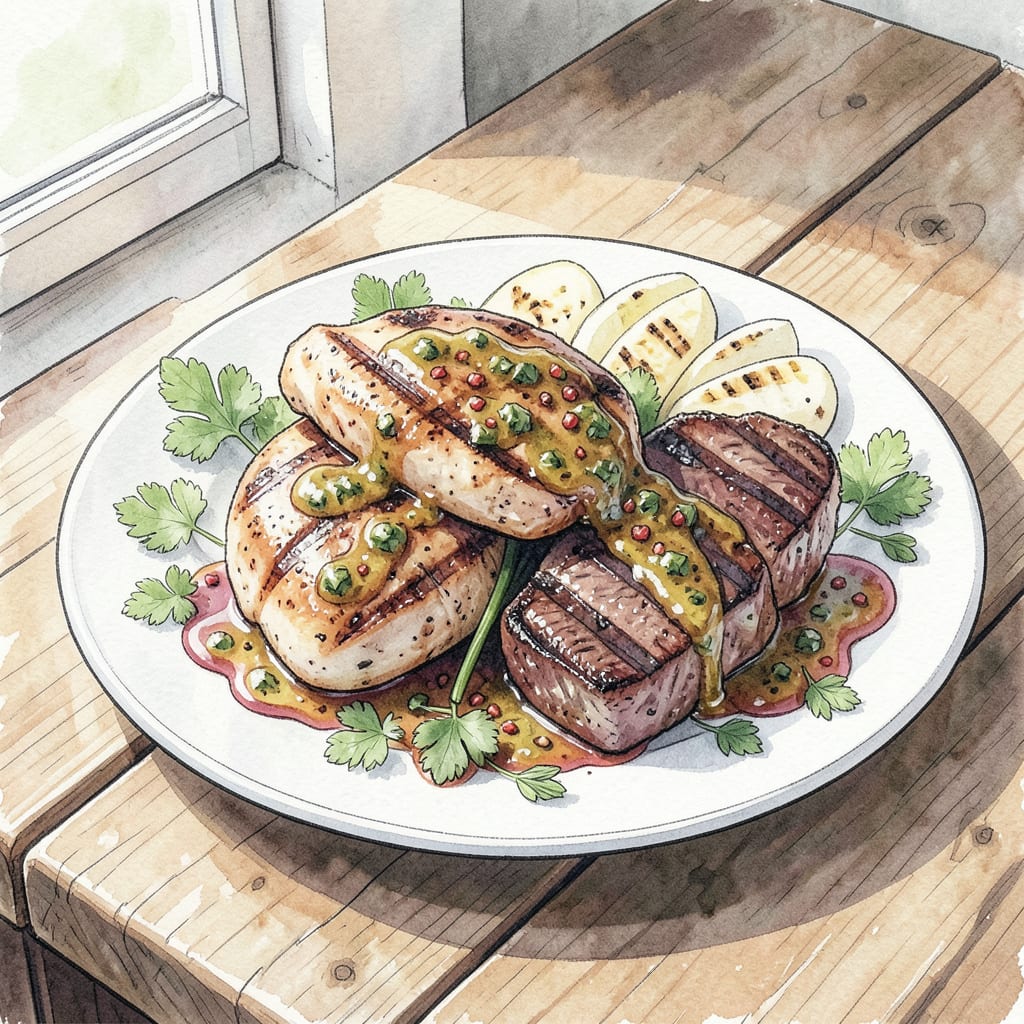
I’ve perfected my chimichurri BBQ marinade recipe through years of experimenting with fresh herbs and spices. This tangy, herbaceous sauce brings Argentinean flair to your grilled meats, elevating even the simplest BBQ to new heights.
With just a few simple ingredients – fresh parsley, oregano, garlic, red pepper flakes, and red wine vinegar – you’ll create a marinade that’s both bold and balanced. It’s perfect for chicken, steak, or vegetables, and can be made ahead for maximum flavor.
Ingredients for Chimichurri Bbq Marinade
Simple ingredients come together to create this bold, herbaceous marinade.
| Ingredient | Amount | Notes |
|---|---|---|
| Fresh Parsley Leaves 🌿 | 1 cup | Packed, stems removed |
| Fresh Oregano Leaves 🌿 | ¼ cup | Leaves only, chopped |
| Garlic Cloves 🧄 | 4 cloves | Peeled, minced |
| Red Pepper Flakes 🔥 | 1 tsp | Adjust for heat preference |
| Red Wine Vinegar 🍷 | ½ cup | Use good quality vinegar |
| Extra-Virgin Olive Oil 🫒 | ¾ cup | High quality, fruity |
| Salt 🧂 | 1 tsp | Kosher or sea salt |
| Black Pepper 🌶️ | ½ tsp | Freshly ground |
[recipe_ingredient_scaler]
The fresh herbs make or break this recipe. Farmers market quality gives the best flavor. Look for vibrant, fresh parsley and oregano. If you’re using dried oregano, reduce to one-third the amount. For the garlic, pre-minced works in a pinch, but fresh is worth the extra minute.
No red wine vinegar? Apple cider vinegar is a decent substitute, though the flavor will be slightly different. For the olive oil, high-quality extra-virgin makes a difference. If you like a bit more heat, bump up the red pepper flakes to 1.5 teaspoons.
This marinade keeps for 1 week in the fridge. Store in a glass jar with a tight lid. Give it a good stir before using. You can also freeze portions in ice cube trays for up to 3 months.
Step-by-Step Instructions for Chimichurri BBQ Marinade
Here’s the straightforward method to create this tangy herb marinade that’s perfect for BBQ.
Step 1: Prepare the Herb Mixture
Start by combining the 1 cup Fresh Parsley Leaves and 0.25 cup Fresh Oregano Leaves in a food processor. I like to use a mini food processor for this task as it handles small quantities better. Process until the herbs are finely chopped and well combined. You’ll notice they start to release their aromatic oils and turn into a vibrant green mixture.
Next, add the 4 cloves Garlic Cloves that you’ve peeled and minced. Process for another few seconds until the garlic is fully incorporated into the herb mixture. Be careful not to overprocess, as this can make the mixture too fine and lose its texture.
Step 2: Add the Remaining Ingredients
Add the 1 tsp Red Pepper Flakes to the herb mixture. If you prefer a milder marinade, you can reduce this amount or omit it altogether. Process for a second to distribute the red pepper flakes evenly.
With the processor running, slowly pour in the 0.5 cup Red Wine Vinegar and 0.75 cup Extra-Virgin Olive Oil through the top. This emulsifies the marinade, giving it a smooth consistency. Continue processing until the mixture is well combined and has a uniform texture.
Step 3: Season and Finish the Marinade
Add the 1 tsp Salt and 0.5 tsp Black Pepper to the marinade. Process for just a second to incorporate these seasonings. Taste the marinade and adjust the seasoning if needed. You can add more salt, pepper, or even a bit more vinegar to taste.
Transfer the chimichurri marinade to an airtight container. It will keep in the refrigerator for up to 1 week. Before using, give it a good stir to re-emulsify the ingredients. This marinade is perfect for chicken, steak, or vegetables – simply coat your chosen protein or vegetables with the marinade and let it sit for at least 30 minutes before grilling or roasting.
Common Mistakes When Making Perfect Results
Herb Preparation Mistakes
One of the most common mistakes is not properly preparing the fresh herbs. I always
Overprocessing the Marinade
Many people overprocess the marinade, thinking it will create a smoother texture. However, this can actually damage the herbs and result in a bitter flavor. I recommend pulsing the mixture just until the ingredients are combined. You want to maintain some texture from the fresh herbs. Stop processing as soon as everything is incorporated. 🔥
Incorrect Vinegar Ratio
Using too much red wine vinegar can overpower the other flavors and make the marinade too acidic. The key is balance – you want enough acidity to cut through richness, but not so much that it becomes overwhelming. Start with the recommended ½ cup and adjust to taste. Remember, you can always add more vinegar, but you can’t remove it once it’s added.
Skipping the Resting Time
After making the marinade, it’s tempting to use it immediately. However, letting it rest allows the flavors to meld together beautifully. I like to make it at least 30 minutes before using. This resting period lets the garlic and herbs infuse their flavors into the oil and vinegar base, creating a more complex taste profile.
Improper Storage Techniques
After you’ve used your marinade, store any leftover in an airtight glass container. Plastic can absorb the flavors and affect the taste of future uses. Keep it in the refrigerator for up to 1 week. Before using stored marinade, give it a good stir as the ingredients may separate. If you won’t use it within a week, consider freezing portions in ice cube trays for longer storage.
Not Adjusting for Personal Taste
One size doesn’t fit all when it comes to marinades. Some people prefer stronger garlic flavor, while others like more herbaceous notes. Taste as you go and adjust the seasoning. If you prefer less heat, start with ½ teaspoon of red pepper flakes and add more to taste. The beauty of homemade marinades is that you can customize them to your liking.

Trained in classic French technique but raised on slow-cooked ribs and spicy rubs, she blends culinary skill with smoke and soul.
- Recipe for Boneless Pork Chops in Cast Iron Skillet: Sear and Baste to Juicy Perfection - October 3, 2026
- Recipe for Boneless Cross Rib Roast: Slow-Roasted Beef with Herb Crust - October 3, 2026
- Hamburgers in Sauce Recipe Crock Pot: Slow-Cooked Savory Delight - October 3, 2026