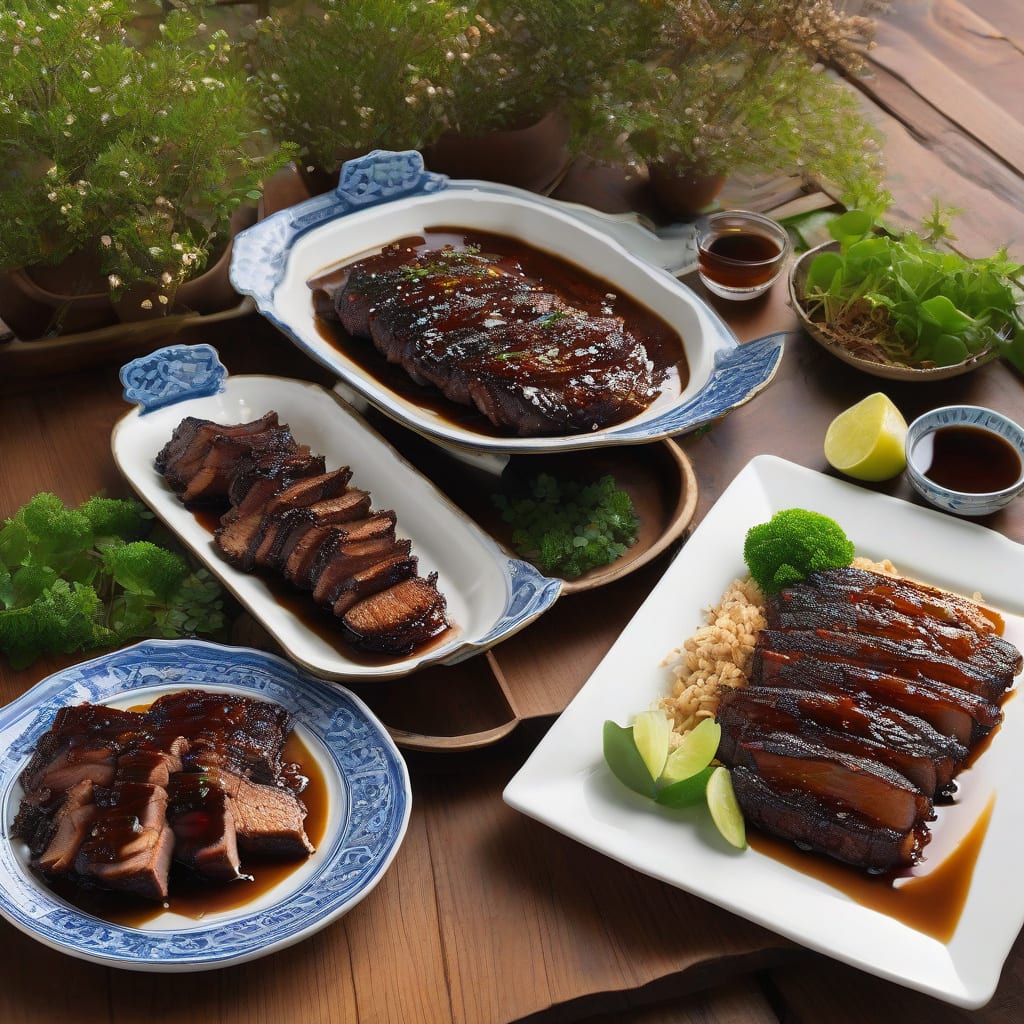
I’ve spent years perfecting my Chinese BBQ pork recipe, and I’m excited to share it with you. 🔥 As a pitmaster with a passion for blending traditional techniques with modern flavors, I’ve developed a method that guarantees perfectly glazed Char Siu every time.
The secret lies in the marinade, where a careful balance of soy sauce, hoisin, and five-spice creates deep, complex flavors. I let the pork shoulder marinate for at least 4 hours, allowing the meat to absorb all that savory goodness.
Cooking the pork is a two-step process: first, a quick sear at 400°F to create that signature caramelized crust, followed by a lower temperature finish to ensure tender, juicy meat. The result is a beautifully glazed exterior with a rich, velvety texture.
Serve this restaurant-quality Char Siu with steamed rice and stir-fried vegetables for a meal that’s sure to impress. With this recipe, you’ll be able to achieve that authentic Chinese BBQ flavor in the comfort of your own home.
Ingredients for Chinese Bbq Pork
These essential ingredients create the perfect Char Siu with deep, complex flavors.
| Ingredient | Amount | Notes |
|---|---|---|
| Pork Shoulder 🥩 | 2 lb | Boneless, skin removed |
| Soy Sauce 🧂 | ½ cup | Use low-sodium variety |
| Hoisin Sauce 🍜 | ¼ cup | Quality brand recommended |
| Honey 🍯 | 2 tbsp | Pure honey preferred |
| Chinese Five-Spice 🌶️ | 2 tsp | Freshly ground for best flavor |
| Garlic Cloves 🧄 | 4 cloves | Minced for marinade |
| Ginger 🌿 | 2 tbsp | Fresh, grated |
| Brown Sugar 🍮 | 2 tbsp | Dark or light brown |
| Rice Vinegar 🥂 | 2 tbsp | Unseasoned, for balance |
| Sesame Oil 🫒 | 1 tsp | Toasted for depth |
| Black Pepper 🌶️ | 1 tsp | Freshly ground preferred |
| Red Food Coloring 🔴 | ¼ tsp | Optional, for color |
[recipe_ingredient_scaler]
[recipeingredientscaler]The pork shoulder is key here. Look for boneless cuts at your local butcher or Asian market for the best results. I prefer using Costco when I’m short on time—their pre-trimmed pork shoulders save a step. For the marinade, Pearl River Bridge soy sauce gives that authentic umami, but any good brand works.
No hoisin sauce? Make a quick substitute with equal parts plum sauce and soy sauce. For a spicier kick, add 1-2 teaspoons of chili flakes to the marinade. If you can’t find Chinese five-spice, mix your own with cinnamon, cloves, fennel, star anise, and Szechuan peppercorns. The sesame oil adds depth, but it’s optional if you’re out.
This dish keeps beautifully—4-5 days in the fridge, 3 months frozen. I portion mine into containers so lunches are sorted for the week. When reheating, a quick 5-minute steam brings back that just-cooked texture. Leftovers are great in noodle bowls or fried rice too.
Why You’ll Love This Recipe
- I’ll be real: this recipe makes amazing leftovers – the pork shoulder stays tender and juicy even after a day or two, and it’s perfect for using in sandwiches or fried rice.
Step-by-Step Instructions for Chinese BBQ Pork
Here’s the method that guarantees perfect Char Siu every time, with a beautiful glaze.
👨🍳 Step 1: Prepare the Marinade
In a blender or food processor, combine the 4 cloves garlic cloves, 2 tbsp ginger, 0.5 cup soy sauce, 0.25 cup hoisin sauce, 2 tbsp honey, 2 tbsp brown sugar, 2 tbsp rice vinegar, 2 tsp chinese five-spice, 1 tsp sesame oil, 1 tsp black pepper, and 0.25 tsp red food coloring (if using). Blend until smooth and well combined.
You’ll notice the marinade has a thick, syrupy consistency with a deep reddish-brown color. The aroma should be complex, with the sweetness of honey and hoisin sauce balanced by the savory soy sauce and spices. Taste it—if it’s too salty, you can add a bit more honey; if it’s too sweet, add a splash more soy sauce.
🔥 Step 2: Marinate the Pork Shoulder
Place the 2 lb pork shoulder in a large zip-top plastic bag or a non-reactive container. Pour the prepared marinade over the meat, turning to coat evenly. Seal the bag or cover the container, then refrigerate for at least 4 hours or overnight (8-12 hours).
During marinating, the meat will absorb all those wonderful flavors. You’ll notice the surface of the meat becoming more deeply colored as the marinade penetrates. If you’re using a bag, massage it gently every few hours to redistribute the marinade.
🔥 Step 3: Roast to Perfection
Preheat your oven to 425°F. Remove the pork shoulder from the marinade, letting any excess drip off. Place it on a roasting rack set in a rimmed baking sheet. Roast for 20 minutes per pound, or until the internal temperature reaches 160°F.
Baste the pork with the pan juices every 20 minutes. You’ll see the glaze forming on the surface, creating that characteristic Char Siu lacquered appearance. The edges will start to caramelize, creating a beautiful contrast between the crispy exterior and juicy interior.
⏰ Step 4: Rest Before Slicing
Once the pork reaches 160°F internally, remove it from the oven and tent loosely with foil. Let it rest for 10-15 minutes before slicing. This resting period allows the juices to redistribute, making the meat more tender and flavorful.
When you slice the pork, you’ll notice the meat is moist and tender, with a beautiful sheen from the glaze. The edges should be slightly caramelized, adding a nice textural contrast. Serve immediately, garnished with green onions or cilantro if desired.
Pro Tips For Making Chinese Bbq Pork Recipe: Char Siu Perfection Every Time
- Score the Fat: Make shallow cuts in the pork shoulder’s fat layer to help the marinade penetrate deeper and the fat render more evenly during cooking. I learned this the hard way—before, my BBQ pork was always a bit tough and lacking that silky texture.
- Balance the Marinade: Whisk the soy sauce, hoisin sauce, and honey until smooth before adding it to the pork; this ensures the honey doesn’t clump and stick to the bottom of the container. My grandmother swore by this, and she was right: it makes a real difference in the final flavor.
- Watch the Glaze: Keep an eye on the pork during the last 10 minutes of cooking as the sugar in the hoisin sauce can cause it to burn quickly. After burning one too many batches, I now stay right by the oven, ready to pull it out at a moment’s notice.
- Rest Before Slicing: Let the pork rest for at least 5-10 minutes before slicing; this allows the juices to redistribute, making the meat more tender and flavorful. I skip this when I’m lazy, but the dish is noticeably better when I don’t.
Perfect Pairings for This Recipe
Steamed Rice Companion
Steaming rice is the traditional way to serve Char Siu, as it absorbs the savory glaze beautifully. I use jasmine rice for its fragrant aroma that complements the pork’s sweetness. For perfect results, maintain a 1:1.2 ratio of rice to water and steam for 15-18 minutes. Let it rest covered for 5 minutes before serving.
Stir-Fried Vegetable Medley
A quick stir-fry of mixed vegetables adds color and nutrition to your meal. I like combining broccoli, bell peppers, and snap peas for their contrasting textures. Stir-fry them in 2 tablespoons of peanut oil with a pinch of salt and pepper until they reach your desired tenderness. Add minced garlic and ginger for extra flavor. Serve hot alongside the Char Siu.
Noodle Pairings
For a different twist, serve Char Siu with lo mein or chow mein noodles. The noodles soak up the delicious sauce, making each bite flavorful. I prefer using fresh egg noodles for their chewy texture. Cook them according to package instructions and toss with the sliced Char Siu and your favorite stir-fried vegetables.
Beverage Matches
A refreshing drink can balance the richness of Char Siu. I recommend Chinese tea, such as jasmine or green tea, for its subtle floral notes that cleanse the palate. For something different, a cold Tsingtao beer pairs nicely, with its crisp finish cutting through the pork’s sweetness. Alternatively, a glass of Chinese plum wine adds a fruity and slightly sweet contrast.
Dipping Sauces
Enhance your Char Siu experience with a variety of dipping sauces. A classic choice is hoisin sauce, which adds a sweet and savory depth. For a spicy kick, mix sriracha with soy sauce. You can also try a ginger-scallion sauce made with minced ginger, chopped scallions, and a touch of vinegar for a fresh flavor.
Additional Sides
Consider adding other sides to round out your meal. Pickled vegetables, like cucumbers or carrots, provide a tangy contrast. A simple cucumber salad dressed with sesame oil and vinegar can also be refreshing. For a heartier meal, add some roasted vegetables like bok choy or Brussels sprouts, tossed with a bit of soy sauce and sesame oil.
Nutrition Facts
Frequently Asked Questions
What’s the best cut of pork for Chinese BBQ?
The best cut for Chinese BBQ pork is pork shoulder or pork belly. These cuts have the perfect balance of fat and meat, making them tender and flavorful after marinating and roasting. Pork shoulder is leaner and easier to slice, while pork belly is richer and more indulgent. Both work beautifully for Char Siu.
Can I make Char Siu without a grill?
Absolutely! While traditional Char Siu is grilled, you can achieve excellent results in the oven. Roasting at 425°F gives a similar caramelized exterior. The key is to baste frequently during cooking to build that signature glaze. You can also use a broiler for a final crisping if desired.
How long can I store leftover Char Siu?
Properly stored in an airtight container, leftover Char Siu keeps in the refrigerator for 4-5 days. You can also freeze it for up to 3 months. When reheating, a quick steam or microwave warming helps restore the tender texture. Consider slicing and freezing individual portions for easy meals later.
Can I adjust the sweetness level in the marinade?
Yes, you can adjust the sweetness to your taste. The honey and brown sugar in the marinade balance the savory elements. For a less sweet version, reduce the honey to 1 tablespoon or substitute with a sugar alternative like maple syrup. Taste the marinade before applying it to the pork to ensure it suits your preferences.

Trained in classic French technique but raised on slow-cooked ribs and spicy rubs, she blends culinary skill with smoke and soul.
- Recipe for Boneless Pork Chops in Cast Iron Skillet: Sear and Baste to Juicy Perfection - October 3, 2026
- Recipe for Boneless Cross Rib Roast: Slow-Roasted Beef with Herb Crust - October 3, 2026
- Hamburgers in Sauce Recipe Crock Pot: Slow-Cooked Savory Delight - October 3, 2026