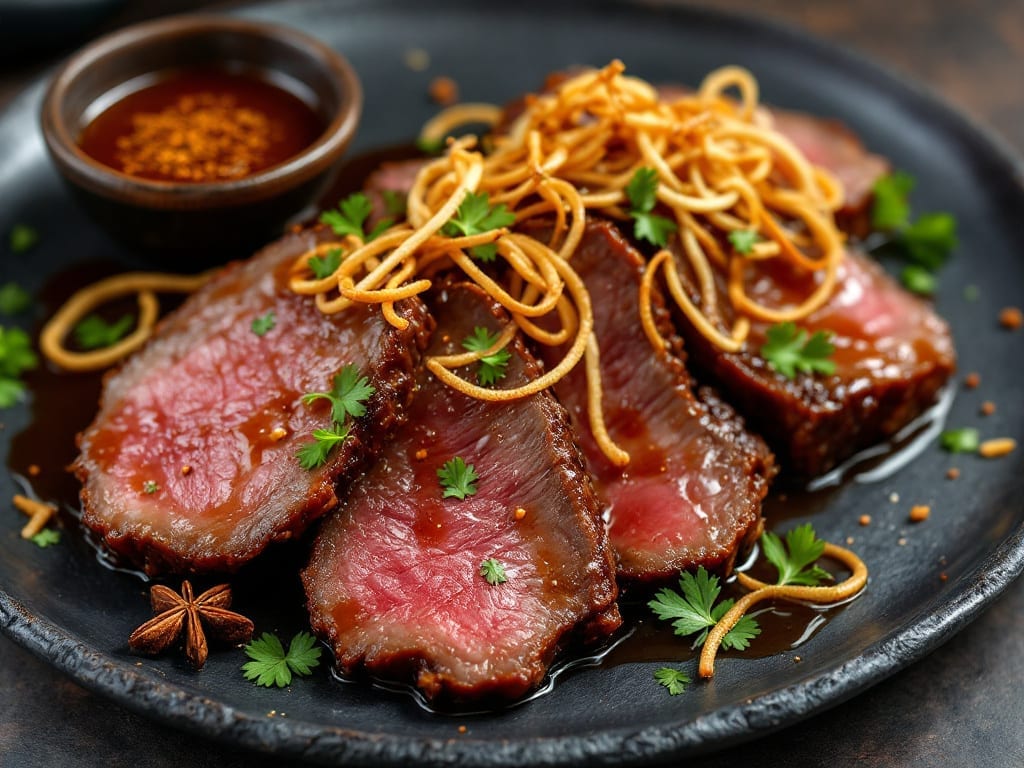
This Chinese beef brisket recipe delivers the deep, aromatic flavors of a Cantonese-style braise that transforms tough cuts into melt-in-your-mouth perfection. 🌟 The secret lies in slow-simmering with soy sauce, star anise, and five-spice blend—technique I first mastered during a trip to Guangzhou where the scent of star anise lingering in the air made me realize how much I’d been missing in my own kitchen.
The process begins with marinating the brisket overnight in a blend of soy sauce, Shaoxing wine, and spices, then slow-braising until fork-tender.
This method isn’t just about time—it’s about layering flavors through proper technique: first searing the meat to develop a rich crust, then simmering low and slow to render fat and infuse every fiber with aromatic depth.
The result is a dish that balances sweet, salty, and umami notes in each bite.
By the time you serve it, you’ll have a restaurant-quality beef brisket with tender, almost falling-apart texture and a sauce that clings beautifully to each slice. The star anise and five-spice blend create that signature Chinese depth that makes this dish unforgettable.
Serve with steamed jasmine rice and stir-fried bok choy for an authentic experience that feels like a home away from home.
Modern adaptations like sous vide or Instant Pot methods can shorten cooking time while preserving authenticity. The key remains the same: patience and proper technique to unlock the full potential of this classic Chinese dish. Let’s get started on creating something truly special.
Ingredients for chinese beef brisket
Six ingredients transform tough brisket into melt-in-your-mouth Cantonese perfection—star anise and five-spice are non-negotiable.
| Ingredient | Amount | Notes |
|---|---|---|
| Beef Brisket 🥩 | 3 lb | Flat cut, 1-inch thick slices |
| Soy Sauce 🍶 | ½ cup | Light or dark, high-quality |
| Shaoxing Wine 🍷 | ¼ cup | Dry Chinese cooking wine |
| Brown Sugar 🍯 | ¼ cup | Packed firmly |
| Star Anise 🌿 | 2 whole | Whole pods for aroma |
| Five-Spice Powder 🌶️ | 2 tsp | Authentic Chinese blend |
| Garlic Cloves 🧄 | 6 cloves | Peeled, smashed lightly |
| Fresh Ginger 🌿 | 2 tbsp | Grated, fresh preferred |
| Green Onions 🧅 | 4 whole | White and green parts |
| Sesame Oil 🫒 | 1 tbsp | Toasted, for finishing |
| Cornstarch 🌾 | 1 tbsp | For thickening sauce |
| Vegetable Oil 🫒 | 2 tbsp | High smoke point |
| Water 💧 | 2 cups | For braising liquid |
| Salt 🧂 | 1 ½ tsp | Kosher or sea salt |
| Black Pepper 🌶️ | ½ tsp | Freshly ground |
[recipe_ingredient_scaler]
The brisket is your canvas—flat cut, 1-inch thick slices from the butcher ensure even cooking. I always ask for the well-marbled sections at Whole Foods or my local Asian market, where the staff knows exactly what I need. If you’re buying a whole brisket, trim excess fat but leave some for flavor. Costco sells pre-sliced brisket that works in a pinch, though it lacks the marbling of a quality cut. For the Shaoxing wine, Trader Joe’s has a great affordable option, but if you can find it at a Chinese grocery store, it’s worth the splurge—authentic flavor makes all the difference. The five-spice blend? Penzeys or bulk bins at natural food stores are your best bet for that authentic depth.
No Shaoxing wine? Dry sherry or even a splash of apple cider vinegar works in a bind, though it won’t be as authentic. Fresh ginger is ideal, but dried works at half the amount if you’re in a hurry—just make sure it’s labeled food-grade. The star anise pods can be found in the spice aisle or international section of most grocery stores. If you can’t find them, a pinch of anise extract (not the baking kind) adds a hint of the flavor. For the green onions, use the white parts too—they pack more flavor. And if you’re short on time, pre-minced garlic and ginger from the freezer section works, though fresh is always better.
This dish tastes even better the next day—plan ahead. The braised brisket keeps for 5 days in the fridge, and the sauce freezes beautifully for 3 months if you portion it into ice cube trays. I like to make extra sauce and freeze it separately—just thaw and reheat when you need it. For serving, keep the brisket warm in its juices on low heat, and toss the green onions with a drizzle of sesame oil right before plating. The aroma alone will have everyone at the table.
Why You’ll Love This Recipe
- One-Pot Magic: I swear by this—just toss the brisket in a deep pan with soy sauce, Shaoxing wine, and star anise, then let it simmer. No chopping, no fuss, and honestly, the hardest part is waiting for the aroma to fill your kitchen.
- Sweet-Savory Bomb: That caramelized brown sugar glaze? It’s the star. The soy and wine cut through the richness while the star anise adds this subtle, warm spice that makes every bite ridiculously good—like a hug in sauce form.
- Budget-Buster with Bragging Rights: Brisket’s affordable, and this method turns it into something restaurant-worthy without breaking the bank. Between us, my friends always ask for seconds, and I just smile while they don’t realize they’re eating my secret weapon.
Step-by-step instructions for Chinese beef brisket
Here’s how to transform tough brisket into tender, aromatic perfection with deep umami flavors.
🔥 Step 1: Sear the Brisket to Lock in Juices
Heat a heavy pot or Dutch oven over medium-high heat until the 2 tablespoons vegetable oil shimmers. Pat the 3 lb Beef Brisket completely dry with paper towels—this ensures maximum browning. Place the brisket in the pot and sear for 4-5 minutes per side until deep golden brown with crispy edges.
Here’s the thing—don’t move the brisket around while searing. Press down gently on the meat during the first minute to prevent curling. The goal is to develop a rich, flavorful crust that will later dissolve into the braising liquid. Once browned, remove the brisket and set it aside on a plate.
👨🍳 Step 2: Build the Aromatic Braising Base
In the same pot, add the 6 cloves garlic cloves and 2 tablespoons fresh ginger (grated). Sauté for 30 seconds until fragrant—you should smell that fresh, zesty aroma. Add the 2 whole star anise and 2 teaspoons five-spice powder, stirring for 10 seconds to toast the spices lightly.
Pour in the 0.5 cup soy sauce, 0.25 cup shaoxing wine, and 0.25 cup brown sugar. Scrape up all the browned bits from the bottom of the pot with a wooden spoon—this is where all the flavor lives. Add the 2 cups water and bring to a gentle simmer. You’ll notice the mixture darkens and thickens slightly as it cooks.
🥘 Step 3: Braise Until Fork-Tender
Return the brisket to the pot, fat-side up, and add the 1.5 teaspoons salt and 0.5 teaspoon black pepper. Bring the liquid to a full simmer, then reduce heat to low to maintain a gentle bubble. Cover the pot and let it cook for 2.5-3 hours until the meat is fork-tender and easily pulls apart.
Here’s what to watch for: the liquid should reduce by about half, creating a rich, glossy sauce. If it reduces too quickly, add ½ cup water to maintain proper braising liquid. The brisket is done when it reaches an internal temperature of 205°F and the meat fibers separate cleanly with minimal resistance.
⏰ Step 4: Thicken the Sauce and Finish
Once the brisket is tender, remove it from the pot and set it aside on a cutting board. Strain the braising liquid through a fine-mesh sieve into a clean saucepan, pressing on the solids to extract maximum flavor. Return the liquid to medium heat and whisk in the 1 tablespoon cornstarch mixed with 2 tablespoons water from the brisket.
Simmer for 2-3 minutes until the sauce thickens to a glossy consistency that coats the back of a spoon. Taste and adjust seasoning—you might need a touch more soy sauce for saltiness or black pepper for heat. Stir in the 1 tablespoon sesame oil and 4 whole green onions (chopped), reserving the green tops for garnish.
🍽️ Step 5: Slice and Serve with Sauce
Slice the brisket against the grain into ¼-inch thick slices. Spoon the thickened sauce over the top and garnish with the reserved green onion tops. Serve immediately with steamed rice or noodles—this dish is best enjoyed fresh when the meat is at its most tender and the sauce is still warm and glossy.
Each bite should deliver perfectly balanced flavors: the deep umami from the soy and star anise, sweetness from the brown sugar, and a subtle heat from the five-spice. The sauce should cling beautifully to the meat, creating that signature Chinese braised texture we all love.
Pro Tips For Making Chinese Beef Brisket
- Sear the Brisket First: High heat. Seriously, crank it up until the brisket is deep brown—this isn’t just for looks. The crust locks in flavor and keeps the meat from drying out later, especially when you’re braising it with soy and wine.
- Bloom the Star Anise: Toss the whole star anise into the hot oil or pan before adding anything else. Let it sizzle for 30 seconds—this releases its aroma and makes the dish smell like a proper Chinese kitchen. (Yes, even if you’re skeptical, it works.)
- Don’t Rush the Wine: Let the Shaoxing wine simmer uncovered for 2-3 minutes after adding it. This burns off the alcohol (which tastes harsh) and concentrates the sweet, nutty flavor. Skipping this step leaves your dish tasting raw and sharp.
- Use Less Sugar Early: Add the brown sugar in the last 10 minutes of cooking, not at the start. Too early, and it burns into bitter bits. Late addition caramelizes just enough to balance the soy’s saltiness without overpowering. (I learned this after a very sad, bitter batch.)
Best sauces and condiments for this chinese beef brisket
Soy-Based Sauce Mastery
The star of this dish is the soy-braised sauce, where light and dark soy sauce combine for depth. I recommend using Kikkoman Light Soy Sauce for clarity and Lee Kum Kee Premium Dark Soy Sauce for richness—mix them in a 1:1 ratio for that perfect balance.
For extra umami, add 1 tablespoon of hoisin sauce during the final thickening step. The key is reducing the sauce until it coats the back of a spoon, creating a glossy finish that clings to every bite. 🍶
Star Anise and Five-Spice Infusion
These aromatic spices are non-negotiable for authentic flavor. Toast the whole star anise pods lightly in the pot before adding liquid to release their essential oils—this step amplifies their floral, licorice-like notes. The five-spice powder (cinnamon, clove, fennel, star anise, and pepper) adds warmth and complexity.
I like to toast the spices in 1 tablespoon neutral oil for 30 seconds before adding the wet ingredients to deepen their flavor. ✨
Sweet-Savory Balance
Brown sugar isn’t just for sweetness—it caramelizes during braising, creating a deep, molasses-like richness that pairs perfectly with the soy’s saltiness. For a modern twist, swap half the brown sugar for honey or maple syrup, but reduce the braising time by 15 minutes since it caramelizes faster.
Taste the sauce before thickening: it should sing with sweet, salty, and umami harmony. 💫
Finishing Touches
Don’t overlook the sesame oil and green onions—they elevate the dish from good to restaurant-quality. Drizzle 1 tablespoon toasted sesame oil into the finished sauce just before serving (it burns easily, so add it last).
Reserve the green onion tops for garnish—their fresh bite cuts through the richness. For extra drama, sprinkle with toasted sesame seeds or a pinch of smoked salt for a modern fusion touch. 🌿
Sauce Variations
Craving heat? Stir in 1 teaspoon of chili crisp or ½ teaspoon of Sichuan peppercorns (lightly toasted) for a numbing-spicy kick. For a tangy twist, add 1 tablespoon of rice vinegar during the final reduction.
If you’re short on time, use 1 packet of Knorr Beef Gravy Mix (½ cup water) as a shortcut, though it lacks the depth of homemade. The sauce freezes beautifully—portion it into ice cube trays for easy reheating later. 🔥
Equipment Essentials
You’ll need a heavy-bottomed pot or Dutch oven (like Le Creuset) to distribute heat evenly and prevent scorching. A fine-mesh sieve is critical for straining out impurities while keeping the sauce flavorful. For precision, use a meat thermometer—the brisket should reach 205°F for fork-tender perfection.
If you’re braising on the stovetop, keep the heat at low and steady to avoid boiling, which can make the meat tough. For oven braising, maintain 300°F for even cooking. 🌡️
Nutrition facts
Frequently asked questions
Can I substitute beef brisket with another cut of beef?
For the best results, stick with brisket—its marbling and collagen content create that signature tender texture. However, you can use chuck roast or short ribs in a pinch. Adjust cooking time: chuck roast needs 3-4 hours while short ribs may only require 2 hours. The key is choosing a cut with good fat content to mimic brisket’s flavor and tenderness.
What’s the best way to make this recipe with an Instant Pot?
Use the Sauté function to sear the brisket first, then add all braising ingredients. Cook on High Pressure for 45 minutes, then quick-release the pressure. Finish by thickening the sauce on the stovetop as directed. The Instant Pot reduces cooking time to about 1.5 hours total while keeping the flavors intact.
How do I know when the brisket is fully tender?
The brisket is ready when it reaches 205°F internally and the meat fibers separate easily with a fork. Look for a glossy sauce that’s reduced by about half—it should coat the back of a spoon. If you’re unsure, cut into a small piece: it should feel like butter melting on your tongue.
Can I prepare this dish ahead of time?
The brisket tastes even better the next day. Store it in its braising liquid in the fridge for up to 5 days. Reheat gently on the stovetop, adding a splash of water if the sauce thickens too much. The sauce also freezes beautifully—portion it into ice cube trays for easy reheating later.
What are some good side dishes to serve with this?
Classic pairings include steamed jasmine rice, stir-fried bok choy, or egg fried rice. For a heartier meal, add garlic green beans or steamed dumplings. The rich, savory flavors of the brisket complement light, fresh sides perfectly. Don’t forget to garnish with extra green onions and sesame seeds for freshness.

Trained in classic French technique but raised on slow-cooked ribs and spicy rubs, she blends culinary skill with smoke and soul.
- Best Smoked Oxtail Recipe: Deep-Rich Flavor After Low-and-Slow Cooking - October 14, 2026
- Pit Boss Smoked Prime Rib Roast Recipe: Bark-to-Bone Crispness in 4 Hours - October 14, 2026
- Smoked Tuna Steak Recipe: Seared Crust Meets Silky Centers - October 14, 2026