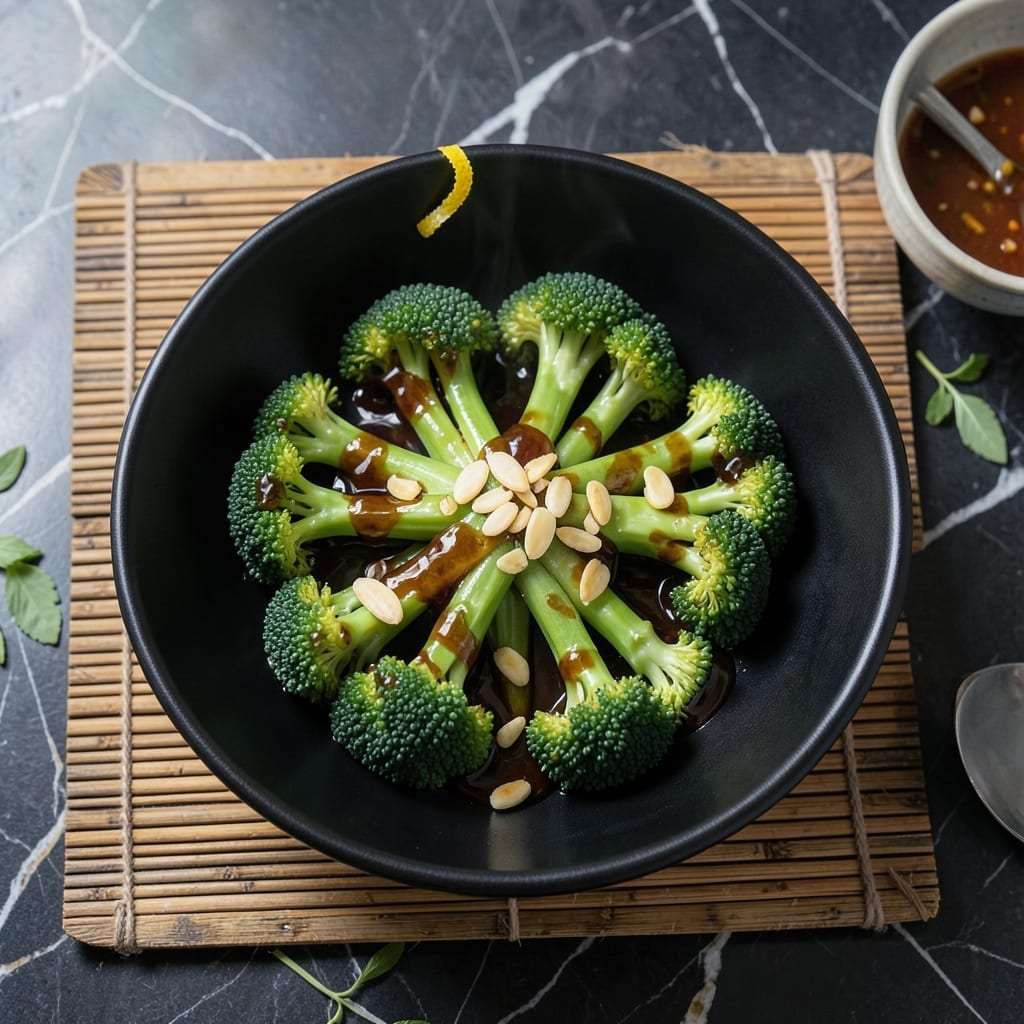
This wok-tossed Chinese broccoli delivers restaurant-quality results with minimal effort. The combination of garlicky aromatics and savory soy sauce transforms simple greens into an irresistible side dish.
In just 10 minutes, you’ll have tender-crisp gai lan with glossy, umami-rich sauce. The high-heat stir-fry method preserves color and texture while infusing every bite with bold flavor.
Ingredients for Chinese Broccoli Recipe Soy Sauce
Restaurant-quality greens require just these fresh, bold ingredients for authentic flavor.
| Ingredient | Amount | Notes |
|---|---|---|
| Chinese Broccoli (Gai Lan) 🥦 | 1 ½ lb | Trimmed, thick stems halved lengthwise |
| Soy Sauce 🫒 | 3 tbsp | Low-sodium or regular variety |
| Garlic Cloves 🧄 | 5 cloves | Thinly sliced or minced |
| Ginger Root 🌿 | 1 tbsp | Fresh, finely grated |
| Vegetable Oil 🫒 | 2 tbsp | High smoke point, neutral flavor |
| Oyster-Free Vegetarian Stir-Fry Sauce 🫒 | 1 tbsp | Vegan oyster sauce substitute |
| Rice Vinegar 🍯 | 1 tsp | Balances savory flavors |
| Sesame Oil 🫒 | 1 tsp | Toasted, for finishing |
| Red Pepper Flakes 🌶️ | ¼ tsp | Adjust to spice preference |
| Sugar 🧂 | 1 tsp | Granulated, balances saltiness |
| Cornstarch 🌾 | 1 tsp | Mixed with 1 tbsp water for slurry |
| Water 💧 | ¼ cup | For cornstarch slurry |
| Green Onions 🧅 | 3 whole | Thinly sliced, white and green parts |
[recipe_ingredient_scaler]
The Chinese broccoli is non-negotiable for authenticity—look for gai lan at Asian markets or well-stocked supermarkets. The stems should be firm, leaves vibrant. Soy sauce quality matters: Kikkoman or Pearl River Bridge deliver consistent results. Vegetable oil must handle high heat; peanut or avocado oil are ideal alternatives if you have them.
No oyster sauce? Vegan oyster sauce from Lee Kum Kee or mushroom stir-fry sauce work perfectly. Fresh ginger is preferred, but ground ginger at one-quarter the amount in a pinch. For extra umami, add 1 tsp miso paste to the sauce. The cornstarch slurry is essential for that glossy finish—don’t skip it. Red pepper flakes can be swapped for Sichuan peppercorns for numbing heat.
Store fresh gai lan wrapped in damp paper towels for up to 5 days. Cooked leftovers keep 3-4 days refrigerated. The sauce components (except cornstarch) can be mixed ahead—just whisk in the slurry right before cooking for best texture.
Why You’ll Love This Recipe
- I’ll be real: gai lan is cheap at my local market, and this dish stretches a few ingredients into a satisfying meal.
- One Pan Wonder: I toss everything in with minimal prep—just chop the gai lan, mince the garlic and ginger, and let the soy sauce do its magic.
- Umami Bomb: The combo of soy sauce, garlic, and fresh ginger hits that perfect salty-savory note every single time.
- Weeknight Hero: Between us, it’s my go-to when I need something fast, healthy, and still impressive for dinner.
Step-by-Step Instructions for Wok-Tossed Chinese Broccoli
Master this technique for perfectly crisp-tender greens with a glossy, flavorful sauce every time.
Step 1: Prepare the Chinese Broccoli and Aromatics
Trim the 1.5 lb Chinese Broccoli (Gai Lan) by cutting off the very ends of the stems, then halve the thick stems lengthwise if they’re wider than ½ inch. This ensures even cooking. Separate the florets and stems, keeping them similar in size so they finish at the same rate.
Thinly slice the 5 cloves Garlic Cloves and finely grate the 1 tbsp Ginger Root. Slice the 3 whole Green Onions into ½-inch pieces, keeping white and green parts separate. Having these prepped before cooking is essential—stir-frying moves quickly.
Step 2: Create the Sauce and Slurry
In a small bowl, combine the 3 tbsp Soy Sauce, 1 tbsp Oyster-Free Vegetarian Stir-Fry Sauce, 1 tsp Rice Vinegar, 1 tsp Sugar, and 0.25 tsp Red Pepper Flakes. Stir until the sugar dissolves completely. This balanced sauce delivers the perfect combination of salty, sweet, and umami notes.
In a separate small bowl, whisk the 1 tsp Cornstarch with the 0.25 cup Water until smooth. This slurry will thicken the sauce to a glossy consistency that clings beautifully to the broccoli. Set both mixtures near your cooking station for quick access.
Step 3: Blanch the Broccoli
Heat a large pot of water to a rolling boil. Add the Chinese broccoli and blanch for 1 minute—just until the stems turn bright green and slightly tender. Immediately drain and rinse under cold water to stop the cooking process. This step removes any bitterness and ensures the broccoli stays vibrant.
Drain thoroughly and pat dry with a clean kitchen towel. Excess water will cause the oil to splatter during stir-frying and dilute your sauce, so take care to remove as much moisture as possible. The broccoli should be crisp-tender at this stage, ready for its final cooking in the wok.
Step 4: Stir-Fry and Finish
Heat the 2 tbsp Vegetable Oil in a wok or large skillet over high heat until it shimmers. Add the garlic, ginger, and white parts of the green onions. Stir-fry for 15-20 seconds until fragrant but not browned—burnt garlic turns bitter.
Add the blanched Chinese broccoli and stir-fry for 1-2 minutes, tossing constantly with tongs. Pour the sauce mixture over the broccoli and stir to coat evenly. Make a well in the center of the wok, pour in the cornstarch slurry, and stir for 30 seconds until the sauce thickens and becomes glossy.
Remove from heat and drizzle with the 1 tsp Sesame Oil. Toss once more to distribute, then transfer to a serving platter. Garnish with the green onion tops. The final dish should have vibrant green stems with a slight crispness and a rich, clinging sauce.
Pro Tips For Making Chinese Broccoli Recipe Soy Sauce
- Blanch First: Parboil the gai lan for 30 seconds in salted water before stir-frying—this keeps it vibrant green and tender-crisp instead of chewy or dull.
- Smash the Aromatics: Lightly crush the garlic and ginger with the flat of your knife before mincing; it releases way more flavor into the oil than just chopping.
- Skip the Overcrowding: I learned this the hard way—cook the gai lan in batches if needed, or it’ll steam instead of sear in the wok.
- Finish with Soy: Add the soy sauce at the very end of cooking, not the beginning, so it reduces slightly and coats the leaves instead of making them soggy.
Flavor Customization for These Flavors
🔥 Make it Spicier
For those who love a fiery kick, add 1-2 tsp of chili flakes or 1 tbsp of sriracha to your Chinese broccoli recipe with soy sauce. This will deepen the heat while complementing the salty umami of the soy. Balance it with a touch of honey if the spice feels too intense.
🍯 Add Sweetness
A hint of sweetness can elevate the dish. Stir in 1 tsp of brown sugar or 1 tbsp of honey while tossing the greens. This rounds out the sharpness of garlic and soy, creating a well-balanced, caramelized flavor. A dash of hoisin sauce also works wonderfully for depth.
🍋 Tangy Twist
Brighten up your Chinese broccoli by adding 1 tbsp of rice vinegar or a squeeze of fresh lime juice at the end. The acidity cuts through the richness of the soy sauce, adding a refreshing zing that keeps your taste buds engaged.
🔥 Extra Smoky
For a deeper, smokier profile, use 1 tsp of smoked paprika or a few drops of liquid smoke in your stir-fry. This pairs especially well with charred or wok-seared broccoli, enhancing its earthy notes. A pinch of five-spice powder can also add complexity.
Umami Boost
Double down on savory flavors by incorporating 1 tsp of fish sauce or 1 tbsp of oyster sauce into your soy sauce mixture. These ingredients amplify the umami, making the dish richer and more satisfying. A sprinkle of msg (if preferred) can also take it to the next level.
Nutrition Facts

Trained in classic French technique but raised on slow-cooked ribs and spicy rubs, she blends culinary skill with smoke and soul.
- Recipe for Boneless Pork Chops in Cast Iron Skillet: Sear and Baste to Juicy Perfection - October 3, 2026
- Recipe for Boneless Cross Rib Roast: Slow-Roasted Beef with Herb Crust - October 3, 2026
- Hamburgers in Sauce Recipe Crock Pot: Slow-Cooked Savory Delight - October 3, 2026