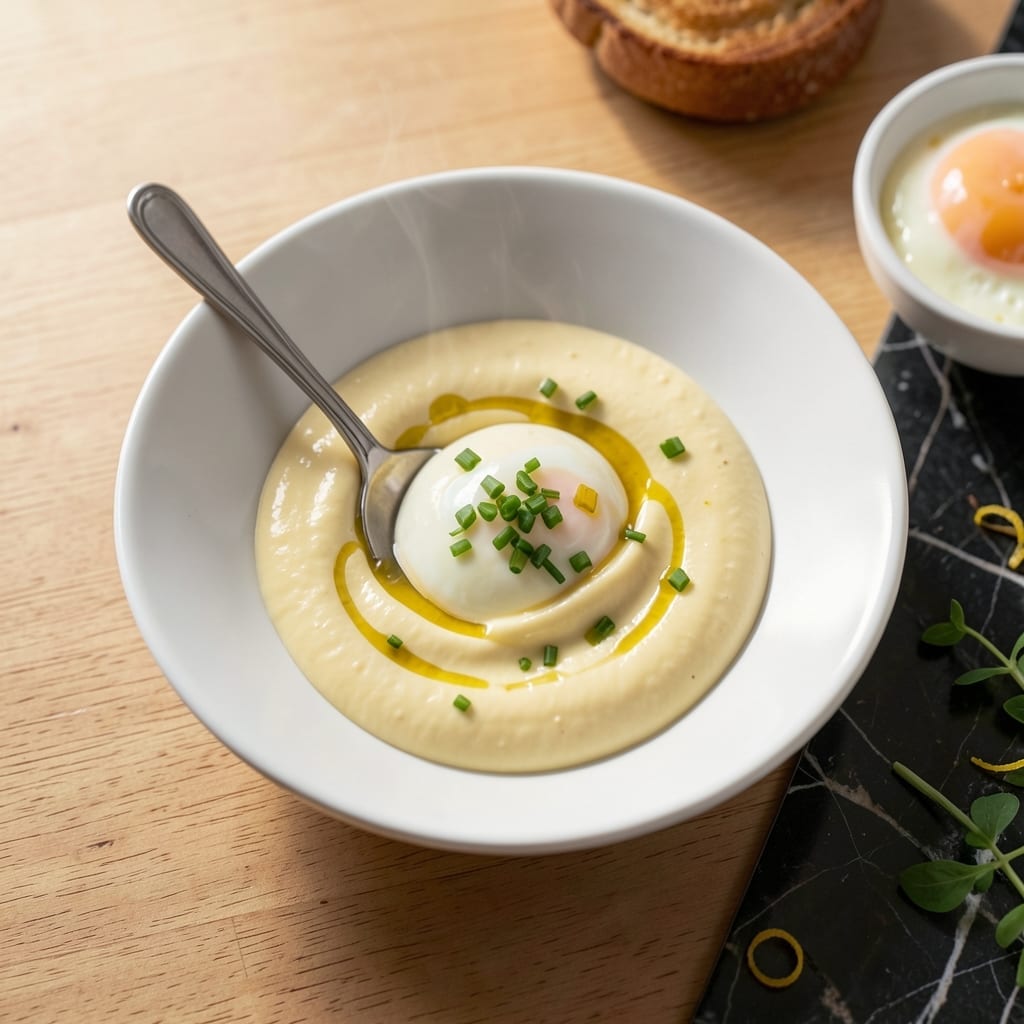
This classic French sauce transforms brunch with its rich, buttery texture and bright lemon finish. A proper emulsion creates that signature velvety consistency that clings perfectly to poached eggs.
Mastering hollandaise requires patience and temperature control, but the result is worth every minute. The balanced combination of butter, egg yolks, and acid makes it the ideal topping for eggs benedict.
Ingredients for Hollandaise Sauce Recipe for Eggs Benedict
Eight ingredients create that signature velvety emulsion with bright lemon finish.
| Ingredient | Amount | Notes |
|---|---|---|
| Unsalted Butter 🧈 | 1 cup | Melted, cooled slightly |
| Large Egg Yolks 🥚 | 3 whole | Room temperature essential |
| Fresh Lemon Juice 🍋 | 2 tbsp | Newly squeezed preferred |
| White Wine Vinegar 💧 | 1 tbsp | Or substitute tarragon vinegar |
| Dijon Mustard 🟡 | ½ tsp | Optional for stability |
| Cayenne Pepper 🌶️ | 0.125 tsp | Pinch for subtle heat |
| Kosher Salt 🧂 | ¼ tsp | Or to taste |
| White Pepper 🌶️ | 0.125 tsp | Freshly ground preferred |
[recipe_ingredient_scaler]
The butter quality is non-negotiable here. European-style unsalted butter (like Plugrá or Kerrygold) has the fat content needed for a stable emulsion. Egg yolks must be fresh and room temperature—cold yolks won’t incorporate properly. Most grocery stores carry suitable butter, but avoid margarine or spreads. The acid balance comes from both lemon juice and vinegar, creating that classic hollandaise tang.
No white wine vinegar? Substitute with apple cider vinegar or additional lemon juice. For a milder flavor, reduce the cayenne or omit entirely. The Dijon mustard isn’t traditional but adds emulsion stability—skip if you prefer authenticity. If you’re making a large batch, clarified butter prevents separation. Always use a whisk and gentle, constant motion to maintain the emulsion rather than a blender.
Hollandaise is best served immediately but can be held for 1 hour in a warm thermos. Refrigerate leftovers (unlikely, but possible) for up to 2 days—reheat gently in a double boiler, whisking constantly. Never microwave, as it will break the emulsion. For eggs benedict, prepare the sauce last so it’s fresh and warm.
Why You’ll Love This Recipe
- I’ll be real: leftovers keep in the fridge for two days, so I drizzle it on asparagus or salmon the next night.
- Whisk & Done: I can make this in 10 minutes while the English muffins toast—just yolks, butter, and a squeeze of lemon.
- Rich & Tangy: That buttery sauce with a hit of lemon and Dijon cuts through the richness of poached eggs like nothing else.
- Brunch MVP: Honestly, it’s my secret for weekend brunches, holidays, or even a fancy Tuesday breakfast.
Step-by-Step Instructions for Hollandaise Sauce
Master the classic French emulsion technique for a rich, velvety sauce that elevates any dish.
Step 1: Melt and Cool the Butter
In a small saucepan, melt the 1 cup unsalted butter over medium heat until fully liquid and just beginning to foam. Watch for the milk solids to settle at the bottom—this is normal and adds flavor.
Immediately transfer the melted butter to a heatproof bowl to stop the cooking process. Let it cool slightly for 5 minutes until it’s warm but not hot to the touch. This temperature control is critical for the emulsion to form properly without scrambling the yolks.
Step 2: Whisk yolks with acid and seasonings
In a heatproof bowl, combine the 3 whole large egg yolks, 2 tbsp fresh lemon juice, 1 tbsp white wine vinegar, 0.5 tsp Dijon mustard, 0.25 tsp kosher salt, 0.125 tsp cayenne pepper, and 0.125 tsp white pepper. The mustard acts as an emulsifier, while the vinegar and lemon provide the signature tang.
Whisk vigorously until the mixture is pale, thick, and forms ribbons when the whisk is lifted. This incorporates air and prepares the base for the butter. The texture should look like a light custard before you begin adding the butter.
Step 3: Create the Emulsion Over a Double Boiler
Set the bowl with the yolk mixture over a pot of barely simmering water, ensuring the bottom of the bowl doesn’t touch the water. This indirect heat provides gentle, even warming to slowly cook the yolks without curdling.
Begin adding the melted unsalted butter in a very slow, thin stream while whisking constantly. Start with just a few drops at a time, then gradually increase to a thin stream as the emulsion begins to form. You’ll notice the sauce thickening and turning pale yellow as the butter incorporates.
If the sauce becomes too thick or starts to separate, remove from heat and whisk in 1 tsp of warm water to restore the emulsion. The finished sauce should coat the back of a spoon and leave a clean path when you run your finger through it.
Step 4: Adjust Seasoning and Serve
Taste the hollandaise and adjust the seasoning if needed. The kosher salt and cayenne pepper can be increased slightly for more pronounced flavor, but remember this sauce should complement rather than overpower.
Strain the sauce through a fine-mesh sieve to remove any cooked bits of yolk for a silky-smooth texture. Serve immediately over poached eggs for eggs Benedict, or use to enhance vegetables, fish, or steak. If you must hold it, keep warm in a thermos or over barely warm water, stirring occasionally.
Pro Tips For Making Hollandaise Sauce Recipe For Eggs Benedict
- Keep It Warm: Use a double boiler and keep the water at a gentle simmer—too hot and your egg yolks will scramble. I learned this the hard way after ruining two batches with overheated water.
- Clarify Your Butter: Melt the unsalted butter separately and let the milk solids settle before using the clear yellow liquid. Sounds fussy, but it actually changes the outcome by giving you a smoother, silkier sauce.
- Skip the Cold Eggs: Start with room temperature egg yolks—they emulsify faster and more evenly. My grandmother swore by this, and she was right: cold yolks resist blending and can lead to a broken sauce.
- Acid Last: Add the lemon juice and white wine vinegar at the very end to balance the richness without curdling the mixture. I was skeptical until I tried it, but the flavor is noticeably brighter when you wait.
Make-Ahead Tips for Leftovers
⏰ Week Before
Start by gathering non-perishable ingredients like white wine vinegar, lemon juice, and dry mustard. Check your pantry for unsalted butter and ensure you have a blender or whisk ready for emulsifying. Pro tip: 💡 Buy fresh eggs closer to the day for the best results, but non-perishables can wait.
🍳 Day Before
Prep your clarified butter by melting unsalted butter and skimming off the milk solids—this can be stored in the fridge overnight. Poach your Canadian bacon or ham and keep it chilled. If making from scratch, prepare your English muffins and store them in an airtight container.
👨🍳 Day Of
Bring your clarified butter to room temperature 1 hour before cooking. Poach your eggs just before serving, but you can hold them in warm water for up to 10 minutes if needed. Toast the muffins and warm the ham while you whisk the hollandaise.
✨ Last-Minute Tasks
Assemble everything quickly: place muffins on plates, top with ham, poached eggs, and a generous drizzle of fresh hollandaise. Garnish with chopped chives or paprika for a pop of color. Serve immediately while warm!
Nutrition Facts

Trained in classic French technique but raised on slow-cooked ribs and spicy rubs, she blends culinary skill with smoke and soul.
- Recipe for Boneless Pork Chops in Cast Iron Skillet: Sear and Baste to Juicy Perfection - October 3, 2026
- Recipe for Boneless Cross Rib Roast: Slow-Roasted Beef with Herb Crust - October 3, 2026
- Hamburgers in Sauce Recipe Crock Pot: Slow-Cooked Savory Delight - October 3, 2026