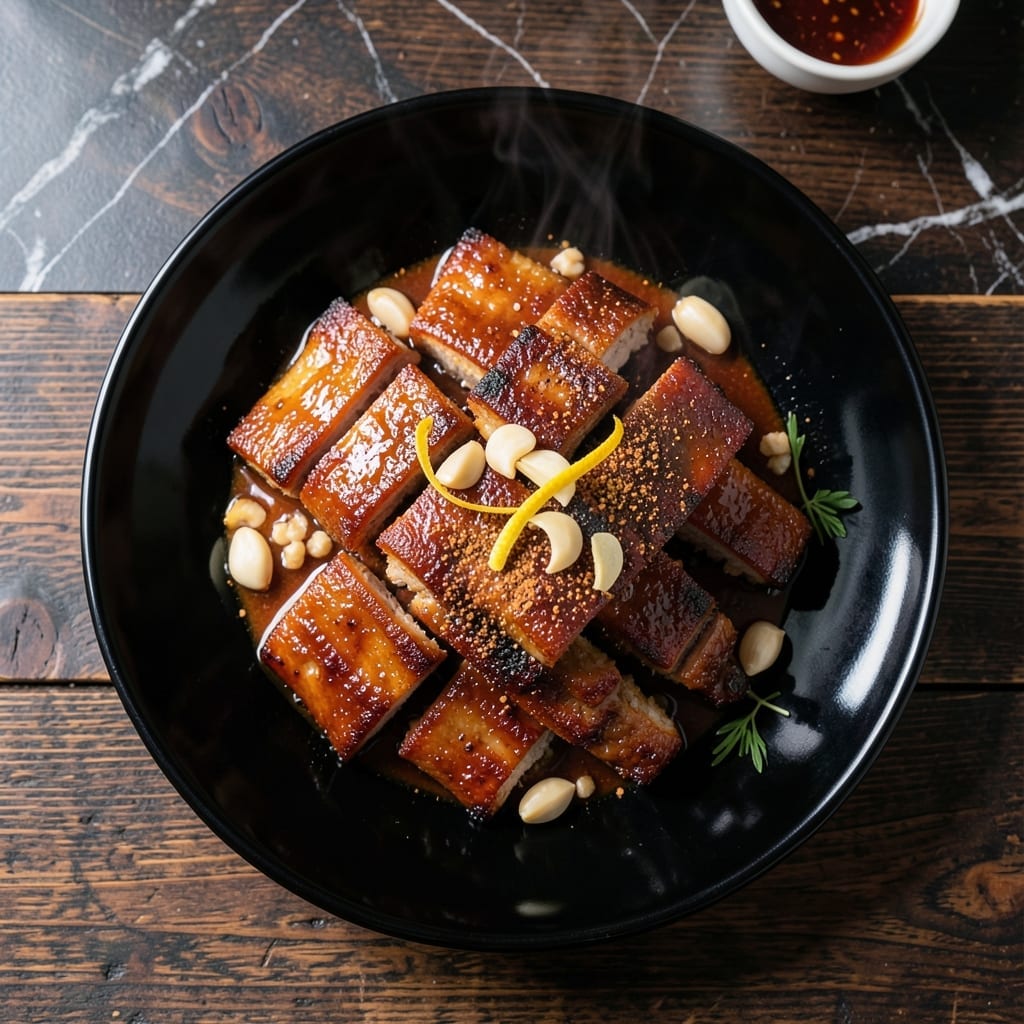
When I first smelled hickory smoke at my family’s backyard cookouts, I knew ribs were my calling. This method blends that tradition with Chinese five-spice for a depth that’s hard to beat.
What sets this apart is the balance—sweet honey glaze meets the warmth of star anise and cinnamon. The ribs emerge sticky and tender, with layers of flavor that linger.
I’ve perfected the timing to ensure the meat pulls clean from the bone while keeping the glaze caramelized, not burnt. It’s a dish that respects both my roots and the craft.
Serve with steamed rice to soak up every last bit of sauce. The result is worth the effort.
Ingredients for Chinese Pork Spare Ribs
Pantry staples plus a trip to the Asian market. Big flavor payoff here.
| Ingredient | Amount | Notes |
|---|---|---|
| Pork Spare Ribs 🍖 | 3 lb | Cut into individual ribs |
| Honey 🍯 | ½ cup | For sticky glaze |
| Chinese Five-Spice Powder 🌿 | 1 tbsp | Essential for depth |
| Soy Sauce 🫒 | ½ cup | Low-sodium preferred |
| Hoisin Sauce 🥫 | ¼ cup | For rich sweetness |
| Garlic Cloves 🧄 | 6 cloves | Minced for marinade |
| Fresh Ginger 🌱 | 1 tbsp | Grated or minced |
| Rice Vinegar 🍚 | 2 tbsp | For tangy balance |
| Brown Sugar 🍚 | ¼ cup | Light or dark works |
| Star Anise Pods ⭐ | 2 whole | Lightly crushed |
| Cinnamon Stick 🌰 | 1 whole | For warm aroma |
| Sesame Oil 🫒 | 1 tbsp | Toasted variety preferred |
| Green Onions 🧅 | 4 whole | Thinly sliced for garnish |
| Vegetable Oil 🫒 | 2 tbsp | For searing ribs |
[recipe_ingredient_scaler]
The ribs are the star—look for well-marbled spare ribs at your butcher or Whole Foods. Ask them to cut into individual ribs if you’re short on time. The five-spice powder needs to be fresh (old spices taste like dust), and Penzeys or a good Asian market will have the best quality. Star anise can be tricky to find, but most grocery stores with a decent spice aisle carry it.
No hoisin? Oyster sauce plus a touch of sugar works in a pinch. Short on honey? Maple syrup or brown sugar can step in, though the flavor will shift slightly. The star anise can be swapped for an additional 1/2 tsp of five-spice. If you’re missing rice vinegar, apple cider vinegar works too (just use a bit less).
The ribs taste even better the next day—store in the fridge for up to 4 days. The glaze can be made ahead and kept in a jar for 1 week. Reheat gently to keep everything tender.
Why You’ll Love This Recipe
- One Pot Wonder: I toss everything in a pan and let the oven do the work—no fuss, no stress.
- Sweet & Savory: The honey and hoisin create this sticky, caramelized glaze that’s just ridiculous.
- Feeds My Crew: Between us, it’s the only dish my picky nephew and foodie sister both devour.
- Leftovers? Better: Honestly, the flavors deepen overnight—lunch the next day tastes even richer.
Step-by-Step Instructions for Chinese Pork Spare Ribs
Here’s how to achieve fall-off-the-bone tenderness with that signature sticky glaze every time.
Step 1: Marinate the Pork Spare Ribs with Aromatics
Cut the 3 lb Pork Spare Ribs into individual ribs if not already prepared. In a large bowl, combine the 0.5 cup Soy Sauce, 0.25 cup Hoisin Sauce, 6 cloves minced Garlic Cloves, 1 tbsp Fresh Ginger, 2 tbsp Rice Vinegar, 0.25 cup Brown Sugar, 1 tbsp Chinese Five-Spice Powder, 2 whole lightly crushed Star Anise Pods, and 1 whole Cinnamon Stick.
Add the ribs to the marinade, ensuring they’re fully coated. Cover and refrigerate for at least 2 hours (overnight is ideal). This long marinade time allows the bold flavors to penetrate deeply into the meat. I always give it a good stir halfway through the marinating time to redistribute the flavors.
Step 2: Sear the Ribs for Maximum Flavor
Remove the ribs from the marinade (reserve the marinade) and pat them dry with paper towels. Heat the 2 tbsp Vegetable Oil in a large pot or Dutch oven over medium-high heat. Working in batches to avoid crowding, sear the ribs for 3-4 minutes per side until they develop a deep golden brown crust.
This searing step is crucial—it builds a flavor foundation and helps the ribs develop that beautiful caramelized exterior. Don’t rush this process; you want good color on all sides. As you finish each batch, transfer the seared ribs to a plate and set aside.
Step 3: Braise the Ribs in the Marinade
Pour the reserved marinade into the same pot and bring it to a gentle boil over medium heat. Return all the seared ribs to the pot, along with any accumulated juices. The liquid should come about halfway up the ribs—add a splash of water if needed.
Reduce heat to low, cover, and let the ribs braise for 1 hour to 1 hour 15 minutes. You’ll know they’re ready when the meat starts to pull away from the bones and a fork slides in easily. This slow cooking process transforms the ribs into that melt-in-your-mouth texture we’re after.
Step 4: Glaze with Honey and Finish
Once the ribs are tender, stir in the 0.5 cup Honey and 1 tbsp Sesame Oil. Increase heat to medium and cook uncovered for 8-10 minutes, basting the ribs frequently with the sauce. You want the sauce to reduce and thicken into a glossy, sticky glaze that clings to the ribs.
Keep an eye on the heat—too high and the honey can burn. The ribs are done when they’re fully coated in that beautiful, thick glaze and the sauce has reduced by about half. This final step is what gives these ribs their signature sticky, finger-licking finish.
Step 5: Garnish and Serve
Transfer the glazed ribs to a serving platter. Discard the Star Anise Pods and Cinnamon Stick from the sauce, then spoon any remaining sauce over the ribs. Garnish with the 4 whole thinly sliced Green Onions.
Let the ribs rest for 5 minutes before serving. This brief rest allows the glaze to set slightly and the juices to redistribute. Serve with steamed rice to soak up every last bit of that incredible sauce. The ribs should be so tender they nearly fall off the bone with just a gentle tug.
Pro Tips For Making Chinese Pork Spare Ribs
- Blanch First: Parboil the ribs for 5-8 minutes before marinating to remove impurities and help the sauces cling better—I learned this the hard way after my first batch turned out gritty.
- Score the Meat: Make shallow cuts across the fatty side of the ribs so the soy-hoisin glaze penetrates deeper; it’s a small step that actually changes the outcome.
- Skip the Overcrowding: Roast or grill the ribs in a single layer with space between them, or they’ll steam instead of caramelize—yes, even if you’re impatient like me.
- Glaze Late: Brush on the honey-hoisin mix only in the last 10-15 minutes of cooking to prevent burning; sounds obvious, but I ruined two racks before figuring this out.
Health Benefits of chinese pork spare ribs
Rich Protein Source
This dish delivers a solid 30 grams of protein per serving from the pork ribs, essential for muscle repair and growth. The slow cooking process actually helps break down the protein, making it easier for your body to absorb and utilize these building blocks. 💪
Bone Health Boost
Pork ribs provide calcium and phosphorus that support strong bones. The ginger in the recipe adds anti-inflammatory benefits, which can help with joint health. I notice my knees feel better when I include ginger regularly in my meals.
Iron and Zinc
You’ll get a healthy dose of iron and zinc from this meal, both crucial for immune function. The vitamin C in the rice vinegar actually enhances iron absorption from the pork. That’s why I always include some acid in rib recipes.
Antioxidant Spices
The Chinese five-spice blend contains cinnamon and star anise, both packed with antioxidants. These compounds help combat oxidative stress in your body. The star anise particularly stands out for its high antioxidant content.
Energy from Natural Sugars
The honey and brown sugar provide natural carbohydrates for quick energy. Unlike refined sugar, these contain trace minerals that your body can use. I prefer local honey from farmers markets for its additional health benefits.
Low-Calorie Flavor
Despite the rich taste, most of the flavor comes from spices and aromatics rather than added fats. The garlic and ginger add depth without significant calories. This makes the dish satisfying without being overly heavy.
Nutrition Facts
Frequently Asked Questions
Can I use baby back ribs instead?
Yes, but they cook faster. Reduce braising time to 45-60 minutes to prevent drying out. Baby backs are leaner, so watch the glaze closely to avoid burning.
How do I store leftovers?
Keep in an airtight container in the fridge for up to 4 days. Reheat gently in a pan with a splash of water to maintain tenderness.
Why did my glaze turn bitter?
Honey can burn if the heat is too high. Always keep it at medium and stir frequently. Add a pinch of brown sugar to balance if needed.
Is the five-spice powder necessary?
It’s key for authentic flavor, but in a pinch, use 1/2 tsp each cinnamon and star anise plus a dash of clove. The depth won’t be the same, though.

Trained in classic French technique but raised on slow-cooked ribs and spicy rubs, she blends culinary skill with smoke and soul.
- Recipe for Boneless Pork Chops in Cast Iron Skillet: Sear and Baste to Juicy Perfection - October 3, 2026
- Recipe for Boneless Cross Rib Roast: Slow-Roasted Beef with Herb Crust - October 3, 2026
- Hamburgers in Sauce Recipe Crock Pot: Slow-Cooked Savory Delight - October 3, 2026