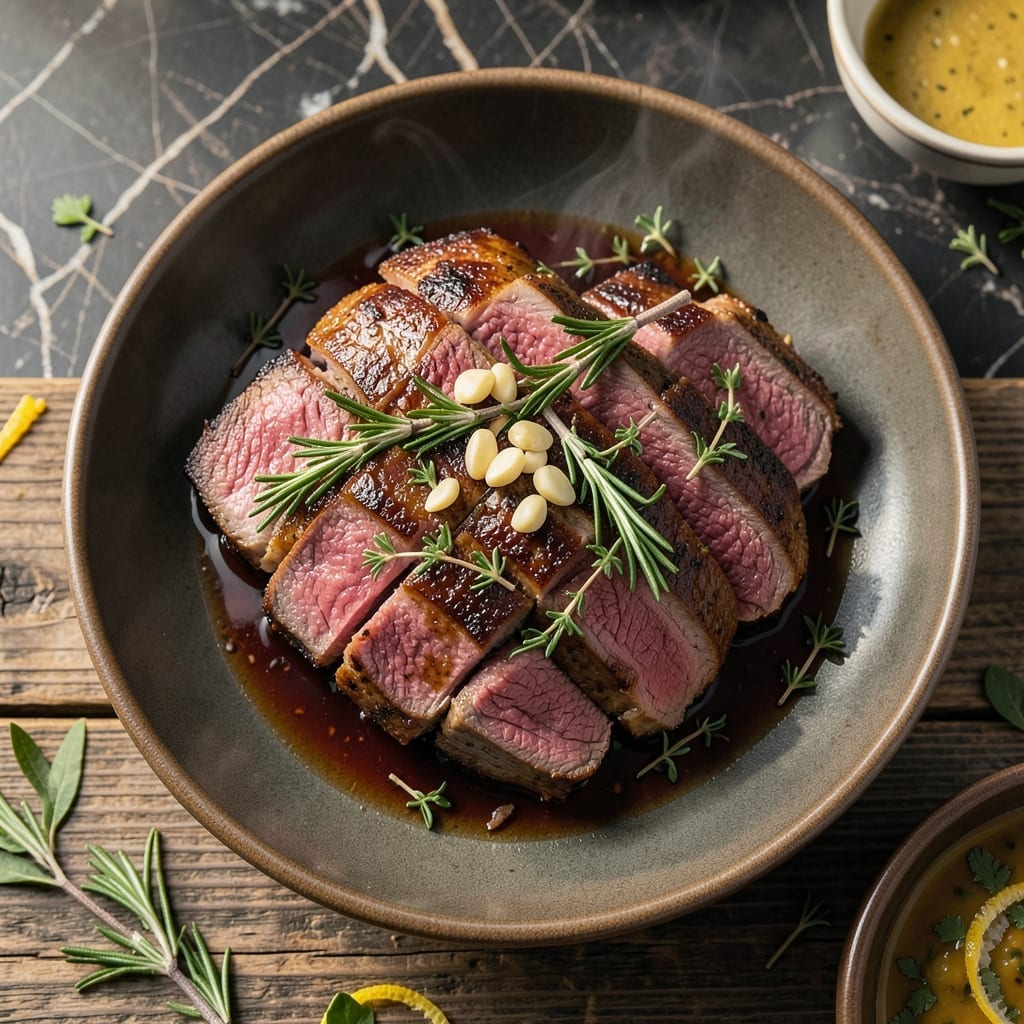
This oven-baked method transforms a budget-friendly cut into a perfectly tender roast with a caramelized crust.
I rely on precise timing and temperature control to achieve succulent results every time, proving that great flavor doesn’t require premium cuts.
Ingredients for Top Sirloin Tip Roast
Transform a budget cut into restaurant-quality roast with these precise ingredients.
| Ingredient | Amount | Notes |
|---|---|---|
| Top Sirloin Tip Roast 🥩 | 2 ½ lb | Trimmed of excess fat |
| Kosher Salt 🧂 | 1 ½ tsp | Diamond Crystal preferred |
| Freshly Ground Black Pepper 🌶️ | 1 tsp | Coarse grind recommended |
| Garlic Cloves 🧄 | 4 cloves | Minced or pressed |
| Fresh Rosemary 🌿 | 2 tbsp | Chopped, stems discarded |
| Fresh Thyme 🍃 | 2 tbsp | Chopped, stems discarded |
| Olive Oil 🫒 | 2 tbsp | Extra-virgin for richness |
| Dijon Mustard 🟡 | 1 tbsp | Smooth, not whole grain |
| Worcestershire Sauce 💧 | 1 tbsp | Lea & Perrins recommended |
| Red Wine Vinegar 🍷 | 1 tbsp | Balances richness |
| Beef Broth 🥣 | ½ cup | Low-sodium preferred |
| Unsalted Butter 🧈 | 2 tbsp | For basting finish |
| Yellow Onion 🧅 | 1 whole | Diced for aroma base |
| Carrots 🥕 | 2 whole | Peeled, cut into chunks |
[recipe_ingredient_scaler]
The roast itself is critical—select top sirloin tip with good marbling for optimal tenderness. Whole Foods or Costco consistently offer high-quality cuts. Avoid pre-cut steaks; a whole roast ensures even cooking. The herbs should be fresh for maximum aromatic impact, though dried can work in a pinch at one-third the quantity.
No fresh rosemary? Dried rosemary at one-third the amount works, but fresh delivers superior depth. Apple cider vinegar can replace red wine vinegar if needed. For the broth, homemade or high-quality boxed brands like Better Than Bouillon yield the best results. The butter for basting can be omitted, but it adds a luxurious finish.
The roast benefits from resting 15-20 minutes before slicing, allowing juices to redistribute. Store leftovers in an airtight container for up to 4 days, or freeze for 3 months (slice before freezing for easy portions).
Why You’ll Love This Recipe
- One roast, three meals: dinner tonight, sandwiches tomorrow, tacos the next day.
- Set It and Forget: I just season, sear, and let the oven do all the work—no babysitting required.
- Garlic-Rosemary Bliss: The garlic cloves and fresh rosemary create a crust so fragrant, it fills the house before the roast even hits the table.
- Feeds My Crew Twice: One roast, three meals: dinner tonight, sandwiches tomorrow, tacos the next day.
Step-by-Step Instructions for Top Sirloin Tip Roast
Achieve restaurant-quality results with this proven technique for oven-baked beef at its best.
Step 1: Prepare the Aromatic Herb Marinade
In a small bowl, whisk together the 2 tbsp Olive Oil, 1 tbsp Dijon Mustard, 1 tbsp Worcestershire Sauce, and 1 tbsp Red Wine Vinegar until fully emulsified. The vinegar will help tenderize the meat while the mustard creates a perfect crust.
Finely chop the 4 cloves Garlic Cloves, 2 tbsp Fresh Rosemary, and 2 tbsp Fresh Thyme and add them to the mixture. I prefer fresh herbs for their vibrant flavor and aroma. Stir in the 1.5 tsp Kosher Salt and 1 tsp Freshly Ground Black Pepper to complete the marinade.
Step 2: Season and Sear the Roast
Pat the 2.5 lb Top Sirloin Tip Roast completely dry with paper towels. This crucial step ensures a proper sear. Coat the roast evenly with the herb marinade, pressing it into all surfaces. Let it marinate at room temperature for 30 minutes while your oven preheats.
Preheat your oven to 450°F. Heat an oven-safe roasting pan or Dutch oven over medium-high heat. Add the 2 whole Carrots and 1 whole Yellow Onion to the pan, then place the marinated roast on top of the vegetables. Sear for 3-4 minutes per side until deeply browned.
Step 3: Roast to Perfection
Transfer the pan to the preheated oven. Roast for 20 minutes at 450°F, then reduce the temperature to 325°F and continue roasting. The initial high heat creates a flavorful crust while the lower temperature ensures even cooking.
After 1 hour of total roasting time, begin checking the internal temperature. For medium-rare, aim for 135°F on an instant-read thermometer. Remember, the temperature will rise 5-10°F during resting. Baste the roast with the 0.5 cup Beef Broth every 20 minutes to keep it moist.
Step 4: Rest and Finish with Butter
When the roast reaches your desired temperature, transfer it to a cutting board and tent loosely with foil. Let it rest for 15-20 minutes before slicing. This resting period allows the juices to redistribute throughout the meat.
While the roast rests, place the vegetables and pan juices back on the stove over medium heat. Stir in the 2 tbsp Unsalted Butter until melted and emulsified with the cooking liquid. This creates a simple but flavorful pan sauce to serve with the roast.
Step 5: Slice and Serve
Slice the roast against the grain into ½-inch thick slices. The grain runs in one direction through the meat, and slicing perpendicular to it ensures each piece is as tender as possible.
Arrange the slices on a platter and spoon the pan sauce and vegetables over the top. The roast should be juicy and pink in the center with a rich, herbaceous crust. Serve immediately while hot, with additional pan sauce on the side if desired.
Pro Tips For Making Top Sirloin Tip Roast
- Dry the Roast: Pat the top sirloin tip roast completely dry with paper towels before seasoning—this is the only way to get that deep brown crust. I learned this the hard way after my first few attempts came out steamed rather than seared.
- Use a Meat Thermometer: Pull the roast at 130°F for medium-rare, not based on time alone. After overcooking a $20 cut, I finally started checking the temp religiously—it actually changes the outcome.
- Crush the Garlic: Smash the garlic cloves with the side of your knife before mincing—more surface area means more flavor. Sounds weird, but it works, especially when paired with the rosemary.
- Let It Rest: Tent the roast with foil and give it a solid 15 minutes before slicing. I skip this when I’m lazy, but the dish is noticeably better when I don’t.
Common Mistakes When Making Perfect Results
Skipping the Dry Pat
I’ve seen many home cooks skip drying the roast before searing, but this is critical. 2.5 lb of wet meat won’t brown properly—it’ll steam instead. Always pat it completely dry with paper towels for that perfect crust. 🔥
Overcrowding the Pan
Using a pan that’s too small causes the roast to steam rather than sear. I recommend a heavy-bottomed roasting pan or Dutch oven with enough space for the 2 whole Carrots and 1 whole Yellow Onion to sit comfortably beneath the meat.
Ignoring the Thermometer
Guessing doneness leads to dry, overcooked meat. Invest in an instant-read thermometer and aim for 135°F for medium-rare. Remember, the temperature will climb 5-10°F during resting, so pull it early.
Skipping the Rest
Slicing too soon causes all those precious juices to spill onto the cutting board. Tent the roast loosely with foil and let it rest for 15-20 minutes. This step is non-negotiable for juicy results.
Uneven Basting
Basting every 20 minutes with 0.5 cup Beef Broth keeps the roast moist and builds flavor. Use a spoon to drizzle the liquid over the top, and don’t forget the sides. This ensures even cooking and a glossy crust.
Slicing With the Grain
Cutting parallel to the muscle fibers makes the meat chewy. Always slice against the grain into ½-inch thick pieces. This shortens the fibers, making every bite tender. Trust me, your guests will notice the difference. ✨
Nutrition Facts
Frequently Asked Questions
What internal temperature should I aim for?
For perfect medium-rare, remove the roast at 135°F. The temperature will rise to 140-145°F during resting. Use an instant-read thermometer for accuracy.
How long should it rest before slicing?
Let it rest for 15-20 minutes tented with foil. This allows juices to redistribute, ensuring each slice stays moist and flavorful.
Can I use dried herbs instead of fresh?
Yes, but use one-third the amount. Dried herbs are more concentrated, so 2 tsp dried rosemary replaces 2 tbsp fresh. Fresh delivers better flavor though.
Why does my roast turn out tough?
Overcooking or slicing too soon are common culprits. Always pull at 135°F and rest before slicing against the grain for tenderness.

Trained in classic French technique but raised on slow-cooked ribs and spicy rubs, she blends culinary skill with smoke and soul.
- Recipe for Boneless Pork Chops in Cast Iron Skillet: Sear and Baste to Juicy Perfection - October 3, 2026
- Recipe for Boneless Cross Rib Roast: Slow-Roasted Beef with Herb Crust - October 3, 2026
- Hamburgers in Sauce Recipe Crock Pot: Slow-Cooked Savory Delight - October 3, 2026