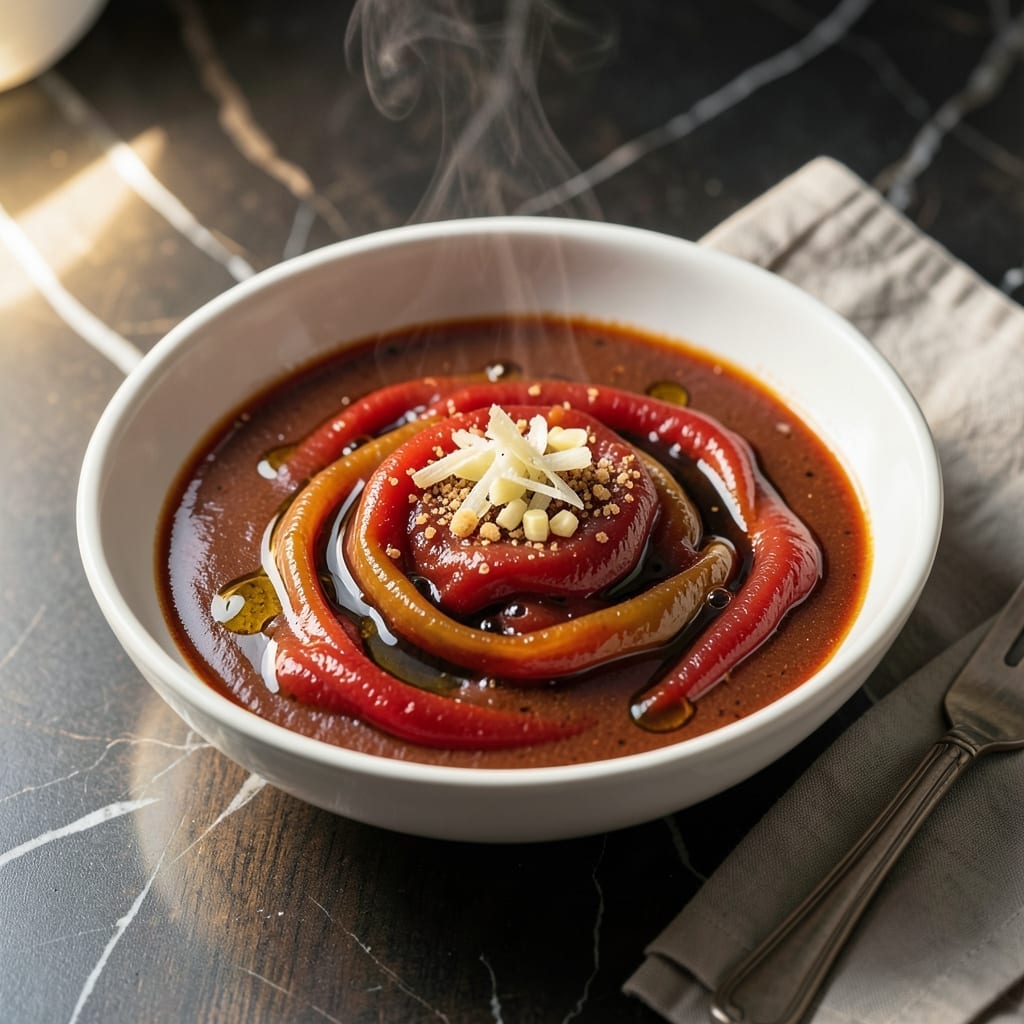
This Chinese red sauce brings restaurant-quality flavor to your stir-fries with minimal effort. The balanced sweetness and umami depth transform simple ingredients into something extraordinary.
I developed this version after testing countless combinations, focusing on achieving that perfect glossy texture and complex taste profile. The sauce thickens beautifully while maintaining its vibrant red color.
What sets this apart is the careful balance of sweet, tangy, and savory elements. Each component plays a crucial role in creating that signature flavor that coats every noodle or piece of protein perfectly.
Store extras in the fridge for up to a week, or freeze for longer preservation. This versatile sauce works with chicken, beef, or vegetables.
Ingredients for Chinese Red Sauce
Nine ingredients create that glossy, restaurant-quality sauce with perfect umami balance.
| Ingredient | Amount | Notes |
|---|---|---|
| Tomato Paste 🍅 | ¼ cup | For deep red color base |
| Soy Sauce 🫒 | ¼ cup | Low-sodium preferred for balance |
| Rice Vinegar 🧂 | 2 tbsp | Adds bright tanginess |
| Brown Sugar 🥄 | 2 tbsp | Balances acidity and salt |
| Hoisin Sauce 🍯 | 2 tbsp | Essential for umami depth |
| Sesame Oil 🫒 | 1 tbsp | Toasted variety for nutty aroma |
| Garlic Cloves 🧄 | 3 cloves | Minced for maximum flavor |
| Fresh Ginger 🌿 | 1 tbsp | Finely grated for zing |
| Red Pepper Flakes 🌶️ | ½ tsp | Adjust for heat preference |
| Cornstarch 🌾 | 1 tbsp | Mixed with water to thicken |
[recipe_ingredient_scaler]
The hoisin sauce is non-negotiable—it delivers that signature depth you taste in takeout. Kikkoman hoisin is my go-to (find it in the Asian aisle at Walmart or any Asian market). Tomato paste from a can is fine, but San Marzano double-concentrate gives you a richer red color. For the soy sauce, I prefer Pearl River Bridge or Lee Kum Kee over the mass-market brands.
No hoisin? Oyster sauce with a pinch of five-spice powder gets you close, though it’s not identical. Brown sugar can be swapped for regular white sugar plus molasses (1 tbsp molasses per 1/4 cup sugar). Out of rice vinegar? Apple cider vinegar at half the amount works in a pinch. The cornstarch slurry is key for that glossy finish—don’t skip it (or use arrowroot if that’s what you’ve got).
Sauce keeps beautifully in the fridge for 7-10 days in a sealed jar. Freeze in ice cube trays for 3 months—perfect for quick weeknight stir-fries. The ginger and garlic can be prepped ahead (store in oil for 1 week).
Why You’ll Love This Recipe
- Five Minute Mix: I dump all the ingredients—tomato paste, hoisin, a splash of rice vinegar—in one bowl and stir. Honestly, that’s it.
- Sweet-Savory Balance: The brown sugar caramelizes with the soy sauce, giving it that sticky, finger-licking depth.
- Stretches for Days: One batch covers stir-fries, dumplings, even meatballs. I’ll be real: I triple it and freeze the rest.
- Pantry Hero: Every ingredient lives in my cabinet already. No last-minute grocery runs, just dinner on the table.
Step-by-Step Instructions for Chinese Red Sauce
This sauce comes together quickly with techniques that maximize flavor depth and texture.
Step 1: Bloom Aromatics in Sesame Oil
Heat 1 tbsp sesame oil in a saucepan over medium heat until it shimmers. Add 3 cloves garlic cloves (minced) and 1 tbsp fresh ginger (finely grated). Stir constantly for 30 seconds until fragrant but not browned—this releases their essential oils.
I keep the heat moderate here because burned garlic turns bitter. You want the aromatics to sizzle gently, filling your kitchen with that warm, spiced scent. The sesame oil’s nutty aroma will deepen as it heats, creating the perfect base for your sauce.
Step 2: Combine Wet Ingredients and Sweeteners
Add 0.25 cup tomato paste, 0.25 cup soy sauce, 2 tbsp rice vinegar, 2 tbsp hoisin sauce, and 2 tbsp brown sugar. Whisk vigorously to combine, breaking up any clumps in the tomato paste. The mixture will darken and thicken slightly as the sugar dissolves.
Let this simmer for 2-3 minutes until it reaches a gentle bubble. The soy sauce and hoisin will meld into a deep, savory base, while the rice vinegar cuts through with a bright tang. The brown sugar balances everything with a subtle sweetness.
Step 3: Add Heat and Thicken
Stir in 0.5 tsp red pepper flakes and let it simmer for another 1 minute to infuse the sauce with a mild heat. The flakes will release their oils, adding a gentle spiciness that lingers without overwhelming the other flavors.
In a small bowl, mix 1 tbsp cornstarch with 2 tbsp cold water to create a slurry. Slowly pour this into the sauce while whisking constantly. The sauce will thicken noticeably within 30-60 seconds, coating the back of a spoon.
Continue simmering for 1-2 minutes until the sauce reaches your desired consistency—it should be glossy and cling to a spoon without dripping off immediately. If it thickens too much, whisk in a splash of water to loosen it slightly.
Step 4: Finish and Adjust
Remove the sauce from heat and let it sit for 2 minutes. This allows the flavors to meld and the sauce to settle into its final texture. Taste and adjust seasoning if needed, though the balance of sweet, tangy, and umami should already be spot-on.
I always check the consistency one last time here. If it’s too thin, return it to the heat and add another slurry of ½ tbsp cornstarch and water. The sauce should be rich and velvety, perfect for clinging to noodles or proteins in a stir-fry.
Pro Tips For Making Chinese Red Sauce
- Bloom the Paste: Cook the tomato paste for 2-3 minutes in oil before adding liquids—this deepens the flavor and removes the raw taste.
- Balance the Vinegar: Add the rice vinegar last and taste as you go; it brightens the sauce but can overpower if added too early.
- Skip the Sugary Overload: Brown sugar caramelizes fast, so start with half what you think you need—you can always adjust later.
- Use Fresh Hoisin: Check the date on your hoisin sauce; old or dried-out hoisin loses its depth and can make the sauce taste flat.
Essential Equipment for This Dish
Small Saucepan
Use a 2-quart saucepan with a heavy bottom for even heat distribution. I prefer All-Clad stainless steel because it responds quickly to temperature changes. A nonstick pan works too, but avoid cast iron as the acidity may react with the metal. 🔥
Whisk
A balloon whisk helps break up tomato paste clumps and blend the cornstarch slurry smoothly. I keep a 10-inch OXO whisk in my sauce drawer—perfect for sauces. The wide surface area covers the pan efficiently.
Measuring Tools
Precise measurements matter for balanced flavors. Use a 1-tbsp measure for hoisin and vinegar, and a ¼-cup measure for tomato paste. I love OXO Good Grips measuring spoons and cups for their magnetic storage.
Fine Grater
For the ginger, a Microplane creates a fine, even paste that incorporates seamlessly into the sauce. Avoid pre-ground ginger—it lacks the fresh, zesty brightness. I keep mine in a drawer near my cutting board for easy access.
Glass Jars for Storage
Store extras in 16-oz mason jars or similar airtight glass containers. The glass won’t absorb odors and lets you see the vibrant red color. I label mine with masking tape and a date for easy tracking. ❄️
Immersion Blender
For ultra-smooth texture, I sometimes blend the finished sauce with my Bamix immersion blender. This helps emulsify the ingredients for a restaurant-quality finish. Just pulse it a few times—over-blending can make it too thin.
Nutrition Facts
Frequently Asked Questions
What can I use if I don’t have hoisin sauce?
Substitute with 1 tbsp oyster sauce plus ½ tsp five-spice powder. It won’t be identical but delivers similar depth. Avoid skipping this entirely—it’s key for authentic flavor.
How do I adjust the thickness?
For thicker sauce, mix ½ tbsp cornstarch with 1 tbsp cold water and whisk in while simmering. To thin, add warm water 1 tbsp at a time.
Can I make this ahead of time?
Yes! It keeps for 7-10 days refrigerated in an airtight container. For longer storage, freeze in ice cube trays for 3 months.
Why is my sauce bitter?
Burned garlic or over-reduced tomato paste causes bitterness. Always cook aromatics on medium heat and stir constantly. Balance with a pinch of sugar if needed.

Trained in classic French technique but raised on slow-cooked ribs and spicy rubs, she blends culinary skill with smoke and soul.
- Recipe for Boneless Pork Chops in Cast Iron Skillet: Sear and Baste to Juicy Perfection - October 3, 2026
- Recipe for Boneless Cross Rib Roast: Slow-Roasted Beef with Herb Crust - October 3, 2026
- Hamburgers in Sauce Recipe Crock Pot: Slow-Cooked Savory Delight - October 3, 2026