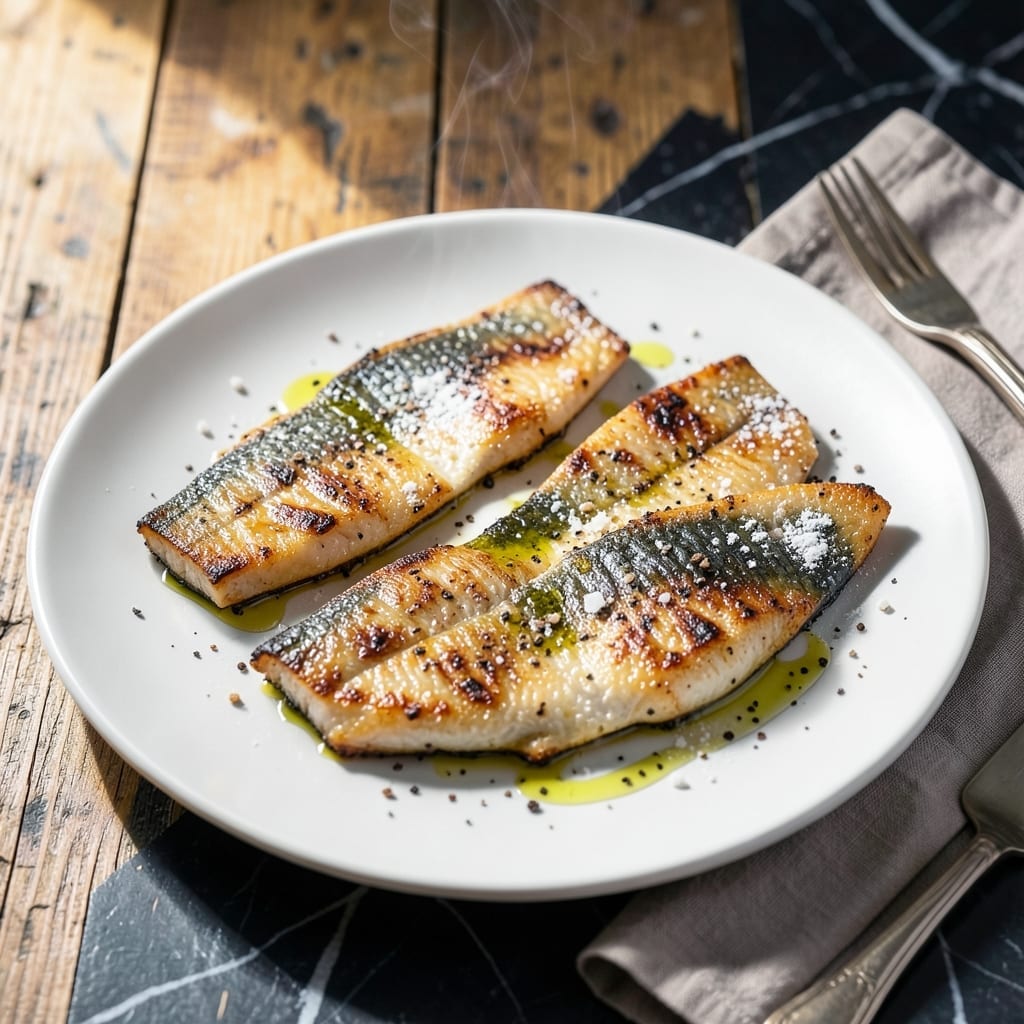
Achieving crispy skin and flaky white flesh with spotted bass requires precision and respect for the fish’s natural delicate texture. This method transforms a simple catch into a restaurant-worthy dish.
The key is a hot pan and dry skin—patience ensures the exterior crisps without the flesh drying out. I learned this technique while perfecting my French training on coastal catches, balancing heat and timing.
You’ll end up with bass that flakes effortlessly at the touch of a fork, each bite offering the perfect contrast of textures. The skin stays shatteringly crisp, while the meat remains tender and moist.
Serve immediately for the best experience, as the skin loses its crispness quickly. Here’s how to master this dish.
Ingredients for Spotted Bass
A handful of quality ingredients highlight the natural elegance of this coastal favorite.
| Ingredient | Amount | Notes |
|---|---|---|
| Spotted Bass Fillets 🐟 | 4 whole | Skin-on, about 6 oz each |
| Kosher Salt 🧂 | 1 ½ tsp | Diamond Crystal preferred for even seasoning |
| Freshly Ground Black Pepper 🌶️ | ½ tsp | Coarse grind for texture |
| All-Purpose Flour 🌾 | ½ cup | For light dredging of skin |
| Unsalted Butter 🧈 | 3 tbsp | Divided for pan and basting |
| Extra-Virgin Olive Oil 🫒 | 2 tbsp | High smoke point for searing |
| Fresh Lemon 🍋 | 1 whole | Zested and juiced for brightness |
| Fresh Thyme Sprigs 🌿 | 4 whole | Stems removed, leaves chopped |
| Garlic Cloves 🧄 | 2 cloves | Minced for aromatic base |
| Shallot 🧅 | 1 whole | Finely diced for subtle sweetness |
| Dry White Wine 🍷 | ¼ cup | Sauvignon Blanc or Pinot Grigio |
| Fresh Parsley 🌿 | ¼ cup | Roughly chopped for garnish |
[recipe_ingredient_scaler]
The bass is the star—ask your fishmonger for skin-on fillets and use them within 24 hours for peak freshness. Look for firm, translucent flesh with a mild ocean scent. Whole Foods or a trusted local seafood market are your best bets. The skin should be dry before cooking (pat it thoroughly), which is non-negotiable for achieving that shatteringly crisp texture mentioned in the intro.
No white wine? Substitute with dry vermouth or a splash of chicken stock with a squeeze of lemon. Fresh thyme can be swapped for rosemary or tarragon at a 1:1 ratio. If shallots aren’t on hand, red onion at half the amount works in a pinch. For the flour, rice flour produces an even crispier skin if you’re feeling experimental (and it’s gluten-free).
Cook and serve immediately—crispy skin waits for no one. Leftovers? They’ll keep for 1 day in the fridge, but the skin will soften. Reheat gently in a dry pan to revive some texture. Never microwave (the horror).
Why You’ll Love This Recipe
- One Pan Wonder: I love that this only dirties one skillet—just flour, butter, and bass, and dinner’s ready.
- Crispy Perfection: The flour crust fries up golden in butter, with the fish staying tender inside. Honestly, it’s the simplest way to get that restaurant-quality bite.
- Weeknight Hero: Between us, this is my go-to when I need something fast but impressive for family dinner.
- Budget-Friendly Feast: Spotted bass is often cheaper than other fillets, yet it tastes rich and buttery with just salt, pepper, and a little flour.
Step-by-Step Instructions for Spotted Bass
Here’s the method I use to get that perfect crispy skin and tender flakes every time.
Step 1: Season and Dredge the Fillets
Pat the 4 whole Spotted Bass Fillets completely dry with paper towels—this is crucial for crispy skin. Season both sides evenly with the 1.5 tsp Kosher Salt and 0.5 tsp Freshly Ground Black Pepper, pressing the seasoning into the flesh so it adheres well.
Lightly dredge the skin side only in the 0.5 cup All-Purpose Flour, shaking off any excess. The flour creates a barrier that prevents the skin from sticking and promotes even browning. I use a light hand here—too much flour and you’ll end up with a pasty coating rather than a crispy crust.
Step 2: Sear the Fillets to Golden Perfection
Heat the 2 tbsp Extra-Virgin Olive Oil in a large skillet over medium-high heat until it shimmers but doesn’t smoke. Carefully place the fillets in the pan, skin-side down, pressing gently with a fish spatula for the first 10 seconds to prevent curling.
Cook undisturbed for 4-5 minutes until the skin is golden brown and crisp. You’ll see the edges of the fillets turn opaque and the skin release easily from the pan when it’s ready to flip. Don’t rush this step—patience ensures that perfect crunch.
Flip and cook for another 2-3 minutes until the flesh flakes easily with a fork.
Step 3: Build the Aromatic Pan Sauce
Transfer the fillets to a warm plate, skin-side up, and tent with foil to keep warm. Reduce the heat to medium and add 1 tbsp of the 3 tbsp Unsalted Butter to the same skillet along with the finely diced 1 whole Shallot.
Cook for 2 minutes until the shallot softens, then add the minced 2 cloves Garlic Cloves and the chopped leaves from the 4 whole Fresh Thyme Sprigs. Stir constantly for 30 seconds until fragrant—don’t let the garlic brown or it will turn bitter.
Pour in the 0.25 cup Dry White Wine and scrape up all those delicious browned bits from the bottom of the pan. Let it simmer for 2-3 minutes until the liquid reduces by half.
Step 4: Finish with Butter and Lemon
Reduce heat to low and whisk in the remaining 2 tbsp of the 3 tbsp Unsalted Butter, one tablespoon at a time, until the sauce is smooth and slightly thickened. Squeeze in the juice from the 1 whole Fresh Lemon and stir to combine.
Return the fillets to the pan, skin-side up, and spoon the sauce over them. Let them warm through in the sauce for 1-2 minutes—this is just enough time for the flavors to meld without overcooking the fish.
Step 5: Garnish and Serve Immediately
Transfer the fillets to individual plates and spoon the remaining sauce over the top. Garnish with the 0.25 cup Fresh Parsley, roughly chopped, for a pop of color and freshness. Serve immediately—the skin stays crispy for only a few minutes after cooking.
The fish should flake easily at the touch of a fork, with a perfectly crisp exterior and moist, tender flesh underneath. The bright, herby sauce complements the rich, buttery bass beautifully.
Pro Tips For Making Spotted Bass
- Pat Fillets Dry: I learned this the hard way—moisture on the surface steams the fish instead of searing it. Press the fillets between paper towels for 30 seconds before seasoning.
- Hot Pan, Cold Butter: Start with a screaming hot pan to get that golden crust, then add cold butter right before flipping to baste the fish without burning it.
- Season Flour Generously: Mix about 1 teaspoon of kosher salt and ½ teaspoon of black pepper into the flour before dredging—this guarantees even seasoning and a flavorful crust.
- Don’t Overcrowd the Pan: After burning three batches, I finally figured out that cooking more than two fillets at once drops the pan temp too much, leading to soggy fish.
Storing and Reheating This Recipe
Refrigerator Storage
This dish is best enjoyed fresh, but if you must store leftovers, let them cool completely before refrigerating. Place fillets in an airtight container with a paper towel to absorb moisture. They’ll keep for 1 day at 40°F or below. ❄️
Reheating on Stovetop
Gently warm leftovers in a dry skillet over medium-low heat for 2-3 minutes per side. This method helps revive some of the skin’s crispness. Avoid high heat, which can dry out the delicate flesh.
Microwave Reheating
If you’re in a pinch, microwave on 50% power in 30-second intervals, checking between each. Cover with a damp paper towel to retain moisture. Honestly, I avoid this method—it’s just not the same.
Freezing Not Recommended
Spotted bass doesn’t freeze well—the texture degrades significantly. If you must, wrap fillets tightly in plastic wrap and foil, then freeze for up to 1 month. Thaw overnight in the fridge before reheating.
Sauce Storage Tip
Store any leftover pan sauce separately in a small jar. It’ll keep for 2 days in the fridge. Reheat gently in a saucepan, then drizzle over reheated fillets for a fresh finish.
Nutrition Facts
Frequently Asked Questions
How do I prevent the skin from sticking to the pan?
Pat the skin completely dry and let the pan get ripping hot before adding the fillets. Don’t move them for at least 4 minutes to form a crisp crust.
Can I substitute another type of fish?
Yes! Try branzino, sea bass, or trout using the same method. Adjust cooking time slightly for thinner or thicker fillets.
What if my sauce breaks or separates?
Lower the heat and whisk vigorously. If needed, add a splash of cold water or lemon juice to bring it back together.
Is it safe to eat undercooked spotted bass?
No. Cook until the flesh reaches 145°F internally and flakes easily. Undercooked fish poses health risks.

Trained in classic French technique but raised on slow-cooked ribs and spicy rubs, she blends culinary skill with smoke and soul.
- Recipe for Boneless Pork Chops in Cast Iron Skillet: Sear and Baste to Juicy Perfection - October 3, 2026
- Recipe for Boneless Cross Rib Roast: Slow-Roasted Beef with Herb Crust - October 3, 2026
- Hamburgers in Sauce Recipe Crock Pot: Slow-Cooked Savory Delight - October 3, 2026