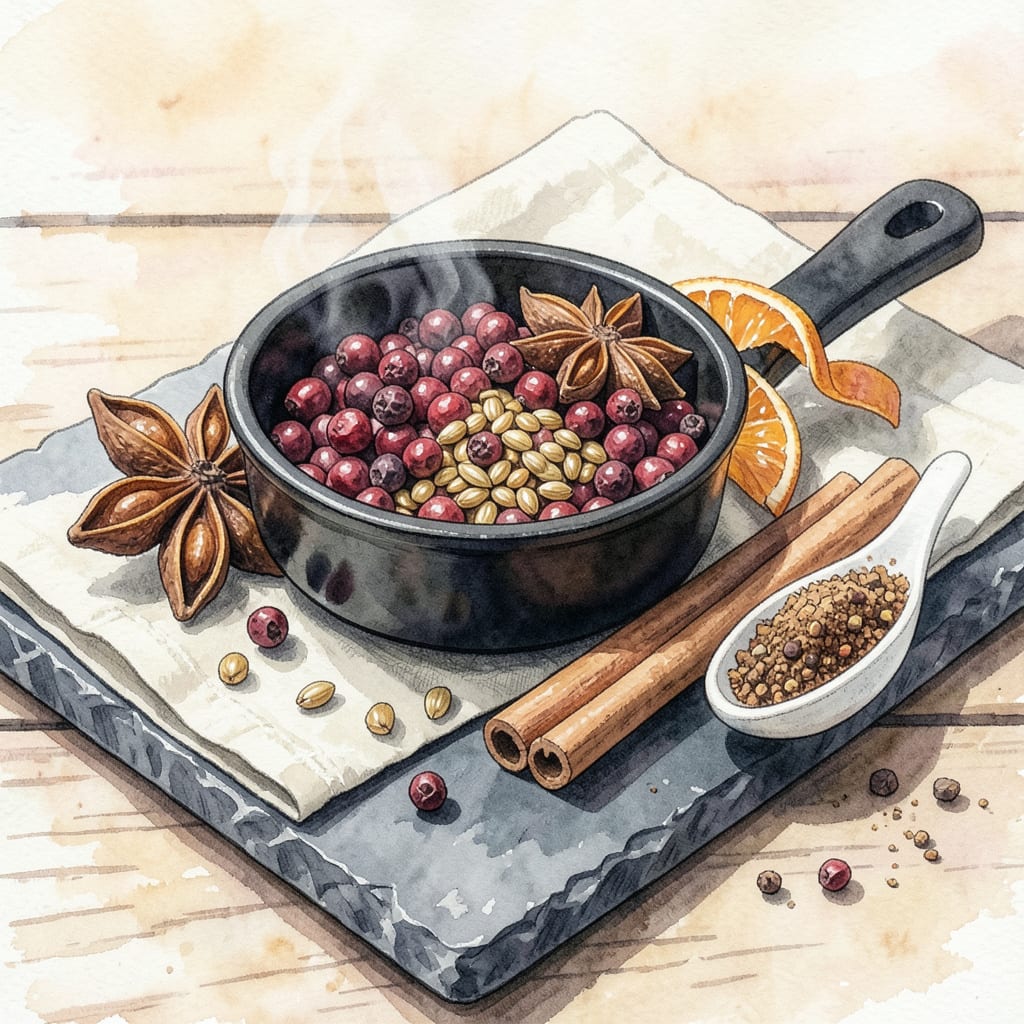
This umami-packed Chinese seasoning blend transforms ordinary dishes into restaurant-quality creations. Developed through years of testing traditional spice ratios, it captures the complex balance of sweet, savory, and aromatic flavors that define authentic Chinese cooking. The carefully selected spices create depth without overpowering your main ingredients.
Keep this versatile mix in an airtight container for up to six months, ready to elevate stir-fries, marinades, or roasted meats. A single tablespoon enhances vegetables, tofu, or proteins with authentic Chinese flavor – no complicated recipes required. The precise spice combination ensures consistent results every time you cook.
Ingredients for Chinese Seasoning
Nine carefully balanced ingredients that’ll make your stir-fries taste like takeout—no mystery packets needed.
| Ingredient | Amount | Notes |
|---|---|---|
| Sichuan Peppercorns 🌶️ | 1 tbsp | Lightly toasted, then ground |
| Five-Spice Powder 🌿 | 2 tbsp | High-quality blend preferred |
| Dried Mandarin Orange Peel 🍊 | 1 tbsp | Finely minced (or powdered) |
| Star Anise Pods 🌟 | 2 whole | Ground to fine powder |
| Cassia Cinnamon 🌿 | 1 tsp | Freshly ground for potency |
| Fennel Seeds 🌱 | 1 tsp | Lightly toasted before grinding |
| White Pepper 🌶️ | 2 tsp | Freshly ground for best flavor |
| MSG (Monosodium Glutamate) 🧂 | 1 tsp | Optional but recommended for umami |
| Demerara Sugar 🍚 | 1 tbsp | Coarse texture preferred |
[recipe_ingredient_scaler]
The Sichuan peppercorns and star anise are non-negotiable for that authentic numbing-spicy vibe. Hunt them down at Asian markets or Penzeys—skip the sad grocery store ‘Chinese spice’ section. Freshness matters here, so buy whole spices and grind them yourself (a cheap coffee grinder works great). The dried mandarin peel is the secret weapon—look for it in bulk bins or order from The Mala Market (worth it).
No five-spice powder? Make your own with equal parts cinnamon, cloves, fennel, star anise, and pepper—but honestly, just buy it. MSG haters, I get it, but this blend needs that umami punch (try half the amount first). Swap demerara for brown sugar if needed, but the coarse crystals add texture. White pepper is key—black pepper won’t cut it for that authentic flavor.
Store this in a dark glass jar (light kills spices fast) and it’ll stay potent for the full 6 months. Double the batch—you’ll use it more than you think. Pro tip: toast the spices before grinding for extra depth (30 seconds in a dry pan, until fragrant).
Why You’ll Love This Recipe
- No Blender Needed: I just toast the spices in a dry pan, grind them with a mortar and pestle (or a rolling pin in a pinch), and boom—homemade magic. No fancy equipment, no fuss.
- That Tingling Heat: Here’s what sold me—the Sichuan peppercorns give this numbing, citrusy buzz that makes every bite exciting. Paired with the warm cassia cinnamon and star anise? Ridiculously good.
- Stir-Fry to Soup: I’ve used this in everything from crispy roasted duck to a quick weeknight broth. Honestly, it’s my secret weapon for making takeout favorites taste *better* than delivery.
Instructions
This blend comes together quickly—just toast, grind, and mix for maximum flavor impact.
Step 1: Toast the Whole Spices
Heat a dry skillet over medium heat. Add the 1 tbsp Sichuan Peppercorns, 2 whole Star Anise Pods, and 1 tsp Fennel Seeds. Toast for 2-3 minutes, stirring constantly, until the spices become fragrant and the Sichuan peppercorns start to darken slightly. You’ll notice the fennel seeds turning golden and the star anise releasing its licorice-like aroma.
Remove from heat immediately and transfer to a plate to cool. This toasting step is crucial—it wakes up the essential oils in the spices and deepens their flavors. Don’t walk away during this process; spices can burn quickly and become bitter.
Step 2: Grind the Spices to Fine Powder
Once cooled, transfer the toasted spices to a spice grinder or mortar and pestle. Add the 1 tsp Cassia Cinnamon and grind until you achieve a fine, even powder. The mixture should look uniform with no large pieces remaining. If using a mortar and pestle, this might take 3-4 minutes of steady grinding.
For the 1 tbsp Dried Mandarin Orange Peel, you have two options: if you’re using whole dried peel, mince it as finely as possible before adding to the grinder. If you’re using powdered peel, simply add it to the other ground spices. The goal is to have all components uniformly fine for even distribution in your cooking.
Step 3: Combine All Ingredients
In a medium bowl, combine your freshly ground spice mixture with the remaining ingredients: 2 tbsp Five-Spice Powder, 2 tsp White Pepper, 1 tsp MSG (Monosodium Glutamate), and 1 tbsp Demerara Sugar. The Demerara sugar will add a subtle caramel note and help balance the blend’s intensity.
Use a whisk to thoroughly blend all components. The mixture should be uniform in color—a rich, warm brown with no visible sugar crystals. Taste a tiny pinch (be cautious with the Sichuan peppercorns—they’re potent!) to check the balance. You should detect layers of warmth, citrus, and umami with a slight numbing sensation from the Sichuan pepper.
Step 4: Store for Maximum Freshness
Transfer the completed seasoning blend to an airtight container. I prefer glass jars with tight-fitting lids to preserve the volatile aromatic compounds. Store in a cool, dark place away from direct sunlight or heat sources. Properly stored, this blend will maintain its potency for up to 3 months, though I find it’s at its peak within the first 6 weeks.
Before each use, give the jar a good shake to redistribute any settled ingredients. The coarse Demerara sugar may separate slightly, but this is normal. When cooking, remember that this is a concentrated blend—start with ½ to 1 teaspoon per pound of meat or vegetables and adjust to taste.
Storing and Reheating This Recipe
Short-Term Storage
For daily use, keep your Chinese seasoning in a small glass jar with an airtight lid—I love the 4-ounce mason jars from Ball. Store it in your pantry or spice cabinet, away from direct light and heat sources. The blend will stay fresh and potent for up to 3 months this way, though I notice the Sichuan peppercorns lose their signature tingle after about 8 weeks. 🌿
Long-Term Freezing
If you’ve made a double batch, portion out what you won’t use within 2 months and freeze the rest. Use small zip-top bags (press out all air) or vacuum-sealed pouches. Frozen, this blend maintains its complexity for up to 6 months. When ready to use, let it come to room temperature before opening to prevent moisture condensation.
Revival Technique
If your seasoning seems dull after storage, revive it by dry-toasting 1-2 teaspoons in a clean skillet over low heat for 30 seconds. This reawakens the volatile oils. I do this with older batches before using them in marinades—it makes a surprising difference. Just don’t let it smoke or it’ll turn bitter.
Usage After Storage
Remember that stored spices concentrate over time. Start with ½ teaspoon per pound of protein when using older batches, then adjust. I always taste my blend before cooking—if the sugar has absorbed moisture, a quick 10-second pulse in the spice grinder restores the texture. The mandarin peel flavor actually improves with age, becoming more mellow and integrated.
Humidity Protection
In humid climates, add a silica gel packet to your storage container. I learned this trick after a batch clumped during a coastal summer. For extra protection, store the jar inside a resealable plastic bag with the silica packet. Check monthly and replace the packet if it feels saturated—your spices will thank you.
Labeling System
Always label your container with the date made and “Chinese Seasoning”. I use washi tape and a Sharpie—it’s removable when you refill. Include a tiny
Nutrition Facts

Trained in classic French technique but raised on slow-cooked ribs and spicy rubs, she blends culinary skill with smoke and soul.
- Recipe for Boneless Pork Chops in Cast Iron Skillet: Sear and Baste to Juicy Perfection - October 3, 2026
- Recipe for Boneless Cross Rib Roast: Slow-Roasted Beef with Herb Crust - October 3, 2026
- Hamburgers in Sauce Recipe Crock Pot: Slow-Cooked Savory Delight - October 3, 2026