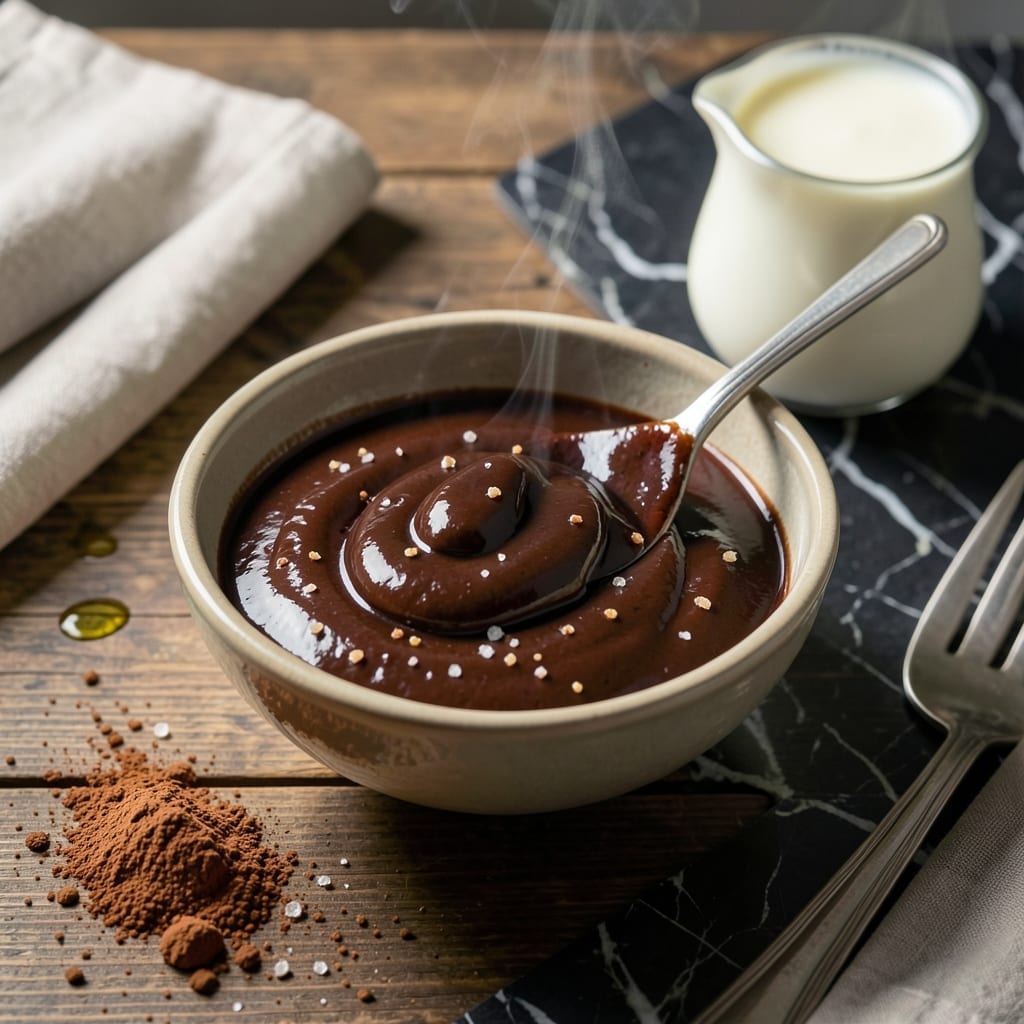
This cocoa powder-based sauce delivers rich chocolate depth with minimal effort. No specialty chocolate required—just pantry staples and a few minutes on the stove.
You’ll achieve a velvety texture and bold flavor that elevates desserts, fruits, or even a warm drink. The process is straightforward and foolproof for consistent results.
Ingredients for Chocolate Sauce Recipe Using Cocoa Powder
Eight pantry staples transform into rich, velvety chocolate sauce with ease.
| Ingredient | Amount | Notes |
|---|---|---|
| Unsweetened Cocoa Powder 🍫 | ½ cup | Dutch-process preferred for smoothness |
| Granulated Sugar 🍚 | ¾ cup | Organic or regular fine grain |
| Water 💧 | ½ cup | Filtered for best taste |
| Coconut Oil 🥥 | 2 tbsp | Melted, or sub vegan butter |
| Vanilla Extract 🌿 | 1 tsp | Pure vanilla for depth |
| Salt 🧂 | ¼ tsp | Fine sea salt enhances flavor |
| Maple Syrup 🍁 | 1 tbsp | Adds natural sweetness balance |
| Espresso Powder ☕ | ½ tsp | Optional, deepens chocolate notes |
[recipe_ingredient_scaler]
The cocoa powder is doing most of the heavy lifting here. Hershey’s Special Dark or Ghirardelli Dutch-process give you that smooth, deep flavor without bitterness. I grab mine from Target or Whole Foods—bulk bins are great if you go through it fast. The sugar matters too; organic granulated has a slightly cleaner taste, but regular works fine (just avoid powdered).
No coconut oil? Melted vegan butter or neutral oil (like avocado) works fine. Want it richer? Swap the water for coconut milk at half the amount. Espresso powder isn’t mandatory, but a pinch intensifies the chocolate like magic. Skip the vanilla if you’re out—just add a tiny bit more sugar to compensate.
This keeps in the fridge for 2 weeks in a sealed jar. Reheat in the microwave in 10-second bursts, stirring between each. Or freeze for 3 months—perfect for spontaneous dessert cravings.
Why You’ll Love This Recipe
- 5-Minute Magic: I can make this between stirring dinner and setting the table—just cocoa, sugar, water, and a quick stir.
- Rich Without Guilt: The cocoa powder gives it that deep chocolate punch without the heaviness of melted bars.
- Drizzle on Everything: Honestly, I’ve used it on ice cream, fruit, even toast. It’s my secret weapon for making dessert feel special.
- Pantry Stable: Between us, I keep the ingredients on hand always, so I’m never more than 5 minutes away from warm chocolate sauce.
Step-by-Step Instructions for Chocolate Sauce Using Cocoa Powder
This method delivers silky, restaurant-quality sauce with minimal effort and maximum flavor.
Step 1: Combine Dry Ingredients for Smooth Foundation
In a medium saucepan, whisk together the 0.5 cup Unsweetened Cocoa Powder, 0.75 cup Granulated Sugar, and 0.25 tsp Salt until fully combined and no lumps remain. I always use Dutch-process cocoa here for its smoother, more mellow flavor profile.
The salt might seem like a small amount, but it’s crucial for balancing the sweetness and enhancing the chocolate depth. Make sure your saucepan is completely dry before adding these ingredients—any moisture will cause the cocoa to clump.
Step 2: Create the Liquid Base and Bloom Flavors
Gradually pour in the 0.5 cup Water while whisking constantly to create a smooth paste. Then add the 1 tbsp Maple Syrup and 0.5 tsp Espresso Powder. The espresso won’t make it taste like coffee—it just amplifies the chocolate flavor, similar to how a pinch of salt makes sweet things taste sweeter.
Place the saucepan over medium heat and stir frequently as it warms. You’ll notice the mixture start to loosen as the sugar dissolves. This is where the magic begins—the cocoa starts to bloom, releasing its full aromatic potential.
Step 3: Incorporate Fats for Luxurious Texture
Once the mixture begins to gently simmer (you’ll see small bubbles forming at the edges), reduce heat to low and add the 2 tbsp Coconut Oil. I prefer to use refined coconut oil here as it has a neutral flavor that won’t compete with the chocolate.
Whisk vigorously until the coconut oil is fully melted and incorporated. The sauce will transform from a matte finish to a glossy sheen. This is your visual cue that the fats have emulsified properly. Continue cooking for 1-2 minutes, stirring constantly.
Step 4: Finish with Vanilla and Perfect Consistency
Remove the saucepan from heat and stir in the 1 tsp Vanilla Extract. The residual heat will gently warm the vanilla, releasing its aromatic compounds without cooking off the delicate flavors.
Let the sauce cool for 2-3 minutes—it will thicken slightly as it cools. For a thinner sauce, you can add a teaspoon of hot water and stir until smooth. The final texture should coat the back of a spoon but still pour easily. Taste and adjust seasoning if needed, though with these proportions, it should be perfectly balanced.
Pro Tips For Making Chocolate Sauce Recipe Using Cocoa Powder
- Whisk Out Lumps: Mix the cocoa powder with water first using a whisk—this breaks up clumps before adding sugar, which I learned the hard way after fishing out chocolate chunks from my sauce.
- Low and Slow: Keep the heat at medium-low and stir constantly; cocoa powder burns easily, and I’ve ruined two batches by cranking it up to speed things along.
- Use Fine Sugar: Granulated sugar dissolves faster than coarse varieties, so stick with the standard kind to avoid a grainy texture in your sauce.
- Add Oil Last: Stir in the coconut oil after removing from heat—adding it too early can cause separation, and nobody wants a greasy chocolate puddle.
Dietary Considerations for These Flavors
Keto-Friendly Options
For a keto-friendly chocolate sauce, replace sugar with a low-carb sweetener like erythritol or monk fruit. These alternatives maintain sweetness without spiking blood sugar. Use heavy cream or coconut milk instead of regular milk to keep the carb count low while adding richness.
Gluten-Free
This cocoa powder-based sauce is naturally gluten-free if you ensure all ingredients, including cocoa and sweeteners, are certified gluten-free. Avoid thickeners like wheat flour, and opt for cornstarch or arrowroot powder if needed.
Allergens
Common allergens in chocolate sauce include dairy and nuts. For a dairy-free version, use almond, oat, or coconut milk and a vegan butter substitute. If nut allergies are a concern, skip nut-based ingredients and check labels for cross-contamination warnings.
Vegetarian Modifications
Most chocolate sauce recipes are vegetarian by default. However, if using add-ins like marshmallows or gelatin, choose vegetarian-friendly alternatives such as agar-agar or plant-based marshmallows to keep the sauce suitable for vegetarians.
Low-Sodium
To reduce sodium, use unsalted butter and omit added salt entirely. If the recipe calls for vanilla extract, opt for a sodium-free version. Taste as you go, and adjust seasoning with other flavor enhancers like cinnamon or espresso powder.
Nutrition Facts

Trained in classic French technique but raised on slow-cooked ribs and spicy rubs, she blends culinary skill with smoke and soul.
- Recipe for Boneless Pork Chops in Cast Iron Skillet: Sear and Baste to Juicy Perfection - October 3, 2026
- Recipe for Boneless Cross Rib Roast: Slow-Roasted Beef with Herb Crust - October 3, 2026
- Hamburgers in Sauce Recipe Crock Pot: Slow-Cooked Savory Delight - October 3, 2026