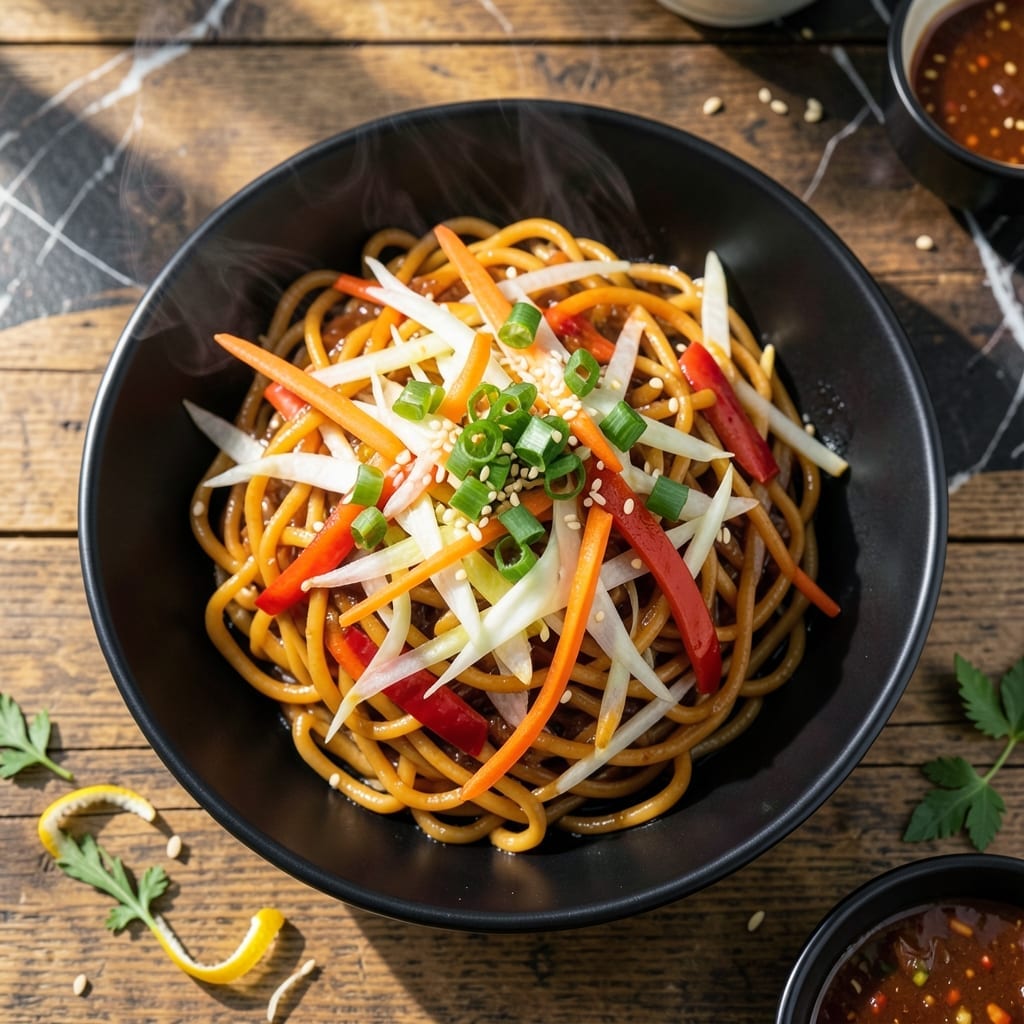
This savory chow mein delivers all the classic flavors without oyster sauce, using a simple soy-based alternative that’s just as rich.
The dish comes together quickly with fresh vegetables, tender noodles, and a perfectly balanced sauce for a restaurant-quality result at home.
Ingredients for Chow Mein Recipe Without Oyster Sauce
Fresh vegetables, tender noodles, and a rich soy-based sauce bring this dish to life.
| Ingredient | Amount | Notes |
|---|---|---|
| Fresh Egg Noodles 🍜 | 12 oz | Or dried noodles, cooked al dente |
| Soy Sauce 🫒 | ⅓ cup | Low-sodium preferred for balance |
| Dark Soy Sauce 🫒 | 1 tbsp | For depth of color and flavor |
| Vegetable Broth 🥕 | ½ cup | Low-sodium or homemade |
| Sesame Oil 🫒 | 1 tbsp | Toasted for nutty aroma |
| Cornstarch 🌾 | 1 tbsp | For thickening the sauce |
| Brown Sugar 🍚 | 1 tbsp | Light or dark, for sweetness |
| Garlic Cloves 🧄 | 4 cloves | Minced finely for even distribution |
| Fresh Ginger Root 🌿 | 1 tbsp | Peeled and grated |
| Napa Cabbage 🥬 | 2 cups | Thinly sliced for texture |
| Carrots 🥕 | 2 whole | Julienned for quick cooking |
| Bell Peppers 🌶️ | 2 whole | Thinly sliced, any color |
| Green Onions 🧅 | 4 whole | Sliced thin, whites and greens separated |
| Bean Sprouts 🌱 | 1 cup | Rinsed and drained well |
| Neutral Cooking Oil 🫒 | 3 tbsp | For stir-frying, high smoke point |
[recipe_ingredient_scaler]
The noodles are the foundation—fresh egg noodles from an Asian market are ideal, but dried works if that’s what you have. Look for low-sodium soy sauce to control the saltiness; Kikkoman or San-J are reliable brands. Dark soy sauce adds depth and color, so don’t skip it. For the vegetables, Napa cabbage and julienned carrots give that classic texture. Most supermarkets carry these in the produce section.
No dark soy sauce? Add a teaspoon of molasses or hoisin for color and richness. Fresh ginger and garlic are non-negotiable for authentic flavor, but pre-minced in a pinch (just use less). Swap bell peppers for snap peas or broccoli if you prefer. The cornstarch slurry is key—mix it with cold water first. For a gluten-free version, tamari instead of soy sauce and rice noodles.
Sauce can be prepped 1 day ahead—store in the fridge. Noodles cook fast, so have all ingredients prepped before heating the wok. Leftovers? They keep 3-4 days in the fridge, though the noodles soften. Reheat in a skillet with a splash of water to revive.
Why You’ll Love This Recipe
- One Pan Wonder: I toss everything in a single wok—fresh egg noodles, soy sauces, and sesame oil—and it’s done before I can even set the table.
- Umami Bomb: The combo of soy sauce and dark soy sauce gives that deep, savory flavor without needing oyster sauce. Honestly, it’s just as rich.
- Feeds a Crowd: I make a big batch on Sunday and pack it for lunches all week. The noodles hold up surprisingly well.
- Budget Friendly: Between us, fresh egg noodles and vegetable broth keep this dish cheap but still restaurant-worthy.
Instructions
Master the wok technique to create perfectly charred noodles with vibrant vegetables and rich sauce.
Step 1: Prepare Sauce and Vegetables
Combine 0.33 cup Soy Sauce, 1 tbsp Dark Soy Sauce, 0.5 cup Vegetable Broth, 1 tbsp Brown Sugar, and 1 tbsp Cornstarch in a small bowl. Whisk until the cornstarch dissolves completely and the mixture appears smooth. This creates the glossy, clinging sauce base.
Meanwhile, slice the 2 cups Napa Cabbage, julienne the 2 whole Carrots, and thinly slice the 2 whole Bell Peppers. Mince the 4 cloves Garlic Cloves and grate the 1 tbsp Fresh Ginger Root. Slice the 4 whole Green Onions, separating whites from greens. Rinse and drain the 1 cup Bean Sprouts thoroughly.
Proper prep ensures even cooking in the hot wok. Keep all ingredients within arm’s reach—stir-frying happens fast and requires immediate access to each component.
Step 2: Par-Cook the Noodles
Bring a large pot of water to a rolling boil. Add the 12 oz Fresh Egg Noodles and cook for 1 minute only. They should remain slightly underdone, as they’ll finish cooking in the wok. Drain immediately in a colander and rinse under cold water to stop the cooking process.
Toss the noodles with 1 tbsp Sesame Oil to prevent sticking. This also adds a subtle nutty aroma that complements the dish. The noodles should glisten but not clump together. Set aside while you cook the vegetables.
Step 3: Stir-Fry the Aromatics and Vegetables
Heat 2 tbsp Neutral Cooking Oil in a wok or large skillet over high heat until shimmering. Add the minced garlic cloves and grated fresh ginger root, stir-frying for 15-20 seconds until fragrant. Immediately add the sliced whites of the green onions and cook for another 30 seconds.
Add the julienned carrots and sliced bell peppers, stir-frying for 2-3 minutes until the vegetables begin to soften but retain their crisp texture. Push the vegetables to one side of the wok, then add the napa cabbage and bean sprouts to the empty space. Cook for 1 minute until the cabbage wilts slightly.
Step 4: Combine Noodles and Sauce
Add the remaining 1 tbsp Neutral Cooking Oil to the wok, then add the par-cooked fresh egg noodles. Toss everything together using tongs, distributing the vegetables evenly throughout the noodles. Cook for 1-2 minutes to allow the noodles to absorb flavors.
Give the sauce mixture a quick stir, then pour it over the noodles in the wok. Continuously toss for 1-2 minutes until the sauce thickens and coats every strand of noodle. The sauce should transform from a thin liquid to a glossy coating that clings to the ingredients.
Step 5: Finish and Serve
Once the noodles are evenly coated and the sauce has thickened, remove from heat. Stir in the sliced green onion greens. The residual heat will soften them slightly while keeping their bright color and fresh flavor.
Serve immediately while hot. The noodles should have a slight char from the wok, vibrant vegetables with a tender-crisp bite, and a rich, savory sauce that pools slightly at the bottom of the serving dish. Each component should maintain its distinct texture while harmonizing with the others.
Pro Tips For Making Chow Mein Recipe Without Oyster Sauce
- Parboil the Noodles: I learned this the hard way—fresh egg noodles need a quick 30-second blanch in boiling water before stir-frying to prevent them from turning to mush or sticking together.
- Balance the Sauces: Use a 2:1 ratio of soy sauce to dark soy sauce for depth without overpowering saltiness; the dark soy adds color and richness without oyster sauce.
- Skip the Overcrowding: After burning three batches, I finally figured out that cooking noodles in small batches over high heat keeps them from steaming into a soggy clump.
- Finish with Sesame Oil: Sounds weird, but it works: drizzle in that sesame oil at the very end, off the heat, so it keeps its fragrant punch instead of burning off.
Dietary Considerations for These Flavors
Keto-Friendly Options
For a keto-friendly version, swap traditional noodles for shirataki noodles or zucchini noodles. These low-carb alternatives keep the dish light while soaking up the savory flavors. Use coconut aminos instead of soy sauce to reduce carbs further.
Gluten-Free Modifications
To make this dish gluten-free, opt for tamari or coconut aminos instead of regular soy sauce. Ensure your noodles are labeled gluten-free, such as rice noodles or chickpea-based options. Always check sauce labels for hidden gluten.
Allergen Considerations
This recipe can easily accommodate common allergies. For nut allergies, avoid adding peanuts or cashews. If egg allergies are a concern, skip the egg noodles and use rice noodles instead. Always verify ingredient labels for cross-contamination warnings.
Vegetarian Modifications
Turn this into a vegetarian delight by replacing meat with tofu, mushrooms, or tempeh. Use vegetarian oyster sauce substitutes like mushroom sauce or hoisin. Load up on veggies like bell peppers, carrots, and cabbage for extra texture and flavor.
Low-Sodium Adjustments
To reduce sodium, use low-sodium soy sauce or coconut aminos. Boost flavor with fresh herbs, garlic, and ginger instead of salt. Rinse canned veggies or noodles to remove excess sodium before cooking.
Nutrition Facts

Trained in classic French technique but raised on slow-cooked ribs and spicy rubs, she blends culinary skill with smoke and soul.
- Recipe for Boneless Pork Chops in Cast Iron Skillet: Sear and Baste to Juicy Perfection - October 3, 2026
- Recipe for Boneless Cross Rib Roast: Slow-Roasted Beef with Herb Crust - October 3, 2026
- Hamburgers in Sauce Recipe Crock Pot: Slow-Cooked Savory Delight - October 3, 2026