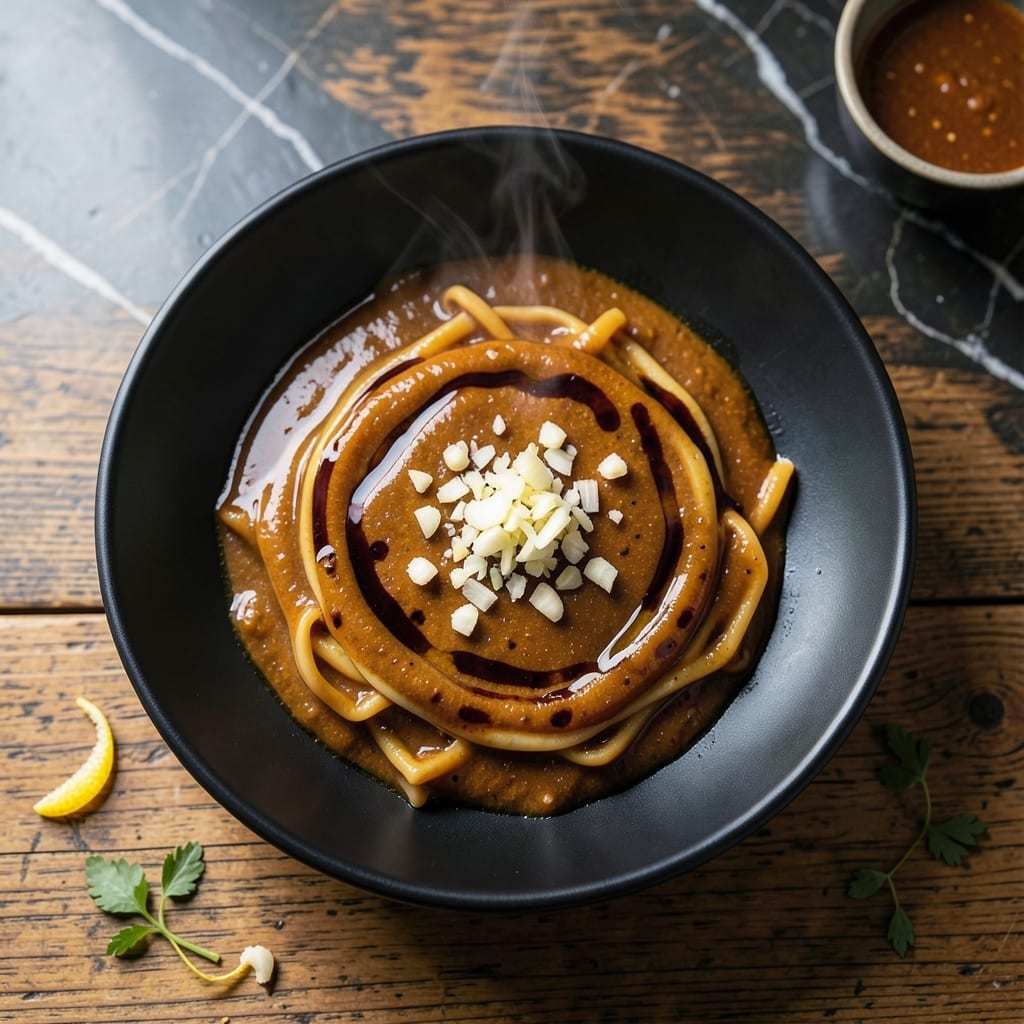
This sauce delivers the savory umami depth of traditional chow mein without oyster sauce. The secret lies in a balanced blend of soy sauce, hoisin, and a touch of rice vinegar for brightness.
It comes together in minutes with pantry staples and keeps well in the fridge for up to a week. Perfect for stir fries, noodles, or as a dipping sauce.
Ingredients for Chow Mein Sauce Recipe Without Oyster Sauce
Pantry staples blend into a rich, savory sauce with authentic depth and balance.
| Ingredient | Amount | Notes |
|---|---|---|
| Low-Sodium Soy Sauce 🥢 | ½ cup | For salty base flavor |
| Hoisin Sauce 🍯 | ¼ cup | Essential for sweet depth |
| Rice Vinegar 🍶 | 2 tbsp | Adds necessary brightness |
| Sesame Oil 🫒 | 1 tbsp | Toasted variety preferred |
| Garlic Cloves 🧄 | 3 cloves | Minced for aromatic base |
| Fresh Ginger 🌿 | 1 tbsp | Grated or minced fine |
| Brown Sugar 🍚 | 1 tbsp | Balances acidity and salt |
| Cornstarch 🌾 | 1 tsp | For slight thickening |
| Water 💧 | 2 tbsp | To dissolve cornstarch |
[recipe_ingredient_scaler]
For the best flavor, Kikkoman low-sodium soy sauce and Koon Chun hoisin are reliable brands available at most supermarkets. The sesame oil should be toasted—look for dark amber color and strong aroma. Whole Foods or Asian markets will have the best selection of these ingredients if your regular store falls short.
No hoisin? Mix equal parts soy sauce and molasses with a pinch of five-spice powder. Out of rice vinegar? Apple cider vinegar at half the amount works, though the flavor profile shifts slightly. Fresh ginger is ideal, but ground ginger at one-fourth the quantity can substitute in a pinch. The brown sugar can be swapped for maple syrup if avoiding refined sugar.
This sauce keeps beautifully in an airtight container for 7-10 days in the fridge. For longer storage, freeze in ice cube trays for up to 3 months. The cornstarch slurry prevents separation, so give it a good stir before using after storage.
Why You’ll Love This Recipe
- 5-Minute Mix: I just dump the soy sauce, hoisin, vinegar, sesame oil, and minced garlic in a bowl and stir. Between us, it’s ready before the noodles finish cooking.
- Garlicky Umami Bomb: The garlic cloves and hoisin give it this deep, savory punch that’s so good I sneak spoonfuls straight from the jar.
- Meal Prep Hero: I make a big batch on Sunday and drizzle it over stir-fries, rice bowls, or even roasted veggies all week.
- Pantry Staples Only: No last-minute grocery runs—just five ingredients I always have on hand. Honestly, it’s saved me on more than one busy night.
Step-by-Step Instructions for Chow Mein Sauce Without Oyster Sauce
This method delivers rich umami flavor with perfectly balanced sweetness and acidity every time.
Step 1: Create the Cornstarch Slurry
In a small bowl, whisk together the 1 tsp Cornstarch and 2 tbsp Water until completely smooth with no visible lumps. This simple mixture will thicken the sauce just enough to cling to your noodles without becoming gluey.
Set the slurry aside while you prepare the remaining ingredients. I always make this first so it’s ready to add at exactly the right moment—timing is everything when building layers of flavor.
Step 2: Bloom the Aromatics
Heat a small saucepan over medium heat. Add the 1 tbsp Sesame Oil, then immediately add the 3 cloves Garlic Cloves and 1 tbsp Fresh Ginger. Stir constantly for 30-45 seconds until the garlic becomes fragrant and just golden—not brown.
Watch carefully and lower the heat if needed. Burnt garlic turns bitter and can ruin the entire sauce. The ginger will soften slightly and release its warm, spicy aroma, signaling it’s ready for the next ingredients.
Step 3: Build the Sauce Base
Add the 0.5 cup Low-Sodium Soy Sauce, 0.25 cup Hoisin Sauce, 2 tbsp Rice Vinegar, and 1 tbsp Brown Sugar to the pan. Stir well to combine all ingredients, then bring to a gentle simmer over medium heat.
Let the mixture simmer for 2-3 minutes. You’ll notice the sauce deepen in color slightly as the flavors begin to meld. The hoisin brings sweet depth, the soy provides the salty foundation, while the rice vinegar adds the essential brightness that balances the richness.
Step 4: Thicken and Finish
Give the cornstarch slurry one more quick whisk, then slowly pour it into the simmering sauce while stirring constantly. Continue stirring for 1-2 minutes until the sauce reaches your desired consistency—it should coat the back of a spoon but still be pourable.
Remove from heat immediately once thickened. The sauce will continue to set slightly as it cools. Taste and adjust seasoning if needed, though the balance should be perfect as written. Use while warm for best results with your stir fry.
Pro Tips For Making Chow Mein Sauce Recipe Without Oyster Sauce
- Bloom the Garlic: Cook minced garlic in sesame oil for 30-45 seconds until fragrant but not brown—I learned this the hard way after bitter, burnt garlic ruined an entire batch.
- Balance the Hoisin: Hoisin can overpower, so start with 1 tablespoon, taste, then add more as needed. It’s stronger than you think, especially without oyster sauce to mellow it.
- Skip the Overcook: Simmer the sauce for just 2-3 minutes after combining ingredients—any longer and the rice vinegar’s tang will dull, leaving your sauce flat.
- Finish with Sesame: Stir in sesame oil at the very end, off heat. Sounds weird, but it works: heating it too long turns the nutty flavor bitter.
Wine and Beer Pairings for This chow mein sauce recipe without oyster sauce
Beer Pairings 🍺
For a chow mein sauce recipe without oyster sauce, light and crisp beers complement the savory, umami-rich flavors beautifully. A Pilsner, like Samuel Adams Noble Pils, offers a clean, slightly citrusy profile that cuts through the sauce’s depth without overpowering it. If you prefer something with a bit more body, a Wheat Beer such as Blue Moon adds a touch of sweetness and spice that pairs well with the dish’s tangy notes.
Wine Pairings 🍷
White wines with bright acidity are ideal for balancing the rich, salty-sweet flavors of this sauce. A crisp Riesling, like Dr. Loosen Blue Slate, brings a hint of apple and peach that enhances the dish’s vibrant taste. For red wine lovers, a light-bodied Pinot Noir such as Meiomi offers subtle earthy notes that won’t clash with the sauce’s umami depth.
Non-Alcoholic Options
If you’re skipping alcohol, try a sparkling ginger beer like Fever-Tree for a zesty, effervescent contrast. For a softer pairing, a jasmine green tea provides a floral, slightly bitter backdrop that lets the sauce’s flavors shine. Both options keep the meal refreshing and well-rounded.
Nutrition Facts

Trained in classic French technique but raised on slow-cooked ribs and spicy rubs, she blends culinary skill with smoke and soul.
- Recipe for Boneless Pork Chops in Cast Iron Skillet: Sear and Baste to Juicy Perfection - October 3, 2026
- Recipe for Boneless Cross Rib Roast: Slow-Roasted Beef with Herb Crust - October 3, 2026
- Hamburgers in Sauce Recipe Crock Pot: Slow-Cooked Savory Delight - October 3, 2026