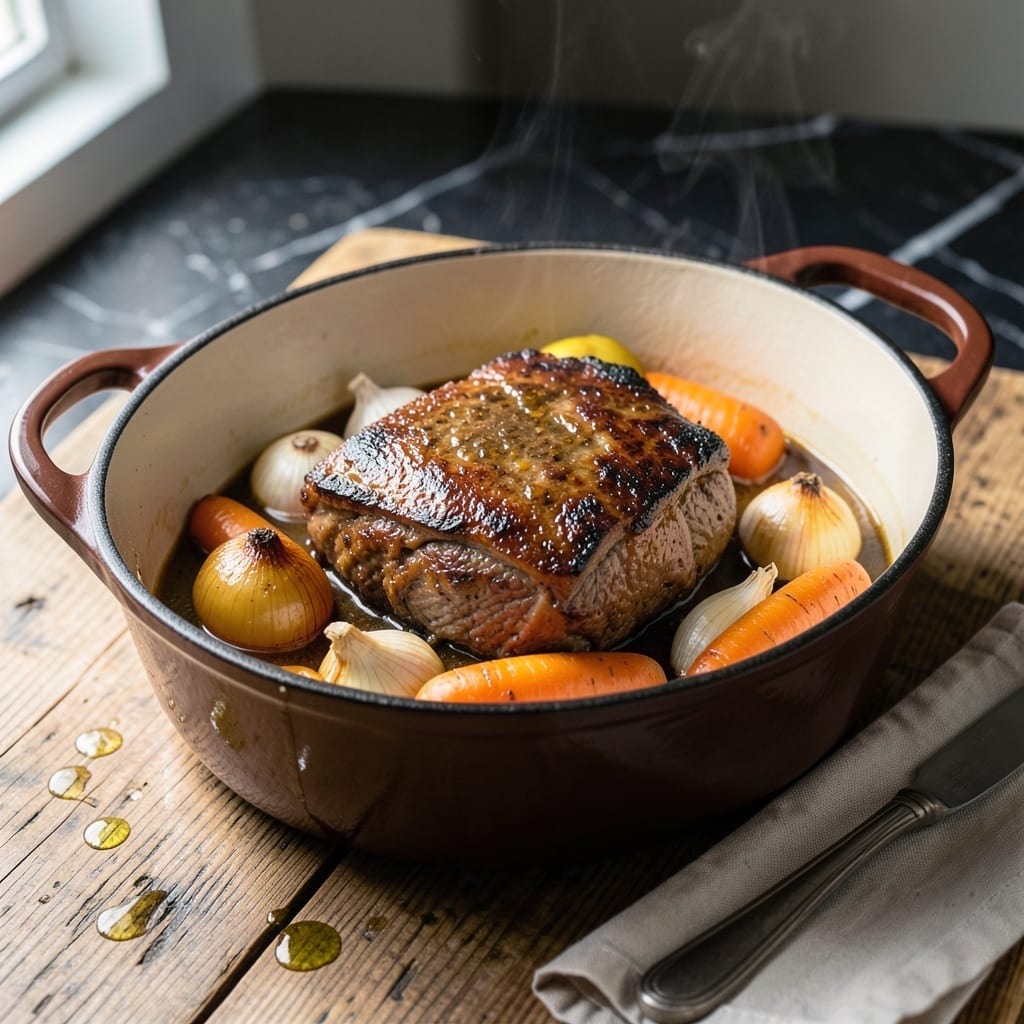
This slow-roasted chuck recipe transforms humble beef into a tender, deeply flavorful centerpiece. The oven’s low heat works its magic over 3-4 hours, breaking down tough fibers into melt-in-your-mouth perfection.
Simple seasonings and time are the only tools needed to achieve this restaurant-quality result with rich, savory depth in every bite.
Ingredients for Chuck Meat Recipe Oven
Transform humble beef into a restaurant-quality centerpiece with these thoughtful ingredients.
| Ingredient | Amount | Notes |
|---|---|---|
| Chuck Roast 🥩 | 3 lb | Well-marbled, boneless preferred |
| Kosher Salt 🧂 | 2 tsp | Diamond Crystal preferred for texture |
| Black Pepper 🌶️ | 1 ½ tsp | Freshly cracked for best flavor |
| Garlic Cloves 🧄 | 6 cloves | Peeled and smashed |
| Yellow Onion 🧅 | 1 whole | Large, roughly chopped |
| Carrots 🥕 | 3 whole | Peeled and cut into chunks |
| Celery Stalks 🌿 | 3 whole | Cut into large pieces |
| Olive Oil 🫒 | 2 tbsp | Extra-virgin for richness |
| Dried Thyme 🍃 | 1 tsp | Rubbed between fingers to release oils |
| Dried Rosemary 🌿 | 1 tsp | Lightly crushed before adding |
| Bay Leaves 🍃 | 2 whole | For aromatic depth |
| Red Wine 🍷 | 1 cup | Dry variety like Cabernet |
| Beef Broth 🥘 | 1 cup | Low-sodium for control |
[recipe_ingredient_scaler]
The chuck roast is non-negotiable for optimal results. Select a well-marbled piece—visible fat streaks ensure tenderness after slow-roasting. Costco and Whole Foods offer high-quality options, but most supermarkets carry suitable cuts. Look for USDA Choice or Prime grades when possible. Avoid pre-cut stew meat, as larger roasts retain moisture better during the extended cooking process.
No red wine? Substitute an additional cup of beef broth with 1 tbsp balsamic vinegar for acidity. Fresh herbs can replace dried at three times the amount. If time is limited, pre-chopped mirepoix from the grocery store saves prep work. The olive oil can be any neutral variety if extra-virgin isn’t available, though the flavor will be slightly less complex.
Leftovers keep beautifully, often tasting even better the next day. Store in an airtight container in the refrigerator for up to 4 days or freeze for 3 months. To reheat, warm gently in a covered pot with a splash of broth to restore moisture.
Why You’ll Love This Recipe
- I’ll be real: this one pot wonder stretches easily for family dinners or Sunday meal prep.
- Set It and Forget It: Honestly, I just season the chuck with salt, pepper, and toss in some garlic and onion—then the oven does all the work.
- Feeds Everyone: I’ll be real: this one pot wonder stretches easily for family dinners or Sunday meal prep.
- Budget Hero: Chuck roast is cheap, and this recipe turns it into something that tastes like a fancy Sunday supper.
Step-by-Step Instructions for Slow-Roasted Chuck Meat
Master the technique for fall-apart tender beef with deep, complex flavors developed in the oven.
Step 1: Sear and Season the Chuck Roast
Pat the 3 lb chuck roast dry with paper towels to ensure a proper sear. Season generously on all sides with the 2 tsp kosher salt and 1.5 tsp black pepper, pressing the seasoning into the meat so it adheres well.
Heat the 2 tbsp olive oil in a large Dutch oven over medium-high heat until shimmering. Sear the roast for 4-5 minutes per side until deeply browned. This creates a flavorful crust that enhances the final dish. Remove the roast and set aside.
Step 2: Sauté the Aromatic Base
In the same Dutch oven, add the 1 whole yellow onion, 3 whole carrots, and 3 whole celery stalks. Sauté for 5-6 minutes until the vegetables begin to soften and develop color. Add the 6 cloves garlic cloves, 1 tsp dried thyme, 1 tsp dried rosemary, and 2 whole bay leaves, stirring for 1 minute until fragrant.
This aromatic foundation builds layers of flavor that penetrate the meat during the long cooking process. The herbs release their essential oils when briefly toasted in the hot pan.
Step 3: Deglaze and Begin the Braise
Pour the 1 cup red wine into the Dutch oven, scraping the browned bits from the bottom with a wooden spoon. Let the wine reduce by half, about 3-4 minutes. This step lifts all the flavorful fond from the searing process.
Return the chuck roast to the pot. Add the 1 cup beef broth, ensuring the liquid comes about halfway up the sides of the meat. Bring to a gentle simmer.
Step 4: Slow-Roast to Perfection
Cover the Dutch oven and transfer to a preheated 325°F oven. Cook for 3 to 3.5 hours, turning the roast every 45 minutes to ensure even cooking and prevent sticking. The meat is done when it yields easily to a fork and reaches an internal temperature of 195-200°F.
This low-and-slow method transforms the tough chuck into buttery tenderness while allowing the connective tissue to melt into the braising liquid, creating a rich, velvety sauce.
Step 5: Rest and Serve
Carefully remove the chuck roast from the Dutch oven and place it on a cutting board. Tent loosely with foil and let it rest for 15-20 minutes. This allows the juices to redistribute, ensuring each slice remains moist and flavorful.
Skimming excess fat from the braising liquid and reducing it slightly on the stovetop enhances its depth before serving. Slice the roast against the grain and serve with the strained sauce spooned over the top.
Pro Tips For Making Chuck Meat Recipe Oven
- Start Low and Slow: Set your oven to 300°F and give it at least 3 hours—chuck roast needs time to break down those tough fibers into tender perfection.
- Dry the Roast Well: Pat the chuck roast completely dry with paper towels before seasoning. I learned this the hard way—wet meat steams instead of searing, and you’ll lose that rich crust.
- Don’t Skip the Sear: Sear the chuck in a hot pan with a little oil before it goes in the oven. Sounds like an extra step, but it adds a depth of flavor that’s worth the 5 minutes.
- Use Whole Garlic Cloves: Toss in whole, unpeeled garlic cloves with the onion—they’ll roast into sweet, spreadable paste inside their skins, and you can squeeze them out later.
Health Benefits of These Flavors
Rich Protein Source
This creation delivers high-quality protein essential for muscle repair and growth. A 3-ounce serving provides about 25 grams of protein, making it perfect for active lifestyles. I love how it keeps me full and energized for hours. 💪
Iron and Zinc Boost
Beef chuck is packed with heme iron and zinc, crucial for immune function and energy levels. The 3 lb roast yields multiple servings, each contributing significantly to your daily needs. These minerals are more easily absorbed than plant-based alternatives.
B Vitamin Complex
You’ll get a healthy dose of B vitamins, especially B12, B6, and niacin. These support brain function and metabolism. The slow-roasting process preserves these nutrients, ensuring maximum benefit in every bite.
Collagen for Joint Health
The connective tissue in chuck breaks down into gelatin during cooking, which is great for joint and skin health. This natural collagen source is more bioavailable than many supplements. I notice my joints feel better when I eat this regularly.
Low-Carb Friendly
With virtually no carbs, this dish fits perfectly into low-carb or keto diets. The rich flavors and satisfying texture make it easy to enjoy without missing starchy sides. It’s my go-to for staying on track with healthy eating. ✨
Energy-Sustaining Fats
The marbling in chuck provides healthy fats that fuel your body efficiently. These fats are slow-burning, providing steady energy throughout your day. The oven-roasting method enhances the natural richness without adding extra oil.
Nutrition Facts
Frequently Asked Questions
What oven temperature works best for chuck roast?
Use a low 325°F for slow-roasting. This gentle heat breaks down tough fibers over 3-4 hours, ensuring tender results without drying out the meat.
How do I know when it’s done?
The roast is ready when it reaches 195-200°F internally and shreds easily with a fork. This ensures the collagen has fully melted into the sauce.
Can I cook it faster at a higher temperature?
Not recommended. Higher heat will toughen the meat before the connective tissue breaks down. Stick to the low-and-slow method for the best texture.
What if my roast is tough after cooking?
It likely needs more time. Return it to the oven at 325°F for another 30-60 minutes until fork-tender. Undercooking is the most common mistake.

Trained in classic French technique but raised on slow-cooked ribs and spicy rubs, she blends culinary skill with smoke and soul.
- Recipe for Boneless Pork Chops in Cast Iron Skillet: Sear and Baste to Juicy Perfection - October 3, 2026
- Recipe for Boneless Cross Rib Roast: Slow-Roasted Beef with Herb Crust - October 3, 2026
- Hamburgers in Sauce Recipe Crock Pot: Slow-Cooked Savory Delight - October 3, 2026