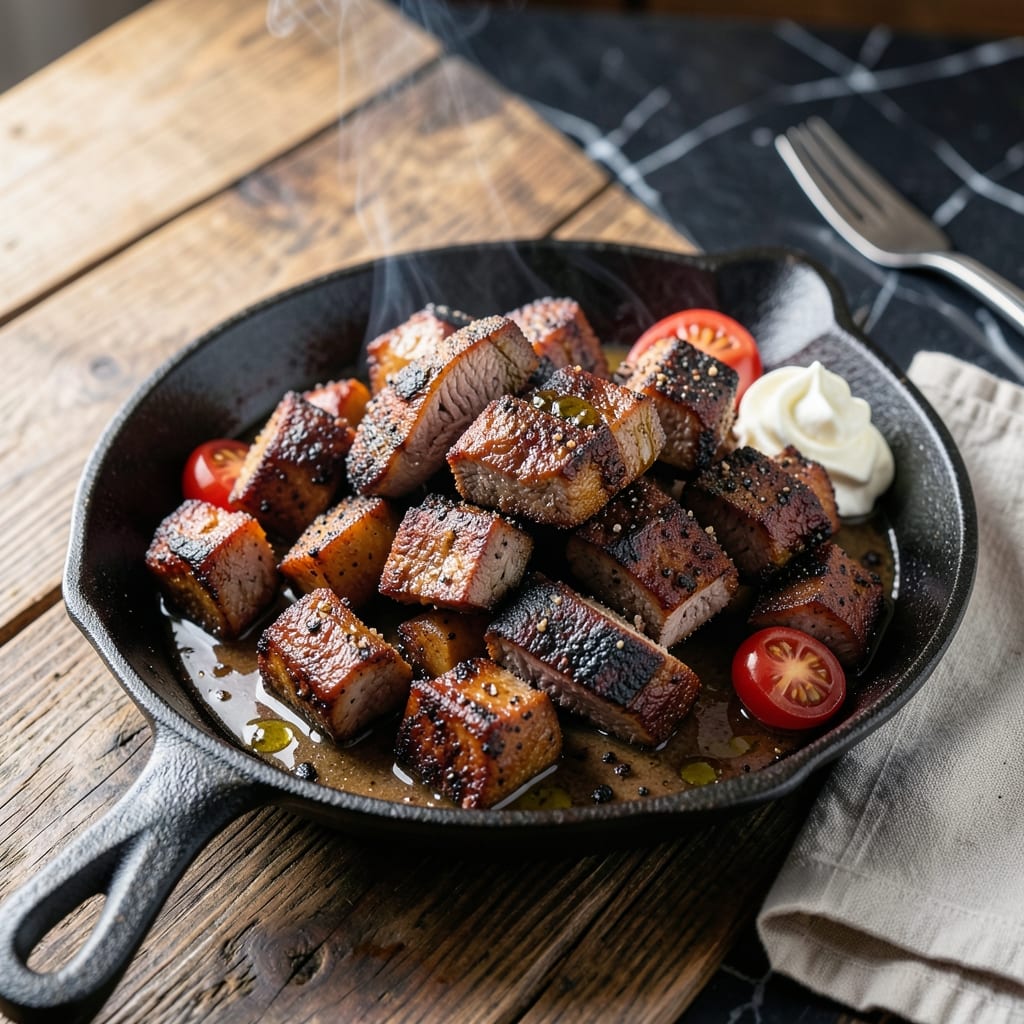
This chuck roast burnt ends recipe transforms an affordable cut into tender, smoky, caramelized cubes that rival any BBQ joint. I developed this method after years of testing in my small Boston kitchen, perfecting the balance of smoke, spice, and sweetness.
The process starts with a well-seasoned chuck roast, slow-smoked until fork-tender. Then comes the magic: cubing the meat, tossing it in a sticky sauce, and returning it to the smoker for that signature crispy exterior.
What you get is fall-apart tender meat with a deeply caramelized bark, packed with rich, smoky flavor. Each bite delivers the perfect combination of sweet, spicy, and savory notes that make these burnt ends irresistible.
Serve them as an appetizer, in sandwiches, or alongside classic BBQ sides. The results speak for themselves.
Ingredients for Chuck Roast Burnt Ends
Transform affordable chuck into BBQ-worthy burnt ends with these flavor-packed ingredients.
| Ingredient | Amount | Notes |
|---|---|---|
| Chuck Roast 🥩 | 3 lb | Well-marbled, trimmed of excess fat |
| Kosher Salt 🧂 | 2 tbsp | Diamond Crystal preferred for even coating |
| Coarse Black Pepper 🌶️ | 2 tbsp | Freshly ground for maximum flavor |
| Garlic Powder 🧄 | 1 tbsp | Not garlic salt for balanced seasoning |
| Onion Powder 🧅 | 1 tbsp | Adds depth to the bark |
| Smoked Paprika 🌶️ | 1 tbsp | Essential for authentic BBQ flavor |
| Brown Sugar 🍚 | ½ cup | Light or dark for caramelization |
| Apple Cider Vinegar 🍏 | ¼ cup | Balances sweetness with tang |
| BBQ Sauce 🍯 | 1 ½ cups | Use smoky, thick variety |
| Unsalted Butter 🧈 | ½ cup | Melted for sauce richness |
| Yellow Mustard 🟡 | 2 tbsp | Emulsifies the sauce |
| Worcestershire Sauce 🫒 | 2 tbsp | Adds umami depth |
| Hickory Wood Chips 🪵 | 2 cups | Soaked for smoking |
[recipe_ingredient_scaler]
The chuck roast is non-negotiable here—look for well-marbled pieces at Costco or your local butcher. The fat content keeps it juicy through the long smoke. I’ve had luck with USDA Choice grade for the best balance of quality and price. Avoid lean cuts like round; they’ll dry out. For the wood chips, hickory gives that classic BBQ flavor, but cherry or apple wood works too if you prefer a milder smoke.
No smoked paprika? Regular paprika plus a pinch of liquid smoke gets you close. Out of brown sugar? White sugar with a splash of molasses works in a pinch. The BBQ sauce can be store-bought—I like Stubb’s Original—but homemade takes it to another level. If you’re avoiding gluten, check your BBQ sauce and Worcestershire for hidden wheat. Annie’s or San-J make gluten-free versions.
Leftovers keep in the fridge for 4-5 days or freeze for up to 3 months. Reheat in a skillet with a splash of water to revive the bark. The sauce components can be mixed ahead and stored separately for 1 week—just whisk before using.
Why You’ll Love This Recipe
- Set It and Forget: I rub the chuck with salt, pepper, garlic and onion powder, pop it in the smoker, and let time do the heavy lifting.
- Crispy Caramelized Bites: The edges turn dark and sticky, each cube packing a smoky punch with that classic burnt-end chew.
- Feeds the Weekend Crew: One big roast makes enough for Friday dinner, Saturday leftovers, and a couple of lunch boxes—no extra cooking.
- Budget Beef Win: Chuck roast costs half what brisket does, but with the same rich, beefy depth in every bite.
Step-by-Step Instructions for Chuck Roast Burnt Ends
Here’s the method that transforms this cut into tender, caramelized bites of pure flavor.
Step 1: Season and Smoke the Chuck Roast
Pat the 3 lb chuck roast dry with paper towels, then rub it all over with 2 tbsp kosher salt, 2 tbsp coarse black pepper, 1 tbsp garlic powder, 1 tbsp onion powder, and 1 tbsp smoked paprika. I press the seasoning in hard so it forms a crust that locks in juices.
Soak the 2 cups hickory wood chips in water for 30 minutes, then drain. Smoke the roast at 225°F with the wood chips for 4-5 hours until the internal temperature reaches 165°F. The meat should have a dark, well-formed bark when it’s ready for the next step.
Step 2: Cube and Prepare for Caramelization
Remove the roast from the smoker and let it rest for 15 minutes. Cube it into 1-inch pieces, trimming any large chunks of fat. In a large bowl, toss the cubes with 0.5 cup brown sugar, 0.25 cup apple cider vinegar, 2 tbsp yellow mustard, and 2 tbsp Worcestershire sauce until fully coated.
This mixture creates a sticky, tangy base that will caramelize beautifully. I like to let it sit for 10 minutes so the flavors penetrate the meat before it goes back into the smoker.
Step 3: Sauce and Return to the Smoker
Return the cubed meat to the smoker at 225°F for another 1.5-2 hours, stirring every 30 minutes to ensure even cooking and prevent sticking. The burnt ends are ready when the cubes are dark, glossy, and probe-tender.
In a saucepan, melt the 0.5 cup unsalted butter and stir in the 1.5 cups BBQ sauce until smooth. I keep this warm so it’s ready to toss with the meat as soon as it comes off the smoker.
Step 4: Finish and Serve
Transfer the smoked cubes to a large bowl and pour the warm BBQ sauce mixture over them. Toss gently to coat every piece evenly. Let them rest for 5-10 minutes so the sauce thickens slightly and clings to the meat.
Serve immediately while hot—the burnt ends should have a rich, smoky-sweet bark with a melt-in-your-mouth interior. The sauce should glaze each cube without making them soggy.
Pro Tips For Making Chuck Roast Burnt Ends
- Cube Evenly: Cut the chuck roast into 1.5-inch cubes—any smaller and they’ll dry out, any larger and they won’t crisp properly. I learned this the hard way after ending up with chewy bits that refused to caramelize.
- Season Aggressively: Don’t be shy with the kosher salt and coarse black pepper. A heavy hand here actually changes the outcome, especially since most of it will stay on the bark after smoking.
- Skip the Early Sauce: Resist the urge to add sauce or liquid in the first 2-3 hours. After burning a batch to a sad, soggy mess, I realized dry heat is what builds that perfect crust before you glaze.
- Rest Before Cubing: Let the chuck roast rest for 15-20 minutes after the initial smoke before cubing. Sounds weird, but it works—it keeps the juices from bleeding out all over your cutting board.
Common Mistakes When Making Great chuck roast burnt ends
Skipping the Rest
I learned the hard way that resting the roast after the first smoke is non-negotiable. Once, I rushed and cubed the meat immediately—the juices ran everywhere, and the final burnt ends were dry. Always let it rest for 15 minutes to retain moisture. 💧
Uneven Cubing
Cut your cubes consistently to 1-inch pieces. Smaller pieces dry out, while larger ones won’t caramelize properly. I use a ruler the first few times to train my eye. Uniform size ensures even cooking and that perfect bark on every bite.
Overcrowding the Smoker
Spread the cubes in a single layer on the smoker grate with space between each piece. Piling them up steams the meat instead of smoking it, and you’ll end up with soggy burnt ends. Stir every 30 minutes for even exposure to smoke and heat.
Sauce Too Early
Don’t add the BBQ sauce until the final toss. Adding it too soon burns the sugar in the sauce, creating bitter, charred bits instead of sweet, sticky caramelization. The sauce should glaze, not blacken.
Ignoring Internal Temp
Use a probe thermometer to check for 203°F internal temperature in the cubes during the second smoke. This ensures the collagen has fully broken down. I pull a test cube—if it probes like butter, they’re ready.
Skipping the Stir
Stirring the cubes every 30 minutes prevents sticking and promotes even caramelization. I set a timer—it’s easy to forget when you’re managing the smoker. The result is burnt ends with bark on all sides, not just the bottom. 🔥
Nutrition Facts
Frequently Asked Questions
What’s the ideal internal temperature for the first smoke?
Remove the roast when it hits 165°F internally. This typically takes 4-5 hours at 225°F. The bark should be dark and well-formed before cubing.
Can I use a different wood for smoking?
Hickory gives classic BBQ flavor, but cherry or apple wood work too for a milder smoke. Avoid softwoods like pine—they’ll make your meat taste bitter.
How do I store leftovers?
Keep in an airtight container in the fridge for 4-5 days or freeze for up to 3 months. Reheat in a skillet with a splash of water to revive the bark.

Trained in classic French technique but raised on slow-cooked ribs and spicy rubs, she blends culinary skill with smoke and soul.
- Recipe for Boneless Pork Chops in Cast Iron Skillet: Sear and Baste to Juicy Perfection - October 3, 2026
- Recipe for Boneless Cross Rib Roast: Slow-Roasted Beef with Herb Crust - October 3, 2026
- Hamburgers in Sauce Recipe Crock Pot: Slow-Cooked Savory Delight - October 3, 2026