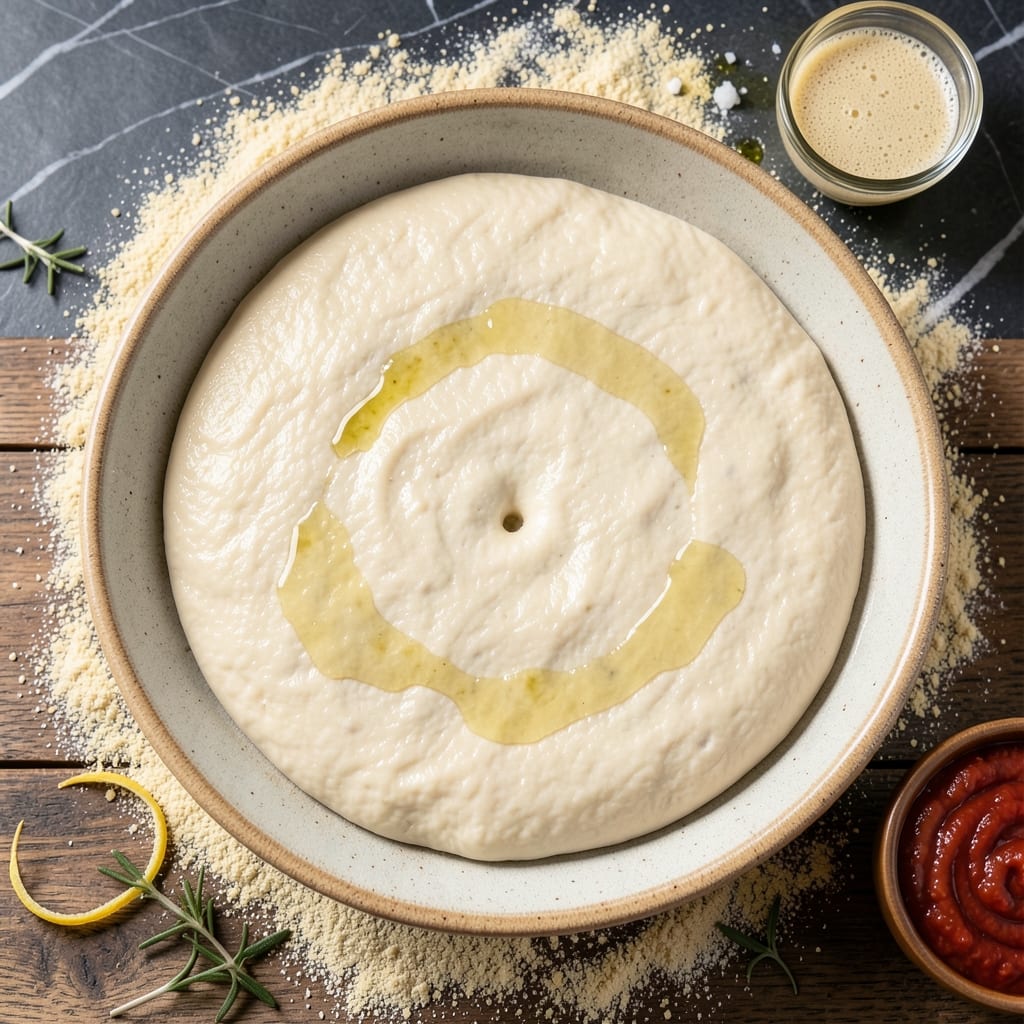
Authentic Neapolitan pizza begins with the right foundation, and this 24-hour dough delivers the chewy, airy crust that defines the style. The key is using 00 flour, which creates a tender yet elastic texture that’s impossible to replicate with standard flour.
This recipe follows traditional methods, allowing the dough to ferment slowly in the refrigerator. That extended rest develops deep flavor and the perfect open crumb structure that makes Neapolitan pizza so special.
You’ll end up with a soft, pliable dough that stretches easily and bakes into a crust with leopard-spotted char and a light, airy interior. It’s the kind of pizza that transports you straight to Naples.
Perfect for wood-fired ovens or your home kitchen. Here’s how to make it.
Ingredients for Neapolitan Pizza Dough Recipe 00 Flour
Authentic Neapolitan dough starts with 00 flour and just a handful of quality ingredients.
| Ingredient | Amount | Notes |
|---|---|---|
| 00 Flour 🌾 | 3 ½ cups | Caputo or Antimo brand preferred |
| Water 💧 | 1 ½ cups | Room temperature, filtered |
| Active Dry Yeast 🍞 | ¾ tsp | Or 1/4 tsp instant yeast |
| Fine Sea Salt 🧂 | 2 tsp | Diamond Crystal preferred |
| Extra-Virgin Olive Oil 🫒 | 1 tbsp | For bowl coating |
| Semolina Flour 🌾 | ½ cup | For dusting work surface |
| Sugar 🍚 | ½ tsp | Optional, aids yeast activation |
| Baking Powder 🧂 | ¼ tsp | Optional, for extra lift |
[recipe_ingredient_scaler]
The 00 flour is non-negotiable here. Caputo or Antimo are the gold standard brands—look for them at Italian markets or online. This finely milled flour creates that signature tender yet elastic texture. The yeast matters too: active dry works, but instant yeast (at one-third the amount) gives a slightly cleaner flavor. Don’t rush the fermentation; that 24-hour rest in the fridge is what develops the deep, complex flavor.
No 00 flour? Bread flour at half the quantity plus all-purpose can work in a pinch, but the texture won’t be the same. Swap the sugar for honey if you prefer (though this is vegetarian, not vegan). The olive oil for coating can be any neutral oil, but extra-virgin adds a nice depth. If your kitchen is cold, warm the water slightly to help the yeast activate faster.
This dough keeps in the fridge for up to 3 days—the flavor actually improves over time. For longer storage, freeze the dough balls in airtight bags for 1 month. Bring to room temperature before shaping, and don’t skip dusting with semolina. It prevents sticking and adds that classic Neapolitan texture.
Why You’ll Love This Recipe
- Five Ingredients Only: I love that this dough comes together with just 00 flour, water, yeast, salt, and a drizzle of olive oil—no fancy additions.
- That Authentic Bite: The 00 flour gives it that tender, slightly chewy Neapolitan texture I crave, with just the right crisp at the edges.
- Weeknight Pizza Hero: I can prep the dough in the morning, let it rise slowly in the fridge, and have fresh pizza ready by dinner with minimal evening effort.
- Budget-Friendly Feast: A big batch of dough costs pennies and makes enough for multiple pizzas, so I can feed a crowd without breaking the bank.
Step-by-Step Instructions for Neapolitan Pizza Dough with 00 Flour
Here’s the authentic method I use to achieve that perfect chewy, airy crust every time.
Step 1: Activate the Yeast and Sugar
In a small bowl, combine the 1.5 cups water with the 0.75 tsp active dry yeast and the 0.5 tsp sugar. Stir gently and let it sit for 5-10 minutes until the mixture becomes frothy and cloudy. This confirms your yeast is alive and active.
The sugar gives the yeast a quick food source to wake it up. If you don’t see bubbles forming, your yeast may be expired—start over with fresh yeast. The water should be at room temperature; if it’s too hot, it’ll kill the yeast, and if it’s too cold, it won’t activate properly.
Step 2: Mix the Dough
In a large mixing bowl, combine the 3.5 cups 00 flour and the 2 tsp fine sea salt. If using, add the 0.25 tsp baking powder for extra lift. Make a well in the center and pour in the yeast mixture and the 1 tbsp extra-virgin olive oil.
Using a wooden spoon or your hands, mix until a shaggy dough forms. It’ll look rough at first, but that’s normal. The dough should start to pull away from the sides of the bowl but will still be slightly sticky. Don’t add more flour yet—this hydration level is key for authentic Neapolitan texture.
Step 3: Knead to Develop Gluten
Turn the dough out onto a surface lightly dusted with 0.5 cup semolina flour. Knead for 8-10 minutes by hand, pushing the dough away with the heel of your hand, folding it over, and turning it a quarter turn each time. The semolina prevents sticking while adding a subtle texture to your crust.
You’ll know the dough is ready when it’s smooth, elastic, and slightly tacky but not sticky. Press your finger into the dough—if the indentation springs back slowly, your gluten development is perfect. If it springs back immediately, you’ve overworked it. If it doesn’t spring back at all, knead for another minute or two.
Step 4: First Rise at Room Temperature
Lightly coat a clean bowl with a bit more extra-virgin olive oil and place the dough inside, turning to coat all sides. Cover with a damp kitchen towel or plastic wrap and let it rise at room temperature for 1-2 hours.
During this time, the dough should approximately double in size. The ideal room temperature is around 70-75°F. If your kitchen is cooler, the rise will take longer. Don’t rush it—this first rise develops the flavor and structure of your dough.
Step 5: Cold Ferment for 24 Hours
After the first rise, gently press down the dough to deflate it, then cover the bowl tightly and refrigerate for 24 hours. This cold fermentation is what gives Neapolitan dough its signature complex flavor and perfect texture.
The next day, remove the dough from the refrigerator and let it come to room temperature for 1-2 hours before shaping. The dough will have developed a slightly sour aroma, which is exactly what you want. Divide into 4 equal portions (about 250g each) and shape into balls. Your dough is now ready for stretching and topping!
Pro Tips For Making Neapolitan Pizza Dough Recipe 00 Flour
- Use Room-Temp Water: I learned this the hard way—cold water slows yeast activation and warm water can kill it. Aim for 70-75°F to get the right fermentation going.
- Weigh Your 00 Flour: Sounds weird, but it works: scooping flour with a cup can add 20% extra. Use a scale for accurate hydration—250g flour to 150g water is my go-to.
- Skip the Oil Early: After burning three batches, I finally figured out that olive oil in the dough can make it too soft. Save it for stretching to avoid a gummy crust.
- Rest Overnight: My grandmother swore by this, and she was right: let the dough cold-ferment in the fridge for 24 hours. It develops flavor and makes shaping way easier.
Storing and Reheating This neapolitan pizza dough recipe 00 flour
Refrigerator Storage
After the 24-hour cold ferment, your dough balls can stay in the fridge for up to 3 days. Store them in airtight containers with a light coating of olive oil to prevent drying. The flavor deepens with each passing day. ❄️
Freezing for Later
For longer storage, wrap individual dough balls tightly in plastic wrap, then place in a freezer bag. They’ll keep for 1 month. Thaw overnight in the fridge before using. Freezing pauses fermentation, so let the dough warm to room temperature for 2-3 hours before shaping.
Room Temperature Rest
Before stretching, let chilled dough rest at room temperature for 1-2 hours. This relaxes the gluten, making it easier to shape. Cover with a damp towel to prevent a skin from forming on the surface.
Reheating Baked Dough
If you’ve pre-baked crusts, reheat in a 450°F oven for 5-7 minutes until crisp. For a wood-fired effect, use a pizza stone or steel. Avoid the microwave—it’ll make the crust soggy. 🔥
Shaping Cold Dough
If you must shape dough straight from the fridge, let it sit at room temperature for at least 30 minutes first. Cold dough resists stretching and can tear. Dust your surface with semolina flour for easier handling.
Reviving Overproofed Dough
If your dough smells overly sour or has large bubbles, it’s overproofed. Gently press out the gas, reshape into a ball, and let it rest for 30 minutes before using. This refreshes the structure.
Nutrition Facts
Frequently Asked Questions
Why is 00 flour essential for Neapolitan dough?
00 flour’s fine grind and low protein create a tender, elastic crust. Standard flour makes denser dough that won’t stretch as thin. Brands like Caputo or Antimo are ideal.
Can I skip the 24-hour cold ferment?
No, the long fermentation develops the signature flavor and texture. Shortening it results in a less complex, less airy crust. The wait is worth it.
How do I know when the dough is properly kneaded?
It should be smooth, elastic, and spring back slowly when pressed. If it’s sticky, add semolina—not more flour—to avoid tough dough.
What if my dough doesn’t rise during the first hour?
Check your yeast’s expiration date and water temperature. If it’s too cold, the yeast won’t activate. Move the dough to a warmer spot and give it more time.

Trained in classic French technique but raised on slow-cooked ribs and spicy rubs, she blends culinary skill with smoke and soul.
- Recipe for Boneless Pork Chops in Cast Iron Skillet: Sear and Baste to Juicy Perfection - October 3, 2026
- Recipe for Boneless Cross Rib Roast: Slow-Roasted Beef with Herb Crust - October 3, 2026
- Hamburgers in Sauce Recipe Crock Pot: Slow-Cooked Savory Delight - October 3, 2026