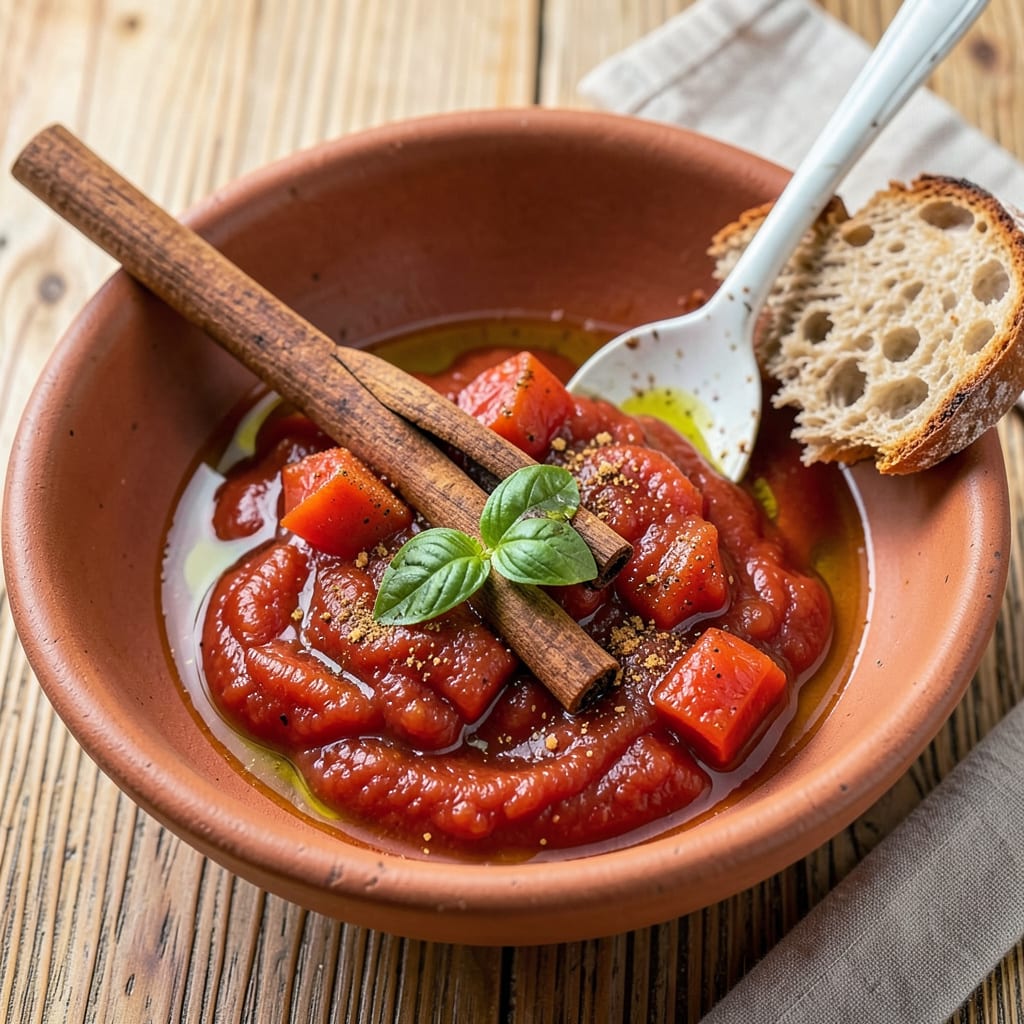
Here’s the thing—I never expected cinnamon to become my secret weapon for tomato sauce. That first time I stirred a pinch into simmering tomatoes, the whole kitchen smelled like comfort. The warm spice doesn’t overpower; it just adds this velvety depth that makes people ask, “What’s in this?” without being able to pinpoint it.
This isn’t your basic marinara. The cinnamon works its magic by balancing tomato acidity, rounding out the sharp edges while letting the natural sweetness shine. I bloom it in olive oil first—just like I’d start a good BBQ rub—to wake up its flavors before the tomatoes even hit the pot. A 15-minute simmer is all it takes to transform simple ingredients into something complex and crave-worthy.
What you get is a sauce that’s rich without being heavy, with just enough warmth to make it interesting. It clings to pasta perfectly, transforms boring weeknight chicken, and even makes a killer pizza base. I’ve been known to double the batch just to keep jars in the fridge for those “I need dinner now” moments.
Fair warning: Once you try this, plain tomato sauce will never taste the same. The cinnamon doesn’t scream “spice”—it just makes everything taste more like itself, but better. And isn’t that what good cooking’s all about?
📚 In This Guide
- What You’ll Need
- Instructions
- Tips and Common Mistakes
What Youll Need
- ● Core ingredients: 28 oz (1 large can) crushed tomatoes (San Marzano preferred for sweetness)
- ● 2 tbsp tomato paste (double-concentrated for richness)
- ● 1 small yellow onion, finely diced (~½ cup)
- ● 3 garlic cloves, minced
- ● ½ tsp ground cinnamon (Ceylon for subtle sweetness or Cassia for bolder spice)
- ● 2 tbsp extra-virgin olive oil
- ● 1 tsp salt (adjust to taste)
- ● ½ tsp black pepper, freshly ground
- ● Tools: Medium saucepan (2–3 quart, heavy-bottomed for even heat)
- ● Wooden spoon (to stir without scratching)
- ● Chef’s knife + cutting board
- ● Measuring spoons (for precise spice balance)
- ○ Optional upgrades: 1 bay leaf (for earthy depth)
- ● Pinch of red pepper flakes (for heat)
- ● 1 tsp honey or brown sugar (to balance acidity)
- ● Immersion blender (for ultra-smooth texture)
Instructions
Here’s how to transform your tomato sauce with cinnamon’s warm, velvety magic—simple steps for rich flavor.
Bloom the Cinnamon in Olive Oil
Heat 2 tablespoons olive oil in a saucepan over medium-low heat. When the oil shimmers but isn’t smoking, add ½ teaspoon ground cinnamon (or a whole cinnamon stick if you prefer). Let it toast for 30-45 seconds until the oil becomes fragrant and the cinnamon turns slightly darker.
This quick toasting step wakes up the cinnamon’s warm, earthy notes and prevents that raw spice taste. You’ll smell when it’s ready—the kitchen will fill with a sweet, woody aroma. Don’t let it burn; if the oil starts smoking, pull the pan off heat immediately.
Build the Sauce Base with Aromatics
Add 1 small diced onion to the cinnamon-infused oil and cook over medium heat for 5-7 minutes until translucent. Then stir in 3 minced garlic cloves and cook for 1 minute until fragrant. The onion should soften without browning—you want sweetness, not caramelization.
As the onions cook, they’ll absorb the cinnamon’s warmth, creating a rich foundation. If using a cinnamon stick, leave it in the pan; if using ground cinnamon, it should now be fully dissolved into the oil. This aromatic base ensures the cinnamon flavor permeates every bite of your sauce.
Simmer Tomatoes with Cinnamon Infusion
Pour in 28 ounces crushed tomatoes and ½ cup vegetable broth. Stir well to combine, then reduce heat to low. Let the sauce simmer uncovered for 20-25 minutes, stirring occasionally, until it thickens slightly and deepens in color.
You’ll notice the sauce transforming—the raw tomato sharpness mellows, and the cinnamon’s warmth emerges. Taste after 15 minutes; if the cinnamon flavor is too subtle, you can add another ¼ teaspoon. The sauce should reduce by about one-third, leaving you with a velvety texture.
Balance and Finish the Sauce
Remove the cinnamon stick (if using) and stir in 1 teaspoon salt, ½ teaspoon black pepper, and 1 tablespoon honey or sugar. The sweetness balances the cinnamon’s warmth and the tomatoes’ acidity. Let it simmer for another 5 minutes to meld the flavors.
Taste and adjust seasoning—add a pinch more salt if needed, or a splash of broth if the sauce is too thick. The finished sauce should coat the back of a spoon and have a complex, warm depth where the cinnamon hums in the background rather than dominating. It’s ready when the flavors marry into a rich, velvety harmony.
Tips and Common Mistakes
Mastering this sauce is all about coaxing out cinnamon’s subtle warmth without letting it overpower the tomatoes. Here’s what I’ve learned from making it dozens of times.
The Heat Factor: When toasting the cinnamon in Step 1, keep that heat at medium-low and don’t walk away. Those 30-45 seconds are critical—you want the oil to shimmer and the cinnamon to darken slightly, but the moment you smell anything acrid, pull the pan off immediately. Burnt cinnamon turns bitter and ruins the whole sauce. I like to swirl the pan constantly during this step for even toasting.
Simmering Strategy: During the 20-25 minute simmer in Step 3, resist the urge to crank up the heat to speed things along. Low and slow is key here—the sauce needs that gentle heat to reduce properly and let the flavors meld. If you notice it’s reducing too quickly, add a splash of broth to slow it down. The sauce should thicken gradually, not turn into a paste.
Flavor Balance: Don’t skip the 1 tablespoon honey or sugar in Step 4. I know it seems odd in a savory sauce, but that touch of sweetness is what makes the cinnamon sing. It doesn’t make the sauce taste sweet—it just rounds out the acidity and lets the warm spice shine. Taste as you go, but trust the recipe on this one.
Texture Tip: The final 5-minute simmer after seasoning isn’t just for flavor—it’s your chance to perfect the texture. If the sauce coats the back of a spoon but still feels thin, let it go a minute or two longer. If it’s too thick, stir in a tablespoon of broth. You’re aiming for velvety, not gluey.
Pro Tips for Cinnamon In Tomato Sauce
- Mastering this sauce is all about coaxing out cinnamon’s subtle warmth without letting it overpower the tomatoes. Her…
- The Heat Factor: When toasting the cinnamon in Step 1, keep that heat at medium-low and don’t walk away. Those 30-45 …
- Simmering Strategy: During the 20-25 minute simmer in Step 3, resist the urge to crank up the heat to speed things al…
Frequently Asked Questions
Does cinnamon really belong in tomato sauce?
While it might seem unusual, cinnamon adds a warm, slightly sweet depth that balances tomato acidity—especially in Mediterranean and Middle Eastern cuisines. Start with 1/4 teaspoon per 2 cups of sauce and adjust to taste. It’s a game-changer in dishes like pasta, shakshuka, or braised meats!
When should I add cinnamon to my tomato sauce?
Timing matters! Add ground cinnamon early (with garlic/onions) to bloom its flavors in oil, or stir it in mid-simoomer to mellow harshness. Avoid adding at the end—it can taste raw. For whole sticks, simmer 20+ minutes and remove before serving. No cinnamon? No problem! Try these swaps (use half the amount first): Bitterness usually means too much cinnamon or low-quality spice. Fix it by: Pro tip: Ceylon cinnamon is milder than cassia—opt for it if bitterness is a recurring issue! Yes, but adjust the approach! For fast sauces, bloom cinnamon in olive oil for 30 seconds before adding tomatoes. Use 1/8 teaspoon (or less) and pair with basil, oregano, or smoked paprika to harmonize flavors quickly.What’s a good substitute if I don’t have cinnamon?
Why does my sauce taste bitter after adding cinnamon?
Can I use cinnamon in quick tomato sauces (like 15-minute pasta)?
Adding cinnamon to tomato sauce is a game-changer—just a pinch transforms ordinary recipes into rich, aromatic masterpieces. Whether you’re simmering a classic marinara or crafting a bold curry, this warm spice brings depth and warmth that’ll have everyone asking for seconds. 🌿
Ready to experiment? Start with a ¼ teaspoon in your next batch and tweak to taste. Your taste buds (and dinner guests) will thank you!

Trained in classic French technique but raised on slow-cooked ribs and spicy rubs, she blends culinary skill with smoke and soul.
- Recipe for Boneless Pork Chops in Cast Iron Skillet: Sear and Baste to Juicy Perfection - October 3, 2026
- Recipe for Boneless Cross Rib Roast: Slow-Roasted Beef with Herb Crust - October 3, 2026
- Hamburgers in Sauce Recipe Crock Pot: Slow-Cooked Savory Delight - October 3, 2026