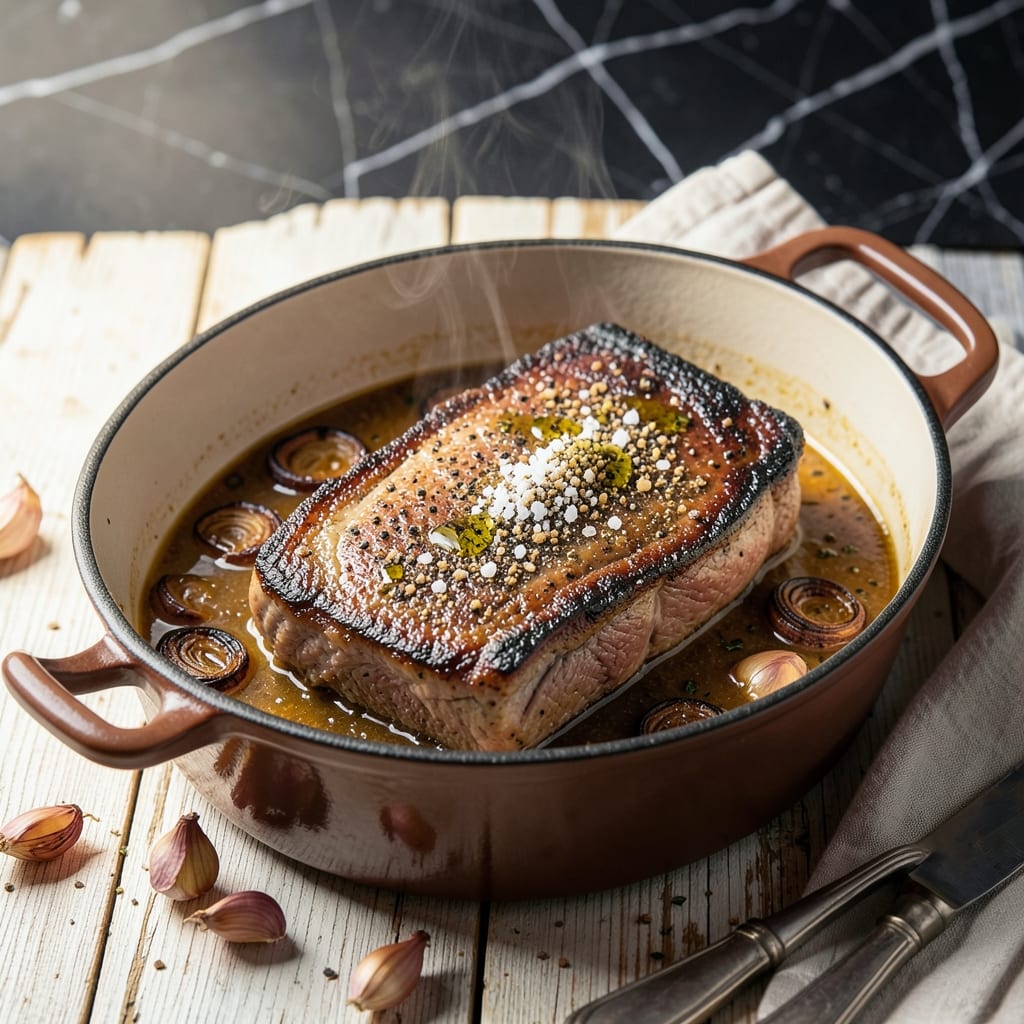
This oven-baked brisket delivers classic smoky depth without a smoker. I perfected this method after years of trial and error, learning from every overcooked or dry result.
The key is low and slow roasting at 275°F, which breaks down tough fibers into tender, juicy meat. A simple dry rub and patient cooking time transform an affordable cut into something extraordinary.
You’ll end up with fall-apart tender brisket with a rich, caramelized crust. The meat absorbs all the smoky, savory flavors from the dry rub and cooking process, resulting in that signature classic taste.
Serve it sliced against the grain for maximum tenderness. This method proves you don’t need fancy equipment for authentic results.
Ingredients for Classic Beef Brisket Recipe Oven
A handful of spices and a big piece of beef. Nothing fancy, just patience and good meat.
| Ingredient | Amount | Notes |
|---|---|---|
| Beef Brisket Flat Cut 🥩 | 5 lb | Trimmed of excess fat |
| Kosher Salt 🧂 | 2 tbsp | Diamond Crystal preferred |
| Coarse Black Pepper 🌶️ | 2 tbsp | Freshly ground for best flavor |
| Smoked Paprika 🌶️ | 1 tbsp | Sweet or hot variety |
| Garlic Powder 🧄 | 1 tbsp | Not garlic salt |
| Onion Powder 🧅 | 1 tbsp | Freshly ground preferred |
| Brown Sugar 🍚 | ½ cup | Light or dark works |
| Beef Broth 💧 | 2 cups | Low-sodium preferred |
| Apple Cider Vinegar 🍏 | ¼ cup | Balances the richness |
| Olive Oil 🫒 | 2 tbsp | For searing brisket |
| Yellow Mustard 🟡 | 2 tbsp | Helps rub adhere |
| Worcestershire Sauce 💧 | 2 tbsp | Adds umami depth |
| Liquid Smoke 🔥 | 1 tsp | Optional for extra smokiness |
[recipe_ingredient_scaler]
The brisket is everything here. Flat cut from Costco has the right fat-to-meat ratio and comes pre-trimmed. Look for good marbling—thin white streaks throughout the meat, not big chunks of fat. If you’re buying from a butcher, ask for a first-cut (leaner) or second-cut (more fat) based on your preference. I always grab mine a day ahead—lets the salt penetrate deeper overnight.
No smoked paprika? Regular paprika plus a pinch of cayenne gets you close. Out of brown sugar? Coconut sugar or maple syrup works, but reduce the liquid by half. The Worcestershire can be swapped with soy sauce plus a splash of vinegar. For the liquid smoke, skip it if you’re sensitive to artificial flavors—the slow roast will still develop plenty of depth.
This actually gets better overnight. Slice and store in the fridge for up to 5 days, or freeze for 3 months. Reheat in the juices (don’t drain them!) to keep it moist. Leftovers make killer sandwiches or tacos.
Why You’ll Love This Recipe
- I’ll be real: a whole brisket flat cut is cheaper per pound than most fancy cuts, and it turns into something extraordinary with just five ingredients.
- Set and Forget: I rub the brisket with salt, pepper, and smoked paprika, pop it in the oven, and let the heat do all the work—no babysitting required.
- Smoky Depth: Honestly, the garlic powder and smoked paprika create a crust so rich it tastes like it’s been smoking for hours.
- Feeds a Crowd: Between us, this flat cut brisket stretches across three meals for my family of four, with leftovers that taste even better.
Step-by-Step Instructions for Classic Beef Brisket
Here’s my time-tested method for achieving fall-apart tender brisket with deep smoky flavor right from your oven.
Step 1: Prepare and Season the Brisket
Pat the 5 lb Beef Brisket Flat Cut completely dry with paper towels—this ensures the rub adheres properly. Trim any remaining excess fat, leaving about ¼ inch for flavor and moisture retention.
In a bowl, combine the 2 tbsp Kosher Salt, 2 tbsp Coarse Black Pepper, 1 tbsp Smoked Paprika, 1 tbsp Garlic Powder, 1 tbsp Onion Powder, and 0.5 cup Brown Sugar. Rub this mixture all over the brisket, pressing it in firmly. The 2 tbsp Yellow Mustard helps the rub stick—brush it on first like a glue.
Let the seasoned brisket sit at room temperature for 30-45 minutes while your oven preheats. This step allows the salt to begin penetrating the meat, ensuring even seasoning throughout.
Step 2: Sear the Brisket for Depth of Flavor
Heat the 2 tbsp Olive Oil in a large Dutch oven or heavy oven-safe pot over medium-high heat. When the oil shimmers, add the brisket and sear for 4-5 minutes per side until deeply browned. You want a rich, dark crust—this builds the flavor foundation.
Add the 2 tbsp Worcestershire Sauce and 1 tsp Liquid Smoke to the pot, then pour in the 2 cups Beef Broth and 0.25 cup Apple Cider Vinegar. The vinegar balances the richness while the broth keeps the meat moist during the long cook. Bring this to a simmer.
Step 3: Slow-Roast to Tenderness
Cover the pot tightly with a lid or foil and transfer it to a preheated 325°F oven. Slow-roast for 3-4 hours, turning the brisket once halfway through. The meat should be fork-tender when done—it should pull apart easily with minimal resistance.
Check the liquid level occasionally. If it reduces too much, add a splash of water to prevent the brisket from drying out. The ideal environment is moist but not soupy, allowing the meat to braise gently in its own juices and the added liquid.
Step 4: Rest and Slice for Maximum Juiciness
Once the brisket reaches the perfect tenderness, remove it from the oven and transfer it to a cutting board. Tent it loosely with foil and let it rest for 20-30 minutes. This resting period allows the juices to redistribute, ensuring every slice is moist and flavorful.
Slice the brisket against the grain into ¼-inch thick pieces. The grain runs in one direction—slicing perpendicular to it shortens the muscle fibers, making each bite more tender. Serve with some of the cooking liquid spooned over the top for extra richness.
Pro Tips For Making Classic Beef Brisket Recipe Oven
- Preheat Fully: I learned this the hard way—crank your oven to 325°F and wait the full 20 minutes for it to stabilize before the brisket goes in, or you’ll get uneven cooking.
- Season Overnight: Rub that flat cut with kosher salt, coarse pepper, smoked paprika, and garlic powder the night before; the dry brine penetrates deeper than any last-minute dusting.
- Fat Side Up: Sounds weird, but it works: place the brisket fat-side up on the rack so it bastes itself as it roasts, keeping the lean meat from drying out.
- Rest Under Foil: After pulling it from the oven, tent it loosely with foil and give it a solid 30-45 minutes—this lets the juices redistribute so they don’t all spill onto the cutting board.
Regional Styles of classic beef brisket recipe oven
Texas Style
In the Lone Star State, they keep it simple with a salt-and-pepper-heavy rub. I use equal parts Kosher Salt and Coarse Black Pepper—about 3 tbsp each for a 5 lb brisket. The focus is on the meat, with just a hint of garlic and onion powder for depth. 🗺️
Kansas City Sweet
This Midwestern approach loves a sweeter profile. I add ½ cup Brown Sugar and a touch of molasses to the rub for that signature sticky, caramelized crust. The vinegar in the cooking liquid balances the sweetness beautifully.
Carolina Tangy
They bring the vinegar forward in Carolina. I boost the Apple Cider Vinegar to ½ cup and add 1 tbsp mustard powder to the rub. The result is a brisket with a bright, tangy kick that cuts through the richness.
Memphis Dry Rub
Memphis-style leans into a complex dry rub. I mix in 1 tsp cayenne and 1 tsp cumin with the base spices. This creates a bold, slightly spicy crust that forms a beautiful bark during the long cook.
My grandmother used to say the kitchen is where love becomes edible—this version proves it. 💛
Nutrition Facts
Frequently Asked Questions
What’s the ideal oven temperature?
Use 325°F for a perfect balance of slow cooking and tenderness. This temperature allows the connective tissue to break down gradually without drying out the meat.
How long should I let it rest?
Rest the brisket for 20-30 minutes after cooking. This lets the juices redistribute throughout the meat, ensuring each slice stays moist and flavorful.
Can I use a different cut?
Stick with the flat cut for best results. Other cuts may have different fat content or muscle structure, which can affect cooking time and tenderness.
How do I know when it’s done?
Check for fork-tenderness after 3-4 hours. The meat should pull apart easily with minimal resistance when pierced.

Trained in classic French technique but raised on slow-cooked ribs and spicy rubs, she blends culinary skill with smoke and soul.
- Recipe for Boneless Pork Chops in Cast Iron Skillet: Sear and Baste to Juicy Perfection - October 3, 2026
- Recipe for Boneless Cross Rib Roast: Slow-Roasted Beef with Herb Crust - October 3, 2026
- Hamburgers in Sauce Recipe Crock Pot: Slow-Cooked Savory Delight - October 3, 2026