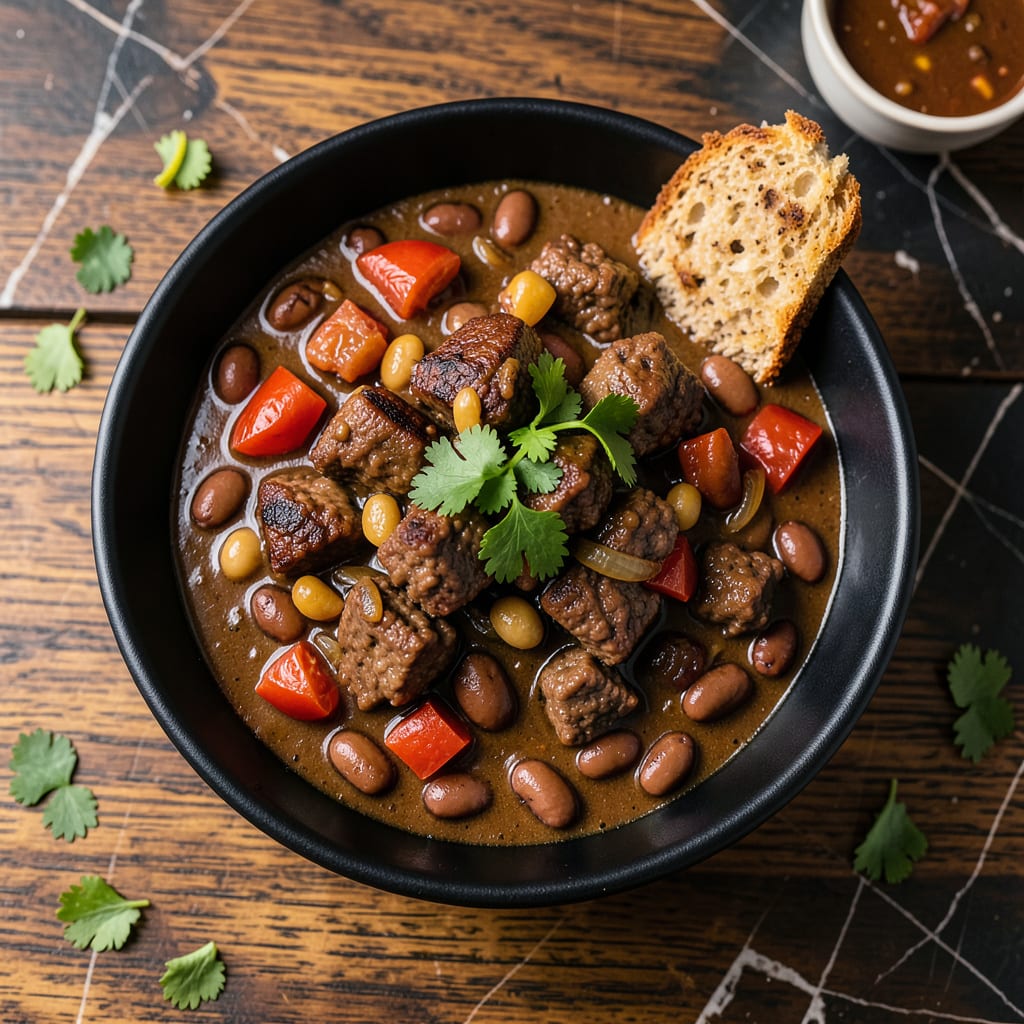
Cold nights demand chili with depth—real, smoky richness that lingers on your palate. This recipe achieves that through an unexpected ingredient: coffee. Not as a beverage, but as a flavor amplifier that transforms ordinary chili into something extraordinary. The bitterness of freshly brewed coffee enhances the natural umami of beef and tomatoes while adding a subtle, earthy complexity.
The technique is simple yet precise. A small amount of strong coffee joins the broth base, simmering with spices to develop layers of flavor without overpowering. What emerges after hours of slow cooking is a chili with remarkable balance—savory from the meat, sweet from the vegetables, and just enough coffee-infused depth to keep every bite interesting. No single note dominates; they all work in harmony.
This isn’t about making coffee-flavored chili. It’s about using coffee as a professional chef’s secret weapon to intensify existing flavors. The result is a bowl so rich and satisfying that you’ll find yourself reaching for seconds before you’ve finished the first. Every spoonful delivers that perfect combination of heat, meaty texture, and a lingering smokiness that makes this chili unforgettable.
Serve it with cornbread to soak up the sauce or over rice for a heartier meal. The coffee’s influence becomes more pronounced as the chili rests, so consider making it a day ahead. This is comfort food elevated through thoughtful technique and bold, balanced flavors.
📚 In This Guide
- What You’ll Need
- Instructions
- Tips and Common Mistakes
What Youll Need
- ● Ingredients: 2 lbs ground beef (80/20 fat ratio for best flavor 🥩)
- ● 1 cup strong brewed coffee (dark roast preferred, cooled)
- ● 2 tbsp chili powder (adjust to taste)
- ● 1 tbsp ground cumin
- ● 1 tbsp smoked paprika (for that deep, smoky kick)
- ● 1 large yellow onion, diced
- ● 3 cloves garlic, minced
- ○ 1 (15 oz) can kidney beans, drained & rinsed (optional for texture)
- ● 1 (28 oz) can crushed tomatoes
- ● 2 cups beef broth (low-sodium if preferred)
- ● 1 tbsp brown sugar (balances the coffee’s bitterness)
- ● Salt & black pepper to taste
- ● Tools: 1 large pot or Dutch oven (5-6 quart capacity)
- ● 1 wooden spoon (for stirring & scraping)
- ● 1 sharp chef’s knife & cutting board
- ● 1 measuring cups & spoons set
- ● Coffee brewer (French press or drip)
- ● Ladle (for serving)
- ○ Optional (but fun!): 1 tsp cocoa powder (enhances richness)
- ● 1 tsp cinnamon (for warmth)
- ● Sour cream, shredded cheese, or cilantro for topping
Instructions for Coffee-Infused Chili
This method transforms simple ingredients into a complex, deeply flavored chili with minimal effort.
Bloom the Spices and Aromatics
Heat a heavy Dutch oven over medium heat until warm. Add the ground beef and cook, breaking it apart with a wooden spoon, until evenly browned and no pink remains. This should take about 8-10 minutes and creates a flavorful foundation.
Push the beef to one side of the pot and add the diced onions, minced garlic, and chopped bell peppers. Cook for 5-6 minutes until the vegetables soften and the onions become translucent. Stir in the chili powder, cumin, and smoked paprika, cooking for 1 minute until fragrant. This toasting step intensifies the spices’ flavors.
Build the Liquid Base
Pour in the crushed tomatoes, tomato paste, and beef broth, stirring to combine with the meat and vegetables. Bring the mixture to a gentle simmer over medium-high heat, then reduce to low heat to maintain a steady simmer.
Add the kidney beans and black beans, stirring gently to incorporate. The beans should be fully submerged in the liquid. At this point, the chili will look thin, but it will thicken as it simmers and the flavors meld together.
Incorporate the Coffee
In a small bowl, dissolve 1 cup of strong brewed coffee with 1 tablespoon of brown sugar. Pour this mixture into the chili, stirring well to distribute evenly. The coffee should blend seamlessly into the liquid, adding depth without overpowering the other flavors.
Allow the chili to simmer uncovered for 30 minutes, stirring occasionally. You’ll notice the coffee’s aroma blending with the spices, creating a rich, complex scent. The liquid will begin to reduce slightly, concentrating the flavors.
Simmer and Develop Flavors
Cover the pot and continue simmering for an additional 45-60 minutes, stirring every 15 minutes to prevent sticking. The chili is ready when the liquid has thickened enough to coat the back of a spoon and the flavors have melded into a cohesive, rich taste.
Taste and adjust seasoning with salt and black pepper as needed. The coffee’s bitterness should be balanced by the sweetness of the tomatoes and the warmth of the spices, creating a harmonious blend of flavors.
Rest and Serve
Remove the chili from heat and let it rest for 10 minutes before serving. This brief resting period allows the flavors to settle and the liquid to thicken slightly. The coffee’s influence will be more pronounced after resting, adding a subtle smokiness to each bite.
Ladle the chili into bowls and garnish with your choice of toppings. The coffee-infused chili should have a deep, rich color and a complex flavor profile that reveals itself with each spoonful, offering warmth and comfort with every bite.
Tips and Common Mistakes
Mastering this coffee-infused chili comes down to understanding how each component develops flavor over time.
Heat Management: The progression from medium to medium-high to low heat in Steps 1-2 is crucial for building layers of flavor. When browning the ground beef at medium heat, resist the urge to rush—those 8-10 minutes develop the meat’s fundamental flavor. The brief 1-minute toast of spices at the end of Step 1 should be done over consistent medium heat to activate their oils without burning. I’ve found that reducing to low heat immediately after adding liquids prevents the beans from breaking down too quickly while allowing the coffee’s bitterness to mellow properly.
Coffee Integration: In Step 3, dissolving the brown sugar in the coffee before adding it to the chili isn’t just about mixing—it’s about creating a balanced flavor carrier. The 30-minute uncovered simmer that follows is when the coffee’s acidity begins to tenderize the meat fibers while its aromatic compounds bind with the spices. Stir occasionally during this phase to ensure even distribution, but don’t over-stir or you’ll prevent the liquid from reducing properly.
Simmering Strategy: The 45-60 minute covered simmer in Step 4 is where the magic happens. Stirring every 15 minutes isn’t arbitrary—it prevents the beans from settling and burning at the bottom while allowing the coffee’s smoky notes to permeate evenly. I recommend using a wooden spoon for stirring as it’s gentler on the beans than metal. The chili is done when it coats the back of a spoon, which typically happens right at that 45-minute mark in most home kitchens.
Resting Period: Those final 10 minutes of resting in Step 5 aren’t optional. This is when the coffee’s volatile aromatic compounds redistribute throughout the chili, and the liquid achieves its ideal consistency. Skipping this step means you’ll serve a chili where the coffee flavor sits on top rather than being fully integrated. I always use this time to prepare my garnishes so everything is ready to serve immediately after resting.
Pro Tips for Coffee In Chili
- Mastering this coffee-infused chili comes down to understanding how each component develops flavor over time.
- Heat Management: The progression from medium to medium-high to low heat in Steps 1-2 is crucial for building layers o…
- Coffee Integration: In Step 3, dissolving the brown sugar in the coffee before adding it to the chili isn’t just abou…
Frequently Asked Questions
Can I use instant coffee instead of brewed coffee in chili?
Yes! Use 1–2 teaspoons of instant coffee (or espresso powder) per cup of liquid the recipe calls for. Dissolve it in a splash of hot water first to avoid grainy texture. Instant coffee intensifies the smoky depth without adding extra liquid.
When’s the best time to add coffee to chili?
Add brewed coffee early (with the broth/tomatoes) so the flavors meld . If using instant, stir it in during the initial sauté with spices. Avoid adding it late—it needs time to mellow and blend with other ingredients.
What’s a good coffee substitute for chili if I don’t like coffee?
Try these for similar depth:
- Unsweetened cocoa powder (1 tbsp) – adds earthiness
- Mole sauce (2 tbsp) – brings smoky-sweet complexity
- Smoked paprika + a dash of balsamic vinegar – mimics coffee’s richness
Will coffee make my chili taste like a mocha dessert?
Nope! When used correctly (1/2–1 cup for a 6-quart pot), coffee enhances savory notes—think deep, molasses-like richness, not sweetness. Balance with spices like cumin or chili powder to keep it hearty.
Help! My chili tastes bitter after adding coffee. How do I fix it?
Bitterness usually means too much coffee or not enough simmering. Fix it by:
- Adding a pinch of brown sugar or honey (1 tsp at a time)
- Stirring in a splash of vinegar (brightens flavors)
- Simmering 10–15 more minutes to mellow the bite
Adding coffee to your chili isn’t just a trend—it’s a game-changer for bold, layered flavor that warms you from the inside out. 🌶️ Whether you’re a chili purist or an adventurous cook, this twist brings depth, richness, and a subtle smokiness that’ll have everyone asking for seconds.
Ready to take your chili to the next level? Grab your favorite beans, brew a fresh cup of coffee, and let the simmering begin! Don’t forget to tweak the spices to match your taste—happy cooking! 🍲

Trained in classic French technique but raised on slow-cooked ribs and spicy rubs, she blends culinary skill with smoke and soul.
- Recipe for Boneless Pork Chops in Cast Iron Skillet: Sear and Baste to Juicy Perfection - October 3, 2026
- Recipe for Boneless Cross Rib Roast: Slow-Roasted Beef with Herb Crust - October 3, 2026
- Hamburgers in Sauce Recipe Crock Pot: Slow-Cooked Savory Delight - October 3, 2026