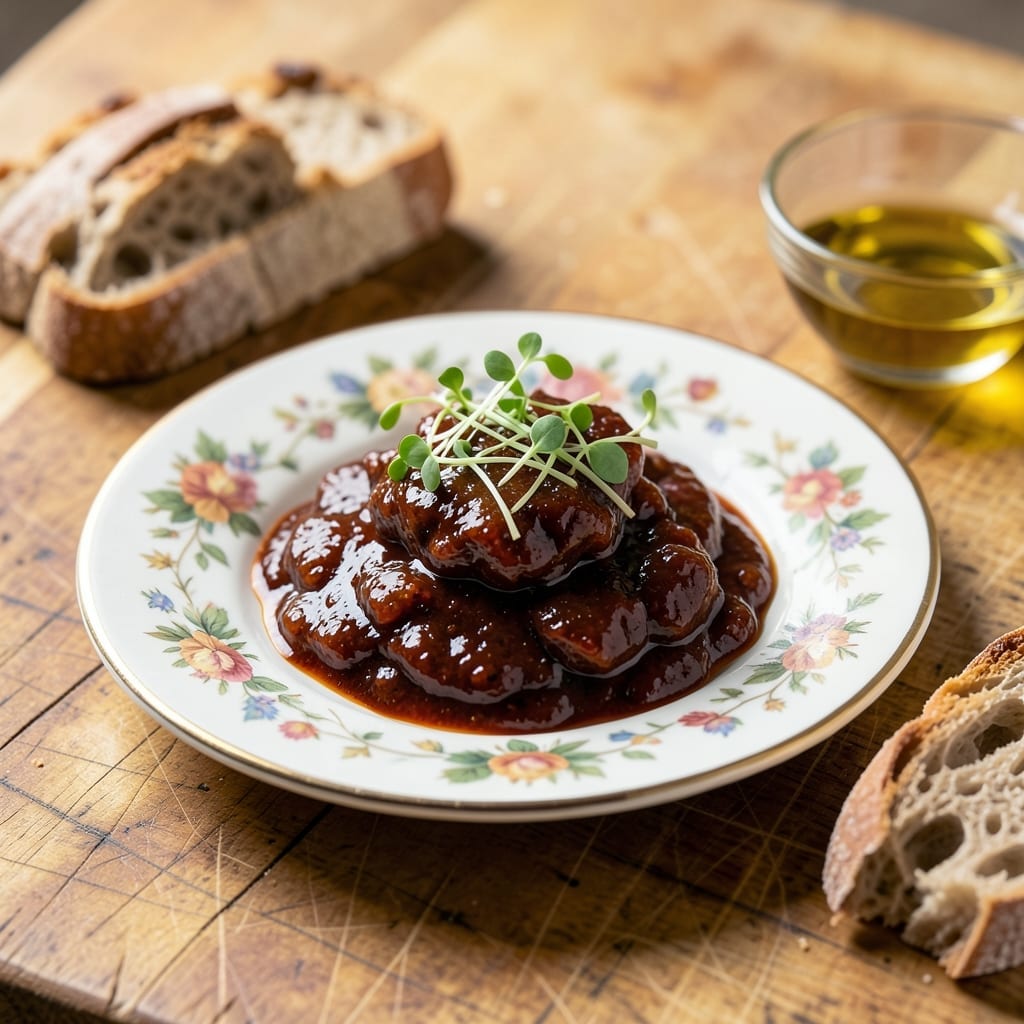
This sauce elevates grilled meats with rich oak-infused depth that store-bought can’t touch. I developed this blend by combining classic BBQ elements with a splash of cognac for complexity.
Perfect balance of sweet, tangy, and smoky with a subtle brandy finish. Use it as a glaze or dipping sauce to transform chicken, ribs, or brisket.
Ingredients for Cognac Bbq Sauce
Nine ingredients blend into a sauce with oak-infused depth no store-bought can match.
| Ingredient | Amount | Notes |
|---|---|---|
| Ketchup 🍅 | 1 ½ cups | High-quality for base sweetness |
| Apple Cider Vinegar 🍏 | ½ cup | Balances sweetness with tang |
| Cognac 🥃 | ½ cup | Oak-aged for depth |
| Worcestershire Sauce 🫒 | 2 tbsp | Adds umami complexity |
| Molasses 🍯 | ¼ cup | Deep, robust sweetness |
| Dijon Mustard 🟡 | 2 tbsp | Sharp, tangy kick |
| Smoked Paprika 🌶️ | 2 tsp | Essential smoky element |
| Garlic Powder 🧄 | 1 tsp | Convenient savory depth |
| Onion Powder 🧅 | 1 tsp | Subtle aromatic base |
| Black Pepper 🌶️ | 1 tsp | Freshly ground preferred |
[recipe_ingredient_scaler]
The cognac is the star here—splurge on a decent bottle (Hennessy VS or Courvoisier VS work great). Ketchup quality matters too; I like Heinz Organic for its cleaner taste. Molasses adds that deep, caramelized richenss—Brer Rabbit is my go-to. Don’t skimp on the smoked paprika; it’s carrying the smoky note since we’re not using liquid smoke.
No cognac? Bourbon or brandy works in a pinch (same amount). Swap molasses for honey or dark brown sugar if needed. Regular paprika plus a pinch of cayenne can stand in for smoked paprika. For a less sweet version, reduce the ketchup by half and add tomato paste to compensate. The Worcestershire is there for umami—soy sauce or tamari can sub in if you’re out.
This keeps for 10 days in the fridge, but honestly, it’s best fresh. For longer storage, freeze in ice cube trays—perfect for portioning. The flavors meld overnight, so make it a day ahead if you can (worth the extra minute).
Why You’ll Love This Recipe
- One Bowl Wonder: I just dump everything in a pot and let it simmer—no fancy prep, no fuss.
- Rich & Complex: The cognac and molasses add a deep, smoky sweetness that’s way beyond basic BBQ sauce.
- Grill Season MVP: I slather it on ribs, brush it on chicken, even stir it into baked beans.
- Makes Extra: Honestly, I always double the batch because it keeps for weeks and tastes even better later.
Step-by-Step Instructions for Cognac BBQ Sauce
Here’s the method. Straightforward, tested, works every time.
Step 1: Combine the Liquid Foundation
In a medium saucepan, whisk together 1.5 cups Ketchup, 0.5 cup Apple Cider Vinegar, and 0.5 cup Cognac until fully incorporated. I start with these liquids first because they form the base of your sauce—sweet, tangy, and rich with that oak-aged complexity.
Place the pan over medium heat and bring to a gentle simmer. You’ll notice the cognac’s aroma becoming more pronounced as it warms—that’s the alcohol starting to cook off, leaving behind its deep, caramelized notes. Don’t rush this; let it warm gradually for 2-3 minutes.
Step 2: Incorporate the Sweet and Umami Elements
Stir in the 0.25 cup Molasses and 2 tbsp Worcestershire Sauce. The molasses will thicken the mixture slightly and add that deep, robust sweetness, while the Worcestershire contributes a savory, umami depth.
At this stage, the sauce will look a bit thin, but don’t worry—it will reduce and thicken as it cooks. Keep the heat at medium and stir occasionally to prevent sticking, especially as the sugars in the molasses start to caramelize.
Step 3: Add the Spices and Mustard
Now, whisk in the 2 tbsp Dijon Mustard, 2 tsp Smoked Paprika, 1 tsp Garlic Powder, 1 tsp Onion Powder, and 1 tsp Black Pepper. The Dijon adds a sharp tang that cuts through the sweetness, while the smoked paprika brings that essential smoky element.
The garlic and onion powders dissolve easily into the warm liquid, infusing the sauce with a subtle aromatic base. I always use freshly ground black pepper when possible—it has a brighter, more complex flavor than pre-ground.
Step 4: Simmer to Perfection
Reduce the heat to low and let the sauce simmer uncovered for 20-25 minutes. Stir occasionally to prevent burning, especially as the sauce begins to thicken.
You’ll know it’s ready when it coats the back of a spoon and has a glossy, slightly syrupy consistency. The flavors will have melded together—sweet, tangy, smoky, with a hint of oak from the cognac. Taste and adjust seasoning if needed, though the balance should be spot-on.
Step 5: Cool and Store
Remove the sauce from the heat and let it cool to room temperature. It will continue to thicken slightly as it cools. Once cool, transfer it to an airtight container or jar.
The sauce can be used immediately, but I’ve found that letting it sit for 24 hours in the refrigerator allows the flavors to develop even further. It will keep in the fridge for up to 2 weeks, or you can freeze it for longer storage. This makes about 4 servings, perfect for your next grilling session.
Pro Tips For Making Cognac Bbq Sauce
- Simmer Low and Slow: Keep the heat at a gentle simmer—too high and the cognac will evaporate before it melts into the sauce. I learned this the hard way after my first batch tasted more like ketchup than BBQ.
- Use Good Cognac: Skip the cheap stuff; a mid-range cognac actually changes the outcome. After wasting money on a bottom-shelf bottle once, I noticed the sauce lacked depth.
- Balance the Vinegar: Apple cider vinegar can overpower if you’re heavy-handed. Start with half the amount you think you need, then adjust—most recipes call for too much.
- Bloom the Molasses: Warm the molasses slightly before mixing it in. Sounds weird, but it works: it blends smoother and avoids that sticky clump at the bottom of the pot.
Dietary Considerations for cognac bbq sauce
Keto-Friendly Options
This sauce can fit a keto diet with a few tweaks. Replace brown sugar with a keto-friendly sweetener like erythritol or allulose, which keep the caramel notes without the carbs. Since cognac is low-carb, you won’t need to swap it out—just ensure other ingredients, like Worcestershire, are sugar-free.
Gluten-Free
To make this sauce gluten-free, opt for tamari or coconut aminos instead of soy sauce. Also, check that your cognac and Worcestershire sauce are certified gluten-free, as some brands use wheat-based additives. Most other ingredients, like tomatoes and vinegar, are naturally gluten-free.
Allergen Awareness
This recipe may contain common allergens like soy (in Worcestershire or soy sauce) and sulfites (in cognac). For a soy-free version, use coconut aminos. If avoiding sulfites, choose a high-quality, sulfite-free cognac. Always verify labels for hidden allergens.
Vegetarian Modifications
Traditional Worcestershire sauce often contains anchovies, but vegetarian or vegan Worcestershire works just as well. Additionally, swap honey for maple syrup or agave to keep it plant-based while maintaining the sauce’s sweet depth.
Low-Sodium Options
To reduce sodium, use low-sodium tomato paste and soy sauce, or omit added salt entirely. Boost flavor with fresh herbs, garlic, or a splash of apple cider vinegar to compensate. This keeps the sauce rich and tangy without excess salt.
Nutrition Facts

Trained in classic French technique but raised on slow-cooked ribs and spicy rubs, she blends culinary skill with smoke and soul.
- Recipe for Boneless Pork Chops in Cast Iron Skillet: Sear and Baste to Juicy Perfection - October 3, 2026
- Recipe for Boneless Cross Rib Roast: Slow-Roasted Beef with Herb Crust - October 3, 2026
- Hamburgers in Sauce Recipe Crock Pot: Slow-Cooked Savory Delight - October 3, 2026