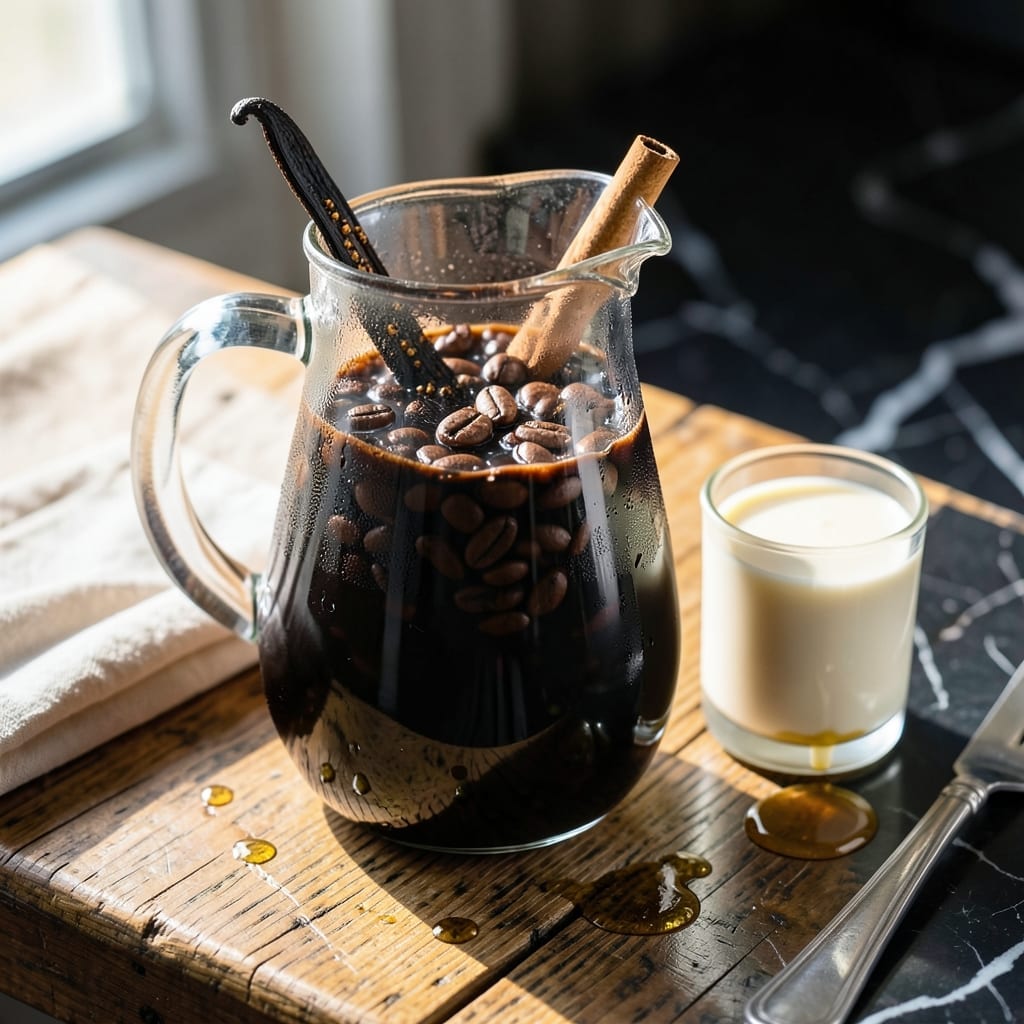
Achieving the ideal cold brew requires precision, not luck. This method delivers a perfectly balanced concentrate with rich, smooth flavor and no bitterness.
With the right coffee-to-water ratio and proper steeping time, you’ll create a versatile base for iced coffee, lattes, or drinking straight over ice.
Ingredients for Cold Brew Recipe Ratio
Six simple components create a smooth, rich concentrate with no bitterness every time.
| Ingredient | Amount | Notes |
|---|---|---|
| Coarsely Ground Coffee Beans ☕ | 1 ½ cups | Dark roast preferred for depth |
| Cold Filtered Water 💧 | 6 cups | Use filtered for cleanest flavor |
| Vanilla Bean 🌿 | 1 whole | Split and scraped, optional |
| Cinnamon Stick 🌰 | 1 piece | Optional for warmth |
| Maple Syrup 🍁 | 2 tbsp | Adjust to taste for sweetness |
| Almond Milk 🥛 | ½ cup | For diluting concentrate |
[recipe_ingredient_scaler]
The coffee beans are critical here. Opt for a dark roast from a specialty shop—local roasters often have the freshest beans. Coarse grinding is non-negotiable for proper extraction. Filtered water removes impurities that can affect flavor. If your tap water tastes off, bottled spring water is a better choice. The vanilla and cinnamon add subtle complexity but can be omitted for a purist approach.
No dark roast on hand? Medium roast works but may lack depth. For sweetness, agave nectar or date syrup substitute well for maple. Dairy-free milk alternatives like oat or coconut milk can replace almond milk. Skip the spices entirely if you prefer a cleaner profile. The ratio of coffee to water is flexible—adjust to your preferred strength.
Store the concentrate in an airtight container in the fridge for up to 2 weeks. The flavors deepen over 24-48 hours. For iced coffee, dilute with equal parts water or milk. Freeze in ice cube trays for 3 months to have cold brew ready anytime.
Why You’ll Love This Recipe
- Set and Forget: No fancy equipment—just combine the coarsely ground coffee and water, then let the countertop do the work overnight.
- Smooth and Sweet: The vanilla and cinnamon infuse the brew with this warm, aromatic depth that’s way smoother than hot coffee, and the maple syrup adds just the right touch of natural sweetness.
- Week Ready: Honestly, I make a big batch Sunday night and it keeps perfectly in the fridge for iced coffee all week—no daily runs to the shop.
- Penny Wise: One pound of beans stretches into multiple pitchers, and it costs a fraction of what cafes charge for the same rich, slow-steeped flavor.
Instructions
Follow this precise method to create a perfectly balanced cold brew concentrate with consistent results.
Step 1: Combine Coffee and Water for Extraction
In a large jar or pitcher, combine the 1.5 cups Coarsely Ground Coffee Beans with all 6 cups Cold Filtered Water. Stir gently to ensure all grounds are fully saturated—you should see no dry pockets floating on the surface.
This ratio creates a strong concentrate that dilutes beautifully. The coarse grind prevents over-extraction and bitterness while allowing for full flavor development. Cover the container with a clean kitchen towel or lid, but don’t seal it completely—this allows for slight airflow during the steeping process.
Step 2: Add Flavor Infusions for Depth
Split the 1 whole Vanilla Bean lengthwise and scrape the seeds into the coffee mixture. Add both the seeds and the pod for maximum vanilla flavor. Toss in the 1 piece Cinnamon Stick as well—these infusions add subtle warmth and complexity to the final brew.
These additions are optional but highly recommended for a gourmet touch. The vanilla bean will release its aromatic compounds during the long steep, while the cinnamon stick imparts a gentle spiced note that complements the coffee’s natural richness. Stir once more to distribute the infusions evenly.
Step 3: Steep at Room Temperature
Let the mixture steep at room temperature for 12-18 hours. I find the sweet spot is 14 hours for optimal extraction—shorter times yield a weaker concentrate, while longer steeps can become overly bitter.
Place the container in a cool, dark place away from direct sunlight or heat sources. The ideal steeping temperature is between 65-70°F. You’ll notice the liquid darkening significantly as the hours pass, transforming from a murky brown to a deep, rich black.
Step 4: Strain and Sweeten the Concentrate
After steeping, strain the mixture through a fine-mesh sieve lined with a coffee filter or cheesecloth into a clean container. This double filtration ensures a smooth, sediment-free concentrate. Press gently on the grounds to extract all liquid, but avoid squeezing which can add bitterness.
Stir in the 2 tbsp Maple Syrup while the concentrate is still at room temperature. The syrup dissolves easily and adds a natural sweetness that balances the coffee’s boldness. Taste and adjust sweetness if desired—remember this is a concentrate, so the sweetness will be more pronounced when diluted.
Step 5: Dilute and Serve
To serve, mix equal parts concentrate with 0.5 cup Almond Milk or water for each serving. The almond milk adds a creamy texture and nutty flavor that pairs exceptionally well with the coffee’s depth. For iced cold brew, pour over ice in a 1:1 ratio with your preferred diluent.
Store the remaining concentrate in the refrigerator for up to 2 weeks. The flavor will mellow slightly over time but remains rich and smooth. For best results, dilute only what you’ll drink immediately to preserve the concentrate’s potency.
Pro Tips For Making Cold Brew Recipe Ratio
- Steep Overnight: I learned this the hard way—anything less than 12 hours and your cold brew will taste weak, even with a 1:8 coffee-to-water ratio.
- Use Cold Water: Hot water extracts bitterness; cold filtered water keeps it smooth and balanced, especially with coarsely ground beans.
- Skip Fine Grinds: Fine grounds clog filters and over-extract, turning your brew muddy—I ruined two batches before switching to coarse.
- Add Syrup Last: Stirring in maple syrup after filtering prevents fermentation and lets you adjust sweetness to taste.
Health Benefits of cold brew recipe ratio
Low Acid Benefits
Cold brew is naturally 60% less acidic than hot-brewed coffee, making it gentler on sensitive stomachs. This lower acidity means you can enjoy it without the heartburn that often follows traditional coffee. 💪
Smoother Digestion
The slow extraction process creates a beverage that’s easier to digest. Many of my friends with acid reflux have switched to cold brew and noticed a significant difference in their comfort levels after drinking.
Rich in Antioxidants
This method preserves more of coffee’s natural antioxidants, particularly polyphenols. These compounds help combat oxidative stress in your body. A 12-ounce serving provides about 200mg of these beneficial plant compounds.
Gentle Caffeine Release
The slower steeping process results in a more gradual caffeine release in your system. This provides sustained energy without the jitters that can come from hot coffee. I find my energy levels stay steady for hours after drinking.
Hydration Friendly
With its lower acidity, cold brew is less likely to dehydrate you than hot coffee. The 1:4 coffee-to-water ratio in this recipe creates a concentrate that, when diluted, maintains good hydration properties. 💧
Dental Health
The reduced acidity also means cold brew is less damaging to tooth enamel. Regular coffee drinkers often notice less tooth sensitivity after switching to cold brew. Plus, the natural sweetness from maple syrup means you can skip artificial sweeteners.
Nutrition Facts
Frequently Asked Questions
What happens if I use finely ground coffee?
Using fine grounds will result in a cloudy, over-extracted brew with noticeable bitterness. The coarse grind is essential for clean filtration and smooth flavor.
Can I steep cold brew in the refrigerator?
Yes, but it will take 24-36 hours to achieve similar extraction. Room temperature steeping at 65-70°F is more efficient for full flavor development.
How do I adjust the strength?
For a stronger concentrate, increase coffee to 2 cups. For milder, reduce to 1 cup while keeping 6 cups water. Always taste before diluting.
Why is my cold brew watery?
This usually means the grounds weren’t fully saturated or the steep time was too short. Ensure all grounds are submerged for at least 12 hours.

Trained in classic French technique but raised on slow-cooked ribs and spicy rubs, she blends culinary skill with smoke and soul.
- Recipe for Boneless Pork Chops in Cast Iron Skillet: Sear and Baste to Juicy Perfection - October 3, 2026
- Recipe for Boneless Cross Rib Roast: Slow-Roasted Beef with Herb Crust - October 3, 2026
- Hamburgers in Sauce Recipe Crock Pot: Slow-Cooked Savory Delight - October 3, 2026