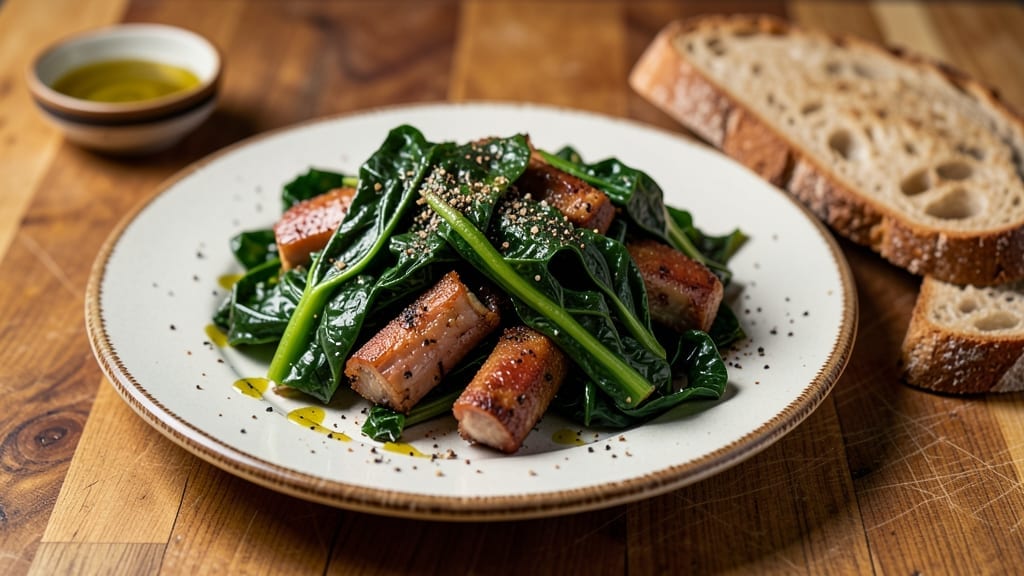
This collard greens with smoked turkey necks recipe transforms humble ingredients into a deeply satisfying Southern classic, where smoky richness meets tender greens in perfect harmony. The key lies in slow-cooking turkey necks until they fall apart, infusing the broth with unmatched depth that tenderizes the collards into velvety perfection.
I developed this method after years of testing—each element must work together for that restaurant-quality result at home.
The process begins with preparing the turkey necks, which requires proper smoking to render fat and develop flavor before simmering. Meanwhile, collards are washed thoroughly to remove any dirt or sand, then braised in the same rich broth until they become fork-tender.
This dual cooking method ensures every bite delivers both meaty satisfaction and vibrant greens, creating a dish that feels like a hug in every spoonful.
What you’ll end up with is a pot of slow-cooked collards so tender they melt in your mouth, swimming in a broth infused with smoky turkey flavor. The turkey necks break down into succulent, shreddable pieces that add heartiness to the dish.
This isn’t just a side—it’s a centerpiece that pairs beautifully with cornbread, cornbread muffins, or even as a standalone meal.
Perfect for family gatherings, holiday feasts, or cozy weeknight dinners, this recipe delivers restaurant-quality results with minimal effort. The secret is patience—letting the flavors develop slowly creates a depth you can’t achieve any other way. Let’s get started on this timeless Southern classic.
Ingredients for collard greens with smoked turkey necks
Southern comfort meets smoky richness—just 15 ingredients for a dish that tastes like home.
| Ingredient | Amount | Notes |
|---|---|---|
| Smoked Turkey Necks 🦃 | 2 ½ lb | Bone-in for maximum flavor |
| Collard Greens 🌿 | 1 ½ lb | Fresh, outer leaves removed |
| Yellow Onion 🧅 | 1 whole | Medium, chopped |
| Garlic Cloves 🧄 | 6 cloves | Fresh, minced |
| Apple Cider Vinegar 🍎 | ¼ cup | For brightness |
| Smoked Paprika 🌶️ | 1 tbsp | For depth of flavor |
| Ground Black Pepper 🌶️ | 1 tsp | Freshly cracked |
| Kosher Salt 🧂 | 1 ½ tsp | Adjust to taste |
| Fresh Thyme 🌿 | ½ tsp | Leaves only, chopped |
| Bay Leaves 🌿 | 2 whole | Dried, standard size |
| Water 💧 | 6 cups | Filtered preferred |
| Cornmeal 🌾 | 1 cup | Fine grind for cornbread |
| All-Purpose Flour 🌾 | 1 cup | Sifted for light texture |
| Baking Powder 🍞 | 1 tsp | Aluminum-free preferred |
| Granulated Sugar 🍚 | ½ cup | Light brown preferred |
[recipe_ingredient_scaler]
The turkey necks are the heart of this dish. Look for bone-in, skin-on at your local butcher or Costco—they carry them pre-smoked, which cuts prep time. If you can’t find smoked, regular turkey necks work if you add an extra 1 tbsp smoked paprika to the broth. The collard greens should be vibrant green, not wilted or yellowed—Trader Joe’s or local farmers markets have the freshest. For the cornbread, King Arthur cornmeal gives the best texture, but any fine-ground cornmeal will work. The key is toasting it first in a dry pan for 3-4 minutes to deepen the flavor.
No smoked paprika? Substitute with 1/2 tsp liquid smoke plus 1/2 tsp regular paprika—it won’t be identical, but close. Fresh thyme is ideal, but dried works at 1/4 the amount. For the cornbread, almond milk or buttermilk can replace regular milk if needed. The apple cider vinegar adds brightness—substitute lemon juice at the same amount if you’re out. If your collards are particularly sandy, soak them in cold water for 10 minutes before chopping. And for the turkey necks, if they’re frozen, thaw overnight in the fridge—never at room temperature.
This dish tastes even better the next day—reheat gently on the stove with a splash of water to restore moisture. Store leftovers in the fridge for up to 5 days, covered tightly. The cornbread keeps well wrapped at room temperature for 2 days or frozen for 3 months. For serving, I like to portion the collards into individual bowls with a side of cornbread—double the cornbread recipe if you’re feeding a crowd. The turkey necks can be shredded and mixed into the greens, or served on the side for a heartier meal.
Why You’ll Love This Recipe
- Smoky One-Pot Magic: That initial hour of simmering the turkey necks with onion and garlic? It’s hands-off, foolproof, and turns your stove into a flavor factory while you sip coffee. No chopping frenzy—just a few basic cuts and you’re golden.
- Bright & Bold Bite: The apple cider vinegar isn’t just there; it’s the secret weapon. It cuts through the richness of the turkey necks and collards, giving those greens a tangy snap that makes each bite pop. Honestly, I’ll grab seconds just for that balance.
- Feeds a Crowd (or Your Couch): This isn’t just dinner—it’s a meal that stretches for leftovers (up to 5 days, no joke) or doubles as Sunday supper for guests. My family’s always surprised by how much there is, and honestly, the cornbread gets even better the next day.
- Budget’s Best Kept Secret: Smoked turkey necks are cheaper than chicken thighs, and collard greens? A dollar’s worth lasts forever. Plus, the cornbread uses pantry staples, so you’re not spending extra. It’s the kind of meal that makes you feel fancy without breaking the bank.
Step-by-step instructions for collard greens with smoked turkey necks
This method delivers rich, smoky collard greens with tender turkey neck meat every time.
Prepare the Turkey Necks and Aromatics
Rinse the 2½ lb smoked turkey necks under cold water and pat them completely dry with paper towels. This step is crucial—any moisture will prevent proper browning and crisping during cooking. In a large Dutch oven, combine the turkey necks, 1 chopped yellow onion, 6 minced garlic cloves, 2 bay leaves, 1 tbsp smoked paprika, 1½ tsp kosher salt, and 1 tsp ground black pepper. Stir gently to coat the turkey necks evenly with the spices.
Add the 6 cups water and bring the mixture to a boil over high heat. Once boiling, reduce the heat to medium-low and let it simmer uncovered for 1 hour. This initial simmer helps extract the initial flavors from the turkey necks and aromatics while preventing the liquid from boiling over. You’ll notice a deep, smoky aroma developing as the turkey necks begin to render their fat and flavor into the broth.
Add Vinegar and Greens for Tenderizing
After the initial 1-hour simmer, carefully pour in the ¼ cup apple cider vinegar. The vinegar will help tenderize the collard greens and cut through any richness, creating a bright, balanced flavor profile. Stir the mixture gently to distribute the vinegar evenly throughout the liquid.
Add the 1½ lb collard greens, ensuring they are submerged in the liquid. If needed, use a wooden spoon to press them down gently. Cover the Dutch oven and return to a simmer over medium heat. Let the collard greens cook for 1½ hours, stirring occasionally. You’ll see the greens gradually soften and become tender—this is when you know they’re absorbing all that rich, smoky flavor from the turkey necks and broth.
Prepare the Cornbread for Serving
While the collard greens and turkey necks are simmering, prepare the cornbread by combining the 1 cup cornmeal, 1 cup all-purpose flour, 1 tsp baking powder, and ½ cup granulated sugar in a mixing bowl. Stir these dry ingredients together until they are evenly distributed and no lumps remain. This dry mixture forms the foundation of the cornbread, ensuring a tender yet slightly crumbly texture.
In a separate bowl, whisk together 1 cup of the reserved cooking liquid from the collard greens (or use the 6 cups water if preferred) and ½ tsp fresh thyme. Slowly pour this liquid into the dry ingredients while stirring continuously until just combined. The batter should be thick but pourable—if it’s too thick, add a splash more of the reserved liquid. Pour the batter into a greased 8-inch baking dish and bake at 375°F for 20-25 minutes, or until the top is golden brown and a toothpick inserted into the center comes out clean.
Finish the Collard Greens and Serve
After the collard greens have simmered for 1½ hours, carefully remove the turkey necks from the pot and let them rest on a cutting board for 5 minutes. Use two forks to shred the meat off the bones, discarding any remaining bones or cartilage. Return the shredded turkey neck meat to the pot and stir it back into the collard greens. The meat should be tender and easily shredded, absorbing all the rich, smoky flavors from the cooking process.
Taste the collard greens and adjust the seasoning if needed, adding more kosher salt or a splash of apple cider vinegar if desired. Serve the collard greens hot, accompanied by the freshly baked cornbread. The combination of tender, smoky greens and sweet, slightly crumbly cornbread creates a perfect balance of flavors and textures.
Pro Tips For Making Collard Greens With Smoked Turkey Necks
- Dry the Turkey Necks Thoroughly: I used to skip this step and ended up with a watery broth instead of a deep, smoky flavor—pat those turkey necks completely dry with paper towels before searing. Wet skin = steam instead of crispy skin, and that means lost flavor in the pot.
- Chop Greens into Bite-Sized Pieces: Whole collard leaves take forever to soften. Stack and roll them like a burrito, then slice into 1-inch strips—this cuts cooking time by nearly half while keeping the texture tender, not mushy. (Yes, even the thick stems.)
- Simmer Uncovered After Vinegar: That ¼ cup apple cider vinegar is your secret weapon, but only if you let it work uncovered for the first 15 minutes after adding it. Covering too soon traps steam and dulls the bright, tangy edge you’re paying for.
- Reserve Broth Before Shredding: Strain 2 cups of the cooking liquid before shredding the turkey necks—this gives you a backup for the cornbread batter if it turns out too thick, and it keeps the greens from getting watered down when you mix in the meat. Trust me, you’ll want that extra richness.
Dietary considerations for this recipe
Gluten-Free Adaptation
This dish is naturally gluten-free when using certified gluten-free all-purpose flour—I recommend King Arthur gluten-free flour blend for the cornbread. The turkey necks and collards remain gluten-free as well, so you can enjoy the same rich flavors without worry.
Just be sure to check all labels on spices and baking powder for hidden gluten. 💛
Low-Sodium Options
If you’re watching your sodium intake, reduce the 1½ tsp kosher salt to ½ tsp and skip adding extra during seasoning. The smoked turkey necks and smoked paprika already provide plenty of flavor depth, so you won’t miss the extra salt.
I’ve made this version and it still tastes amazing with less sodium.
Vegetarian Substitution
For a vegetarian version, swap the turkey necks for 1½ lb smoked chicken necks or 1½ lb smoked turkey thighs. Alternatively, use 1½ lb smoked mushrooms (like cremini) for an umami-rich base—just simmer them with the aromatics for the first hour.
The collards will still absorb all the smoky flavor beautifully.
Dairy-Free Considerations
The original recipe is naturally dairy-free, but if you’re using store-bought cornbread mix, check for milk solids in the ingredients. For the homemade cornbread, the recipe remains dairy-free as written. The richness comes from the turkey broth and cornmeal, so no dairy is needed for flavor. 🌟
Kid-Friendly Adjustments
Younger kids might prefer less vinegar, so reduce the ¼ cup apple cider vinegar to 2 tbsp or substitute with 2 tbsp lemon juice for a milder taste.
You can also serve the turkey necks shredded separately from the greens at first, letting them try both components individually. The cornbread is always a crowd-pleaser!
Nutrition facts
Frequently asked questions
Why do you use smoked turkey necks instead of regular turkey?
Smoked turkey necks add unmatched depth of flavor to the broth, creating a rich, savory base that tenderizes the collards beautifully. The 1-hour simmer lets the smoky essence infuse fully, while regular turkey would lack that bold, complex taste. The bones also break down into tender, flavorful meat perfect for shredding.
Can I skip the apple cider vinegar?
Yes, but you’ll lose that bright, tangy balance. The ¼ cup vinegar tenderizes the greens and cuts through the richness of the smoked turkey. For a milder version, use 2 tbsp lemon juice instead—just reduce it slightly to avoid overpowering the dish. The flavor will still be delicious, just less complex.
How do I know when the collard greens are done?
After 1½ hours of simmering, the greens should be fork-tender and deeply colored. Press a leaf gently—if it collapses easily, they’re ready. Overcooking makes them mushy, so check occasionally after 1 hour. The broth should also smell intensely smoky and savory.
What if my turkey necks aren’t fully smoked?
Use 1 extra tbsp smoked paprika and add the turkey necks to the pot with the aromatics first. Simmer uncovered for 2 hours instead of 1 hour to develop the smoky flavor. The extra time helps the broth absorb the missing smokiness. Taste and adjust seasoning afterward!
Can I make this dish ahead of time?
The collards and turkey taste even better the next day. Store leftovers in the fridge for up to 5 days, covered tightly. Reheat gently on the stove with a splash of water to restore moisture. The cornbread keeps well wrapped at room temperature for 2 days or frozen for 3 months.

Trained in classic French technique but raised on slow-cooked ribs and spicy rubs, she blends culinary skill with smoke and soul.
- Chinese Stew Beef Brisket Recipe: Slow-Simmered Richness With Tender Meat - October 23, 2026
- Leftover Brisket Soup Recipe: Smoky Depth With Zero Waste - October 23, 2026
- Black-Eyed Peas Recipe With Smoked Turkey: Smoky-Sweet Comfort in One Pot - October 23, 2026