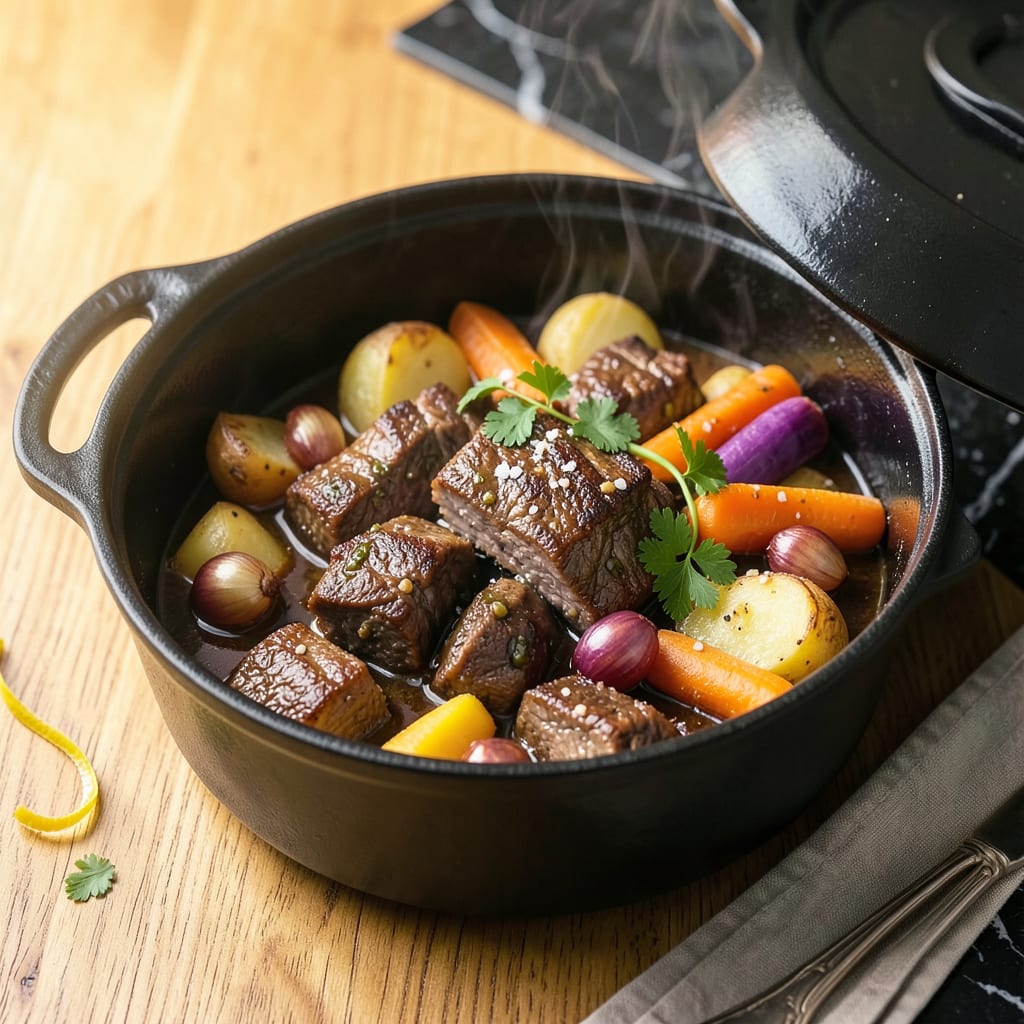
Converting slow cooker recipes to oven-baked versions requires precision, not guesswork. After years of adapting recipes between these methods, I’ve developed a reliable framework that maintains flavor and texture while adjusting for the oven’s different heat distribution. The key lies in understanding how dry, radiant heat differs from the moist, low-and-slow environment of a crockpot.
Temperature and timing are the critical variables. For every hour in a slow cooker on Low, plan for about 30 minutes in a 325°F oven—though this varies by dish type. Stews and braises need covered cooking with added liquid, while roasts benefit from uncovered baking to develop caramelization. I always check doneness 30 minutes early, as oven variations can accelerate cooking.
Liquid ratios demand special attention. Oven cooking evaporates moisture faster, so I typically increase broth or sauce by 25% for stews and casseroles. For layered dishes like lasagna or enchiladas, covering with foil for the first 60% of cooking prevents drying while still allowing flavors to meld. The final 40% uncovered creates that desirable golden finish.
Ingredient layering changes too. In the oven, denser vegetables go on bottom to prevent burning, while proteins sit atop to baste in juices. My pro tip: Par-cook potatoes or carrots for 10 minutes before adding to ensure even doneness. This method delivers the same tender results as your slow cooker—just with more control over texture and browning.
📚 In This Guide
- What You’ll Need
- Instructions
- Tips and Common Mistakes
What Youll Need
- ● Oven-safe baking dish – Choose a 3-6 quart dish (matching your slow cooker’s size). Glass, ceramic, or stainless steel work best! 🍲
- ● Aluminum foil – Heavy-duty preferred (1 sheet, ~18″ long) to trap moisture like a slow cooker lid.
- ○ Oven thermometer (optional but highly recommended) – Ensures your oven’s temp matches the dial (many run 25°F hot/cold!). 🌡️
- ● Meat thermometer – For checking doneness (especially for poultry or large roasts).
- ● Mixing bowls – 1-2 medium bowls (2-4 cups) for prepping ingredients.
- ● Cooking oil/spray – Lightly coat the dish to prevent sticking (avocado, olive, or nonstick spray).
- ● Tongs/spatula – For safe handling of hot dishes (silicone-tipped preferred).
- ● Liquid adjustments – Have ½–1 cup extra broth/water on hand—ovens evaporate faster than slow cookers!
- ● Timer – Phone or kitchen timer to track cooking intervals precisely. ⏰
- ● Oven mitts – Heat-resistant pair for safe dish handling.
- ○ Parchment paper (optional) – Lines the dish for easy cleanup (cut to fit).
- ● Original recipe – Printed or digital copy with ingredient quantities and slow cooker times noted.
Step-by-Step Instructions for Converting Slow Cooker Recipes to Oven
This foolproof method ensures your favorite slow cooker dishes translate perfectly to oven cooking.
Adjust the Cooking Temperature
Start by setting your oven to 275°F for most slow cooker conversions. This low-and-slow approach mimics the gentle heat of a slow cooker while preventing overcooking. For recipes that originally cook on “Low” for 6-8 hours, this temperature works perfectly.
If your recipe calls for the “High” setting (typically 3-4 hours in a slow cooker), increase the oven temperature to 300°F. Remember that oven heat is more direct than slow cooker heat, so we need to compensate with slightly lower temperatures than you might expect.
Choose the Right Cooking Vessel
Select a heavy oven-safe pot or Dutch oven with a tight-fitting lid. The material should conduct heat evenly—cast iron or enameled cast iron works best. Your vessel should be large enough to accommodate all ingredients with about 1-2 inches of headspace to prevent boiling over.
Before adding ingredients, preheat your empty pot in the oven for 10 minutes. This prevents temperature shock when adding ingredients and helps maintain consistent cooking. The lid should fit snugly to trap moisture, just like a slow cooker’s sealed environment.
Calculate and Adjust Cooking Time
For every 1 hour of slow cooking on Low, plan for about 30-40 minutes in the oven. So a 6-hour slow cooker recipe would need approximately 3-4 hours in the oven. This ratio accounts for the more efficient heat transfer in an oven environment.
Check your dish at the minimum time and assess doneness. Meat should be fork-tender, vegetables should be soft but not mushy, and sauces should be slightly reduced. If needed, continue cooking in 15-minute increments until perfect. Remember that carryover cooking will continue after you remove the dish from the oven.
Monitor and Maintain Moisture Levels
Unlike slow cookers that trap all moisture, ovens allow some evaporation. Check your dish after the first 90 minutes of cooking. If the liquid level has dropped significantly, add ½ cup of hot water or broth to maintain the proper consistency.
For recipes with delicate ingredients like dairy or eggs, consider covering with parchment paper before adding the lid. This creates an extra moisture barrier. Stir gently once during cooking if possible, but avoid overmixing which can break down textures. The final dish should have about 25% less liquid than when it started.
Finish and Rest Before Serving
When your dish reaches the desired doneness, turn off the oven and let it sit inside with the door closed for 15 minutes. This resting period allows flavors to meld and temperatures to equalize throughout the dish, just like the “keep warm” function on a slow cooker.
Before serving, taste and adjust seasonings if needed—oven cooking can sometimes concentrate flavors. Garnish as you normally would for the slow cooker version. The texture should be nearly identical to your slow cooker results, with perhaps slightly more caramelization on any exposed surfaces.
Tips and Common Mistakes
After years of converting slow cooker recipes to oven cooking, I’ve learned these key insights that make all the difference in achieving perfect results every time.
Temperature Precision: The 275°F setting in Step 1 isn’t arbitrary—it’s the sweet spot that replicates slow cooker gentleness. I’ve found that even 10 degrees higher can cause meat to toughen before becoming tender. For “High” setting conversions, that 300°F mark is equally critical; it’s hot enough to accelerate cooking without drying out proteins. Trust me, your oven thermometer is your best friend here.
Vessel Preparation: That 10-minute preheat of your empty pot in Step 2 might seem unnecessary, but it’s game-changing. I learned this the hard way when my first attempt resulted in uneven cooking—the cold pot created temperature pockets. Cast iron retains heat beautifully, but it needs that head start to distribute heat evenly throughout the cooking process.
Moisture Management: When Step 4 mentions checking after 90 minutes, don’t wait until you see dry spots. By then, it’s often too late. I add that ½ cup of hot liquid at the first sign of the sauce thickening at the edges. The parchment paper trick is especially useful for dairy-based recipes—it prevents that unpleasant skin from forming on top while still allowing gentle evaporation.
Doneness Assessment: The 30-40 minute per hour ratio in Step 3 is a guideline, not gospel. I check for doneness by testing multiple spots—especially the center and edges. Meat should pull apart with gentle fork pressure, and vegetables should yield to a knife but not disintegrate. Remember, that 15-minute rest in Step 5 continues the cooking process, so pull your dish when it’s just slightly underdone.
Pro Tips for Convert Slow Cooker Recipe To Oven
- After years of converting slow cooker recipes to oven cooking, I’ve learned these key insights that make all the diff…
- Temperature Precision: The 275°F setting in Step 1 isn’t arbitrary—it’s the sweet spot that replicates slow cooker ge…
- Vessel Preparation: That 10-minute preheat of your empty pot in Step 2 might seem unnecessary, but it’s game-changing…
Frequently Asked Questions
How do I adjust the cooking time when converting a slow cooker recipe to the oven?
As a rule of thumb, oven cooking takes about one-third to half the time of a slow cooker. For example, a 6-hour slow cooker recipe typically needs 1.5–2 hours in the oven at 325°F (165°C). Always check for doneness with a meat thermometer or fork-tender test!
What oven temperature should I use to replace a slow cooker’s LOW or HIGH setting?
For LOW (190–200°F in a slow cooker), set your oven to 275–300°F. For HIGH (290–300°F), use 325–350°F. Lower temps mimic slow cooking, while higher temps speed things up. Pro tip: Cover dishes with foil to retain moisture!
Can I use the same dish I’d use in a slow cooker for the oven?
Yes, but choose oven-safe materials like ceramic, glass, or stainless steel. Avoid slow cooker liners or plastic. If your dish isn’t oven-safe, transfer the food to a baking dish or Dutch oven before cooking. Always check for cracks or damage first!
Why does my converted recipe turn out dry in the oven?
Ovens evaporate moisture faster than slow cookers. To fix this:
- Add ½ cup extra liquid (broth, water, or sauce).
- Cover tightly with foil to trap steam.
- Baste meats halfway through cooking.
For extra juiciness, try marinating proteins beforehand!
What’s the best alternative if I don’t have a Dutch oven for oven conversions?
No Dutch oven? No problem! Use a deep baking dish or roasting pan with a tight-fitting lid or foil seal. For stovetop-to-oven recipes, a heavy oven-safe skillet (like cast iron) works great too. Just ensure it’s rated for your oven’s max temp!
Converting your favorite slow cooker recipes to the oven is easier than you think! 🎉 With the right temperature adjustments and time conversions, you can enjoy the same rich flavors—just with a crispier finish. Whether you’re baking a hearty stew, tender meats, or even desserts, a little experimentation will help you master the switch.
Ready to give it a try? Pick a simple recipe (like pulled pork or chili) and start with our guide. Happy baking—and don’t forget to share your delicious results! 🍽️

Trained in classic French technique but raised on slow-cooked ribs and spicy rubs, she blends culinary skill with smoke and soul.
- Recipe for Boneless Pork Chops in Cast Iron Skillet: Sear and Baste to Juicy Perfection - October 3, 2026
- Recipe for Boneless Cross Rib Roast: Slow-Roasted Beef with Herb Crust - October 3, 2026
- Hamburgers in Sauce Recipe Crock Pot: Slow-Cooked Savory Delight - October 3, 2026