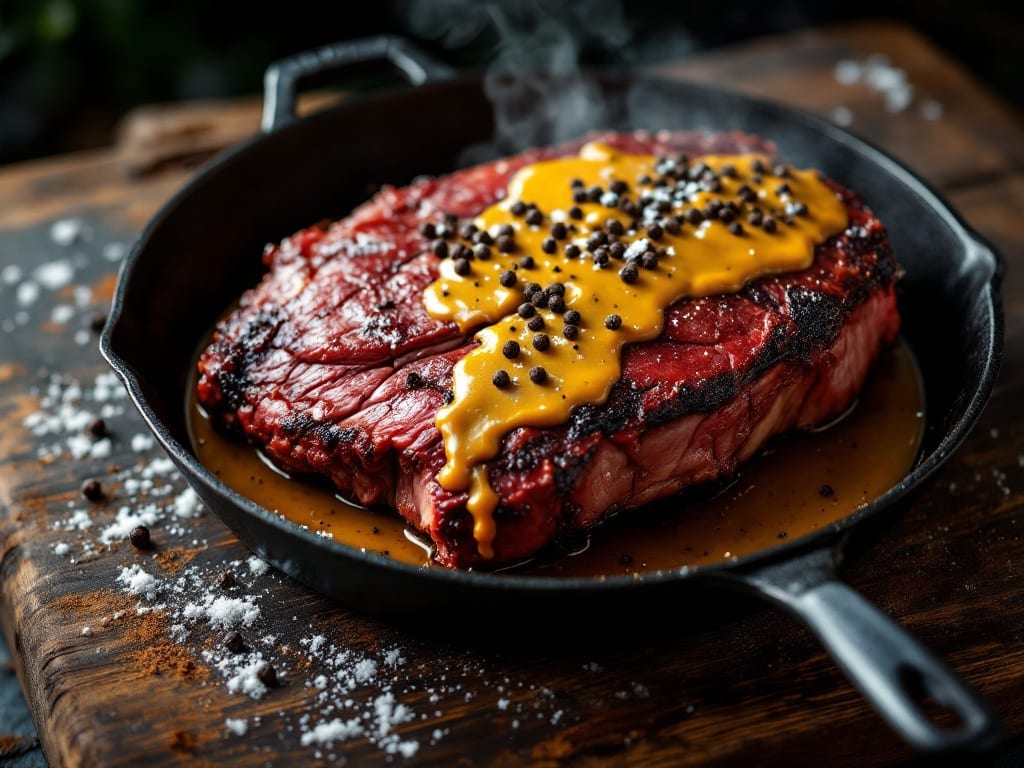
The cooked brisket recipe that delivers restaurant-quality results at home requires patience, precision, and a few key techniques to transform a tough cut into fork-tender perfection.
After years of perfecting this method, I’ve cracked the code for achieving that coveted smoky-spiced crust while keeping the meat inside so tender it practically melts. The secret lies in a slow, controlled cooking process that develops deep flavor without drying out the meat.
This recipe uses a simple yet effective dry rub that clings to the brisket, creating a flavorful bark while allowing the meat to retain moisture. We’ll focus on a low-and-slow approach—whether in a smoker, oven, or slow cooker—ensuring the connective tissue breaks down for that signature tenderness.
The goal is a brisket that’s fork-tender, with a dark, aromatic crust and a rich, juicy interior that falls apart at the touch of a fork.
By the time you’re done, you’ll have a brisket that’s worth the wait—ideal for feeding a crowd or meal prepping for the week. The smoky aroma alone will have everyone anticipating dinner, and the first bite delivers on that promise of melt-in-your-mouth texture.
Whether you’re hosting a barbecue or simply treating yourself, this method guarantees results that rival your favorite smoked brisket.
Pair it with classic sides like coleslaw, cornbread, or baked beans to complete the meal. Let’s get started on creating brisket that’s impossible to resist.
Ingredients for cooked brisket
Eight pounds of brisket plus a few key ingredients transform into smoky perfection.
| Ingredient | Amount | Notes |
|---|---|---|
| Packer Brisket 🥩 | 8 lb | Whole packer cut, fat cap intact |
| Yellow Mustard 🍯 | ¼ cup | For binder application |
| Coarse Kosher Salt 🧂 | ½ cup | Diamond Crystal preferred |
| Black Peppercorns 🌶️ | 2 tbsp | Freshly cracked, coarse grind |
| Smoked Paprika 🌶️ | 2 tbsp | High-quality, not sweet |
| Garlic Powder 🧄 | 1 tbsp | Freshly ground preferred |
| Onion Powder 🧅 | 1 tbsp | Not onion salt |
| Ground Cumin 🌿 | 1 tbsp | Toasted for depth |
| Chili Powder 🌶️ | 1 tbsp | Medium heat preferred |
| Brown Sugar 🍯 | 2 tbsp | Light or dark, packed |
| Apple Cider Vinegar 🍎 | ½ cup | For spritzing during cook |
| Beef Broth 🍲 | 1 cup | Low-sodium, for spritzing |
| Wood Chips 🌳 | 2 cups | Hickory or oak preferred |
| Wood Chunks 🌳 | 1 lb | For smoker or oven roasting |
| Butter 🧈 | ½ cup | Unsalted, for basting |
[recipe_ingredient_scaler]
The brisket is everything here. Packer cuts with that thick fat cap are non-negotiable—they self-baste while cooking. Grab one from Costco or your local butcher, and ask for the whole packer cut (not flat or point separately). The fat cap should be at least 1/4-inch thick. If you’re buying pre-cut, look for a 4-5 lb flat and 3-4 lb point—they’ll cook at different rates. For the rub ingredients, Penzeys or bulk bins at Whole Foods have the best quality, but the grocery store stuff works fine if it’s fresh. Smoked paprika should smell woodsy, not stale, and your spices should be ground within the last year.
No yellow mustard? Dijon or olive oil works as a binder—just don’t skip it, or the rub won’t stick. Short on brown sugar? Honey or maple syrup at half the amount adds moisture without overpowering. The wood chips matter too—hickory for classic BBQ, oak for milder smoke. If you’re oven-roasting, soak the wood chunks in water for 30 minutes first. For the spritz, apple cider vinegar cuts the richness while beef broth adds depth. The butter at the end? Full-fat, unsalted—it bastes the brisket and adds a luxurious finish. No need to stress about exact measurements here; eyeball the spices and trust your taste.
Brisket reheats like a dream—wrap in foil with a splash of broth and warm in the oven at 300°F for 1-2 hours. Store cooked brisket in the fridge for 5-6 days or freeze for up to 3 months. For meal prep, slice against the grain and portion into containers. The rub keeps indefinitely in an airtight container, so make extra. The wood chips? Store them in a sealed bag in the freezer to keep them dry. This brisket gets better the next day—plan ahead and thank yourself later.
Why You’ll Love This Recipe
- I’ll be real: this is my go-to when I need to feed a crowd without slaving away for hours. It’s perfect for game day, holiday leftovers, or even a lazy Sunday when you don’t want to cook. Plus, it reheats like a dream—no dry, sad meat here.
- Just Five Ingredients: Honestly, I swear by this recipe because it’s that simple—no fancy rubs or secret marinades. Toss the brisket with mustard, salt, pepper, and smoked paprika, then let the oven do the heavy lifting. That’s it. No stress, no mess.
- Smoky-Sweet Magic: Between us, the yellow mustard and smoked paprika create this ridiculously addictive balance—tangy, smoky, and just salty enough to make your taste buds dance. The crust? Crispy enough to stand up to a fork, but the inside stays tender. That’s the kind of brisket that disappears fast.
- Weeknight Hero: I’ll be real: this is my go-to when I need to feed a crowd without slaving away for hours. It’s perfect for game day, holiday leftovers, or even a lazy Sunday when you don’t want to cook. Plus, it reheats like a dream—no dry, sad meat here.
Step-by-step instructions for smoky-spiced brisket
Here’s the method that delivers that perfect balance of smoky bark and fork-tender meat every time.
Prepare the Brisket with Mustard and Rub
Start by trimming the fat cap of the 8 lb packer brisket to about ¼ inch thickness using a sharp boning knife. This ensures even cooking while preserving moisture. Pat the entire surface dry with paper towels—moisture is the enemy of that perfect smoky crust.
In a small bowl, combine the 0.5 cup coarse kosher salt, 2 tbsp freshly cracked black peppercorns, 2 tbsp smoked paprika, 1 tbsp garlic powder, 1 tbsp onion powder, 1 tbsp ground cumin, 1 tbsp chili powder, and 2 tbsp brown sugar. Mix thoroughly to create an even spice blend. This is your dry rub, and it’s what will give your brisket that complex, layered flavor.
Apply a thin, even layer of the 0.25 cup yellow mustard to the entire surface of the brisket using your hands or a brush. The mustard acts as a binder for the rub, ensuring it sticks and penetrates the meat. Sprinkle the dry rub generously over the mustard-coated brisket, pressing it into the meat so it adheres well. Place the brisket on a wire rack set over a tray and refrigerate uncovered for 12-24 hours. This dry-brining step is crucial—it enhances flavor and ensures that smoky crust you’re after.
Set Up the Smoker for Low and Slow Cooking
Soak the 2 cups wood chips in water for at least 30 minutes before using. This prevents them from burning too quickly and creating bitter smoke. Fill your smoker with the soaked wood chips and 1 lb wood chunks, then preheat to 225°F. I like to use a combination of hickory and oak for that classic brisket flavor profile—it’s bold but balanced.
Once the smoker reaches temperature and you see steady, thin blue smoke (not thick white steam), it’s ready. Place the brisket fat-side up on the smoker grates. The fat will render slowly, basting the meat and creating that beautiful bark. Close the lid and resist the urge to peek—every time you open it, you lose heat and moisture, adding unnecessary time to your cook.
Here’s the thing—this is where patience pays off. Cook the brisket undisturbed for 6-8 hours, maintaining that 225°F temperature. You’ll know it’s time to spritz when the internal temperature hits 165-170°F. This is called “the stall,” and it’s completely normal. The brisket will stop rising in temperature as moisture evaporates from the surface.
Spritz and Wrap for Maximum Tenderness
When you hit the stall, it’s time to spritz. Mix the 0.5 cup apple cider vinegar with the 1 cup beef broth in a spray bottle. This combination adds moisture and acidity, which helps break down collagen and tenderize the meat. Spritz the brisket every 30-45 minutes with this mixture—you should use about ¼ of the total mixture per spritz.
Continue cooking until the internal temperature reaches 195-203°F. This is when the brisket becomes fork-tender, and a probe should slide in like butter with no resistance. At this point, wrap the brisket tightly in butcher paper (not aluminum foil—paper allows the bark to breathe while retaining moisture). This technique, known as the “Texas crutch,” helps you power through the stall while maintaining that crispy exterior.
Return the wrapped brisket to the smoker and cook for another 1-2 hours, or until the internal temperature reaches 205°F. The brisket should now be probe-tender and ready for resting. The butcher paper wrap ensures you get that perfect balance of tender meat and smoky bark.
Rest and Slice for Perfect Texture
Remove the brisket from the smoker and transfer it to a cutting board. Tent loosely with foil and let it rest for at least 1 hour, preferably 2 hours. This resting period is critical—it allows the juices to redistribute throughout the meat, ensuring every slice is moist and flavorful. If you skip this step, you’ll end up with dry, tough meat.
While the brisket rests, preheat your oven to 250°F. This low temperature helps maintain the internal heat while you slice. Locate the grain direction on the brisket—you’ll see lines running through the meat. Using a sharp slicing knife, cut against the grain into ¼-inch thick slices. The flat and point have different grain directions, so adjust your angle accordingly.
Serve the brisket immediately, topped with the 0.5 cup softened butter if desired. Each slice should be tender enough to pull apart with a gentle tug, with a dark mahogany bark on the outside and a beautiful pink smoke ring just beneath. The combination of the smoky-spiced crust and fork-tender meat is what makes this brisket truly special.
Pro Tips For Making Cooked Brisket
- Trim the Fat First: That thick layer of fat on a packer brisket isn’t just for show—it’s flavor insurance. Use a sharp knife to slice through it at a 45-degree angle, then score the surface in a diamond pattern. This lets the mustard and spices penetrate deeper while keeping the meat from steaming in its own juices. (Yes, it’s messy, but your brisket will thank you.)
- Salt the Night Before: I used to salt brisket right before cooking, thinking it was a last-minute thing. Then I tried dry-brining it overnight with kosher salt—no mustard, just salt and peppercorns rubbed into every crevice. The crust forms faster, and the meat stays juicier because the salt breaks down the proteins just enough. Pro tip: Use about 1.5 teaspoons of salt per pound, and don’t skip the peppercorns—they add tiny bursts of heat that cut through the richness.
- Start Hot, Finish Slow: The first 20 minutes in a screaming-hot pan or smoker are non-negotiable. You need that Maillard reaction to kick in, or your brisket will taste bland no matter how long you cook it. After that, dial it down to 225°F (107°C) and let it smoke. I’ve seen people rush this, and their brisket ends up tough as boot leather. Patience here makes all the difference.
- Mustard as Glaze, Not Sauce: Yellow mustard isn’t just a seasoning—it’s the glue that keeps everything sticky and caramelized. Brush it on after the initial sear, not before, or it’ll burn before the meat gets a chance to render fat. And for the love of brisket, don’t drown it. A thin, even coat is all you need. The rest of the magic happens when the mustard cooks down into a glossy, slightly charred finish.
Make-ahead tips for leftovers
Brisket Prep Ahead
Apply the dry rub to your brisket and refrigerate uncovered for 12-24 hours before cooking. This dry-brining step enhances flavor and ensures that perfect smoky crust. I like to prep mine the night before—it’s hands-off and makes morning cooking a breeze.
Store the brisket on a wire rack over a tray to allow airflow, preventing condensation that could dilute your rub. 🧂
Smoker Prep Timeline
Soak your 2 cups wood chips in water the night before cooking. This prevents them from burning too quickly and creating bitter smoke. Preheat your smoker to 225°F at least 30 minutes before placing the brisket inside.
I recommend setting up your smoker the evening before if you’re cooking a full day ahead—it ensures consistent temperature control right from the start.
Freezer-Friendly Storage
Cooked brisket freezes beautifully for up to 3 months. After slicing against the grain, portion it into quart-sized freezer bags with 1 inch of headspace for expansion. Label each bag with the date and reheating instructions.
I like to freeze it in individual meal-sized portions for easy grab-and-go lunches. Thaw overnight in the fridge before reheating.
Reheating for Maximum Flavor
For the best results, reheat sliced brisket wrapped in foil with 2 tbsp beef broth in a 300°F oven for 1-2 hours. This method keeps the meat moist and preserves that smoky bark.
If you’re short on time, use the microwave on 50% power for 2-3 minutes per portion, covered with a damp paper towel. Always check the internal temperature—it should reach 165°F before serving. 🔥
Meal Prep Strategy
Divide your cooked brisket into airtight containers with a small amount of pan juices or broth at the bottom. Store in the fridge for up to 5 days or freeze for later. I recommend prepping a double batch—one for immediate meals and one for freezing.
When reheating, add a splash of water or broth to prevent drying out. This method ensures you always have tender, flavorful brisket ready for sandwiches or salads.
Spritz Mix Prep
Make your apple cider vinegar and beef broth spritz mix ahead of time and store it in a spray bottle in the fridge. This keeps it ready to use during cooking without any last-minute prep.
I like to double the recipe—you’ll want extra for spritzing later. The acidity in the vinegar helps break down collagen, so don’t skip this step even if you’re prepping ahead. 💫
Nutrition facts
Frequently asked questions
How do I know when brisket is fully cooked?
Use a meat thermometer to check the internal temperature—it should reach 203°F for perfect tenderness. A probe should slide in like butter with no resistance. The flat and point may cook at slightly different rates, so check both sides. Never rely on time alone, as cooking duration varies by smoker or oven.
Can I cook brisket in an oven instead of a smoker?
Preheat your oven to 225°F and use wood chunks on a foil tray for smoke. Place the brisket on a rack over a pan to catch drippings. Cook for 6-8 hours until reaching 203°F, then wrap in butcher paper and finish at 250°F for another 1-2 hours. The key is maintaining low, consistent heat.
What’s the difference between the flat and point cuts?
The flat is leaner and cooks faster (typically 4-5 hours to 203°F), while the point has more fat and marbling, needing 6-8 hours. They’re often sold together as a “packer cut.” For even cooking, separate them after 4 hours and cook independently, wrapping them at different times based on their progress.
Why did my brisket turn out dry?
Overcooking or skipping the rest is the most common cause. Brisket needs to hit 203°F but shouldn’t exceed 205°F. Always rest for 1-2 hours before slicing, and slice against the grain. If using foil, wrap tightly to retain moisture, but avoid aluminum—it steams the meat instead of allowing a bark to form.
How long can I store cooked brisket?
Refrigerate for 5-6 days or freeze for up to 3 months. Store in an airtight container with a splash of beef broth to keep it moist. Reheat sliced portions wrapped in foil at 300°F for 1-2 hours or microwave at 50% power for 2-3 minutes per portion. Never reheat above 165°F.

Trained in classic French technique but raised on slow-cooked ribs and spicy rubs, she blends culinary skill with smoke and soul.
- Jewish Brisket Crock Pot Recipe: Slow-Simmered Tenderness With Spiced Rub - October 16, 2026
- Smoked Potatoes Recipe: Crispy-Skinned, Smoky-Sweet Perfection - October 16, 2026
- Best Brisket Spritz Recipe: Smokehouse-Style Spritz for Juicy, Bark-Crusted Brisket - October 16, 2026