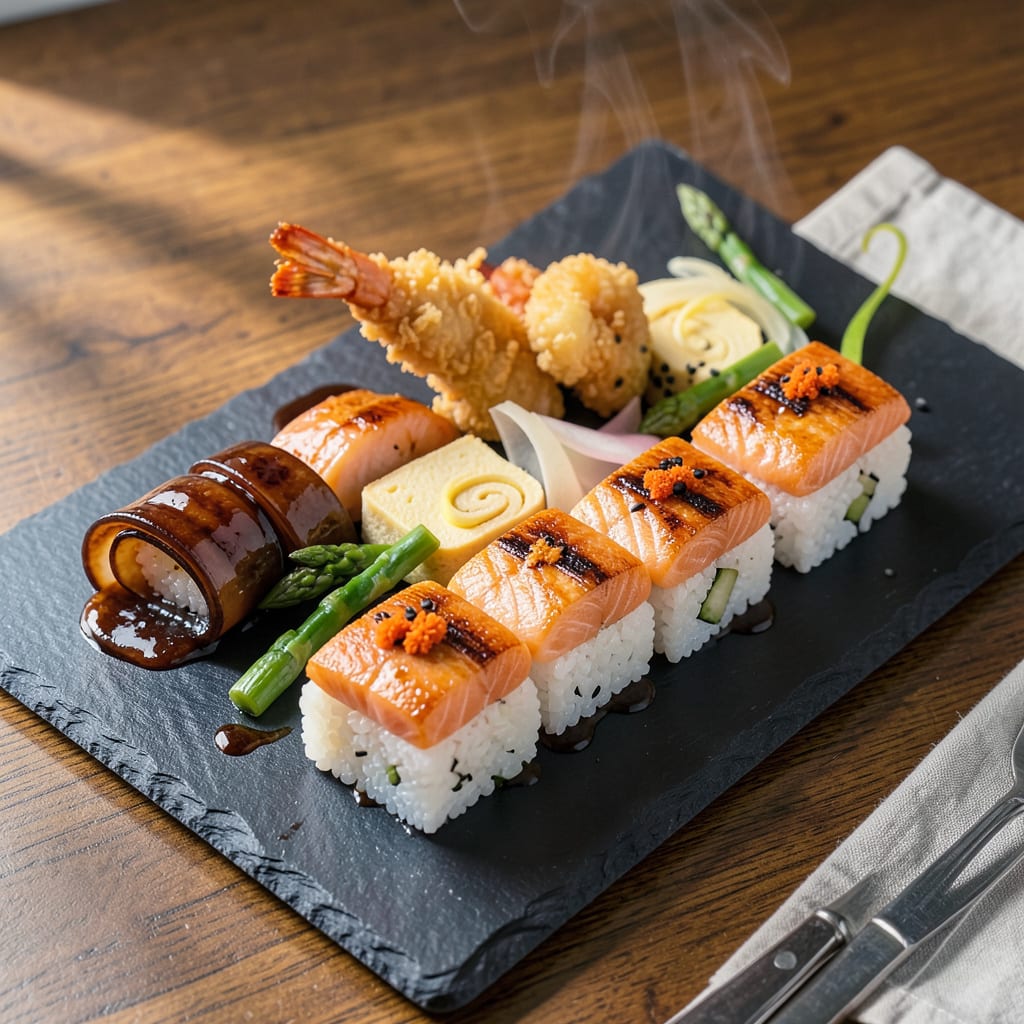
Cooked sushi replaces raw fish with fully cooked ingredients like shrimp, crab, eel, or tempura vegetables. It delivers the same vinegared rice and seaweed experience with a safer, beginner-friendly twist while keeping traditional flavors intact.
This approach opens up sushi to those who might be hesitant about raw seafood but still crave that signature combination of sticky rice, crisp nori, and umami-rich fillings. 🔥 I’ve found that cooked proteins like grilled eel or crab actually bring their own depth of flavor—especially when paired with creamy avocado or crunchy tempura flakes. The cooking process transforms textures too, giving you everything from buttery shrimp to crispy vegetable tempura that contrasts beautifully with the soft rice.
What’s particularly great about this style is how it bridges the gap between traditional Japanese cuisine and more approachable Western tastes. It’s why I often recommend starting with cooked rolls when introducing sushi to newcomers—the familiar flavors make it less intimidating while still delivering that authentic experience.
💡 In This Article
- How Cooked Sushi Differs from Traditional Nigiri
- Top 5 Cooked Sushi Rolls to Order or Make at Home
How Cooked Sushi Differs from Traditional Nigiri
When fish gets cooked, its protein structure completely transforms through a process called denaturation. Heat causes the tightly coiled proteins in raw fish to unravel and then re-bond in new patterns, creating that firm yet flaky texture we love in cooked seafood.
With raw nigiri like salmon or tuna, you’re experiencing proteins in their native state—delicate and almost buttery. But cooked proteins like shrimp or eel develop a more structured, bite-resistant quality that holds up differently against the vinegared rice.
The flavor development is equally dramatic. Cooking triggers the Maillard reaction (the same process that browns steak and toast) in proteins like eel or crab, creating complex umami compounds. 🔥 A piece of grilled unagi (eel) might have 3-4 times more umami than raw eel due to this reaction.
The cooking process also concentrates natural sugars—shrimp’s sweetness becomes more pronounced when sautéed, while raw shrimp tastes more oceanic and subtle. Temperature plays a huge role: eel cooked at 400°F develops a caramelized glaze, while shrimp poached at 165°F retains more moisture.
Here’s what changes with the rice interaction: Cooked proteins absorb less of the vinegared rice’s moisture compared to raw fish. That’s why you’ll notice cooked sushi rolls maintain their structure better over time. The rice stays slightly firmer because it’s not slowly absorbing liquids from raw fish.
I’ve tested this by comparing how quickly California rolls (with cooked crab) versus salmon rolls lose their shape—cooked versions hold their form 2-3 hours longer when refrigerated.
The fat distribution shifts too. Raw fish like tuna has fat marbled throughout, which melts gradually as you eat. Cooked proteins like crab or tempura shrimp have their fats either rendered out (creating crispy textures) or emulsified (like in crab salad). This creates a different mouthfeel—less “melting” sensation, more defined textural contrast.
The nori wrapper also behaves differently: with hot tempura fillings, it can become slightly crisp, while raw fish keeps it pliable.
Even the seasoning approach changes. Raw nigiri relies on minimal seasoning to let the fish shine, while cooked sushi often incorporates sauces during cooking. 💫 Unagi gets basted in a sweet soy glaze (tsume), shrimp might be marinated in yuzu kosho, and crab is frequently mixed with mayo.
These additions create bolder flavor profiles that can stand up to the cooking process. The vinegar in sushi rice also interacts differently—it cuts through richer cooked proteins more assertively than with delicate raw fish.
What most people don’t realize is that cooked sushi actually follows more traditional preservation methods. Historically, sushi began as a way to preserve fish through fermentation and cooking—what we now call “raw” sushi (nigiri/sashimi) is the more modern evolution. 🌟 Techniques like grilling eel or curing mackerel were the original sushi preparations.
Today’s cooked rolls represent both innovation and a return to those ancient methods, just with modern ingredients like cream cheese or spicy mayo.
The temperature contrast when eating is another key difference. Raw sushi is served chilled (45-50°F), while cooked elements might be warm or room temperature. This creates a more dynamic eating experience—imagine the contrast between cool rice, warm tempura flakes, and creamy avocado in a single bite.
The temperature variations actually enhance flavor perception, making each component more distinct on the palate.

Trained in classic French technique but raised on slow-cooked ribs and spicy rubs, she blends culinary skill with smoke and soul.
- Recipe for Boneless Pork Chops in Cast Iron Skillet: Sear and Baste to Juicy Perfection - October 3, 2026
- Recipe for Boneless Cross Rib Roast: Slow-Roasted Beef with Herb Crust - October 3, 2026
- Hamburgers in Sauce Recipe Crock Pot: Slow-Cooked Savory Delight - October 3, 2026