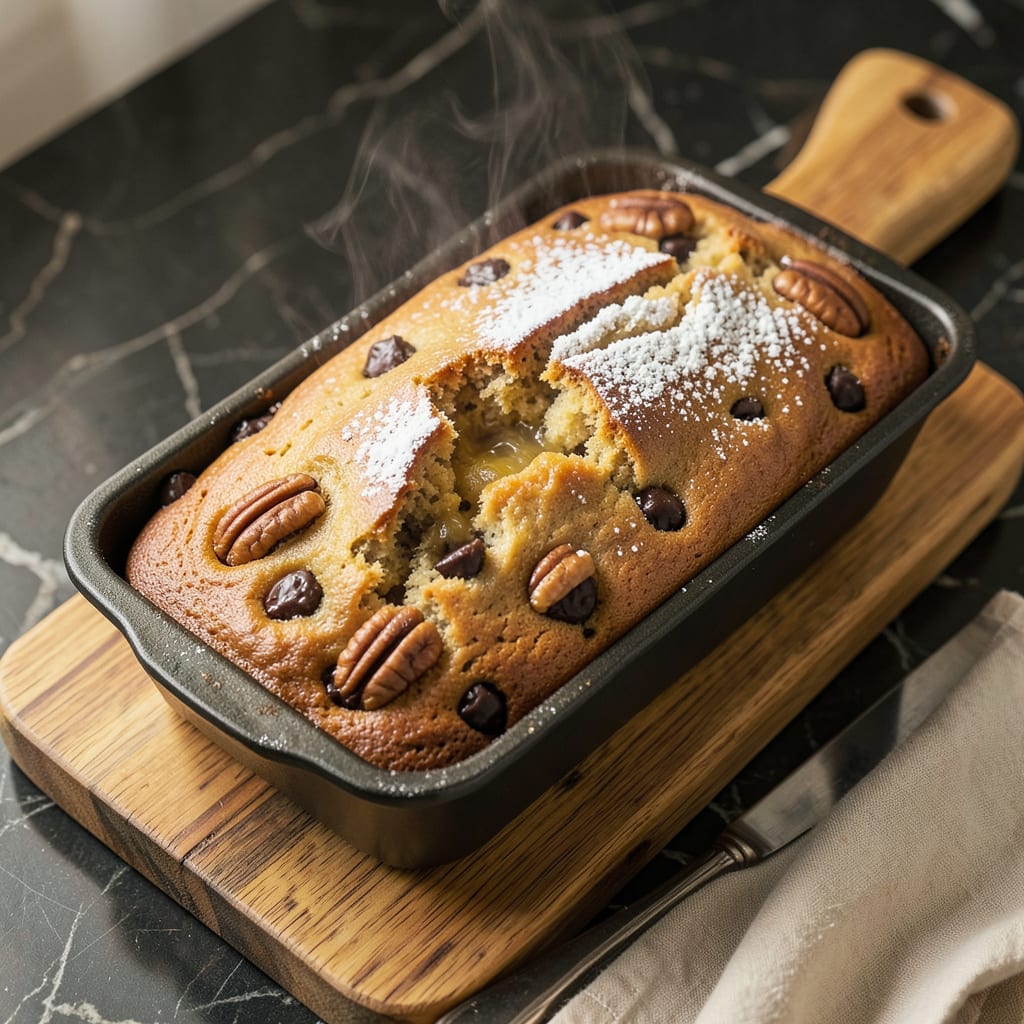
The best pan for banana bread is typically a 9×5-inch loaf pan made of heavy-gauge metal or ceramic for even baking. Nonstick coatings or parchment paper lining prevent sticking while ensuring a golden crust.
I’ve tested countless pans in my kitchen, and the material makes all the difference in texture. 🔥 Heavy-gauge metal distributes heat evenly for consistent browning, while ceramic holds heat longer—perfect for moist centers. The 9×5-inch size isn’t arbitrary; it’s the sweet spot for proper rise without overflow. What many overlook is how the pan’s thickness affects baking time: thinner pans can lead to burnt edges before the center cooks through.
💡 In This Article
- How Loaf Pan Materials Affect Banana Bread Texture
- Choosing the Right Banana Bread Pan Size and Shape
How Loaf Pan Materials Affect Banana Bread Texture
Let me break down the science behind why your pan material transforms banana bread texture. Aluminum pans—especially heavy-gauge ones—conduct heat rapidly and evenly, creating that coveted golden crust while maintaining a tender crumb. The metal’s reactivity actually enhances browning through Maillard reactions at 350-375°F.
I’ve noticed ceramic pans behave differently: they heat more slowly but retain warmth longer, which can prevent over-browning while keeping the center ultra-moist. 🔥
Glass pans require special attention because they’re heat conductors but also insulators. You’ll need to reduce your oven temperature by 25°F since glass traps heat differently than metal. The result? A lighter crust but potentially denser interior if you don’t adjust baking time.
Silicone, while flexible, often produces paler crusts because it doesn’t conduct heat as efficiently—compensate by increasing temperature slightly or extending bake time by 5-10 minutes. ✨
What most bakers don’t realize is how material thickness impacts texture. Thin pans create hot spots that can burn edges before the center sets, while professional-grade 1/8-inch thick pans distribute heat uniformly. I once ruined three batches before learning this lesson!
The material also affects how the bread releases: nonstick coatings work well, but uncoated aluminum develops better crust flavor through direct contact. 💫
Here’s a quick material comparison:
- Aluminum: Best for even browning and crisp edges (ideal for classic banana bread)
- Ceramic: Slower heating, retains moisture (great for extra-tender loaves)
- Glass: Requires temperature adjustment, produces lighter crusts
- Silicone: Flexible but needs time/temp adjustments for proper browning
The material you choose should match your texture goals. Want a bakery-style crust? Go for heavy aluminum. Prefer a softer, cake-like interior? Ceramic’s your friend. Remember that darker pans absorb more heat—reduce temperature by 25°F if using black or dark-colored pans to prevent over-browning. The right material can turn good banana bread into extraordinary. 🌟
Pro tip: For consistent results, invest in a commercial-grade 9×5-inch aluminum pan with a 1/8-inch thickness. This is what most test kitchens use because it offers the perfect balance of heat distribution and durability. The slight extra cost pays off in perfectly baked loaves every time. ⚡

Trained in classic French technique but raised on slow-cooked ribs and spicy rubs, she blends culinary skill with smoke and soul.
- Recipe for Boneless Pork Chops in Cast Iron Skillet: Sear and Baste to Juicy Perfection - October 3, 2026
- Recipe for Boneless Cross Rib Roast: Slow-Roasted Beef with Herb Crust - October 3, 2026
- Hamburgers in Sauce Recipe Crock Pot: Slow-Cooked Savory Delight - October 3, 2026