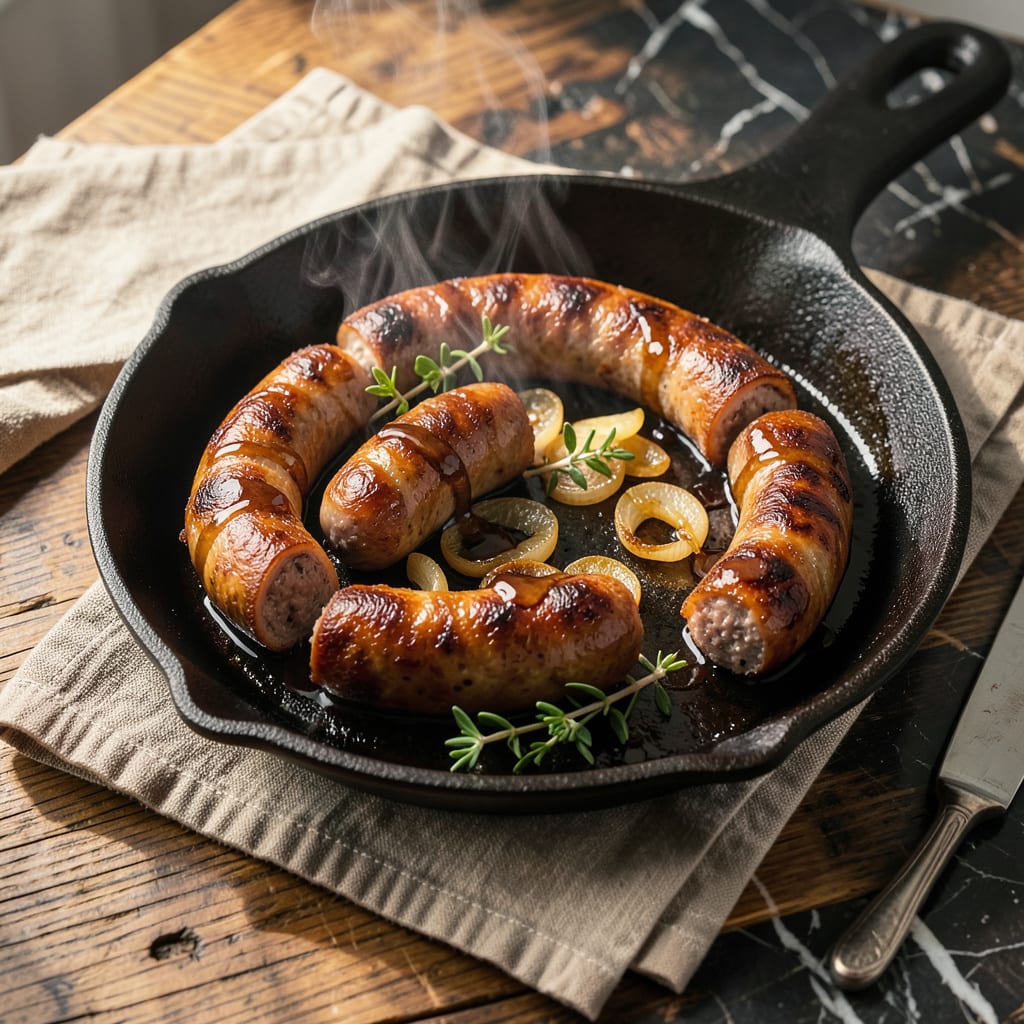
I’ll be real with you—cooking breakfast sausage straight from frozen doesn’t have to mean dry, rubbery results. After burning through more batches than I’d like to admit during early-morning cooking sessions, I cracked the code for getting juicy sausage without the thaw. The trick is all in the heat control and timing.
Here’s the thing—frozen sausage needs a gentler start to cook through evenly without drying out. I’ve tested this method with everything from patties to links, and the key is starting with medium-low heat. This gives the center time to warm up while the outside gets that perfect golden sear. No more sad, overcooked edges with cold centers.
You’ll end up with breakfast sausage that’s browned outside, perfectly cooked inside, and ready in about 15 minutes—faster than thawing would take anyway. I serve these with scrambled eggs most mornings, but they’re just as good tucked into a biscuit or alongside some hash browns. The best part? No planning ahead required.
Fair warning: once you try this, you’ll never bother thawing sausage again. The texture is spot-on every time, and cleanup is minimal since everything cooks in one pan. Let’s get that skillet hot and make breakfast happen.
📚 In This Guide
- What You’ll Need
- Instructions
- Tips and Common Mistakes
What Youll Need
- ● Frozen breakfast sausage – 4–6 links or patties (adjust based on serving size)
- ● Cooking oil or butter – 1–2 tbsp (neutral oils like vegetable or canola work best)
- ● Skillet or frying pan – 10–12″ (cast iron or non-stick preferred)
- ● Tongs or spatula – for flipping (avoid forks to keep juices intact!)
- ○ Meat thermometer (optional but recommended) – to check doneness (160°F internal temp)
- ● Paper towels – for draining excess grease
- ○ Seasonings (optional) – salt, pepper, or a pinch of garlic powder for extra flavor
- ○ Splash guard (optional) – if your sausage tends to pop!
Instructions
Here’s the foolproof method I use to cook frozen sausage perfectly every time—no thawing required.
Choose Your Cooking Method and Prep
First, decide whether you’ll use a skillet, oven, or air fryer. I prefer a cast iron skillet for its even heat distribution, but any heavy-bottomed pan works well. If using the oven or air fryer, preheat to 375°F while you prepare the sausage.
Remove the frozen sausage patties or links from packaging and separate them if they’re stuck together. Don’t worry about defrosting—we’re cooking from frozen. For patties, I like to press them gently with my palm to flatten slightly, ensuring even cooking. For links, use kitchen shears to snip any connecting casings if needed.
Start with Low Heat for Even Cooking
Place your skillet over medium-low heat and add just enough oil to lightly coat the bottom—about 1 tablespoon should do it. Let the pan heat for 2 minutes before adding the sausage. This gradual heating prevents the outside from burning before the inside cooks through.
Add the frozen sausage to the pan, leaving space between pieces so they don’t steam. For patties, cook undisturbed for 4-5 minutes until you see the edges starting to brown. For links, roll them occasionally to promote even browning. You’ll hear a gentle sizzle—this is the sound of perfect cooking, not aggressive frying.
Cover to Trap Heat and Ensure Doneness
After the initial browning, cover the skillet with a lid or foil. This creates a steam environment that helps cook the sausage through without drying it out. Reduce heat to low and let cook for another 8-10 minutes for patties or 12-15 minutes for links.
Here’s the thing—I always check for doneness by cutting into the center of one piece. You’re looking for no pink color and internal temperature of 160°F. If using a meat thermometer, insert it sideways into a patty or lengthwise into a link for accurate reading. The juices should run clear when pressed with a fork.
Crisp the Exterior for Perfect Texture
Once fully cooked, remove the lid and increase heat to medium-high. Cook for an additional 1-2 minutes per side to develop that desirable crispy exterior. Watch closely—this step happens fast and makes all the difference in texture.
For oven or air fryer methods, you’ll want to flip the sausage halfway through cooking. In the oven, this takes about 20-25 minutes total, while the air fryer typically needs 12-15 minutes with shaking halfway. Both methods benefit from a quick broil or air fry at 400°F for the final 2 minutes to crisp up the outside.
Rest Briefly Before Serving
Transfer the cooked sausage to a paper towel-lined plate to drain any excess fat. Let it rest for 2-3 minutes before serving—this short rest allows the juices to redistribute throughout the meat instead of running out when you cut into it.
Serve immediately while hot and crispy. I love these with scrambled eggs and toast, but they’re equally delicious in breakfast burritos or alongside pancakes. The key is that golden brown exterior with juicy, flavorful meat inside—no one will ever guess you started with frozen sausage!
Tips and Common Mistakes
Let me share what I’ve learned from cooking frozen sausage countless times—these small details make all the difference.
Heat Control: The gradual heating in Step 2 is absolutely crucial. Those 2 minutes of preheating at medium-low heat might seem short, but they create the perfect foundation. If your pan isn’t properly heated, the sausage will steam instead of sear, leading to a gray, soggy exterior rather than that beautiful golden brown crust we want.
The Covering Technique: When you cover the skillet in Step 3, use a tight-fitting lid if possible. I’ve found that foil works in a pinch, but a lid traps steam more effectively during those 8-10 minutes for patties or 12-15 minutes for links. This steam is what gently cooks the frozen center without drying out the exterior.
Doneness Check: I can’t stress enough how important that 160°F internal temperature is. Here’s what nobody tells you—color isn’t always reliable with frozen sausage. I’ve seen fully cooked sausage that still had a slight pink tint from spices. Always use a thermometer inserted sideways into patties or lengthwise into links for accuracy.
Final Crisp: That quick 1-2 minutes per side at medium-high in Step 4 transforms good sausage into great sausage. Watch closely during this step—the difference between perfectly crispy and slightly burnt is just seconds. I like to press gently with tongs; when the sausage releases easily, it’s ready to flip.
Pro Tips for Cooking Breakfast Sausage From Frozen
- Let me share what I’ve learned from cooking frozen sausage countless times—these small details make all the difference.
- Heat Control: The gradual heating in Step 2 is absolutely crucial. Those 2 minutes of preheating at medium-low heat m…
- The Covering Technique: When you cover the skillet in Step 3, use a tight-fitting lid if possible. I’ve found that fo…
Frequently Asked Questions
Can I cook frozen breakfast sausage without thawing it first?
Cooking from frozen is safe and convenient—just add 2-3 extra minutes per side compared to thawed sausage. Use medium heat to ensure even cooking without burning the outside while the inside stays cold. A meat thermometer (160°F for pork, 165°F for chicken/turkey) is your best friend here!
How long does it take to cook frozen breakfast sausage on the stovetop?
Expect 10-14 minutes total for patties or links. Cook on medium-low heat ( 5-7 minutes per side), flipping once. For crumbles, break them up in the pan and stir occasionally—aim for 8-10 minutes until no pink remains. Pro tip: Cover the pan for the first 3 minutes to speed up cooking!
What’s the best way to cook frozen sausage if I don’t have a skillet?
No skillet? No problem! Try these methods:
- Oven: Bake at 375°F for 18-22 minutes, flipping halfway.
- Air Fryer: 375°F for 8-10 minutes, shaking the basket once.
- Microwave: Use 50% power in 1-minute bursts (not ideal for texture).
Why is my frozen sausage dry or rubbery after cooking?
Overcrowding the pan or using high heat are common culprits. To fix:
- Cook in single-layer batches (don’t steam them!).
- Add 1 tbsp oil/butter to the pan for moisture.
- Avoid pressing patties—let them sear undisturbed for 2-3 minutes first.
Can I refreeze breakfast sausage after cooking it from frozen?
Technically yes, but quality suffers. If you must, cool it quickly (spread on a tray in the fridge), then freeze in airtight containers for up to 1 month. Reheat gently to avoid dryness—microwave with a damp paper towel or warm in a skillet with a splash of water.
Cooking breakfast sausage straight from the freezer is easier than you think! With the right method—whether it’s pan-frying, oven-baking, or air-frying—you can achieve juicy, flavorful results without the hassle of thawing. 🍳 Just
Ready to put your new skills to the test? Grab a pack of your favorite frozen sausage and try one of the methods today—your taste buds will thank you! For extra inspiration, check out our top 5 breakfast sausage recipes next.

Trained in classic French technique but raised on slow-cooked ribs and spicy rubs, she blends culinary skill with smoke and soul.
- Recipe for Boneless Pork Chops in Cast Iron Skillet: Sear and Baste to Juicy Perfection - October 3, 2026
- Recipe for Boneless Cross Rib Roast: Slow-Roasted Beef with Herb Crust - October 3, 2026
- Hamburgers in Sauce Recipe Crock Pot: Slow-Cooked Savory Delight - October 3, 2026