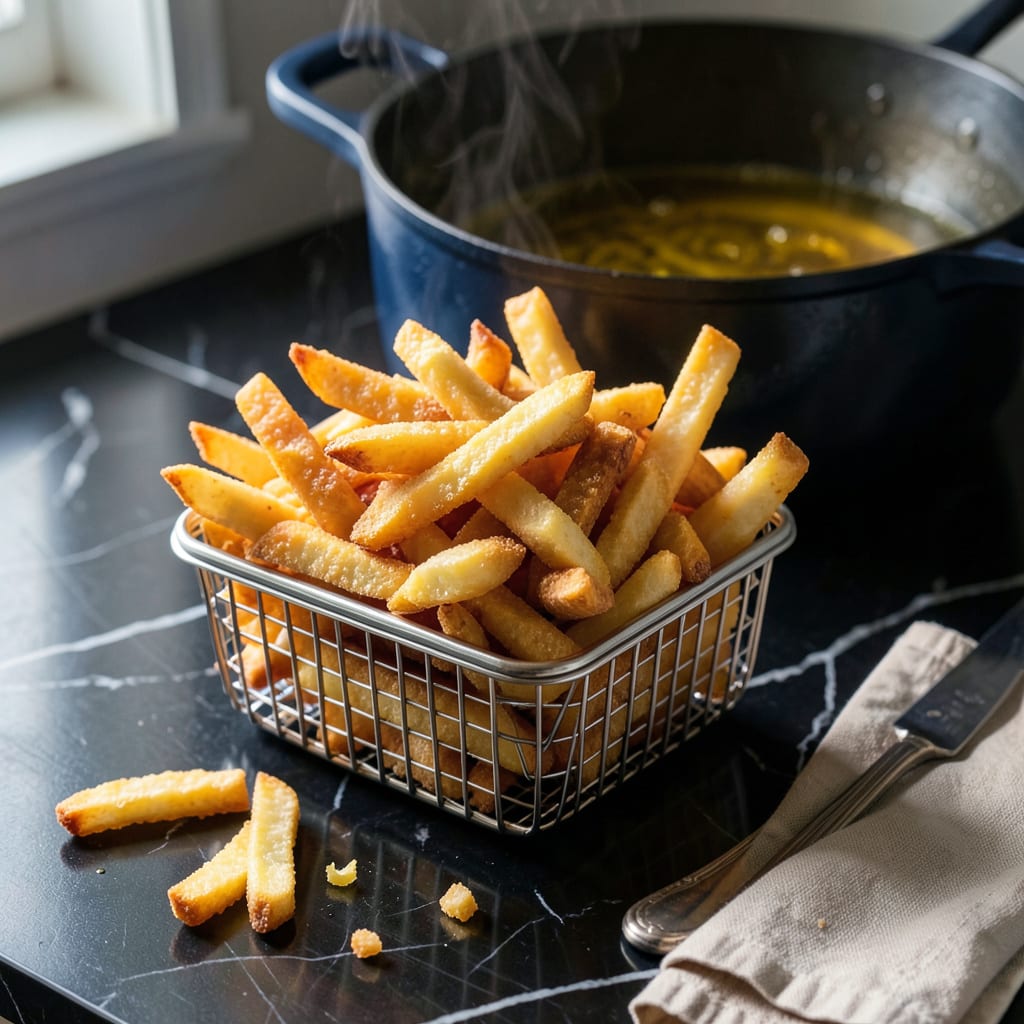
Let me tell you—there’s nothing like the sound of frozen fries hitting hot oil, that immediate sizzle promising golden, crispy perfection. I’ve burned through more batches than I care to admit (literally) before nailing the exact method for crispy fries that stay that way. No soggy disappointments here.
The secret starts with oil temperature—350°F–375°F is the sweet spot where fries transform from frozen to fabulous. I use a deep-fry thermometer religiously because guessing leads to greasy or undercooked results. And here’s the thing—drying those fries thoroughly before they hit the oil prevents dangerous splatter and ensures even browning.
What you’ll get is that ideal contrast: shatteringly crispy exterior with a fluffy potato center. The kind of fries that disappear before they hit the table. I like to finish mine with flaky salt while they’re still hot, but that’s just the beginning—garlic powder, smoked paprika, or even a sprinkle of parmesan can take them over the top.
Whether you’re using a dedicated fryer or just a heavy pot, this method works every time. Just remember—don’t overcrowd the basket, or you’ll drop the oil temp and end up with sad, limp fries. Let’s make this right.
📚 In This Guide
- What You’ll Need
- Instructions
- Tips and Common Mistakes
What Youll Need
- ● Frozen fries: 1 bag (16–32 oz) of your favorite cut (shoestring, crinkle, steak, or waffle). Pro tip: Thicker cuts need slightly longer frying!
- ● Cooking oil: 2–4 cups of high-smoke-point oil (peanut, canola, or vegetable oil). Avoid olive oil—it burns easily! ⚠️
- ● Deep fryer or heavy pot: A 4–6 quart pot with high sides (if frying on the stovetop). Never fill more than halfway with oil!
- ● Slotted spoon or spider strainer: For safely removing fries from hot oil. 🥘
- ● Paper towels or wire rack: To drain excess oil (a cooling rack keeps them crispier!).
- ○ Kitchen thermometer: Optional but highly recommended to monitor oil temp (ideal: 350–375°F). 🌡️
- ● Salt or seasoning: Coarse salt, garlic powder, or paprika to taste. Season while hot for maximum flavor! ✨
- ○ Tongs: Optional for adjusting fries in the oil without splashing.
- ● Fire extinguisher: Safety first! Keep nearby—never leave hot oil unattended. 🚒
Instructions
Here’s exactly how to achieve that perfect golden crispiness every time—no guesswork required.
Prepare Your Oil and Equipment
Choose a heavy-bottomed pot or Dutch oven that’s deep enough to hold at least 2 inches of oil with several inches of clearance at the top. I recommend using peanut oil or vegetable oil because they have high smoke points and neutral flavors that won’t compete with your fries.
Pour in enough oil to reach 2-3 inches deep—this gives the fries room to float and cook evenly. Attach a deep-fry thermometer to the side of the pot. This is your best friend for perfect fries—never trust the oil to be the right temperature just by looking at it.
Set up a wire rack over a baking sheet or line a plate with paper towels for draining. Have tongs or a slotted spoon ready—you’ll need them to safely remove the fries from the hot oil. Safety first: keep kids and pets away from the cooking area.
Heat the Oil to the Perfect Temperature
Heat the oil over medium-high heat until it reaches 325°F. This lower initial temperature is crucial—it allows the fries to cook through completely before they brown. If you start with oil that’s too hot, you’ll end up with burnt outsides and raw insides.
While the oil heats, take your frozen fries straight from the freezer—no need to thaw. In fact, thawing would make them soggy. Give the bag a gentle shake to separate any clumped fries. Don’t overcrowd the pot later; you’ll need to work in batches for best results.
Watch for visual cues: the oil is ready when it shimmers slightly and a wooden spoon handle inserted into the oil produces steady bubbles. If you don’t have a thermometer, this is your best alternative method for gauging temperature.
Fry in Two Stages for Maximum Crispiness
Carefully lower the first batch of fries into the hot oil using tongs or a slotted spoon. Don’t drop them in—this can cause dangerous oil splatter. The fries should sizzle gently when they hit the oil. Cook them for 4-5 minutes at this lower temperature.
You’ll notice the fries will float to the surface and become pale golden. This first fry cooks them through without browning. Remove them with your slotted spoon and drain on your prepared rack or paper towels. They’ll look limp and unappetizing—this is normal at this stage.
Increase the oil temperature to 375°F. When it reaches temperature, return the par-cooked fries to the oil for their second fry. This time, cook for just 1-2 minutes until they’re deep golden brown and crispy. The double-fry method is the secret to that perfect crunch.
Drain, Season, and Serve Immediately
Transfer the crispy fries to your draining setup and sprinkle immediately with salt. I like to use fine sea salt—it adheres better than coarse salt and distributes evenly. Toss them gently to coat all sides while they’re still hot. The salt will stick better to warm fries.
Serve the fries right away while they’re at their crispiest. If you must keep them warm for a few minutes, place them on the wire rack in a 200°F oven. Never cover them or stack them on a plate—the steam will make them soggy in seconds.
For extra flavor, try tossing them with garlic powder, smoked paprika, or grated Parmesan while they’re still hot. The key is to add these seasonings immediately after frying so they adhere to the crispy surface. Enjoy them while they’re hot and at their absolute best!
Tips and Common Mistakes
Let me share what I’ve learned from years of frying—these small details make the difference between good fries and restaurant-quality perfection.
Oil Temperature Control: The two-stage frying at 325°F then 375°F is non-negotiable for that ideal crispy-outside, fluffy-inside texture. I’ve ruined batches by rushing and skipping straight to high heat—don’t make my mistake. Use a thermometer and be patient during the initial 4-5 minutes at the lower temperature. This cooks the fries through without burning.
Batch Size Matters: Overcrowding the pot drops the oil temperature dramatically, leading to greasy fries. I fry in small batches—about 1/3 of the pot’s capacity at a time. This maintains consistent heat and gives each fry room to crisp up properly during both the 4-5 minute first fry and the 1-2 minute final crisping stage.
Draining Technique: That wire rack isn’t just for show—it’s crucial for keeping fries crispy. When I first started, I drained on paper towels and ended up with soggy bottoms. The rack allows air circulation on all sides, preventing steam buildup. If you must use paper towels, change them between batches to avoid oil pooling.
Seasoning Timing: Salt immediately after draining while the fries are still glistening with oil. The salt sticks better to the warm, slightly oily surface. I keep my salt in a small bowl right next to the draining station so I can season within seconds of removing the fries from the oil. This is when the seasoning adheres best.
Pro Tips for Deep Frying Frozen Fries
- Let me share what I’ve learned from years of frying—these small details make the difference between good fries and re…
- Oil Temperature Control: The two-stage frying at 325°F then 375°F is non-negotiable for that ideal crispy-outside, fl…
- Batch Size Matters: Overcrowding the pot drops the oil temperature dramatically, leading to greasy fries. I fry in sm…
Frequently Asked Questions
Can I deep fry frozen fries without thawing them first?
In fact, deep frying frozen fries without thawing is ideal—it helps lock in moisture while creating that crispy exterior. Thawing can make them soggy or stick together. Just shake off excess ice crystals before frying for even cooking.
How long does it take to deep fry frozen fries?
Typically, frozen fries take 3-5 minutes at 350–375°F (175–190°C). Cook in small batches to avoid overcrowding, which can lower the oil temp and lead to limp fries. Check for golden-brown color and crispiness—timing may vary by fry thickness!
What’s the best oil for deep frying frozen fries?
Neutral, high-smoke-point oils work best—think peanut, canola, or vegetable oil. Avoid olive oil (low smoke point). For extra flavor, try a light blend with a touch of beef tallow (like fast-food joints!). Reuse oil 2–3 times max for freshness.
Why are my frozen fries soggy after deep frying?
Sogginess usually means low oil temp (below 325°F/163°C) or overcrowding. Pat excess ice off fries before frying, and drain them on a wire rack (not paper towels) to keep them crisp. Pro tip: Double-fry for extra crunch!
Can I air fry or bake frozen fries instead of deep frying?
Yes! For a lighter option, air fry at 400°F (200°C) for 12–15 minutes, shaking halfway. For baking, toss fries in oil, spread on a tray, and bake at 425°F (220°C) for 20–25 minutes, flipping once. Both methods save oil but may lack deep-fry crispiness.
Now you’ve got the secrets to turning frozen fries into crispy, golden perfection—no soggy disappointments here! 🎉 With the right oil temp, timing, and a few pro tips, you’re just minutes away from that irresistible crunch every time. Whether it’s a quick snack or a crowd-pleasing side, your deep-frying game is officially levelled up.
Ready to put your skills to the test? Grab a bag of fries, fire up that oil, and get frying! And if you’re craving more crispy inspo, check out our guide on seasoning blends to take your fries to the next flavor level. Happy cooking! 🍟✨

Trained in classic French technique but raised on slow-cooked ribs and spicy rubs, she blends culinary skill with smoke and soul.
- Recipe for Boneless Pork Chops in Cast Iron Skillet: Sear and Baste to Juicy Perfection - October 3, 2026
- Recipe for Boneless Cross Rib Roast: Slow-Roasted Beef with Herb Crust - October 3, 2026
- Hamburgers in Sauce Recipe Crock Pot: Slow-Cooked Savory Delight - October 3, 2026