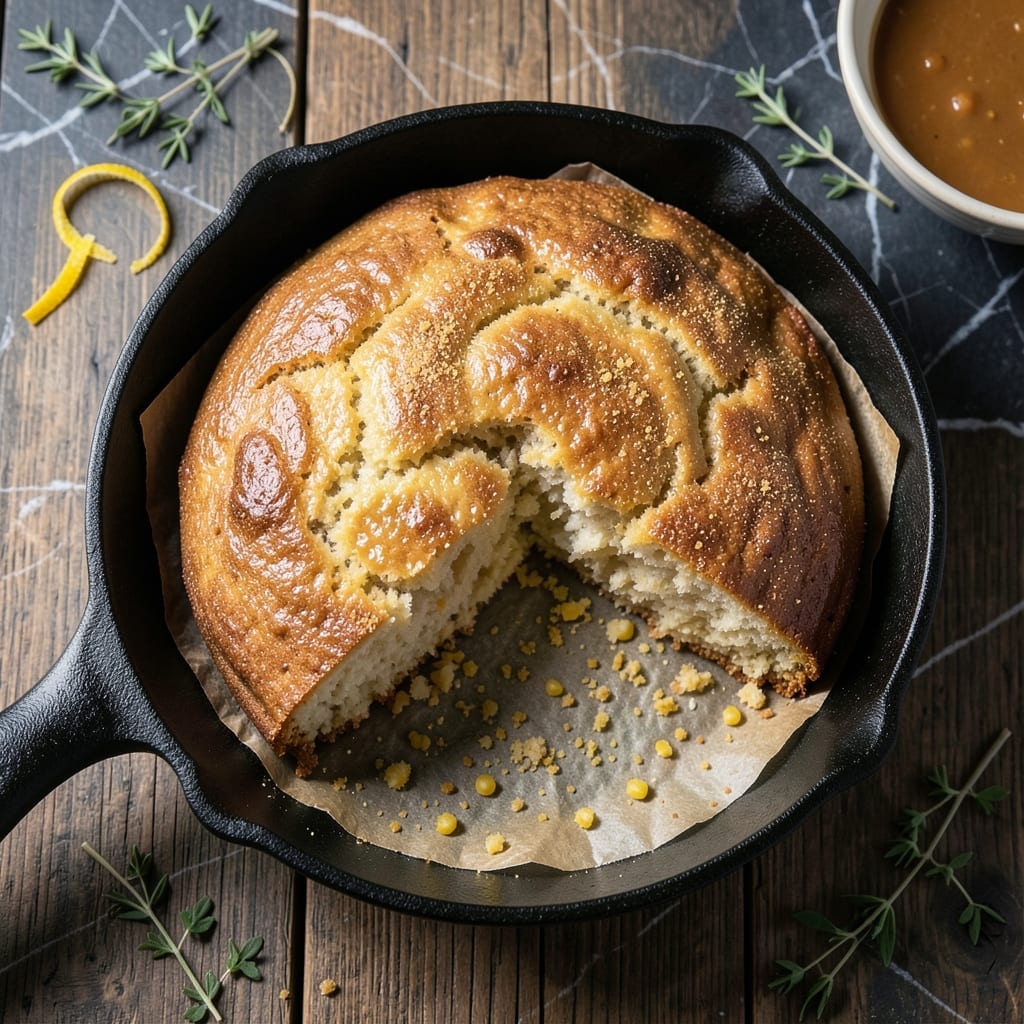
Achieving fluffy cornbread without buttermilk is simpler than you think. This recipe uses a straightforward substitution that delivers the same tender texture and golden crust.
With basic pantry ingredients and 15 minutes of prep, you’ll have a side dish that pairs perfectly with any meal. The secret lies in the right liquid swap.
Ingredients for Cornbread Recipe No Buttermilk
Basic pantry staples transform into golden, fluffy cornbread with one clever swap.
| Ingredient | Amount | Notes |
|---|---|---|
| All-Purpose Flour 🌾 | 1 ½ cups | Sifted for best texture |
| Fine Yellow Cornmeal 🌽 | 1 cup | Stone-ground preferred |
| Granulated Sugar 🍚 | ¼ cup | Adjust to taste preference |
| Baking Powder 🧂 | 1 tbsp | Ensures proper rise |
| Baking Soda 🧂 | ½ tsp | Balances acidity |
| Salt 🧂 | 1 tsp | Fine sea salt preferred |
| Large Egg 🥚 | 1 whole | Room temperature for even mixing |
| Whole Milk 🥛 | 1 cup | Buttermilk substitute base |
| White Vinegar 💧 | 1 tbsp | Acid for buttermilk effect |
| Unsalted Butter 🧈 | ¼ cup | Melted and cooled slightly |
| Vegetable Oil 🫒 | 2 tbsp | For greasing pan |
[recipe_ingredient_scaler]
The cornmeal is crucial for authentic texture. Bob’s Red Mill stone-ground offers superior flavor and grind consistency. Look for fine or medium grind—coarse can create a gritty texture. The milk and vinegar combination replaces buttermilk perfectly; whole milk yields the richest result (skimming reduces tenderness). For best rise, ensure your baking powder is fresh—test by dropping a bit in hot water; it should bubble vigorously.
No whole milk? 2% or skim works (texture slightly less tender). For a tangier flavor, add an extra half tablespoon of vinegar. Out of cornmeal? Substitute fine polenta at a 1:1 ratio. The vinegar is non-negotiable for the chemical reaction—lemon juice works too at the same amount. Butter can be replaced with vegetable oil at a 1:1 ratio if preferred.
The batter keeps for 24 hours refrigerated (bring to room temperature before baking). Baked cornbread stays fresh for 3 days wrapped tightly at room temperature. For longer storage, freeze slices for up to 3 months. Reheat wrapped in foil at 300°F for 10 minutes to restore freshness.
Why You’ll Love This Recipe
- One Bowl Wonder: I just dump the flour, cornmeal, sugar, and levers right in and stir—no extra bowls, no fuss.
- Sweet Crumbly Magic: The sugar caramelizes just enough to give that golden crust while keeping the inside tender.
- Pairs with Anything: Honestly, I serve it with chili, soup, or even as a quick breakfast with honey.
- Budget Stretcher: A bag of cornmeal and pantry staples make two batches for the cost of one fancy loaf.
Step-by-Step Instructions for Cornbread Without Buttermilk
Here’s the method. Straightforward, tested, works every time.
Step 1: Create the Buttermilk Substitute and Prep the Pan
In a liquid measuring cup, combine the 1 cup whole milk and 1 tablespoon white vinegar. Stir gently and let it sit for 5 minutes until slightly thickened and curdled. This acidified milk mimics buttermilk’s tangy richness perfectly.
Meanwhile, preheat your oven to 375°F and grease a 9-inch square baking pan with the 2 tablespoons vegetable oil. I use a paper towel to spread it evenly across the bottom and sides, ensuring complete coverage.
Step 2: Mix the Dry Ingredients
In a large bowl, whisk together the 1.5 cups all-purpose flour, 1 cup fine yellow cornmeal, 0.25 cup granulated sugar, 1 tablespoon baking powder, 0.5 teaspoon baking soda, and 1 teaspoon salt. This ensures even distribution of leavening agents for maximum rise.
I always sift the flour first to eliminate lumps, then whisk the cornmeal with the other dry ingredients. The baking powder and baking soda work together to create a light, airy crumb structure that defines perfect cornbread.
Step 3: Combine Wet Ingredients and Form the Batter
In a separate bowl, whisk the 1 whole large egg until lightly beaten, then stir in the prepared buttermilk substitute and the 0.25 cup unsalted butter (melted and cooled slightly). The melted butter should be warm but not hot to avoid cooking the egg prematurely.
Pour the wet ingredients into the dry ingredients and fold together with a spatula just until combined. The batter will be thick and slightly lumpy—overmixing develops gluten, which makes cornbread dense instead of tender.
Step 4: Bake to Golden Perfection
Transfer the batter to your prepared pan, spreading it evenly with the spatula. Bake in the preheated oven for 20-25 minutes or until the top is golden brown and a toothpick inserted in the center comes out clean.
I check at the 20-minute mark and rotate the pan if one side appears darker. The edges should pull slightly away from the pan, and the center should spring back when gently pressed with a finger.
Let it cool in the pan for 5 minutes before slicing and serving warm. The texture should be moist and crumbly, with a crisp golden crust on top.
Pro Tips For Making Cornbread Recipe No Buttermilk
- Preheat the Pan: I learned this the hard way—always heat your pan in the oven for 5 minutes before adding the batter. It guarantees a crisp golden crust without sticking.
- Swap Milk for Vinegar: Mix 1 tablespoon of vinegar or lemon juice into 1 cup of regular milk and let it sit for 5 minutes. This quick buttermilk substitute reacts with the baking soda just like the real thing.
- Don’t Overmix: Stir just until the dry ingredients disappear—lumps are fine. Overmixing develops gluten in the flour, and you’ll end up with tough, dense cornbread instead of tender.
- Check at 15 Minutes: Oven times vary, so start checking for doneness around 15 minutes. A toothpick inserted in the center should come out clean, and the edges should pull slightly from the pan.
Troubleshooting Great cornbread recipe no buttermilk
Dense Cornbread
If your cornbread turns out dense, you likely overmixed the batter. Fold wet and dry ingredients just until combined—10-12 strokes usually does it. Overmixing develops gluten, which toughens the crumb. 💡
Flat or Sunken Top
This usually means your leavening agents were expired. Test baking powder by dropping ½ teaspoon in hot water—it should bubble vigorously. Also, ensure your oven reaches 375°F before baking.
Dry Texture
Dry cornbread often results from overbaking. Start checking at 20 minutes—pull it out when a toothpick comes out clean with a few moist crumbs. Also, verify your milk and vinegar mixture curdled properly.
Crumbly Cornbread
This can happen with too much cornmeal or insufficient liquid. Stick to the 1:1.5 ratio of cornmeal to flour. If using coarse cornmeal, let the batter rest 10 minutes before baking to hydrate fully.
Pale Color
A pale top suggests the oven temperature was too low. Use an oven thermometer to confirm 375°F. Also, ensure your baking powder is fresh for proper browning.
Bitter Taste
Bitterness often comes from too much baking soda. Stick to ½ teaspoon as the recipe states. Also, ensure your vinegar is white vinegar—other types can impart unwanted flavors. 🔥
Nutrition Facts
Frequently Asked Questions
What can I use instead of vinegar?
Lemon juice works perfectly at the same 1 tablespoon measurement. The acidity creates the same reaction with milk to mimic buttermilk.
Can I make this with almond milk?
Yes, but use unsweetened almond milk and add 1 teaspoon vinegar extra. The texture may be slightly less rich than with whole milk.
Why did my cornbread turn out dry?
Overbaking is the most common cause. Check at 20 minutes and remove when a toothpick comes out clean with a few moist crumbs.
Can I add mix-ins like cheese or jalapeños?
Fold in up to 1 cup of add-ins after combining wet and dry ingredients. Cheddar and jalapeños pair especially well.

Trained in classic French technique but raised on slow-cooked ribs and spicy rubs, she blends culinary skill with smoke and soul.
- Recipe for Boneless Pork Chops in Cast Iron Skillet: Sear and Baste to Juicy Perfection - October 3, 2026
- Recipe for Boneless Cross Rib Roast: Slow-Roasted Beef with Herb Crust - October 3, 2026
- Hamburgers in Sauce Recipe Crock Pot: Slow-Cooked Savory Delight - October 3, 2026