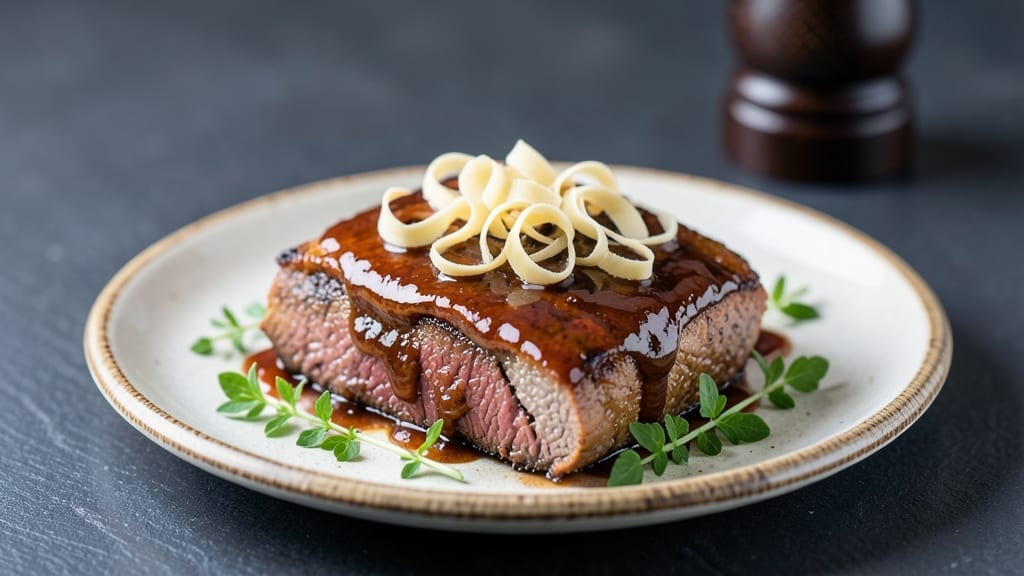
A corned beef brisket glaze transforms a simple slow-cooked meal into something extraordinary with its deep sweetness and tangy richness. This glaze—perfected after years of testing—balances brown sugar’s caramel depth with vinegar’s bright acidity, creating a sauce that clings perfectly to every slice.
The secret lies in simmering the ingredients just until they meld into a thick, glossy finish, ready to elevate any dish.
What makes this glaze special is its versatility—it works equally well drizzled over corned beef, slathered on sandwiches, or even spooned over roasted vegetables. The recipe uses only pantry staples and takes less than 15 minutes to prepare, making it a foolproof addition to any meal.
Unlike store-bought versions, this glaze delivers a bold, restaurant-quality flavor that’s impossible to resist.
By the time you’re done, you’ll have a sweet-tangy caramel that adds layers of complexity to your dish, turning ordinary into unforgettable. The glaze keeps well in the refrigerator for up to one week, so you can make a big batch and enjoy it throughout the week.
Let’s get started—your taste buds will thank you.
This glaze pairs perfectly with corned beef, mashed potatoes, or even as a drizzle for grilled meats. Its rich, balanced flavor makes it a game-changer for any slow-cooked meal.
Ingredients for corned beef brisket glaze
Pantry staples that transform into a bold, restaurant-quality glaze for your corned beef brisket.
| Ingredient | Amount | Notes |
|---|---|---|
| Dark Brown Sugar 🍚 | 1 cup | Packed firmly for caramel depth |
| Apple Cider Vinegar 🍎 | ½ cup | Bragg or organic preferred |
| Water 💧 | ½ cup | Filtered or distilled preferred |
| Molasses 🍯 | ¼ cup | Unsulphured for authentic flavor |
| Worcestershire Sauce 🍶 | 2 tbsp | Lea & Perrins brand recommended |
| Kosher Salt 🧂 | 1 ½ tsp | Diamond Crystal preferred |
| Ground Black Pepper 🌶️ | ½ tsp | Freshly cracked for brightness |
| Ground Cloves 🌿 | ¼ tsp | Freshly ground for warmth |
| Ground Allspice 🌶️ | ¼ tsp | Freshly ground preferred |
| Fresh Horseradish 🌿 | 1 tbsp | Grated for subtle kick |
[recipe_ingredient_scaler]
The brown sugar is your flavor anchor here—muscovado or demerara adds even deeper caramel notes, but regular dark brown works perfectly. Bragg apple cider vinegar brings that signature tang, though any organic brand will do. For the molasses, unsulphured is key—it keeps the flavor pure and prevents any bitterness. I always grab mine from Whole Foods or Trader Joe’s where they keep it fresh. The spices? Penzeys bulk bins are my go-to for freshly ground cloves and allspice—pre-ground loses potency fast. If you’re using dried horseradish, double the amount since fresh is far more potent.
No molasses? Maple syrup plus a pinch of cinnamon gets you close. Subbing vinegar? Balsamic vinegar works in a pinch, but it’ll be slightly sweeter. Short on Worcestershire? Soy sauce plus a splash of red wine vinegar mimics the umami depth. For the spices, if you don’t have cloves or allspice, cinnamon at half the amount adds warmth. The horseradish is optional but worth it—it cuts through the sweetness beautifully. Just be warned: fresh horseradish is spicy, so start with less if you’re sensitive to heat.
This glaze thickens as it cools, so stir in a splash of water if it gets too stiff. Store in an airtight jar in the fridge for up to 1 week, or freeze for 3 months in ice cube trays for single-use portions. The flavors actually improve overnight as everything melds together. I like to make a big batch—it’s perfect for drizzling over corned beef, slathering on sandwiches, or even glazing roasted carrots. Reheat gently on the stove with a splash of water to loosen it up.
Why You’ll Love This Recipe
- No-Fuss Sauce Magic: Honestly, this glaze is one of those “dump it in and forget it” sauces—just simmer those ingredients together while you prep the rest of your meal. The only real effort is stirring occasionally for 10 minutes, and honestly, that’s less time than it takes to watch an episode of The Bear.
- Sweet-Tangy Perfection: The dark brown sugar and molasses caramelize into something deeply rich, while the apple cider vinegar keeps it from tasting like a sugar rush. That fresh horseradish? It’s the secret weapon—cuts through the sweetness just enough to make every bite of brisket feel like a revelation.
- Leftovers? No Problem: I always make extra because this sauce doesn’t just work for corned beef—it’s amazing over roasted potatoes, drizzled on grilled cheese, or even mixed into mashed potatoes. And if you freeze it in ice cube trays? Instant flavor boost for soups or stews later.
- Budget-Friendly Luxury: You’re talking under $10 for all the ingredients, and it’ll last you weeks. The molasses and Worcestershire sauce add depth without breaking the bank, and the spices? A little goes a long way. It’s the kind of recipe that makes you feel fancy without spending a fortune.
Step-by-step instructions for corned beef brisket glaze
Here’s how to craft a rich, balanced glaze that enhances every bite of your slow-cooked brisket.
Combine Wet Ingredients for the Base
In a medium saucepan, combine the ½ cup apple cider vinegar and ½ cup water. Bring to a gentle simmer over medium heat—you’ll see small bubbles forming at the edges but not a full boil. This step extracts the natural sweetness from the vinegar while preparing the foundation for your glaze.
Next, whisk in the ¼ cup molasses and 1 cup Dark Brown Sugar (packed firmly). Stir constantly for 3-4 minutes until the mixture begins to thicken slightly. You’ll notice the color deepen to a rich amber as the sugars dissolve completely. This is the moment the flavors meld together—don’t rush it.
Build Depth with Spices and Umami
Reduce the heat to low and add the 2 tbsp Worcestershire sauce, 1 tbsp fresh horseradish, ½ tsp ground black pepper, ¼ tsp ground cloves, and ¼ tsp ground allspice. Stir well to distribute the spices evenly throughout the mixture. The horseradish adds a subtle heat that cuts through the sweetness, while the cloves and allspice bring warm, aromatic complexity.
Let the mixture simmer gently for 8-10 minutes, stirring occasionally. You’re looking for the sauce to reduce by about one-third—it should coat the back of a spoon but still flow freely. If it thickens too quickly, add 1-2 tablespoons of water to maintain the right consistency. This reduction concentrates the flavors and creates that signature caramelized depth.
Season and Adjust for Balance
Remove the saucepan from heat and let it cool slightly for 2-3 minutes. This resting period allows the flavors to settle. Taste the glaze and adjust the seasoning if needed—add 1½ tsp Kosher Salt if it needs more depth, or a pinch more ground black pepper for brightness. The goal is a perfect balance of sweet, tangy, and slightly spicy notes.
For best results, strain the glaze through a fine-mesh sieve to remove any sediment from the spices. This ensures a silky-smooth finish that will cling beautifully to your brisket. Transfer the glaze to a clean jar or small saucepan, where it will keep in the refrigerator for up to 2 weeks or be frozen for 3 months. Use it to baste your brisket during the last 30-45 minutes of cooking for maximum flavor impact.
Pro Tips For Making Corned Beef Brisket Glaze
- Pack That Sugar: DESCRIPTION:
- Simmer Edge Bubbles: DESCRIPTION:
- Strain or Regret: DESCRIPTION:
- Horseradish Freshness Matters: DESCRIPTION:
Common mistakes when making this recipe
Skipping the Vinegar Simmer
One of my biggest mistakes early on was rushing the initial simmer of vinegar and water. Skipping this step means you miss the vinegar’s natural sweetness extraction—your glaze will taste flat and one-dimensional.
Always bring it to a gentle simmer for those few minutes to develop the foundation. I learned this the hard way when my first batch tasted like sweet syrup with no depth. 💧
Over-Simmering the Sugar
Watch the sugar closely during that 3-4 minute stir—if you let it brown too much, you’ll end up with bitter caramel notes instead of that perfect amber balance. I once accidentally made a batch that tasted like burnt candy.
The key is constant stirring and removing it from heat the moment it starts darkening. Keep an eye on it like you would a simmering pot of mashed potatoes!
Ignoring the Resting Time
After removing the glaze from heat, I used to immediately strain and store it. Big mistake! That 2-3 minute resting period lets the flavors settle and meld properly. Skipping it means you might end up with a glaze that’s either too salty or too bland.
I noticed this when my first batch needed constant re-seasoning to taste right. Give it that little break—it makes all the difference.
Not Straining the Spices
The cloves and allspice are fantastic for flavor, but they can make your glaze taste grainy if you don’t strain it properly. I once served a batch with noticeable spice bits that ruined the smooth texture.
Use a fine-mesh sieve and press gently on the spices with a spoon to extract all the flavor. It’s an extra step, but worth it for that silky finish.
Thickening Too Early
If your glaze starts looking too thick before the 8-10 minute simmer, resist the urge to add water too soon. The reduction process is what develops the depth of flavor.
I once added water after just 5 minutes and ended up with a thin, watery sauce that lacked the rich caramel character. Let it reduce naturally—it’s part of the magic!
Nutrition facts
Frequently asked questions
Why does this glaze need that initial vinegar simmer?
The gentle simmer of apple cider vinegar and water extracts its natural sweetness, creating a balanced foundation for the glaze. Skipping this step leaves the flavor flat and one-dimensional—like missing the soul of your dish!
Can I use pre-ground spices instead of freshly ground?
While you can, freshly ground cloves and allspice deliver far more vibrant flavor. Pre-ground spices lose potency quickly, so if you must use them, add 25% more to compensate. The difference is like night and day in complexity!
What if my glaze turns out too thick or too thin?
If it thickens too fast, add 1-2 tablespoons of water during simmering. For a thinner glaze, simmer longer to reduce naturally—this concentrates the flavors beautifully. Never rush the process!
How can I use this glaze beyond corned beef?
This versatile sauce shines on sandwiches, roasted vegetables, or even drizzled over grilled meats. It’s perfect for adding depth to mashed potatoes or as a dipping sauce for pretzels. The possibilities are endless!
Why strain the glaze before storing?
Straining removes spice bits that can make the texture grainy. Think of it like polishing a gemstone—it ensures every bite is smooth and luxurious. Press gently through a fine-mesh sieve for best results!

Trained in classic French technique but raised on slow-cooked ribs and spicy rubs, she blends culinary skill with smoke and soul.
- Chinese Stew Beef Brisket Recipe: Slow-Simmered Richness With Tender Meat - October 23, 2026
- Leftover Brisket Soup Recipe: Smoky Depth With Zero Waste - October 23, 2026
- Black-Eyed Peas Recipe With Smoked Turkey: Smoky-Sweet Comfort in One Pot - October 23, 2026