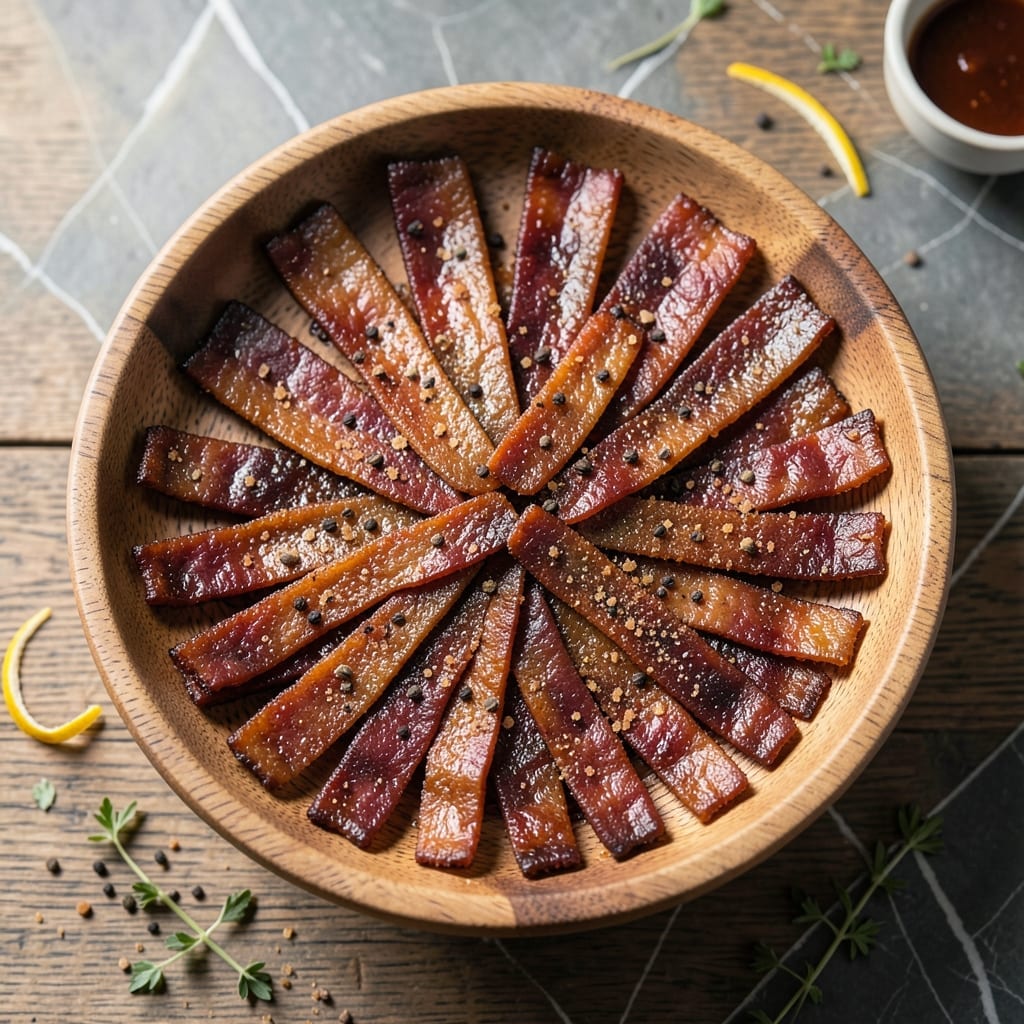
Transforming corned beef into jerky creates a snack with smoky depth and robust flavor. This method preserves the meat’s natural richness while concentrating its taste into chewy, spiced bites.
I developed this technique after experimenting with various drying methods, finding that low and slow works best. The process involves curing, seasoning, and careful dehydration to achieve the perfect texture.
The result is a portable, protein-packed snack with the characteristic tang of corned beef enhanced by a custom spice blend. Each piece delivers concentrated flavor in every bite.
Perfect for road trips or protein boosts, this jerky maintains its quality for weeks when stored properly. The process requires patience but rewards with exceptional taste.
Ingredients for Corned Beef Jerky
Transform pre-cooked brisket into smoky, chewy jerky with this bold spice blend. Nothing complicated here.
| Ingredient | Amount | Notes |
|---|---|---|
| Corned Beef Brisket 🥩 | 2 lb | Pre-cooked, thinly sliced against grain |
| Low-Sodium Soy Sauce 🫒 | ½ cup | Reduced-sodium for curing balance |
| Worcestershire Sauce 🫒 | 2 tbsp | Anchovy-free version if preferred |
| Liquid Smoke 🔥 | 1 tsp | Hickory or mesquite flavor |
| Brown Sugar 🍚 | ¼ cup | Light or dark variety |
| Black Pepper 🌶️ | 1 tbsp | Coarsely ground for texture |
| Garlic Powder 🧄 | 1 tbsp | Not garlic salt substitution |
| Onion Powder 🧅 | 1 tbsp | Adds depth to spice blend |
| Smoked Paprika 🌶️ | 1 tsp | Sweet or hot variety |
| Cayenne Pepper 🔥 | ½ tsp | Adjust for heat preference |
| Mustard Powder 🟡 | 1 tsp | Dry ground mustard |
| Ground Coriander 🌿 | 1 tsp | Freshly ground preferred |
| Curing Salt 🧂 | ½ tsp | Prague Powder #1 for safety |
[recipe_ingredient_scaler]
The corned beef brisket is non-negotiable—look for pre-cooked at your deli counter (the kind in vacuum-sealed bags, not canned). Boar’s Head or Hormel are solid brands. Slice it paper-thin against the grain for that perfect chew. The curing salt (Prague Powder #1) is critical—don’t skip it. I grab mine from Amazon or specialty butcher shops. Liquid smoke adds that campfire depth without a smoker.
No liquid smoke? Swap in 1 tsp chipotle powder for a smoky kick. Out of corned beef? Lean top round beef works but lacks that signature tang. The Worcestershire can be coconut aminos for a different twist. Brown sugar alternatives? Honey or maple syrup add sweetness with a slight flavor shift. Always taste the marinade before drying—adjust cayenne up or down.
Store this in airtight containers with a silica packet to keep it dry. Lasts 4-6 weeks at room temperature, 6 months in the fridge. For road trips, portion into zip-top bags (squeeze out all the air). The flavors actually intensify over time—if you can resist eating it all immediately.
Why You’ll Love This Recipe
- Set It and Forget: I slice the brisket, mix the marinade with soy, Worcestershire, and liquid smoke, then the dehydrator does all the work.
- Sweet and Smoky: Brown sugar caramelizes while liquid smoke adds that deep campfire flavor I can’t get enough of.
- Trail or Tailgate: I pack it for hiking trips or serve it at football parties—everyone always asks for seconds.
- Budget Stretch: A single brisket yields pounds of jerky, so I stock the pantry for weeks without breaking the bank.
Step-by-Step Instructions for Corned Beef Jerky
This method transforms pre-cooked brisket into chewy, smoky jerky with a perfect spice balance.
Step 1: Slice the Corned Beef Brisket Against the Grain
Begin by chilling the 2 lb Corned Beef Brisket in the freezer for 30-45 minutes to firm it up for easier slicing. This partial freeze makes the meat more manageable without freezing it solid.
Using a sharp knife, slice the brisket thinly against the grain into strips about ¼-inch thick and 1-2 inches wide. Cutting against the grain is crucial—it shortens the muscle fibers for that tender, chewy texture jerky is known for. Work carefully to maintain even thickness across all pieces so they dry uniformly.
Step 2: Prepare the Curing and Flavor Marinade
In a large bowl, combine the 0.5 cup Low-Sodium Soy Sauce, 2 tbsp Worcestershire Sauce, 1 tsp Liquid Smoke, 0.25 cup Brown Sugar, 1 tbsp Black Pepper, 1 tbsp Garlic Powder, and 1 tbsp Onion Powder.
Add the 1 tsp Smoked Paprika, 0.5 tsp Cayenne Pepper, 1 tsp Mustard Powder, 1 tsp Ground Coriander, and 0.5 tsp Curing Salt. Whisk everything together until the Brown Sugar is fully dissolved. This curing salt is essential for safety and color development, so don’t omit it.
Step 3: Marinate the Beef Thoroughly
Submerge all the sliced corned beef brisket in the marinade, ensuring every piece is fully coated. I like to use a resealable plastic bag for this—it allows me to massage the marinade into the meat and removes any air for maximum contact.
Seal the container and refrigerate for 12-24 hours. The longer you marinate, the more intense the flavor will be. Give the bag a gentle shake or massage every few hours to redistribute the marinade for even curing and seasoning.
Step 4: Dry the Jerky to Perfection
Preheat your dehydrator or oven to 160°F. For oven drying, position racks in the center and upper third of the oven and place a baking sheet on the lowest rack to catch drips.
Arrange the marinated strips on dehydrator trays or oven racks lined with parchment paper, leaving ½-inch of space between pieces for proper airflow. Dry for 4-6 hours until the jerky is leathery but still slightly pliable—it should bend without snapping when cooled.
Here’s the thing—drying times vary based on your equipment and the thickness of your slices. Start checking at 4 hours and rotate trays if needed for even drying. The jerky is done when it’s dry to the touch with no moist spots.
Step 5: Cool and Store for Long-Lasting Enjoyment
Let the jerky cool completely on the trays—this final step allows it to firm up properly. The pieces should be slightly tacky when warm but will develop the perfect chewy texture as they cool.
Store in an airtight container in the refrigerator for up to 2 weeks, or freeze for longer storage. I know it seems weird, but the flavor actually improves after a day or two as the spices meld together.
Pro Tips For Making Corned Beef Jerky
- Slice Against Grain: Cut the corned beef brisket into 1/4-inch strips against the grain for chewier jerky that doesn’t fall apart. I learned this the hard way after my first batch turned into crumbly beef threads.
- Pat It Dry: Blot the brisket strips thoroughly with paper towels before marinating—excess moisture prevents the brown sugar from sticking and slows down the drying process.
- Skip the Fat: Trim off any visible fat caps from the brisket before slicing, as fat doesn’t dehydrate well and can turn rancid in storage. Sounds tedious, but it’s non-negotiable for long-lasting jerky.
- Use a Fan: Place a fan near your oven or dehydrator to improve airflow and speed up drying. After burning three batches by under-drying, I finally figured out that circulation is the thing that matters most.
Common Mistakes When Making corned beef jerky
Uneven Slicing
Cutting the Corned Beef Brisket unevenly is the most common mistake I see. If some pieces are thicker, they won’t dry at the same rate, leaving you with some jerky too moist and others over-dried. Always slice against the grain to that consistent ¼-inch thickness we talked about. 💡
Skipping the Cure
That 0.5 tsp Curing Salt isn’t optional—it prevents bacterial growth during the long drying process. I learned this the hard way when my first batch developed an off flavor. Use Prague Powder #1 and measure carefully. Safety first, always.
Overcrowding Trays
When drying, give each piece ½-inch of space on all sides. Crowding traps moisture, which means uneven drying and potential spoilage. I use the trays that came with my Nesco dehydrator—they have just the right spacing.
Insufficient Marinating
Don’t rush the 12-24 hour marinade time. Less than that and the flavors won’t penetrate deeply enough. I massage the bag every few hours to ensure even distribution. Patience here makes the difference between good and great jerky.
Drying Too Fast
Setting your dehydrator or oven above 160°F might seem like a time-saver, but it cooks the meat instead of drying it. The result? Hard, crumbly jerky instead of that perfect chewy texture. Low and slow wins this race. 🔥
Improper Storage
After cooling, store your jerky in airtight containers with a silica packet to absorb any lingering moisture. Without this, it can develop mold within days. I’ve kept batches fresh for 6 months in the fridge this way.
Nutrition Facts
Frequently Asked Questions
Can I use a different cut of beef?
Yes, but lean cuts like top round work best. Corned beef brisket gives the best flavor and texture, but other lean meats can be substituted. Avoid fatty cuts as they won’t dry properly.
How long does it stay fresh?
Properly stored in an airtight container, it lasts 2 weeks at room temperature or 6 months refrigerated. Use silica packets to absorb moisture and maintain freshness.
What if my jerky turns out too tough?
This usually means it dried too long or at too high a temperature. Aim for 160°F and check at 4 hours. It should bend, not snap.
Can I adjust the spice level?
Reduce or omit the 0.5 tsp Cayenne Pepper for milder heat, or add extra for more kick. Taste the marinade before drying to adjust.

Trained in classic French technique but raised on slow-cooked ribs and spicy rubs, she blends culinary skill with smoke and soul.
- Recipe for Boneless Pork Chops in Cast Iron Skillet: Sear and Baste to Juicy Perfection - October 3, 2026
- Recipe for Boneless Cross Rib Roast: Slow-Roasted Beef with Herb Crust - October 3, 2026
- Hamburgers in Sauce Recipe Crock Pot: Slow-Cooked Savory Delight - October 3, 2026