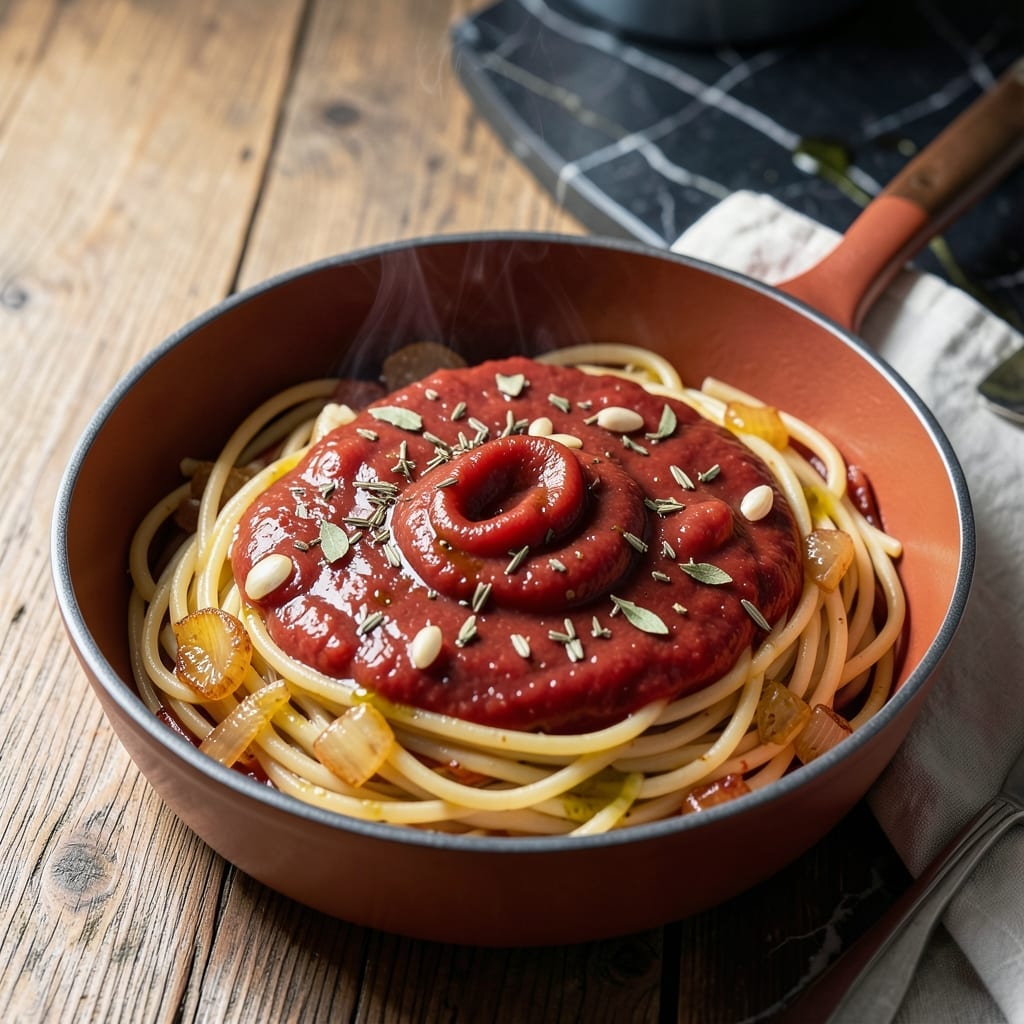
This sauce delivers the homemade tomato richness you expect, with a depth of flavor that elevates any pasta dish. I developed this recipe to capture that classic balance of sweetness and acidity found in traditional Italian sauces.
The secret lies in the slow simmer, allowing the tomatoes to break down and the flavors to meld together perfectly. A touch of garlic and onion adds aromatic complexity without overpowering the natural tomato taste.
You’ll end up with a smooth, velvety sauce that clings beautifully to pasta. The best part? It tastes even better the next day as the flavors continue to develop.
Make a big batch and store it for quick, flavorful meals all week. Here’s how to create this versatile sauce.
Ingredients for Hunts Spaghetti Sauce
Nine simple ingredients deliver that classic homemade tomato richness for any pasta dish
| Ingredient | Amount | Notes |
|---|---|---|
| Canned Tomato Sauce 🍅 | 2 cups | Hunts brand preferred for consistency |
| Tomato Paste 🍅 | 3 tbsp | For deep umami richness |
| Yellow Onion 🧅 | 1 whole | Finely diced for even distribution |
| Garlic Cloves 🧄 | 3 cloves | Minced for aromatic base |
| Extra-Virgin Olive Oil 🫒 | 2 tbsp | High quality for best flavor |
| Dried Oregano 🍃 | 1 tsp | Mediterranean variety preferred |
| Dried Basil 🌿 | 1 tsp | Adds classic Italian character |
| Sugar 🧂 | 1 tsp | Balances natural acidity |
| Salt 🧂 | 1 tsp | Adjust to taste at finish |
| Black Pepper 🌶️ | ½ tsp | Freshly ground preferred |
[recipe_ingredient_scaler]
The tomato sauce base matters here—Hunts gives you that consistent thickness and flavor I’ve come to rely on (the 28 oz cans are perfect for this). San Marzano tomatoes work too if you’re feeling fancy, but Hunts keeps it simple and reliable. I grab mine at Walmart or any regular grocery store. The olive oil should be something you’d actually drizzle on bread—no need for the super expensive stuff, but don’t grab the cheapest either.
No fresh herbs? Dried at one-third the amount of fresh works just fine. Out of tomato paste? Ketchup in a pinch (sounds weird, but it adds that sweet-tangy depth). Want more complexity? A splash of red wine vinegar brightens everything up. The sugar is optional—taste first, then decide if you need it to balance the acidity.
This keeps beautifully in the fridge for 5-7 days or freezes for 3 months. I always make a double batch—one for now, one for later. Glass jars work great for storage (just leave some headspace if freezing).
Why You’ll Love This Recipe
- I’ll be real: it tastes even better the next day, and it freezes like a dream for future quick meals.
- Pantry Staples: I always have these ingredients on hand—canned tomato sauce, paste, and a few fresh basics mean no last-minute grocery runs.
- Rich and Robust: Honestly, the slow-cooked garlic and onion in olive oil make the sauce taste like it simmered all day.
- Weeknight Hero: Between us, this is my go-to for busy Tuesdays when I need dinner ready before soccer practice.
Step-by-Step Instructions for Homemade Tomato Spaghetti Sauce
Here’s my method for building rich, layered flavor in your pasta sauce from scratch.
Step 1: Sauté the Aromatics Until Fragrant
Heat the 2 tbsp Extra-Virgin Olive Oil in a deep saucepan over medium heat. Add the finely diced 1 whole Yellow Onion and cook for 5-7 minutes, stirring occasionally, until the onion becomes soft and translucent.
Add the minced 3 cloves Garlic Cloves and cook for 30-60 seconds until fragrant. Be careful not to let the garlic brown—it should just smell amazing. This base builds the foundation of flavor for the entire sauce.
Step 2: Bloom the Herbs and Sweeten the Sauce
Stir in the 1 tsp Dried Oregano, 1 tsp Dried Basil, 1 tsp Sugar, 1 tsp Salt, and 0.5 tsp Black Pepper. Cook for 1 minute to let the spices toast slightly—this wakes up their flavors.
The sugar balances the natural acidity of the tomatoes, while the herbs add that classic Italian character. You should start to smell the warm, earthy aroma of the seasonings as they bloom in the oil.
Step 3: Incorporate the Tomato Products
Add the 3 tbsp Tomato Paste and stir for 2-3 minutes until it darkens slightly in color. This step deepens the umami richness and removes any raw tomato taste from the paste.
Pour in the 2 cups Canned Tomato Sauce and stir to combine everything. The sauce should come to a gentle simmer within 2-3 minutes. This is where the magic happens as all the flavors start to meld together.
Step 4: Simmer for Depth of Flavor
Reduce the heat to low and let the sauce simmer uncovered for 20-25 minutes, stirring occasionally. You’ll notice the sauce thicken slightly and the flavors intensify as it reduces.
Taste and adjust seasoning if needed. The sauce should be rich, slightly sweet, and well-balanced. If it seems too thick, add a splash of water. The color will deepen to a beautiful, rich red as it cooks.
Once finished, this sauce will coat the back of a spoon and have a velvety texture that clings perfectly to pasta.
Pro Tips For Making Hunts Spaghetti Sauce
- Sauté Onions Low: Cook your yellow onions over medium-low heat for 8-10 minutes until translucent—I learned this the hard way after burning them at high heat, which left a bitter taste in the sauce.
- Bloom Tomato Paste: After adding the tomato paste to the oil, let it cook for 1-2 minutes until it deepens in color; this builds a richer base flavor that canned sauce alone can’t match.
- Skip Raw Garlic: Resist the urge to toss in raw garlic cloves—sauté them with the onions for at least 1 minute to mellow their harshness and prevent that sharp, uncooked bite in your sauce.
- Thin with Reserve: If the sauce thickens too much, stir in a splash of the pasta water instead of plain water—it adds starch that actually changes the outcome by helping the sauce cling to the noodles better.
Perfect Pairings for This hunts spaghetti sauce
Pasta Pairings
This sauce clings beautifully to spaghetti or linguine, but I also love it with rigatoni for heartier bites. For a rustic feel, try pappardelle—the wide ribbons soak up the rich tomato flavor perfectly.
Bread Companions
A warm garlic bread loaf is non-negotiable for soaking up every last drop. I use a baguette brushed with garlic butter and toasted until golden. Focaccia works too if you want something softer. 🥖
Protein Additions
Brown 1 lb Italian sausage or ground beef separately, then stir into the sauce during the last 10 minutes of simmering. For a lighter option, grilled chicken breast slices pair surprisingly well.
Cheese Finishes
Freshly grated Parmigiano-Reggiano is my go-to, but Pecorino Romano adds a sharper bite. Sprinkle generously over each serving—about 2 tbsp per plate—and let it melt slightly from the heat of the sauce.
Fresh Garnishes
A handful of fresh basil leaves, torn just before serving, brightens up the dish. I also love a pinch of red pepper flakes for heat—start with ¼ tsp and adjust to taste. 🌿
Wine Pairing
A medium-bodied Chianti or Sangiovese complements the tomato acidity beautifully. For white wine lovers, a crisp Pinot Grigio works too. Serve slightly chilled for the best experience.
Nutrition Facts
Frequently Asked Questions
Can I use fresh tomatoes instead of canned sauce?
Yes, but you’ll need to cook them down first. Simmer 4 cups chopped fresh tomatoes for 30-40 minutes until thickened, then proceed with the recipe. Canned sauce saves time and ensures consistent thickness.
Why does the sauce need to simmer so long?
The 20-25 minute simmer allows flavors to meld and reduces the sauce to the perfect consistency. Skipping this step results in a watery, less flavorful sauce. Patience pays off with richer taste.
How do I fix sauce that’s too acidic?
Start with the 1 tsp sugar in the recipe, then add more ½ tsp at a time until balanced. A pinch of baking soda can neutralize acidity quickly, but use sparingly.
Can I add meat directly to the sauce?
For best texture, brown meat separately first. Drain excess fat, then add to the sauce during the last 10 minutes of simmering to absorb flavors. This prevents greasy sauce.

Trained in classic French technique but raised on slow-cooked ribs and spicy rubs, she blends culinary skill with smoke and soul.
- Recipe for Boneless Pork Chops in Cast Iron Skillet: Sear and Baste to Juicy Perfection - October 3, 2026
- Recipe for Boneless Cross Rib Roast: Slow-Roasted Beef with Herb Crust - October 3, 2026
- Hamburgers in Sauce Recipe Crock Pot: Slow-Cooked Savory Delight - October 3, 2026