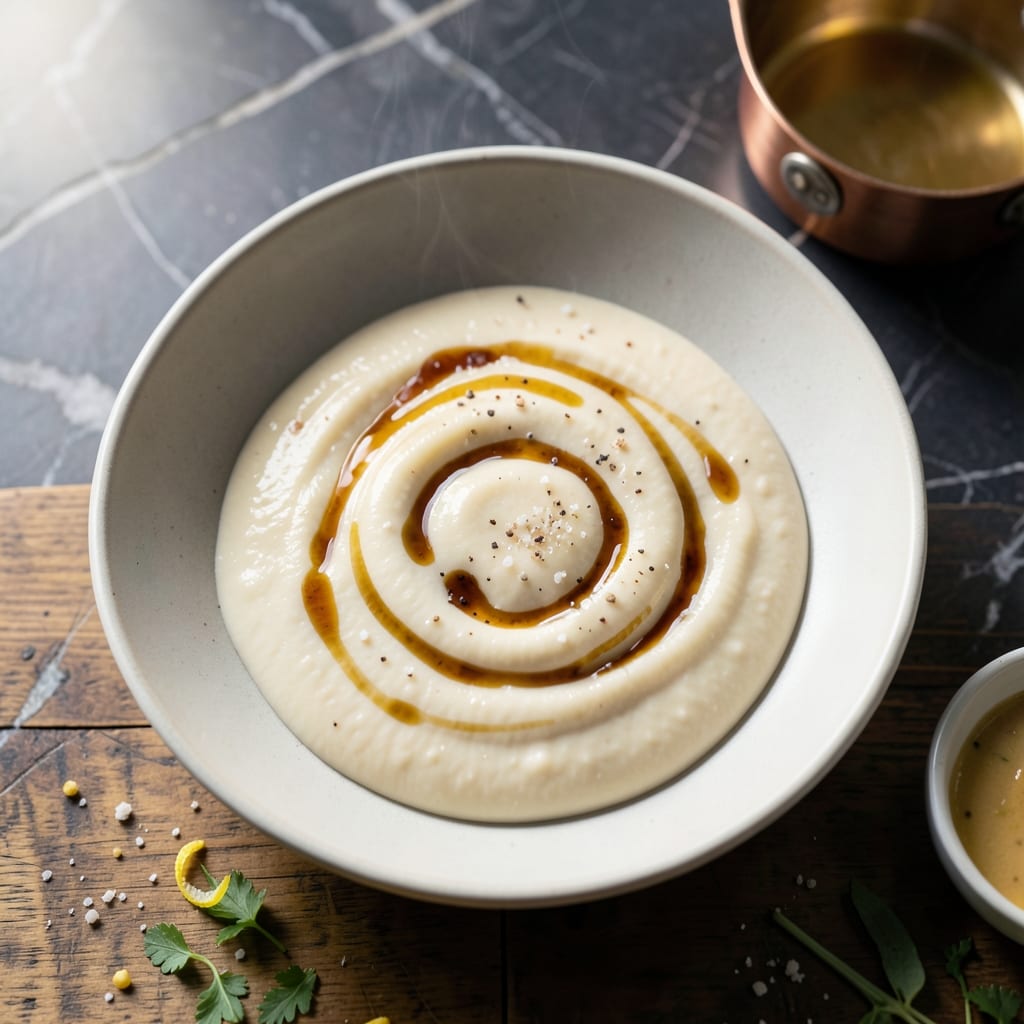
This cornstarch roux delivers a silky-smooth thickness to sauces and gravies without the heaviness of flour. The secret lies in the precise ratio of cornstarch to liquid, creating a neutral base that won’t alter flavors.
Unlike traditional roux, this version comes together in minutes with no cooking required. Simply whisk the ingredients until smooth, then stir into hot liquids for instant thickening. It’s the professional trick for consistent results every time.
What you get is a glossy, lump-free thickener that holds up to long simmering. Use it for everything from pan sauces to pie fillings, knowing it will maintain its stability without breaking.
Perfect for last-minute adjustments or meal prep, this method ensures your dishes achieve restaurant-quality texture with minimal effort.
Ingredients for Cornstarch Roux
Six simple components create a professional-grade thickener for any sauce or gravy.
| Ingredient | Amount | Notes |
|---|---|---|
| Cornstarch 🌾 | 2 tbsp | Fine, lump-free texture essential |
| Cold Water 💧 | 2 tbsp | Chilled for best results |
| Salt 🧂 | ¼ tsp | Fine sea salt preferred |
| White Pepper 🌶️ | 0.125 tsp | Optional for neutral color |
| Vegetable Stock 🥕 | 1 cup | Low-sodium for control |
| Unsalted Vegan Butter 🧈 | 1 tbsp | Optional for richness |
[recipe_ingredient_scaler]
The cornstarch quality is paramount—opt for pure, food-grade cornstarch without additives. Bob’s Red Mill or Argo are reliable brands available at most supermarkets. Ensure it’s fresh; old cornstarch loses thickening power. Cold water is non-negotiable for the slurry; warm water causes premature activation. The ratio of 1:1 cornstarch to liquid is the gold standard for this technique.
No cornstarch? Arrowroot powder at a 1:1 ratio works similarly, though it breaks down at high heat. Tapioca starch is another substitute but yields a slightly gel-like texture. For a gluten-free flour alternative, rice flour can work at double the quantity, though it requires cooking. The vegetable stock can be swapped for water, but stock adds depth (use low-sodium to avoid over-salting).
Store cornstarch in an airtight container in a cool, dry place for up to 18 months. This slurry keeps in the fridge for 24 hours if prepped ahead. For best results, whisk just before using to prevent settling (worth the extra minute).
Why You’ll Love This Recipe
- 5-Minute Slurry: I mix cornstarch and cold water in a jar, shake, and pour—no whisking lumps at the stove.
- Silky Depth: White pepper and stock turn the roux into a velvety, savory base that coats every bite.
- Weeknight Rescue: Honestly, it thickens soups, sauces, and stir-fries on demand, so I skip takeout.
- Pennies Per Batch: A tablespoon of cornstarch stretches a pot of broth into a meal, and leftovers reheat like a dream.
Step-by-Step Instructions for Cornstarch Roux
Master this fundamental technique to achieve perfectly smooth, lump-free thickening for your culinary creations.
Step 1: Create the Cornstarch Slurry
In a small bowl, combine the 2 tbsp Cornstarch with 2 tbsp Cold Water. Use a fork or small whisk to stir vigorously until the mixture is completely smooth and free of any lumps. The cold water is essential—it prevents premature activation of the starch molecules.
This slurry acts as your thickening agent. I always use chilled water (as specified in the ingredients) because it creates a more stable suspension that won’t clump when added to hot liquids. The mixture should have the consistency of heavy cream, with the cornstarch fully dissolved.
Step 2: Heat the Vegetable Stock
In a medium saucepan, bring the 1 cup Vegetable Stock to a gentle simmer over medium heat. As the stock heats, add the 0.25 tsp Salt and 0.125 tsp White Pepper, stirring to dissolve completely. Watch for the first signs of simmering—small bubbles breaking the surface at the edges.
The stock should be hot but not at a rolling boil when you add the slurry. This temperature control is crucial: too hot and the slurry may seize; too cool and it won’t activate properly. Maintain a steady, gentle simmer throughout the process.
Step 3: Temper and Incorporate the Slurry
Slowly pour the cornstarch slurry into the simmering stock while whisking constantly. This gradual incorporation prevents clumping by evenly distributing the starch molecules throughout the liquid. I recommend holding the bowl close to the surface to minimize splashing.
Continue whisking for 30-60 seconds as the mixture begins to thicken. You’ll notice the liquid transform from thin and watery to a more viscous consistency. The whisking motion must be vigorous and continuous to prevent any starch from settling at the bottom of the pan.
Step 4: Achieve Full Thickness
Once the mixture has thickened slightly, reduce the heat to medium-low and continue cooking for an additional 2-3 minutes. Stir frequently with a wooden spoon or silicone spatula, making sure to reach all areas of the pan.
The roux is ready when it coats the back of a spoon and has a glossy, semi-translucent appearance. At this stage, it should have the consistency of heavy cream. If using, stir in the 1 tbsp Unsalted Vegan Butter now, allowing it to melt completely into the mixture for added richness.
Step 5: Verify and Adjust Consistency
To test the final thickness, dip a spoon into the roux and run your finger through the coating on the back of the spoon. The line should hold its shape without immediately running together. If it’s too thin, continue cooking for another 1-2 minutes.
If the mixture becomes too thick, whisk in additional warm stock 1 tablespoon at a time until reaching your desired consistency. Remember that the roux will thicken slightly more as it cools. Use immediately in your recipe or store in an airtight container in the refrigerator for up to 3 days.
Pro Tips For Making Cornstarch Roux
- Use Ice-Cold Water: Always mix your cornstarch with ice-cold water, not warm or hot—it prevents clumping and gives you a silky smooth slurry. I learned this the hard way after ending up with lumps in my sauce more times than I’d like to admit.
- Temper the Slurry: Slowly pour the cornstarch mixture into the hot vegetable stock while stirring constantly. Dumping it all in at once creates stubborn clumps that refuse to dissolve, no matter how hard you whisk.
- Skip the Boiling: Once the roux thickens, reduce the heat immediately—cornstarch loses its thickening power if boiled too long. After ruining a batch by overcooking, I now pull it off the heat the second it reaches my desired consistency.
- Season at the End: Add salt and white pepper after the roux thickens, not before. Seasoning too early can mask the true taste of the stock, and you’ll end up over-salting. I was skeptical until I tried it, but it makes a real difference.
Dietary Considerations for This Recipe
Gluten-Free Friendly
This thickener is naturally gluten-free, making it perfect for anyone with celiac disease or gluten sensitivity. Cornstarch contains no gluten proteins, so you can use it confidently in all your favorite recipes without worry.
Vegan and Plant-Based
The base ingredients are entirely plant-derived, aligning perfectly with vegan diets. I often use vegetable stock to keep it strictly plant-based, though water works too. The optional vegan butter adds richness while maintaining dietary compliance.
Low-Calorie Option
With just 2 tbsp cornstarch per batch, this creates a low-calorie thickener compared to flour-based versions. Each tablespoon of cornstarch contains only about 30 calories, making it ideal for calorie-conscious cooking. 💪
Allergen Considerations
Cornstarch is top-8 allergen-free, but always check labels for cross-contamination warnings if you have severe allergies. Brands like Argo and Bob’s Red Mill clearly label their facilities’ allergen protocols.
Sodium Control
Using low-sodium vegetable stock lets you control salt content precisely. The recipe’s ¼ tsp salt can be adjusted or omitted entirely. This makes it heart-healthy and suitable for low-sodium diets.
Keto Adaptations
While cornstarch isn’t keto-friendly, you can substitute xanthan gum at a ratio of ¼ tsp per cup liquid. This maintains thickening power with minimal carbs. I’ve had great results with this swap in many recipes.
Nutrition Facts
Frequently Asked Questions
Can I use warm water instead of cold?
No, always use cold water for the slurry. Warm water activates the starch prematurely, creating lumps before you even add it to your sauce. Cold keeps the mixture stable until it hits the hot liquid.
How do I fix lumps in my roux?
Whisk vigorously to break them up, or strain through a fine-mesh sieve. To prevent lumps, ensure the slurry is completely smooth before adding to hot liquid and stir constantly.
Can I make this ahead of time?
Yes, the slurry keeps in the fridge for 24 hours. Stir well before using as cornstarch settles. Avoid pre-mixing with hot liquids, as it thickens upon standing.
Why does my sauce thin out after cooling?
Cornstarch thickens fully when hot but may thin slightly as it cools. Reheat gently and stir—it will regain thickness. For permanent stability, add ½ tsp more cornstarch to the slurry.

Trained in classic French technique but raised on slow-cooked ribs and spicy rubs, she blends culinary skill with smoke and soul.
- Recipe for Boneless Pork Chops in Cast Iron Skillet: Sear and Baste to Juicy Perfection - October 3, 2026
- Recipe for Boneless Cross Rib Roast: Slow-Roasted Beef with Herb Crust - October 3, 2026
- Hamburgers in Sauce Recipe Crock Pot: Slow-Cooked Savory Delight - October 3, 2026