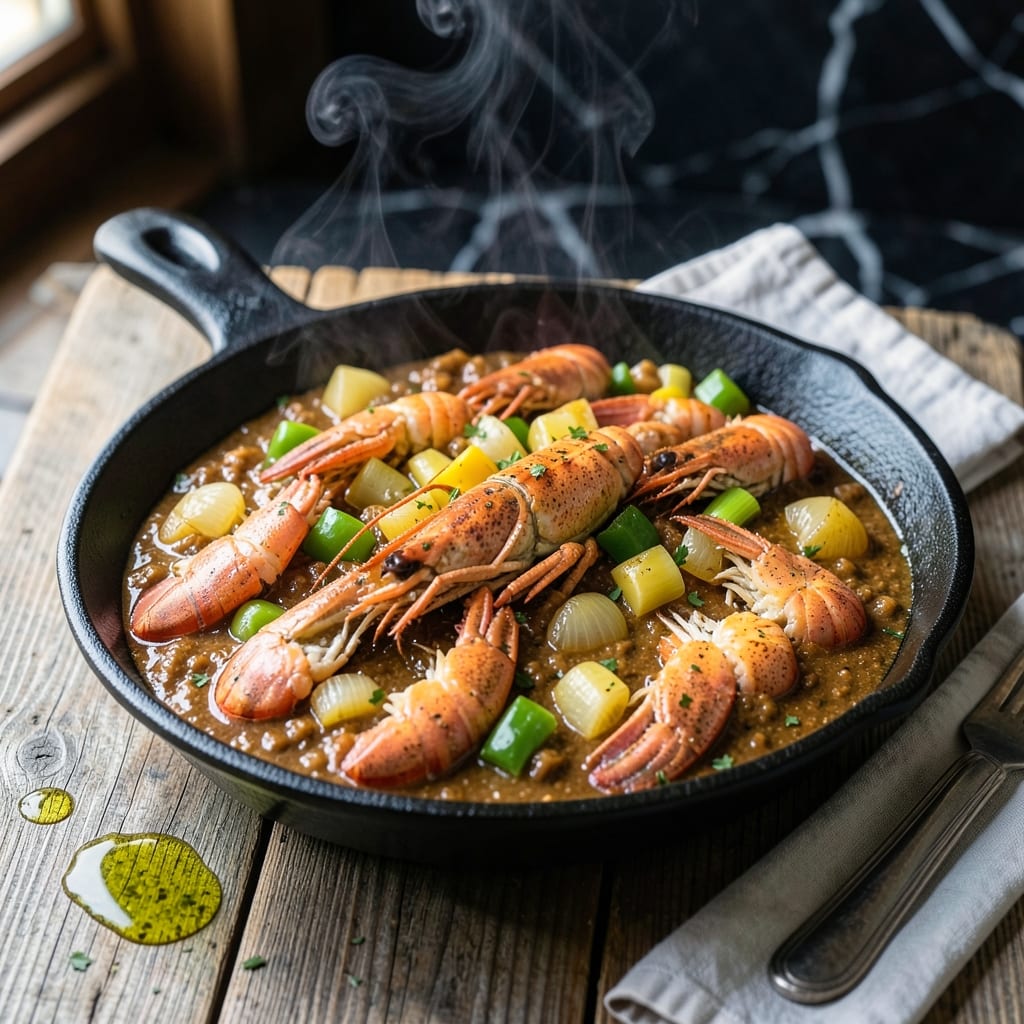
There’s a reason Louisiana cooks swear by smothered crawfish—this dish captures the soul of Cajun country in every bite. I’ve refined this method to balance rich roux, tender crawfish, and the holy trinity of vegetables without overpowering the star ingredient.
The key is a slow-cooked roux that builds deep, nutty flavor as the base for the étouffée. Fresh crawfish tails soak up the sauce, while a touch of cayenne adds just enough heat to keep it authentic. This isn’t a shortcut dish, but the results are worth every minute.
What you’ll get is a thick, velvety sauce packed with plump crawfish, served over steaming rice. The aroma alone will transport you to a bayou kitchen. The first bite delivers layers of smoky, savory, and slightly spicy flavors that define real Cajun cooking.
Serve it with hot sauce on the side for those who want extra kick. Here’s how to bring this classic to your table.
Ingredients for Cajun Ninja Crawfish Etouffee
Pantry staples meet Louisiana soul in this rich, authentic dish.
| Ingredient | Amount | Notes |
|---|---|---|
| Crawfish Tails 🦞 | 2 lb | Peeled, deveined, fresh or frozen |
| All-Purpose Flour 🌾 | ¾ cup | For making the roux |
| Vegetable Oil 🫒 | ¾ cup | Or peanut oil for roux |
| Yellow Onion 🧅 | 1 whole | Finely diced for holy trinity |
| Green Bell Pepper 🌶️ | 1 whole | Finely diced for holy trinity |
| Celery Stalks 🥬 | 3 pieces | Finely diced for holy trinity |
| Garlic Cloves 🧄 | 4 cloves | Minced for depth of flavor |
| Chicken Stock 🍲 | 2 cups | Low-sodium preferred for control |
| Cayenne Pepper 🔥 | ½ tsp | Adjust to preferred heat level |
| Dried Thyme 🌿 | 1 tsp | Crushed between fingers for aroma |
| Bay Leaf 🍃 | 2 pieces | Whole leaves, removed before serving |
| Salt 🧂 | 1 tsp | Kosher or sea salt to taste |
| Black Pepper 🌶️ | ½ tsp | Freshly ground preferred |
| Butter 🧈 | 4 tbsp | Unsalted, added at the end |
| Long-Grain White Rice 🍚 | 2 cups | Uncooked, for serving |
| Green Onions 🧅 | 4 pieces | Thinly sliced for garnish |
[recipe_ingredient_scaler]
The crawfish are the star—fresh tails from a seafood market are ideal, but frozen works too (just thaw completely first). For the roux, vegetable or peanut oil gives you the right smoke point without burning. The holy trinity (onion, bell pepper, celery) should be finely diced so it melts into the sauce. I grab mine from Walmart or Rouses when I’m down south—quality is always spot-on.
No crawfish? Shrimp or crab meat make great substitutes—just adjust cooking time (shrimp cook faster). Out of cayenne? Hot paprika at half the amount adds color and mild heat. Chicken stock can be swapped for seafood stock if you’re feeling fancy. The butter at the end is non-negotiable though—it’s what makes the sauce velvety. Land O’Lakes is my go-to for consistency.
This keeps 3-4 days in the fridge, but honestly it’s best fresh. The roux can be made ahead (store it in the fridge for 1 week), but the crawfish should go in just before serving. Leftovers? Reheat gently on the stove—microwaves can make the sauce separate.
Why You’ll Love This Recipe
- One Pot Meal: I love that this comes together in a single pot—just flour, oil, and the holy trinity of onion and bell pepper.
- Roux Perfection: The dark roux made with flour and oil gives it that deep, nutty base that makes the crawfish tails taste even richer.
- Weeknight Winner: Honestly, it’s my go-to for a quick but impressive dinner, especially when I need something hearty.
- Leftovers? Yes Please: The flavor actually gets better the next day, so I always make extra for lunch the following afternoon.
Step-by-Step Instructions for Louisiana-Style Smothered Crawfish
Here’s my method for building layers of flavor in this classic Louisiana stew.
Step 1: Make the Roux for Rich Base Flavor
Heat the 0.75 cup Vegetable Oil in a large, heavy-bottomed pot over medium heat. Gradually whisk in the 0.75 cup All-Purpose Flour, a little at a time, to prevent lumps from forming.
Cook the roux, stirring constantly with a wooden spoon, for 20-25 minutes until it reaches a rich, peanut butter color. This is crucial—don’t rush it. The roux should smell nutty and toasty, not burnt. If it starts to darken too quickly, reduce the heat slightly. The darker the roux, the deeper the flavor in your etouffee.
Step 2: Build the Holy Trinity and Aromatics
Immediately add the diced 1 whole Yellow Onion, 1 whole Green Bell Pepper, and 3 pieces Celery Stalks. This trio is the foundation of Cajun cooking. Stir well to coat the vegetables in the roux and cook for 5-7 minutes until they soften and become translucent.
Add the minced 4 cloves Garlic Cloves and cook for 1 minute until fragrant. Then stir in the 0.5 tsp Cayenne Pepper, 1 tsp Dried Thyme, 2 pieces Bay Leaf, 1 tsp Salt, and 0.5 tsp Black Pepper. This builds the complex, aromatic base that defines the dish.
Step 3: Add Liquids and Simmer for Depth
Pour in the 2 cups Chicken Stock, stirring constantly to incorporate it fully into the roux. The mixture will thicken and bubble as it comes to a simmer. Reduce the heat to medium-low and let it cook for 10-12 minutes, stirring occasionally, until the sauce has slightly thickened.
This simmering step allows the flavors to meld together beautifully. The sauce should coat the back of a spoon but still be pourable. If it becomes too thick, add a splash of water or stock to loosen it. Taste and adjust seasoning if needed, keeping in mind the crawfish tails will add their own briny flavor.
Step 4: Add Crawfish Tails and Finish
Gently fold in the 2 lb Crawfish Tails, ensuring they are fully coated in the sauce. Cook for 5-7 minutes until the tails are heated through—fresh crawfish will turn opaque and curl slightly, while frozen tails will plump up as they warm.
Just before serving, stir in the 4 tbsp Butter until it melts completely. This adds a rich, velvety finish to the sauce. Remove the 2 pieces Bay Leaf and discard them. The etouffee is now ready to be served hot over steamed 2 cups Long-Grain White Rice, garnished with the thinly sliced 4 pieces Green Onions.
Pro Tips For Making Cajun Ninja Crawfish Etouffee
- Brown the Flour: Cook your flour in oil over medium heat until it reaches a peanut butter color—this builds the roux base that defines etouffee. I learned this the hard way after stopping too early and ending up with a bland, thin sauce.
- Drain Crawfish Well: Press the crawfish tails between paper towels to remove excess moisture. Sounds tedious, but it prevents the etouffee from turning watery instead of rich and thick.
- Skip the High Heat: Keep the heat at medium-low once you add the trinity (onion, bell pepper)—burnt veggies will bitter your whole dish. After ruining a batch this way, I now stir frequently and stay patient.
- Use a Dark Roux: Don’t rush the roux—let it darken to a deep chocolate shade for maximum flavor. It’s the backbone of the dish, and a pale roux just won’t cut it, no matter how good your crawfish are.
Health Benefits of These Flavors
High-Quality Protein
Crawfish tails pack a serious protein punch with about 24 grams per 100-gram serving. This lean seafood helps build muscle and supports tissue repair without the saturated fat found in red meats. The protein in this dish keeps you full and energized for hours. 💪
Rich in Omega-3s
These tiny crustaceans are loaded with omega-3 fatty acids, which support heart health and reduce inflammation. A 2 lb serving provides a significant portion of your daily needs, promoting brain function and cardiovascular wellness.
Low-Calorie Option
At roughly 100 calories per 100 grams, crawfish is a guilt-free indulgence. The rich, velvety sauce in this dish comes from the roux and butter, but the star ingredient remains light and nutritious.
Vitamin B12 Boost
Crawfish is an excellent source of vitamin B12, essential for nerve function and red blood cell production. One serving delivers nearly 100% of your daily requirement, making this dish a nutritional powerhouse. 🥗
Mineral-Rich Profile
You’ll get a healthy dose of selenium, zinc, and iron from crawfish. Selenium acts as a powerful antioxidant, while zinc supports immune function and iron aids in oxygen transport throughout your body.
Low Carb, High Flavor
This dish is naturally low in carbs, making it a great option for those watching their intake. The flavor comes from the spices, aromatics, and rich roux, so you don’t need extra carbs to enjoy every bite.
Nutrition Facts
Frequently Asked Questions
How do I know when my roux is dark enough?
Your roux is ready when it reaches a rich peanut butter color. This takes 20-25 minutes of constant stirring over medium heat. It should smell nutty, not burnt.
Can I use frozen crawfish tails?
Yes, but thaw them completely first. Frozen tails work just as well as fresh and should be cooked for 5-7 minutes until heated through.
What if my sauce becomes too thick?
Add a splash of water or stock to loosen it. The sauce should coat the back of a spoon but still be pourable. Adjust gradually to avoid thinning it too much.
Can I make this dish ahead of time?
The roux can be made 1 week ahead and stored in the fridge. The full dish keeps for 3-4 days in the fridge but is best served fresh.

Trained in classic French technique but raised on slow-cooked ribs and spicy rubs, she blends culinary skill with smoke and soul.
- Recipe for Boneless Pork Chops in Cast Iron Skillet: Sear and Baste to Juicy Perfection - October 3, 2026
- Recipe for Boneless Cross Rib Roast: Slow-Roasted Beef with Herb Crust - October 3, 2026
- Hamburgers in Sauce Recipe Crock Pot: Slow-Cooked Savory Delight - October 3, 2026