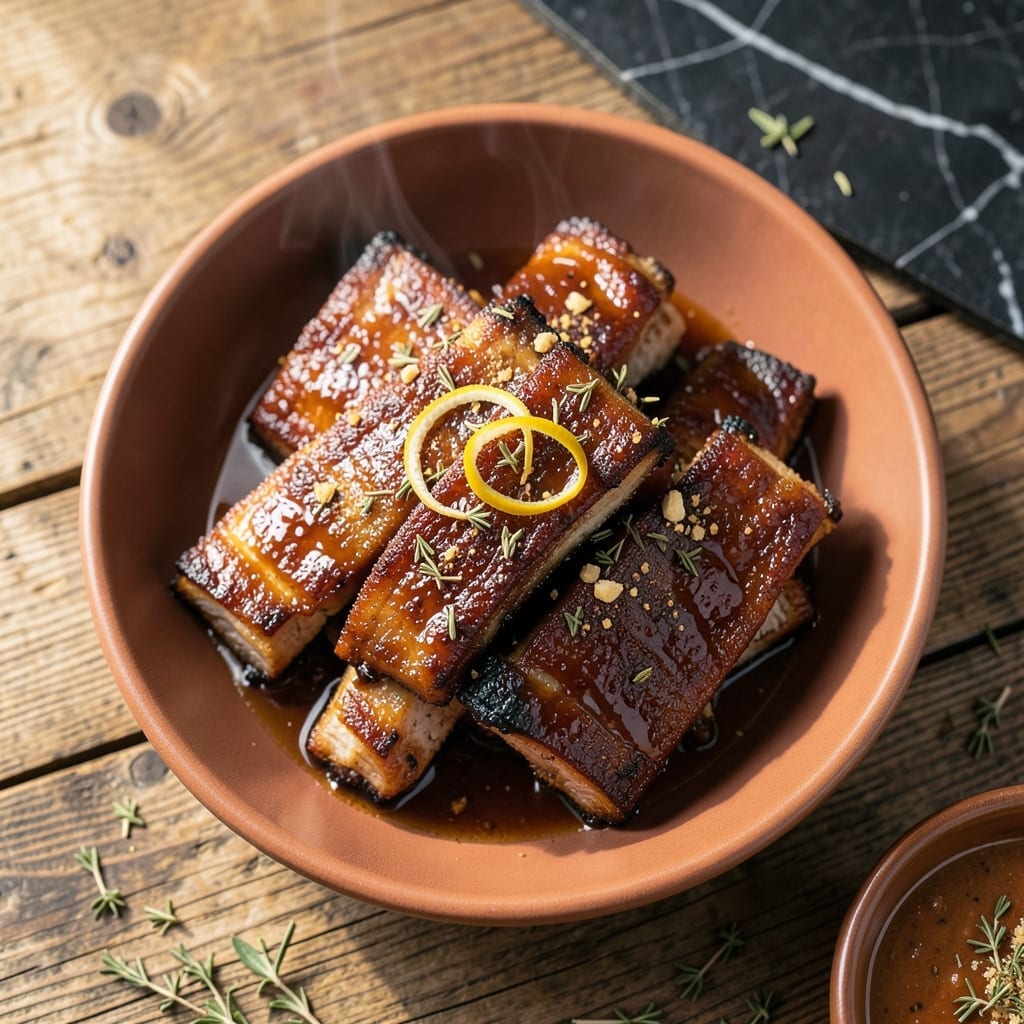
There’s nothing like the aroma of slow-cooked ribs filling your kitchen. This oven method delivers tender results without a smoker.
I developed this technique by adapting my outdoor smoking knowledge for indoor cooking. The key is low heat and patience, letting the collagen break down naturally.
The meat becomes so tender it nearly falls apart at the touch of a fork. A simple dry rub enhances the pork’s natural flavor without overpowering it.
You’ll achieve competition-worthy ribs with just your oven and a few hours. The process is straightforward but demands attention to detail.
Ingredients for Country Style Pork Spare Ribs Oven
Simple dry rub and a few hours in the oven. That’s all you need for competition-worthy results.
| Ingredient | Amount | Notes |
|---|---|---|
| Country Style Pork Spare Ribs 🍖 | 4 lb | Bone-in, well-marbled preferred |
| Brown Sugar 🍚 | ½ cup | Light or dark variety |
| Sweet Paprika 🌶️ | 2 tbsp | For color and mild heat |
| Garlic Powder 🧄 | 1 tbsp | Not garlic salt |
| Onion Powder 🧅 | 1 tbsp | Fresh ground preferred |
| Kosher Salt 🧂 | 1 tbsp | Diamond Crystal preferred |
| Black Pepper 🌶️ | 1 tsp | Freshly ground for best flavor |
| Dried Thyme 🍃 | 1 tsp | Rubbed between fingers to release oils |
| Dried Oregano 🍃 | 1 tsp | Mediterranean variety preferred |
| Apple Cider Vinegar 🍎 | 2 tbsp | For tangy balance in rub |
| Olive Oil 🫒 | 2 tbsp | Light or extra-virgin |
| Chicken Broth 🥣 | 1 cup | Low-sodium preferred for braising |
| Barbecue Sauce 🍯 | 1 ½ cups | Your favorite store-bought or homemade |
[recipe_ingredient_scaler]
The ribs are everything here. Country style spare ribs (meaty, bone-in) give the best texture—avoid baby back for this method. Look for good marbling at Costco or your butcher; they’ll have the thickest, most flavorful cuts. I always buy a full rack and trim it myself (just remove the membrane and any excess fat). This cut handles the long, slow cooking beautifully without drying out.
No brown sugar? Coconut sugar at 1:1 ratio works. Out of paprika? Smoked paprika adds depth (use half the amount). The vinegar might seem odd in a dry rub, but it tenderizes the meat—don’t skip it. For the broth, vegetable or beef broth can swap in, but chicken keeps the flavor mild. Short on time? Cook at 275°F instead of 250°F—still tender, just less fall-apart.
Ribs taste even better the next day (the flavors meld like crazy). Store in an airtight container for up to 4 days in the fridge or freeze for 3 months. Reheat in the oven at 350°F, covered, until warmed through—microwave ruins the texture (worth the extra minute).
Why You’ll Love This Recipe
- Set It and Forget: I toss the ribs with brown sugar and spices, pop them in the oven, and walk away—no babysitting required.
- Smoky Sweet Magic: That combo of brown sugar and sweet paprika gives a caramelized crust that’s ridiculous with the juicy pork.
- Feeds My Crew: Between us, these ribs stretch for family dinner and next-day sandwiches without breaking the bank.
- Weeknight Hero: Honestly, it’s my go-to when I need something hearty ready by 7 PM with zero fuss.
Step-by-Step Instructions for Country Style Pork Spare Ribs
This method ensures the ribs emerge tender enough to pull apart with minimal effort.
Step 1: Create the Flavorful Dry Rub
In a small bowl, combine the 0.5 cup Brown Sugar, 2 tbsp Sweet Paprika, 1 tbsp Garlic Powder, 1 tbsp Onion Powder, 1 tbsp Kosher Salt, 1 tsp Black Pepper, 1 tsp Dried Thyme, and 1 tsp Dried Oregano. I rub the dried herbs between my fingers as I add them to release their essential oils.
Stir in the 2 tbsp Apple Cider Vinegar and 2 tbsp Olive Oil to create a thick, aromatic paste. This liquid helps the rub adhere to the meat and begins the tenderizing process. The mixture should look like wet sand and smell incredibly fragrant.
Step 2: Coat and Marinate the Ribs
Pat the 4 lb Country Style Pork Spare Ribs dry with paper towels. This removes excess moisture so the rub sticks better. Place the ribs on a large baking sheet or in a shallow dish.
Using your hands, generously coat all sides of the ribs with the rub mixture, pressing it into the meat so it forms a thick crust. I always wear gloves for this step—it’s messy but worth it. Let the ribs marinate at room temperature for 30 minutes while your oven preheats.
Step 3: Slow-Braise in the Oven
Preheat your oven to 300°F. This low temperature is key for breaking down the collagen in the ribs without drying them out. Place the ribs in a large Dutch oven or heavy roasting pan, meat-side up.
Pour the 1 cup Chicken Broth into the bottom of the pan. This creates steam that keeps the ribs moist during the long cooking process. Cover tightly with a lid or foil and transfer to the oven.
Step 4: Finish with Barbecue Glaze
After 2.5 hours, carefully remove the pan from the oven. The ribs should be fork-tender at this point. Increase the oven temperature to 375°F.
Brush the ribs generously with 1.5 cups Barbecue Sauce, coating all sides. Return them to the oven, uncovered, for 15-20 minutes until the sauce has caramelized and the ribs have developed a sticky, glossy coating. You’ll know they’re done when the sauce bubbles and thickens slightly.
Step 5: Rest and Serve
Remove the ribs from the oven and let them rest for 10 minutes before serving. This allows the juices to redistribute throughout the meat. The ribs should be falling off the bone but still hold their shape when lifted.
Serve the ribs with the pan juices spooned over the top. The meat should pull away from the bone cleanly with just a gentle tug. Any leftover sauce in the pan makes an excellent dipping sauce.
Pro Tips For Making Country Style Pork Spare Ribs Oven
- Preheat the Oven: Crank it to 325°F—low and slow is non-negotiable for country ribs to get tender without drying out.
- Pat Ribs Dry: I learned this the hard way—blot the ribs with paper towels before seasoning so the brown sugar sticks instead of sliding off.
- Skip the Overcrowding: Leave space between ribs on the pan, or they’ll steam instead of caramelize. Sounds fussy, but it works.
- Rest Before Serving: Give them 10 minutes under foil after baking—juices redistribute, and you won’t lose half the flavor on the cutting board.
Common Mistakes When Making This Recipe
Skipping the Marinate
Don’t rush the 30-minute marinate—this step lets the rub penetrate the meat and the vinegar begin tenderizing. I learned this the hard way at my first BBQ competition; the flavor difference is night and day. 💡
Wrong Cooking Temperature
Cooking above 300°F dries out the ribs before the collagen breaks down. Low and slow is the only way to achieve that fall-off-the-bone texture. I set my oven to 275°F if I’m in a hurry, but never higher.
Not Enough Liquid
Without the 1 cup Chicken Broth in the pan, the ribs will steam in their own juices but risk drying out. The broth creates the necessary moisture for that perfect braise. I always use low-sodium to control the seasoning.
Peeking Too Often
Every time you open the oven, you lose 50-100°F of heat, extending the cook time. Trust the process and keep that lid on tight. I check only once, at the 2-hour mark, to rotate the pan if needed.
Over-Saucing Too Soon
Adding the 1.5 cups Barbecue Sauce too early can cause it to burn. Wait until the ribs are fork-tender, then glaze during the final 15-20 minutes at 375°F. This caramelizes the sauce without bitterness.
Skipping the Rest
Those 10 minutes of rest let the juices redistribute. Slice too soon, and you’ll lose all that moisture to the cutting board. I use this time to warm my serving platters and set the table. 🍽️
Nutrition Facts
Frequently Asked Questions
What’s the best way to check for doneness?
The ribs are ready when the meat pulls back from the ends of the bones by about 1/4 inch and reaches an internal temperature of 195-203°F. Use a fork to test—it should slide in like butter.
Can I make these ahead of time?
Yes! Cook and glaze the ribs completely, then refrigerate for up to 4 days. Reheat covered at 350°F for 15-20 minutes before serving. The flavors actually improve overnight.
What if my ribs turn out tough?
This usually means they needed more time. Return them to the oven at 275°F with extra 1/2 cup broth and cook for another 30-60 minutes. Patience is key with this cut.

Trained in classic French technique but raised on slow-cooked ribs and spicy rubs, she blends culinary skill with smoke and soul.
- Recipe for Boneless Pork Chops in Cast Iron Skillet: Sear and Baste to Juicy Perfection - October 3, 2026
- Recipe for Boneless Cross Rib Roast: Slow-Roasted Beef with Herb Crust - October 3, 2026
- Hamburgers in Sauce Recipe Crock Pot: Slow-Cooked Savory Delight - October 3, 2026