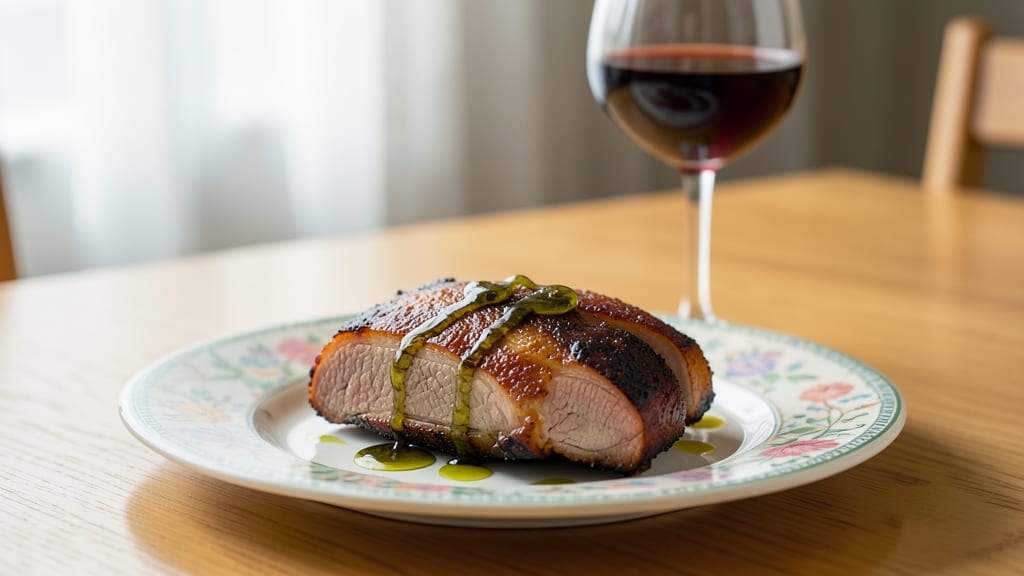
Mastering crispy smoked pork belly transforms a simple cut into a showstopping centerpiece that delivers on both texture and flavor. 🔥 Growing up in small-town Georgia, I learned that the secret to perfect pork belly isn’t just about the smoke—it’s the precise balance of heat, time, and finishing techniques that create that coveted crunch while keeping the meat impossibly tender inside.
This recipe builds on techniques I developed while apprenticing under Master Chef Robert Chen, where we smoked whole hogs for hours until the fat rendered into golden, crackling perfection.
The key lies in starting with a high-quality cut, controlling the smoker temperature precisely, and using a two-stage process that ensures both crispy skin and juicy meat. Every step is designed to deliver professional-quality results at home, even with basic equipment.
What you’ll achieve is a slab of pork belly with skin so crisp it shatters between your teeth, while the meat inside remains succulent and rich. The rendered fat pools around the edges create an irresistible golden crust, and the smoky aroma will have everyone gathering around your table.
This isn’t just another pork belly recipe—it’s the one that will make you the star of any meal.
Pair it with pickled vegetables to cut through the richness, roasted potatoes for heartiness, or a simple arugula salad for freshness. The possibilities are endless, but the technique remains the same—simple yet precise, reliable yet impressive. Let’s get smoking.
Ingredients for crispy smoked pork belly
High-quality pork belly and simple seasonings create restaurant-worthy results at home.
| Ingredient | Amount | Notes |
|---|---|---|
| Pork Belly Slab 🐷 | 3 lb | Skin-on, fat layer 1/2 inch thick |
| Coarse Kosher Salt 🧂 | 2 tbsp | Diamond Crystal preferred |
| Ground Black Pepper 🌶️ | 1 tbsp | Freshly ground, medium grind |
| Smoked Paprika 🌶️ | 1 tbsp | For surface flavor |
| Brown Sugar 🍚 | 1 tbsp | Lightly sweetens crust |
| Apple Cider Vinegar 🍎 | 2 tbsp | For tenderizing |
| Extra-Virgin Olive Oil 🫒 | 2 tbsp | For skin lubrication |
| Wood Chips 🪵 | 1 lb | Hickory or applewood |
| Pork Belly Rub 🧂 | ½ cup | Homemade or quality store-bought |
| Butter 🧈 | 4 tbsp | Unsalted, for finishing |
| Fresh Thyme Sprigs 🌿 | 4 whole | For aromatic smoke |
| Fresh Rosemary Sprigs 🌿 | 4 whole | For herbal complexity |
[recipe_ingredient_scaler]
The pork belly is everything here—look for slabs with at least ½ inch of fat for maximum crispiness. I always buy mine from local butchers or Whole Foods where they can trim it fresh. The fat layer should be vibrant white, not yellowed or dried out. If you’re using pre-cut pork belly from the grocery store, pat it dry thoroughly before seasoning—moisture is the enemy of crispy skin. For the best results, ask for bone-in if available—the bone helps retain moisture during cooking, keeping the meat juicy while the skin crisps perfectly. Skip the pre-rubbed stuff—homemade is always better.
No smoked paprika? Regular paprika plus a dash of cayenne gets you close, but the smoky depth is different. The apple cider vinegar is non-negotiable—it tenderizes the meat while adding brightness. Want to skip it? Pineapple juice works in a pinch (1:1 ratio). For the rub, I mix my own with coarse salt, black pepper, and brown sugar—but high-quality pre-made rubs from Penzeys or McCormick are solid too. The wood chips matter: hickory for bold smoke or applewood for subtlety. Soak them in water for at least 30 minutes before using—this prevents flare-ups and gives you a steady smoke.
This isn’t a quick cook—plan for 4-5 hours in the smoker for perfect results. The pork belly will keep beautifully for 4 days in the fridge if wrapped tightly in plastic. For long-term storage, slice it and freeze portions—the crispiness won’t last, but the meat stays delicious for up to 3 months. To reheat, wrap slices in foil with a pat of butter and warm in a 350°F oven for 10-15 minutes. The rendered fat? Save it—it’s perfect for cooking potatoes or drizzling over finished dishes. And if you’re serving it with sides, let the pork rest 10 minutes before slicing—this keeps the juices in and the meat tender.
Why You’ll Love This Recipe
- No-Fuss Crispiness: Honestly, the dry-brining with 2 tbsp coarse kosher salt, 1 tbsp smoked paprika, and 1 tbsp brown sugar for 12-24 hours is the real MVP—no fancy prep, just let it sit while you live your life. The apple cider vinegar and olive oil? Pure genius for tenderizing without effort.
- Smoky-Sweet Perfection: That 1 lb hickory or applewood smoke meeting the 4 tbsp butter finish? Chef’s kiss. The smoked paprika and fresh rosemary/thyme infuse the fat while keeping the meat so tender it falls apart—crispy edge, creamy center, repeat.
- Leftovers That Rule: Four days in the fridge? More like four days of “thank god I made this.” Slice it up, and it’s perfect for sandwiches, fried rice, or just snacking straight from the fridge. Freeze portions for months—crispiness fades, but the pork? Still dangerously good.
- Budget Smoker Star: Three pounds of pork belly for under $20? Yes, even on a Tuesday night. The pork belly rub and butter finish make it feel fancy, but the real win is that 1 lb wood chips and fresh herbs turn a simple slab into a showstopper without breaking the bank.
Step-by-step instructions for smoked pork belly
Here’s how to transform a simple slab into restaurant-quality pork belly with perfect bark and melt-in-your-mouth tenderness.
🔥 Step 1: Prepare the Pork Belly for Maximum Crisp
Remove the pork belly slab from the fridge and pat it dry completely with paper towels. This step can’t be skipped—moisture is the enemy of crispy skin. I like to press firmly with fresh towels to remove any lingering moisture from the fat cap and skin surface.
In a small bowl, combine the 2 tbsp coarse kosher salt, 1 tbsp ground black pepper, 1 tbsp smoked paprika, 1 tbsp brown sugar, and ½ cup pork belly rub. Mix well to create your dry rub. Spread this evenly over all sides of the pork belly, pressing it into the meat so it adheres. This creates the perfect foundation for that prized crispy crust.
Now for the secret weapon: pour the 2 tbsp apple cider vinegar and 2 tbsp extra-virgin olive oil over the rubbed pork belly. The vinegar tenderizes while the oil helps lubricate the skin for better browning. Let it rest uncovered on a wire rack in the refrigerator for 12-24 hours—this dry-brining process ensures the rub penetrates deeply and the skin becomes paper-thin and crispy.
🍳 Step 2: Set Up Your Smoker for Perfect Smoke
While the pork belly rests, prepare your smoker. Add the 1 lb wood chips (hickory or applewood) to a smoker box or directly into the fire chamber. Light them according to your smoker’s instructions and let them burn until you see clean, blue smoke—this is what carries those delicious aromatics into the meat.
Set your smoker to 225°F and let it stabilize for 30 minutes before adding the pork belly. I always check the temperature with my probe thermometer to ensure accuracy. Place the pork belly fat-side up on the smoker grate—this allows the rendered fat to baste the meat as it cooks, creating that signature juicy interior.
Here’s the thing—don’t open the smoker during the first 2 hours of cooking. Every time you peek, you lose heat and moisture. Resist the temptation! The pork belly will give you plenty of visual cues when it’s ready for the next step.
🥘 Step 3: Build the Crust and Add Herbal Aroma
After 4-5 hours of smoking, check the internal temperature of the pork belly. It should be around 160-165°F—this is when the “stall” begins. At this point, remove the pork belly from the smoker and place it on a cutting board. Using a sharp knife, score the fat cap in a diamond pattern about ½ inch deep, being careful not to cut into the meat itself.
Now we’re going to add those beautiful herbal aromas. Place the 4 fresh thyme sprigs and 4 fresh rosemary sprigs directly on top of the scored fat. Return the pork belly to the smoker and continue cooking until the internal temperature reaches 195-200°F (about 2-3 more hours). The fat should be shiny and golden, and the skin should be deep mahogany brown—this is your crispy crust forming.
Real talk: if the skin starts to darken too quickly, wrap it loosely in aluminum foil (shiny side out) for the final 30 minutes of cooking. This prevents burning while still allowing the fat to render properly.
🔪 Step 4: Finish with Butter for Ultimate Crisp
Once the pork belly reaches 200°F and the skin is beautifully crisp, it’s time for the finishing touch. Remove it from the smoker and let it rest for 10 minutes. Then, using a pastry brush, generously brush the 4 tbsp butter over the entire surface of the pork belly, including the scored fat. This step is non-negotiable—it creates that signature glossy, crackly crust we’re after.
Return the pork belly to the smoker (or a hot grill) for 5-10 minutes until the butter melts and the skin becomes deep golden and crispy. You’ll know it’s perfect when the skin sounds like it’s crackling under your fingers. The butter also infuses the meat with rich flavor as it cooks.
Let the pork belly rest for another 15 minutes before slicing. This resting period allows the juices to redistribute, ensuring each slice is juicy and tender from edge to edge. The skin should be crunchy enough to stand up on its own—that’s your sign of success.
⏰ Step 5: Slice and Serve with Confidence
Using a sharp knife, slice the pork belly against the grain into ¼-inch thick slices. The fat should be shiny and crisp, while the meat should be tender enough to pull apart with your fingers. Serve immediately with your favorite sides—think roasted potatoes, coleslaw, or crusty bread to soak up those delicious juices.
Each bite should deliver that perfect combination of crispy, crackly skin and juicy, melt-in-your-mouth pork. The smoky aroma from the wood chips, combined with the herbal notes from thyme and rosemary, makes this dish truly unforgettable. And don’t forget to save those leftovers—they’re even better the next day!
Pro Tips For Making Crispy Smoked Pork Belly
- Score the Fat First: I learned this the hard way—skipping the diamond pattern scoring means your fat renders unevenly, leaving pockets of uncooked fat that turn rubbery. Use a sharp knife and cut about ½ inch deep, but stop before you hit the meat. This lets the fat baste properly while keeping the skin crisp.
- Don’t Rush the Vinegar Rest: The 12-24 hour dry-brine with apple cider vinegar is where the magic happens, but I’ve rushed it too many times. If you’re impatient, at least give it 12 hours—any less, and your skin won’t crisp as dramatically. Trust me, the extra time makes the difference between good and restaurant-quality pork belly.
- Watch the Smoke Color: Blue smoke is your friend; white smoke means your wood chips aren’t burning hot enough. If you see thick white smoke, your pork belly will taste smoky but not deeply infused. Adjust the airflow or add more wood chips until you’ve got that clean, blue haze—it’s the only way to get that authentic smoky flavor without overpowering the meat.
- Upgrade the Butter Finish: The 4 tbsp unsalted butter isn’t just for flavor—it’s the secret to that glossy, crackling crust. I used to use salted butter, but the extra salt throws off the balance. Brush it on generously and return the pork belly to the smoker for just 5-10 minutes. If you skip this, you’ll miss out on that irresistible crunch and rich finish.
Essential equipment for crispy smoked pork belly
Your Smoker Setup
You don’t need a fancy smoker to achieve that perfect crisp—just a reliable setup. I use a Traeger Pro 575 for most of my cooking, but a Weber Smokey Mountain or even a pellet grill works just fine. The key is maintaining 225°F consistently.
Invest in a quality thermometer like the Thermoworks Smoke—it’s a game-changer for monitoring both smoker and internal temperatures. For wood chips, hickory gives bold, smoky flavor while applewood offers a milder sweetness. Soak them for 30 minutes before smoking to prevent flare-ups and ensure steady smoke. 🔥
Must-Have Tools
A sharp boning or slicing knife is non-negotiable for crispy skin—dull knives crush the fat instead of slicing cleanly. I swear by my Dexter-Russell 12-inch knife, but even a good Wüsthof will do.
For scoring, a sharp chef’s knife works, but a serrated bread knife gives you better control for those diamond patterns. Don’t forget a meat probe thermometer—it’s how I avoid overcooking and ensure perfect doneness every time. My Thermoworks MX-290 is my go-to for accuracy.
Budget-Friendly Alternatives
If you’re just starting out, you can create a DIY smoker using a kettle grill or even a charcoal grill with a water pan to maintain moisture. For wood chips, oak is a versatile substitute if you can’t find hickory.
And if you don’t have a pastry brush, use a folded paper towel to apply that finishing butter. I’ve done it all—sometimes the best tools are the ones you already own. Honestly, the technique matters more than the gadgets.
Pro Upgrades
For serious smokers, consider a Lodge cast iron skillet for finishing the pork belly with butter—it distributes heat evenly and gives you that perfect golden crust. I also love using a reverse sear method with my Lodge cast iron Dutch oven to lock in juices while adding extra crispiness.
If you’re committed to the farm-to-table lifestyle, my heritage Gloucestershire Old Spots pigs produce the most flavorful, tender pork belly—worth the wait if you can source them locally.
Storage and Prep
For storing your pork belly, I use glass Pyrex containers with tight-fitting lids to keep it fresh for up to 4 days in the fridge. If you’re prepping ahead, slice it and freeze in quart-sized freezer bags—the crispiness won’t last, but the meat remains delicious for 3 months.
And here’s a pro tip: save that rendered fat! It’s perfect for cooking potatoes or drizzling over finished dishes—don’t waste a drop. ⚡
Nutrition facts
Frequently asked questions
Why does the pork belly need to rest in the fridge before smoking?
The 12-24 hour dry-brine in the fridge is key for two reasons: first, it lets the coarse salt and spices penetrate deeply into the meat, ensuring maximum flavor. Second, the apple cider vinegar tenderizes while the olive oil helps create that perfect crispy skin. Skipping this step means you’ll get a less flavorful, less crispy result. Trust me—this is where the magic happens!
What if my smoker isn’t hitting 225°F consistently?
If your smoker struggles with temperature control, use a water pan to stabilize heat and check your thermometer placement. A pellet grill or charcoal grill with a water pan works too—just maintain 225°F as closely as possible. Consistency is more important than perfection; the pork belly will still turn out delicious!
Can I skip the scoring step for the fat?
Scoring the fat cap isn’t strictly necessary, but it helps create a more uniform crust and allows the rendered fat to baste the meat better. If you skip it, the fat might render unevenly, but the pork belly will still be tender and flavorful. Just keep an eye on it during the final stages!
How do I know when the pork belly is done?
Use a meat thermometer to check the internal temperature—aim for 195-200°F for perfect doneness. The skin should be deep mahogany brown and crackling, while the fat should be shiny and golden. If you don’t have a thermometer, cut into the thickest part—it should be juicy but firm, not rubbery.
What’s the best way to reheat leftovers?
Wrap slices in foil with a pat of butter and reheat in a 350°F oven for 10-15 minutes. This keeps the meat moist and the fat crispy. Avoid microwaving—it makes the skin soggy! For extra crispiness, broil for the last 2 minutes.

Trained in classic French technique but raised on slow-cooked ribs and spicy rubs, she blends culinary skill with smoke and soul.
- Smoked Brisket Recipe: Low and Slow to Fall-Apart Tenderness - November 2, 2026
- Smoked Turkey Breast Recipe: Juicy Pink Center With Crispy Skin Every Time - November 2, 2026
- Leftover Smoked Pulled Pork Chili Recipe: Rustic Flavor Revival in One Pot - November 2, 2026