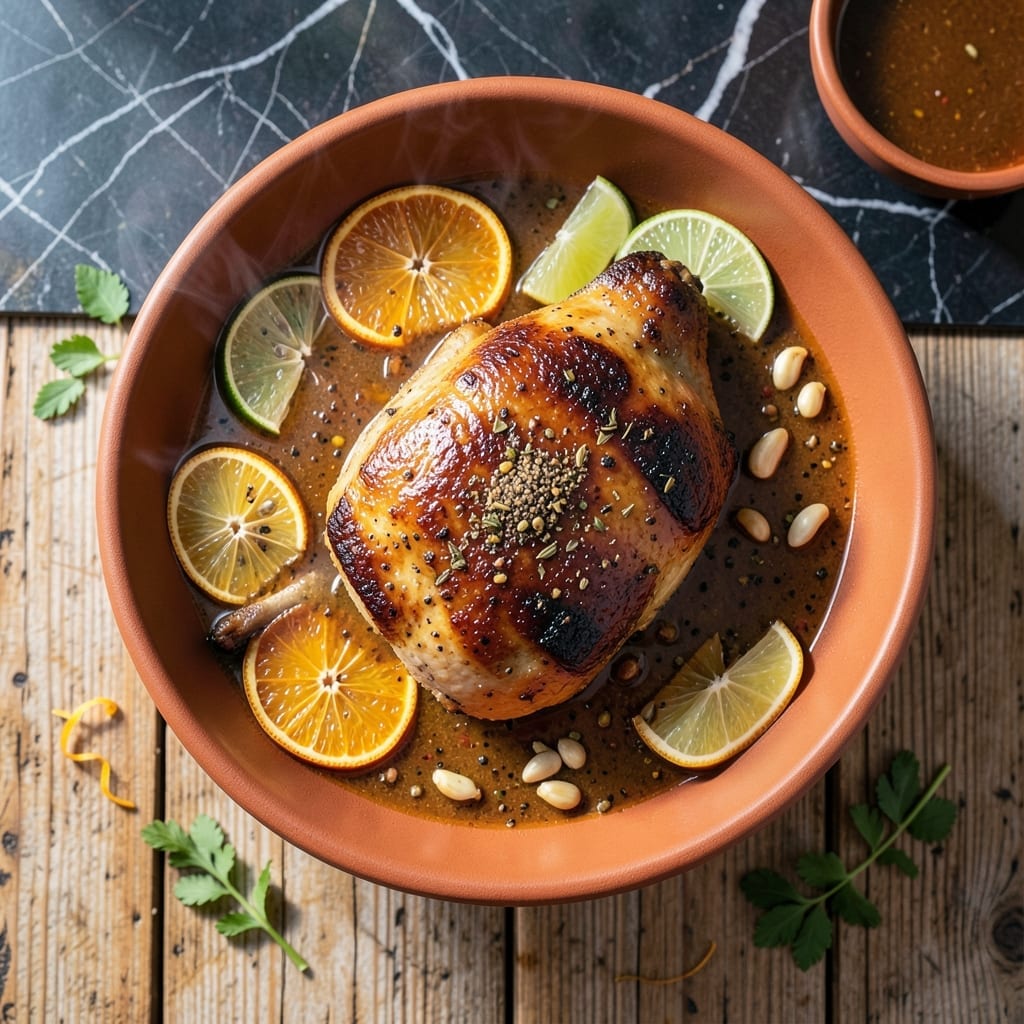
This slow-roasted pork shoulder captures the essence of Cuban flavors through its citrus-marinated tenderness. My French training taught me the value of patience with tough cuts.
Each bite delivers the perfect balance of tangy orange and garlic, with meat that falls apart at the touch. The aroma alone will transport you to a Havana kitchen.
Ingredients for Cuban Pork Roast
Pantry staples meet citrus for that Havana kitchen magic. Nothing exotic, just bold flavor.
| Ingredient | Amount | Notes |
|---|---|---|
| Pork Shoulder 🥩 | 4 lb | Bone-in for best flavor |
| Navel Oranges 🍊 | 3 whole | Zested and juiced |
| Fresh Lime Juice 🍈 | ½ cup | About 4-5 limes |
| Garlic Cloves 🧄 | 8 cloves | Minced for marinade |
| Ground Cumin 🌿 | 2 tsp | Toasted for depth |
| Dried Oregano 🍃 | 2 tsp | Mexican oregano preferred |
| Bay Leaves 🌿 | 2 pieces | Dried, whole |
| Olive Oil 🫒 | ¼ cup | Extra-virgin for marinade |
| Kosher Salt 🧂 | 2 tbsp | Diamond Crystal preferred |
| Black Pepper 🌶️ | 1 tbsp | Freshly cracked |
| Yellow Onion 🧅 | 1 whole | Thinly sliced |
| Green Bell Pepper 🌶️ | 1 whole | Diced for base |
| Dry White Wine 🍷 | ½ cup | Sauvignon Blanc works well |
| Chicken Stock 🥣 | 1 cup | Low-sodium preferred |
[recipe_ingredient_scaler]
The pork shoulder is non-negotiable here. Bone-in gives you that fall-apart texture—boneless works but lacks depth. I grab mine from Costco (great price for 8-10 lb packs) or Whole Foods if I want organic. Look for good marbling; the fat renders down into pure flavor. The oranges should be juicy and heavy—navels are perfect, but blood oranges add a fun color twist if you can find them.
No fresh limes? Bottled works in a pinch (but fresh is brighter). Missing white wine? Extra chicken stock plus a splash of vinegar mimics the acidity. Cumin is key—if yours is old and dusty, toast whole seeds then grind. Oregano can be fresh (double the amount), but Mexican oregano has that earthy note that’s classic in Cuban cooking. For the stock, Better Than Bouillon paste is my go-to.
The roast tastes even better the next day (if there are leftovers). Store in the fridge for up to 4 days, or freeze for 3 months. Shredded pork freezes beautifully—portion it first for easy meals later. The marinade can sit overnight, but 8 hours is the sweet spot for flavor without turning the meat mushy.
Why You’ll Love This Recipe
- I’ll be real: this makes enough for dinner tonight plus sandwiches tomorrow—no extra effort.
- Set It & Forget It: Honestly, it’s just dump, season, and slow-cook—no babysitting required.
- Citrus Garlic Magic: The navel oranges and lime juice create this bright, tangy sauce that soaks into the pork shoulder like a dream.
- Feeds a Crowd: I’ll be real: this makes enough for dinner tonight plus sandwiches tomorrow—no extra effort.
Step-by-Step Instructions for Cuban Pork Roast
This method delivers tender, citrus-kissed pork with minimal effort and maximum flavor.
Step 1: Prepare the Citrus Marinade
In a large bowl, combine the zest and juice from all 3 whole Navel Oranges with the 0.5 cup Fresh Lime Juice. Add the 8 cloves Garlic Cloves (minced), 2 tsp Ground Cumin, 2 tsp Dried Oregano, 2 pieces Bay Leaves, 0.25 cup Olive Oil, 2 tbsp Kosher Salt, and 1 tbsp Black Pepper. Whisk until fully combined.
The acid from the citrus will help tenderize the pork while the aromatics infuse it with authentic Cuban flavor. I let this marinade sit for 10 minutes to allow the spices to bloom before adding the meat.
Step 2: Marinate the Pork Shoulder
Place the 4 lb Pork Shoulder in a large resealable bag or deep dish. Pour the marinade over the pork, making sure it’s completely coated. Massage the marinade into the meat, especially any crevices.
Seal the bag or cover the dish and refrigerate for at least 4 hours, though overnight is ideal for maximum flavor penetration. Turn the pork occasionally to ensure even marinating. The longer it sits, the more the citrus and spices will transform the meat.
Step 3: Sear and Deglaze the Aromatics
Preheat your oven to 325°F. Remove the pork from the marinade (reserve the marinade) and pat it dry. Heat a large Dutch oven over medium-high heat and sear the pork on all sides until deeply browned, about 3-4 minutes per side. Remove the pork and set aside.
In the same pot, add the thinly sliced Yellow Onion and diced Green Bell Pepper. Cook for 3-4 minutes until softened. Pour in the 0.5 cup Dry White Wine to deglaze, scraping up all the browned bits from the bottom of the pot.
Step 4: Slow Roast to Perfection
Return the pork to the pot. Pour in the reserved marinade and add the 1 cup Chicken Stock. The liquid should come about halfway up the pork. Bring to a simmer, then cover and transfer to the oven.
Roast for 3 to 3.5 hours, turning the pork every 45 minutes, until the meat is fork-tender and easily pulls apart. The internal temperature should reach 195°F. The house will smell incredible as the citrus and spices meld together.
Step 5: Shred and Serve
Remove the pork from the oven and let it rest in the braising liquid for 15 minutes. This allows the juices to redistribute. Transfer the pork to a cutting board and shred it using two forks, discarding any large fat pieces.
Skimming excess fat from the braising liquid is optional, but I like to return the shredded pork to the pot to soak up all that flavorful liquid. Serve with the juices spooned over the top for a dish that’s as tender as it is aromatic.
Pro Tips For Making Cuban Pork Roast
- Score the Fat Cap: Cut 1/4-inch deep crosshatches into the pork shoulder’s fat cap before marinating—this lets the citrus and cumin penetrate deeper and renders the fat beautifully.
- Use Fresh Citrus: I learned this the hard way—bottled lime juice won’t give you the bright, sharp acidity that fresh navel oranges and limes bring to the marinade.
- Don’t Rush the Marinade: Give the pork at least 4 hours in the citrus-garlic marinade, but overnight is ideal. The acid needs time to tenderize the shoulder properly.
- Roast Low and Slow: Start at 325°F and plan for 3-4 hours—this ensures the collagen in the pork shoulder breaks down into that melt-in-your-mouth texture.
Storing and Reheating This Dish
Refrigerator Storage
Let your pork cool completely before storing—this prevents condensation in the container. I transfer mine to airtight glass containers with some of the cooking liquid to keep it moist. It stays fresh at 40°F or below for up to 4 days. The flavors deepen overnight. ❄️
Freezer Storage
For longer storage, portion the shredded pork with its juices into quart-sized freezer bags. Squeeze out excess air to prevent freezer burn. It freezes beautifully for up to 3 months without losing texture. I label each bag with the date for easy tracking.
Thawing Properly
Always thaw in the refrigerator overnight—never at room temperature. For quicker thawing, submerge the sealed bag in cold water, changing the water every 30 minutes. A 4 lb portion typically thaws in 2-3 hours this way.
Stovetop Reheating
My preferred method: heat the pork with a splash of chicken stock in a skillet over medium-low heat for 8-10 minutes, stirring occasionally. Add a bay leaf while reheating to refresh the aroma. The meat stays juicy and tender. 🔥
Microwave Reheating
For a quick meal, place portions in a microwave-safe dish with a damp paper towel. Heat on 70% power for 2-3 minutes, stirring halfway. The citrus flavors come alive when gently reheated this way.
Repurposing Leftovers
This pork makes incredible tacos, sandwiches, or rice bowls. I love stuffing it into Cuban bread with pickles and mustard for a next-day treat. The possibilities are endless when you have this flavor base ready to go.
Nutrition Facts
Frequently Asked Questions
How long should I marinate the pork?
For best results, marinate for at least 4 hours, but overnight is ideal. This allows the citrus and spices to fully penetrate the meat for maximum flavor.
Can I use a different cut of pork?
Pork shoulder is traditional, but you can use pork butt. Avoid lean cuts like tenderloin as they won’t hold up to the long cooking time. The fat in shoulder keeps it juicy.
What if I don’t have white wine?
Substitute with extra chicken stock plus 1 tbsp vinegar for acidity. The dish will still be flavorful, though the wine adds a nice depth.
How do I know when it’s done?
The pork is ready when it reaches 195°F internally and shreds easily with forks. If it resists, give it more time at 325°F.

Trained in classic French technique but raised on slow-cooked ribs and spicy rubs, she blends culinary skill with smoke and soul.
- Recipe for Boneless Pork Chops in Cast Iron Skillet: Sear and Baste to Juicy Perfection - October 3, 2026
- Recipe for Boneless Cross Rib Roast: Slow-Roasted Beef with Herb Crust - October 3, 2026
- Hamburgers in Sauce Recipe Crock Pot: Slow-Cooked Savory Delight - October 3, 2026