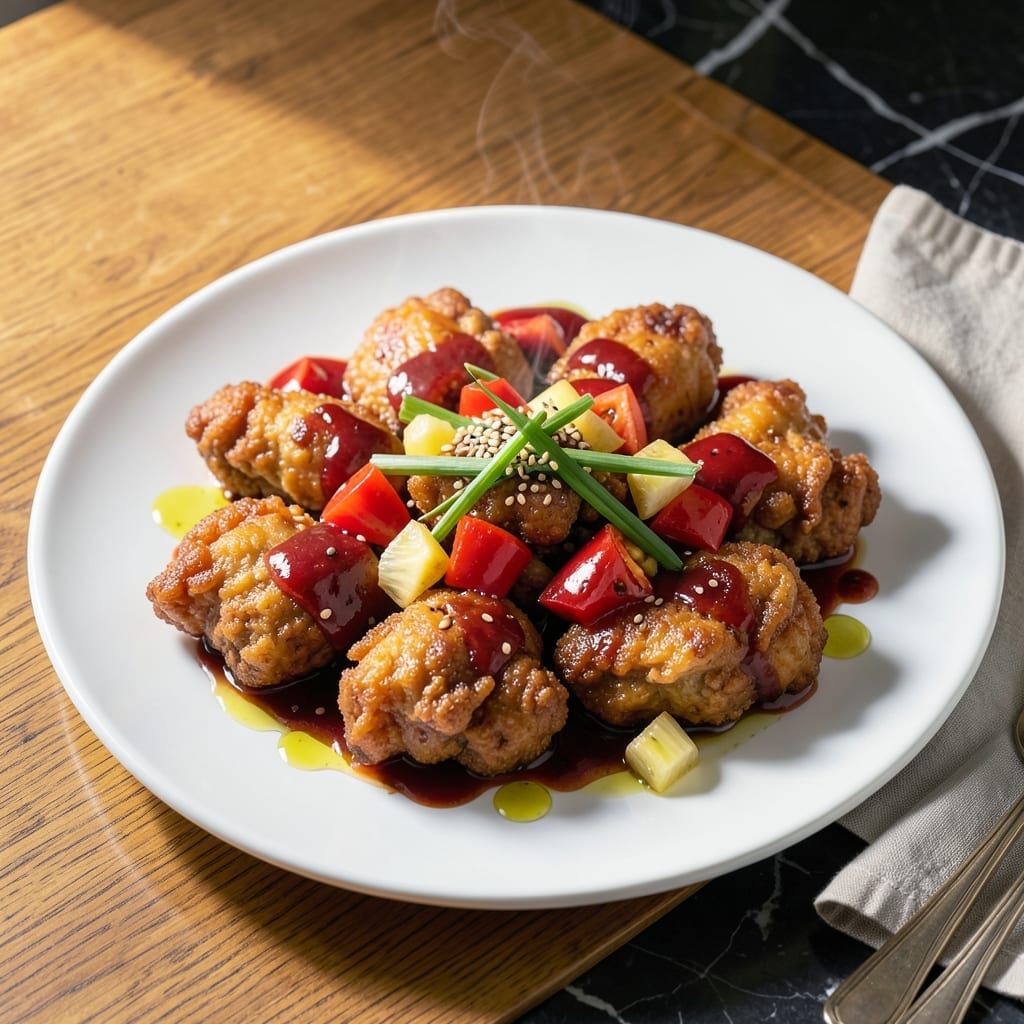
This recipe delivers on the promise of crispy chicken with a perfect balance of sweet and tangy flavors. The key is double-frying for maximum crunch.
I’ve refined this method over years, ensuring each bite stays golden and satisfying. The homemade glaze ties it all together with vibrant, bold taste.
Ingredients for Sweet and Sour Chicken
Crispy chicken meets vibrant glaze with pantry staples and fresh produce.
| Ingredient | Amount | Notes |
|---|---|---|
| Boneless Chicken Thighs 🍗 | 1 ½ lb | Cut into 1-inch pieces |
| Cornstarch 🌾 | ½ cup | For crispy coating |
| All-Purpose Flour 🌾 | ½ cup | Balances cornstarch texture |
| Large Eggs 🥚 | 2 whole | Beaten for binding |
| Vegetable Oil 🫒 | 4 cups | For double-frying |
| Granulated Sugar 🍚 | ¾ cup | Adjust to taste preference |
| White Vinegar 💧 | ½ cup | For tangy balance |
| Ketchup 🍅 | ½ cup | Base for glaze |
| Soy Sauce 🫒 | 2 tbsp | Low-sodium preferred |
| Garlic Cloves 🧄 | 3 cloves | Minced for glaze |
| Green Bell Pepper 🌶️ | 1 whole | Cut into chunks |
| Red Bell Pepper 🌶️ | 1 whole | Cut into chunks |
| Pineapple Chunks 🍍 | 1 cup | Fresh or canned, drained |
| Salt 🧂 | 1 tsp | Kosher or sea salt |
| Black Pepper 🌶️ | ½ tsp | Freshly ground preferred |
[recipe_ingredient_scaler]
The chicken is the foundation here. Boneless thighs stay juicier than breasts during frying—look for skinless to avoid excess oil. Cornstarch is non-negotiable for that signature crunch (find it in the baking aisle at any major supermarket). For the glaze, Heinz ketchup gives consistent sweetness, but any brand works in a pinch. Fresh pineapple adds brightness, but canned (in juice, not syrup) is a solid backup.
No cornstarch? Arrowroot powder at a 1:1 ratio works, but the texture won’t be quite as crisp. Substitute apple cider vinegar for white vinegar if that’s what you have. Prefer a deeper flavor? Rice vinegar adds a nice dimension. The bell peppers can be swapped for broccoli or carrots—just cut them to similar sizes so everything cooks evenly.
Fry in batches to avoid crowding the pan (this drops oil temp fast). Leftovers keep 3-4 days in the fridge, but the chicken loses some crunch. Reheat in a 350°F oven for 10-15 minutes to revive it. Glaze can be made ahead and stored 1 week refrigerated.
Why You’ll Love This Recipe
- Simple Coating: I just toss the chicken thighs in cornstarch and flour, dip in egg, and fry—no fancy steps.
- Sweet-Tangy Bite: That crispy coating soaks up the sweet and sour sauce like a dream.
- Feeds a Crowd: I make a double batch for potlucks, and it’s always the first to disappear.
- Leftovers Win: Honestly, it tastes even better the next day straight from the fridge.
Step-by-Step Instructions for Sweet and Sour Chicken
This method ensures perfectly crispy chicken paired with a tangy, glossy glaze every time.
Step 1: Coat and Prepare the Chicken for Frying
Cut the 1.5 lb boneless chicken thighs into 1-inch pieces and pat them dry with paper towels. This removes excess moisture, which is crucial for achieving that ultra-crispy coating later.
In a bowl, whisk the 2 whole large eggs with the 1 tsp salt and 0.5 tsp black pepper. In a separate shallow dish, combine the 0.5 cup cornstarch and 0.5 cup all-purpose flour. Dip each piece of chicken into the egg mixture, letting any excess drip off, then coat it thoroughly in the cornstarch-flour blend. The cornstarch is what gives the chicken its signature crispiness.
Let the coated chicken rest for 5 minutes while you heat the 4 cups vegetable oil in a large, heavy pot to 350°F. Resting helps the coating adhere better during frying.
Step 2: Double-Fry the Chicken for Maximum Crispiness
Carefully lower half the coated chicken into the hot oil, ensuring not to overcrowd the pot. Fry for 4-5 minutes until light golden brown, turning occasionally for even cooking. Use a slotted spoon to transfer the chicken to a wire rack or paper towel-lined plate to drain.
Increase the oil temperature to 375°F and return the chicken to the pot for a second fry. Cook for another 2-3 minutes until deep golden brown and crispy. This double-frying technique ensures the chicken stays crispy even after being tossed in the sauce. Repeat with the remaining chicken.
Step 3: Prepare the Sweet and Sour Glaze
While the chicken fries, make the glaze. In a saucepan, combine the 0.75 cup granulated sugar, 0.5 cup white vinegar, 0.5 cup ketchup, 2 tbsp soy sauce, and minced 3 cloves garlic cloves. Bring to a simmer over medium heat and cook for 3-4 minutes, stirring until the sugar dissolves and the mixture thickens slightly.
Add the green bell pepper, red bell pepper, and 1 cup pineapple chunks to the saucepan. Simmer for another 2-3 minutes until the peppers soften slightly but retain a bit of crunch. The glaze should be glossy and coat the back of a spoon.
Step 4: Toss and Serve Immediately
Once all the chicken is fried, add it to the saucepan with the glaze. Gently toss to coat each piece evenly, ensuring every bite is covered in the tangy, sweet sauce. Cook for 1-2 minutes just to heat everything through together.
Serve immediately while the chicken is still crispy. The contrast between the crunchy exterior and the tender, saucy chicken is what makes this dish so satisfying. Garnish with extra pineapple chunks or sliced green onions if desired.
Pro Tips For Making Sweet And Sour Chicken
- Double Fry the Chicken: Fry the coated chicken once at 350°F until light gold, rest 5 minutes, then fry again at 375°F for that restaurant-style crunch—I learned this the hard way after too many soggy batches.
- Cut Thighs Evenly: Slice boneless thighs into 1-inch pieces so they cook through in the same 4-5 minutes—uneven bits mean some dry out while others stay raw inside.
- Skip Cold Oil: Heat the vegetable oil to 350°F before adding chicken; dropping pieces into cool oil makes them absorb grease like a sponge.
- Use Cornstarch Last: Dust chicken with cornstarch right before dredging in flour and egg—it keeps the coating from turning gummy while you prep the rest.
Storing and Reheating Leftovers
Refrigerator Storage
Let the chicken cool completely before storing—about 30 minutes at room temperature. Transfer to an airtight container with the glaze and veggies. It’ll keep in the fridge for up to 3-4 days, though the coating softens over time. ❄️
Freezer Storage
For longer storage, freeze the chicken and glaze separately in quart-sized freezer bags. Squeeze out excess air to prevent freezer burn. It’ll stay fresh for up to 2 months. Thaw overnight in the fridge before reheating.
Oven Reheating
To revive crispiness, spread the chicken on a baking sheet and bake at 375°F for 10-12 minutes. Warm the glaze separately in a saucepan over medium heat for 2-3 minutes, then toss together. The oven method preserves texture best. 🔥
Microwave Shortcut
For a quick meal, microwave portions in 30-second intervals at 70% power. Stir between intervals to evenly distribute heat. Add a splash of water to the glaze to prevent drying out.
Pro Tip
If reheating from frozen, thaw in the fridge first for best results. Avoid microwaving straight from frozen—it’ll make the chicken soggy. I always reheat the glaze separately for optimal consistency.
Nutrition Facts
Frequently Asked Questions
Can I use chicken breast instead of thighs?
Yes, but thighs stay juicier. If using breasts, cut into 1-inch pieces and reduce second fry time to 1-2 minutes to prevent dryness.
Why is my coating not crispy?
Oil temperature is key. Use a thermometer to maintain 350°F for first fry and 375°F for second. Overcrowding the pot also lowers temperature.
Can I make the glaze ahead?
Prepare glaze up to 2 days ahead. Store in an airtight container in the fridge. Reheat gently before combining with chicken.
What can I substitute for pineapple?
Try mango chunks or peaches for sweetness. For tang, add 1/4 cup diced green apples or extra vinegar to balance flavors.

Trained in classic French technique but raised on slow-cooked ribs and spicy rubs, she blends culinary skill with smoke and soul.
- Recipe for Boneless Pork Chops in Cast Iron Skillet: Sear and Baste to Juicy Perfection - October 3, 2026
- Recipe for Boneless Cross Rib Roast: Slow-Roasted Beef with Herb Crust - October 3, 2026
- Hamburgers in Sauce Recipe Crock Pot: Slow-Cooked Savory Delight - October 3, 2026