I’ll be real with you—nothing ruins a perfect pork tenderloin dinner faster than improper defrosting. That beautiful cut of meat can go from juicy and tender to dry and tough before it even hits the pan. After years of experimenting (and a few unfortunate hockey puck results), I’ve nailed down the foolproof methods that keep your pork tenderloin safe and ready for whatever recipe you’re planning.
Here’s the thing—defrosting isn’t just about speed, it’s about maintaining that perfect texture and flavor. Whether you’re planning to roast, grill, or sear your tenderloin, how you thaw it makes all the difference. I’ve tested every method from refrigerator to cold water bath, and I’ll walk you through exactly which works best for your timeline and cooking plans.
What you’ll end up with is pork tenderloin that’s ready to cook exactly how you want—no icy centers, no partial cooking from uneven thawing. This means you can focus on creating that perfect crust or tender center without worrying about food safety. And trust me, when you nail both the defrosting and cooking, you’re in for one of the most satisfying meals you’ll make.
We’ll cover the three safest methods with clear time estimates, then I’ll share my go-to recipes that turn that properly thawed tenderloin into something extraordinary. From simple herb crusts to bold marinades, you’ll be set up for success before you even preheat the oven.
📚 In This Guide
- What You’ll Need
- Instructions
- Tips and Common Mistakes
What Youll Need
- ● Pork tenderloin (1–2 lbs, vacuum-sealed or wrapped in airtight packaging)
- ● Leak-proof plastic bag (quart or gallon size, for water-based methods)
- ● Large bowl or container (deep enough to submerge the meat in cold water)
- ● Cold water (enough to fully cover the tenderloin if using the cold-water method)
- ● Microwave-safe dish (if using the microwave method—preferably with a lid or cover)
- ● Paper towels or clean kitchen towel (for patting dry after thawing)
- ○ Food thermometer (optional but highly recommended to check internal temp—safe at 145°F)
- ● Timer or smartphone (to track thawing time accurately ⏰)
- ○ Cutting board & knife (optional, for trimming post-thaw)
- ● Refrigerator space (if using the fridge method—allow 24 hours per 1–2 lbs)
Step-by-Step Instructions for Defrosting Pork Tenderloin
Here’s exactly how to thaw your pork tenderloin safely while keeping it perfectly tender and ready for cooking.
Plan Ahead for Refrigerator Thawing (Best Method)
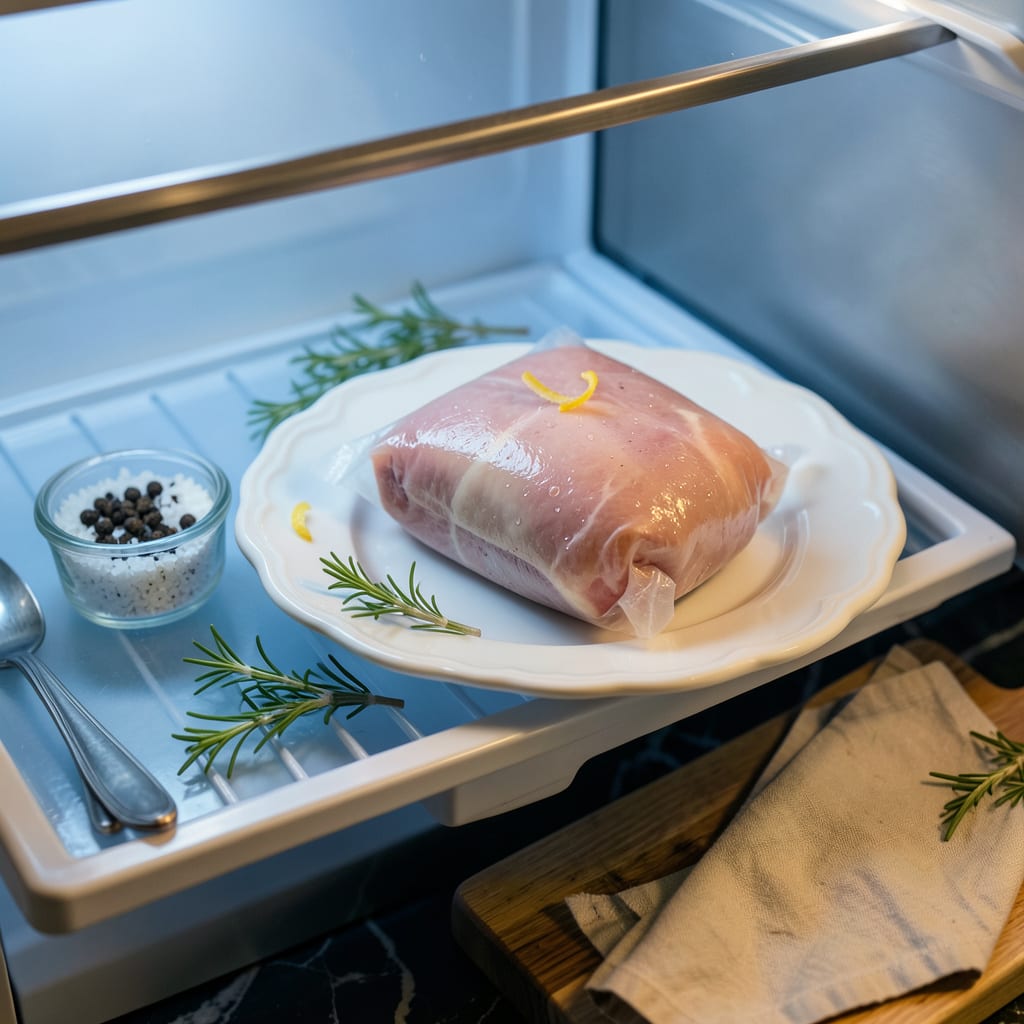
For the absolute best results, thaw your pork tenderloin in the refrigerator. This slow, controlled method maintains perfect texture and prevents any risk of bacterial growth. Place the sealed pork tenderloin on a plate or tray to catch any potential drips, then position it on the bottom shelf of your refrigerator.
Allow approximately 24 hours for every 2 pounds of pork tenderloin. A typical 1-pound tenderloin will be fully thawed in 12 hours. I always check by pressing gently on the thickest part—when it yields slightly and feels uniformly soft, it’s ready. This method gives you the most tender results because the meat thaws evenly without temperature shock.
Step 2: Use the Cold Water Bath for Faster Thawing
When you’re short on time, the cold water method works beautifully. Keep the pork tenderloin in its original vacuum-sealed packaging, or place it in a leak-proof plastic bag. Submerge it completely in a large bowl or sink filled with cold water—never warm or hot water, as this promotes bacterial growth.
Change the water every 30 minutes to maintain a consistently cold temperature. A 1-pound tenderloin will thaw completely in about 1-2 hours using this method. You’ll know it’s ready when the meat feels pliable throughout and there are no ice crystals remaining. I always pat it dry immediately after thawing to ensure perfect searing when cooking.
Employ the Microwave for Emergency Thawing
For last-minute situations, you can use the microwave’s defrost setting. Remove any packaging and place the pork tenderloin on a microwave-safe plate. Use the defrost function based on weight—typically 6-8 minutes per pound, flipping the tenderloin halfway through.
Check frequently and stop as soon as the meat is pliable but still cool to the touch. The edges might begin to cook slightly, so I recommend cooking it immediately after microwave thawing. This method works in a pinch, but I find the texture isn’t quite as perfect as with slower methods. Never let thawed pork sit at room temperature—cook it right away for food safety.
Verify Complete Thawing Before Cooking
No matter which method you use, always verify that your pork tenderloin is fully thawed before cooking. Press on the thickest part—it should feel uniformly soft with no hard or icy spots. Bend the tenderloin gently; if it flexes easily without resistance, it’s ready for the pan or oven.
For perfect results, I like to let the thawed tenderloin rest at room temperature for 15-20 minutes before cooking. This takes the chill off and ensures even cooking throughout. Remember that properly thawed pork will cook more evenly, stay juicier, and deliver that tender texture we all love in a perfectly prepared pork tenderloin.
Tips and Common Mistakes for Perfectly Thawed Pork Tenderloin
Here’s what I’ve learned from years of thawing pork tenderloin—the small details that make a huge difference in texture and safety.
Refrigerator Thawing Perfection: The 24-hour rule for every 2 pounds in Step 1 isn’t just a suggestion—it’s the golden standard! I’ve found that placing the tenderloin on the bottom shelf (coldest part) prevents any temperature fluctuations. For that 1-pound tenderloin, don’t rush the 12 hours; this slow thaw preserves cell structure for maximum tenderness. The difference between meat thawed this way versus faster methods is night and day in terms of juiciness!
Cold Water Bath Pro Tip: When using the 1-2 hour cold water method in Step 2, here’s my secret: add ice cubes to the water to maintain that critical cold temperature between changes. I set a timer for those 30-minute water changes religiously—this prevents any pockets of warmer water that could start cooking the edges. And don’t skip patting it dry afterward; that moisture will steam instead of sear when cooking!
Microwave Emergency Fix: For the 6-8 minutes per pound in Step 3, I can’t stress enough—use the defrost setting, not regular power! The edges will start to cook if you’re not careful. My trick is to stop the microwave every 2 minutes to check progress and flip. You want it pliable but still cool in the center. This method saves dinner plans, but I always have a recipe ready that can handle slightly uneven texture, like stir-fry or braised dishes.
Final Thaw Check: That 15-20 minute rest in Step 4 is non-negotiable! I test doneness by gently bending the tenderloin—it should flex like a well-cooked noodle. Any resistance means ice crystals remain. For perfect cooking, I let it rest on a wire rack (not a plate) during this time so air circulates underneath, preventing that dreaded “cold spot” on one side.
Pro Tips for Defrosting Pork Tenderloin
- Here’s what I’ve learned from years of thawing pork tenderloin—the small details that make a huge difference in textu…
- Refrigerator Thawing Perfection: The 24-hour rule for every 2 pounds in Step 1 isn’t just a suggestion—it’s the golde…
- Cold Water Bath Pro Tip: When using the 1-2 hour cold water method in Step 2, here’s my secret: add ice cubes to the …
Frequently Asked Questions
How long does it take to defrost pork tenderloin in the fridge?
Defrosting pork tenderloin in the fridge is the safest method but takes the longest. Plan for 24 hours per 1–2 pounds (e.g., a 1.5-lb tenderloin takes ~18–24 hours). Keep it in its original packaging or a sealed container on the bottom shelf to prevent cross-contamination.
Can I defrost pork tenderloin in warm water?
Never use warm water—it promotes bacterial growth! For a quick thaw, use the cold water method: Submerge the sealed pork in cold water (change every 30 minutes). A 1-lb tenderloin thaws in ~1 hour. Always cook immediately after!
Is it safe to cook pork tenderloin from frozen?
Yes, but it requires adjustments! Cook frozen tenderloin at 25–50% longer than thawed, using moist heat (e.g., slow cooker, braising) or a lower oven temp (300°F). Use a meat thermometer to ensure it reaches 145°F internally.
What’s the fastest way to defrost pork tenderloin without a microwave?
The cold water bath is your fastest non-microwave option (~1 hour for 1 lb). For even speedier results, flatten the sealed tenderloin slightly to increase surface area. Avoid hot water or leaving it on the counter—food safety first!
Why does my defrosted pork tenderloin smell sour?
A sour or ammonia-like odor means spoilage—toss it! This can happen if pork thaws too slowly (e.g., left at room temp) or stays in the fridge too long after defrosting. Trust your nose: Fresh pork should smell neutral or slightly sweet.
Defrosting pork tenderloin safely doesn’t have to be complicated—whether you plan ahead or need a quick fix, the right method keeps your meat juicy, flavorful, and safe to eat. 🌟 Remember, slow thawing in the fridge is the gold standard, but cold water or microwave methods work in a pinch when time is tight.
Now that you’re armed with the know-how, why not put it to use? Grab that tenderloin, defrost it with confidence, and get ready to cook up a delicious meal! For next steps, check out our guide on seasoning and cooking pork tenderloin to perfection—your taste buds will thank you. 🍽️

Trained in classic French technique but raised on slow-cooked ribs and spicy rubs, she blends culinary skill with smoke and soul.
- Recipe for Boneless Pork Chops in Cast Iron Skillet: Sear and Baste to Juicy Perfection - October 3, 2026
- Recipe for Boneless Cross Rib Roast: Slow-Roasted Beef with Herb Crust - October 3, 2026
- Hamburgers in Sauce Recipe Crock Pot: Slow-Cooked Savory Delight - October 3, 2026