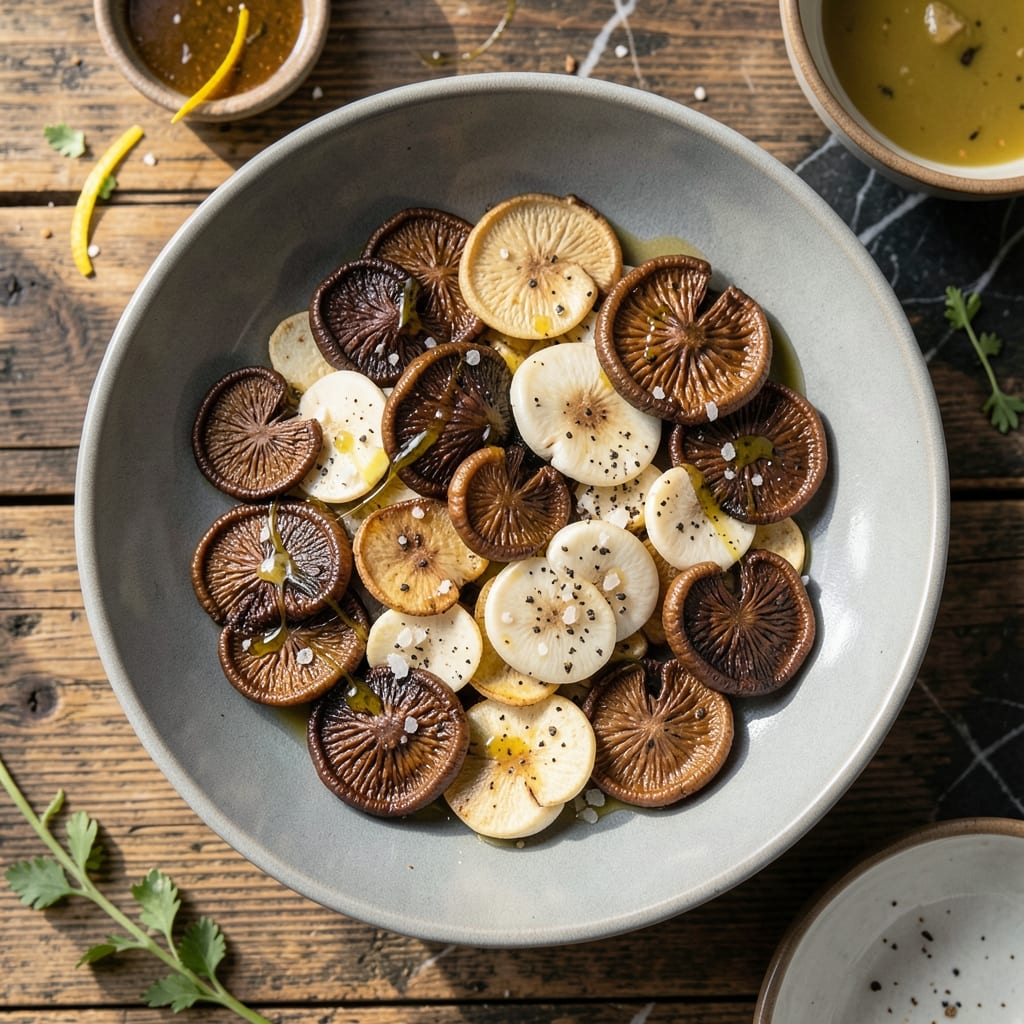
Preserving mushrooms through dehydration unlocks a world of concentrated flavor that elevates any dish. This method transforms fresh mushrooms into umami-packed ingredients that last for months without sacrificing quality.
Using a food dehydrator at 135°F for 6-8 hours removes all moisture while preserving the mushrooms’ natural depth. The result is a lightweight, shelf-stable product that rehydrates beautifully in soups, sauces, or stews.
What makes this technique special is its versatility. Dehydrated mushrooms add intense flavor to broths, risottos, or even as a meat substitute in vegetarian dishes. They store easily in airtight containers away from light.
This preparation method ensures you always have access to mushroom flavor, regardless of season. The process requires minimal equipment and delivers maximum impact.
Ingredients for Dehydrated Mushrooms
Transform fresh mushrooms into shelf-stable umami powerhouses with these simple ingredients.
| Ingredient | Amount | Notes |
|---|---|---|
| Cremini Mushrooms 🍄 | 2 lb | Fresh, firm, and dry |
| Shiitake Mushrooms 🍄 | 1 lb | Stems removed for better texture |
| White Button Mushrooms 🍄 | 1 lb | Small to medium size preferred |
| Olive Oil 🫒 | 2 tbsp | Light or extra-virgin for tossing |
| Sea Salt 🧂 | 1 tsp | Fine grain for even coating |
| Black Pepper 🌶️ | ½ tsp | Freshly ground for best flavor |
| Garlic Powder 🧄 | 1 tsp | Optional for added depth |
| Dried Thyme 🌿 | ½ tsp | Optional for herbaceous notes |
| Lemon Juice 🍋 | 1 tbsp | Freshly squeezed for brightness |
| Water 💧 | 1 cup | For rehydration testing |
[recipe_ingredient_scaler]
The mushrooms are the star here. Cremini and shiitake deliver the deepest umami, but white button works too (just slightly milder). Hit the farmers market for the freshest—look for firm caps with no slimy spots. Whole Foods or Trader Joe’s have solid pre-sliced options if you’re short on time. Smaller mushrooms dehydrate faster and more evenly, so slice larger ones thinly.
No dehydrator? Oven at 170°F with the door cracked works in a pinch (plan for 8-10 hours). Swap olive oil for avocado oil if you prefer a neutral flavor. Skip the garlic powder and use fresh minced garlic post-rehydration for a brighter bite. The lemon juice is optional but adds a nice acidity when rehydrating—bottled works in a pinch.
Store dehydrated mushrooms in airtight glass jars away from light for 6-12 months. Silica packets help absorb any residual moisture. Rehydrate in warm water or broth for 20-30 minutes before using. Pro tip: Save the soaking liquid—it’s packed with flavor for stocks or sauces.
Why You’ll Love This Recipe
- No-Fuss Process: Almost hands-off—just slice, season with sea salt, and let the dehydrator do the work.
- Umami Bomb: The shiitakes and creminis dry into these little flavor powerhouses that taste like pure savory magic.
- Pantry Superhero: I toss these into soups, stews, or even pasta sauces straight from the jar for an instant depth boost.
- Budget Stretcher: Buying mushrooms in bulk and dehydrating them myself cuts my grocery costs by half, easily.
Step-by-Step Instructions for Dehydrated Mushrooms
Here is the reliable, tested method for achieving perfectly preserved mushrooms with maximum flavor.
Step 1: Clean and Prepare the Mushrooms
Begin by cleaning the 2 lb Cremini Mushrooms, 1 lb Shiitake Mushrooms, and 1 lb White Button Mushrooms with a damp paper towel to remove any dirt. Avoid submerging them in water, as they absorb moisture easily. For the shiitake, remove the stems as specified for optimal texture.
Slice all mushrooms uniformly into ¼-inch thick pieces. This consistent thickness ensures even drying. Larger pieces won’t dehydrate properly, while thinner slices may become brittle. Spread them out on a clean kitchen towel to air-dry briefly while you prepare the next steps.
Step 2: Season the Mushrooms for Enhanced Flavor
In a large bowl, toss the sliced mushrooms with the 2 tbsp Olive Oil, 1 tsp Sea Salt, and 0.5 tsp Black Pepper. The oil helps distribute the seasonings evenly and promotes a slight crispness during dehydration.
For added depth, sprinkle in the 1 tsp Garlic Powder and 0.5 tsp Dried Thyme, if using. Toss gently to coat every piece without breaking them. The seasoning not only enhances flavor but also aids in the preservation process by drawing out excess moisture.
Step 3: Arrange and Begin the Dehydration Process
Arrange the seasoned mushroom slices in a single layer on your dehydrator trays, ensuring no pieces overlap. Overlapping causes uneven drying and can lead to spoilage. If using an oven, set it to its lowest temperature, ideally around 170°F, and place the mushrooms on a baking sheet lined with parchment paper.
Dehydrate the mushrooms at 160-170°F for 4-6 hours. Check periodically after the 4-hour mark—they should be dry to the touch and slightly leathery, with no moisture remaining. Proper dehydration is critical to prevent mold growth during storage.
Step 4: Test for Complete Dryness
To confirm the mushrooms are fully dehydrated, remove a few pieces and let them cool to room temperature. They should be brittle and snap easily when bent. For an additional check, place a sample in the 1 cup Water—if they rehydrate and pliably soften within 15-20 minutes, they’re properly dried.
If any pieces still feel pliable or moist, return them to the dehydrator for another 30-60 minutes and retest. Uneven drying can compromise the entire batch, so thoroughness here is essential.
Step 5: Cool, Store, and Optional Finishing
Once fully dehydrated, allow the mushrooms to cool completely on the trays. This prevents condensation from forming in your storage containers, which could reintroduce moisture. Transfer the cooled mushrooms to airtight containers or resealable bags.
For a final touch, drizzle the 1 tbsp Lemon Juice over the mushrooms before storing, if desired. This adds a subtle brightness that complements their umami richness. Store in a cool, dark place, where they’ll keep for up to 6 months with optimal flavor retention.
Pro Tips For Making Dehydrated Mushrooms
- Slice Evenly: Cut all mushrooms into uniform 1/4-inch slices—thicker pieces take forever to dry, and I learned this the hard way after pulling chewy bits out of my first batch.
- Pat Them Dry: Wipe mushrooms with a damp towel then pat completely dry with paper towels; any moisture left on the surface just slows down dehydration.
- Skip the Oil: Tossing with olive oil before drying sounds good, but it creates a greasy film that prevents proper dehydration—save the oil for rehydrating later.
- Rotate Trays: If using an oven, switch tray positions halfway through and flip the slices; this guarantees even drying without hot spots ruining half the batch.
Health Benefits of dehydrated mushrooms
Nutrient Concentration
Dehydrating mushrooms intensifies their nutritional profile by removing water while preserving key compounds. A 1-ounce serving of these dried mushrooms packs the same nutrients as 10 ounces of fresh, making them a powerful addition to any diet. 💪
Vitamin D Boost
Mushrooms naturally produce vitamin D when exposed to sunlight. The dehydration process helps retain this essential nutrient, which supports immune function and bone health. Just 1 ounce can provide up to 20% of your daily needs.
Rich in B Vitamins
These dried fungi are an excellent source of B vitamins, including riboflavin, niacin, and pantothenic acid. These nutrients play vital roles in energy metabolism and nervous system health, making dehydrated mushrooms a smart choice for sustained energy.
Antioxidant Power
Dehydrated mushrooms retain their antioxidant properties, particularly ergothioneine and selenium. These compounds help combat oxidative stress and inflammation in the body. I notice a difference in my energy levels when I incorporate them regularly.
Low-Calorie, High-Flavor
With only about 30 calories per ounce, these mushrooms deliver intense umami flavor without the guilt. They’re perfect for adding depth to dishes while keeping calorie counts low. Their concentrated flavor means you need less to achieve big results. ✨
Fiber and Protein
Each serving provides a good dose of dietary fiber and plant-based protein. The fiber supports digestive health, while the protein helps maintain muscle mass. This makes them an excellent meat alternative for vegetarian and vegan diets.
Nutrition Facts
Frequently Asked Questions
What’s the ideal thickness for slicing?
Slice mushrooms to ¼-inch thickness for even dehydration. Thinner slices dry faster but may become brittle, while thicker pieces won’t dry completely. Consistency is key for the best results.
Can I use an oven instead of a dehydrator?
Yes! Set your oven to its lowest temperature, ideally 170°F, and prop the door open slightly. Expect 8-10 hours of drying time, checking periodically after 6 hours.
How do I know when they’re fully dry?
Properly dehydrated mushrooms will be brittle and snap easily when bent. Test by cooling a piece—if it’s leathery or pliable, it needs more time. Store only when completely dry.
What’s the best way to store them?
Use airtight glass jars with silica packets to absorb any residual moisture. Keep in a cool, dark place for up to 6 months. Avoid plastic bags as they can trap moisture.

Trained in classic French technique but raised on slow-cooked ribs and spicy rubs, she blends culinary skill with smoke and soul.
- Recipe for Boneless Pork Chops in Cast Iron Skillet: Sear and Baste to Juicy Perfection - October 3, 2026
- Recipe for Boneless Cross Rib Roast: Slow-Roasted Beef with Herb Crust - October 3, 2026
- Hamburgers in Sauce Recipe Crock Pot: Slow-Cooked Savory Delight - October 3, 2026