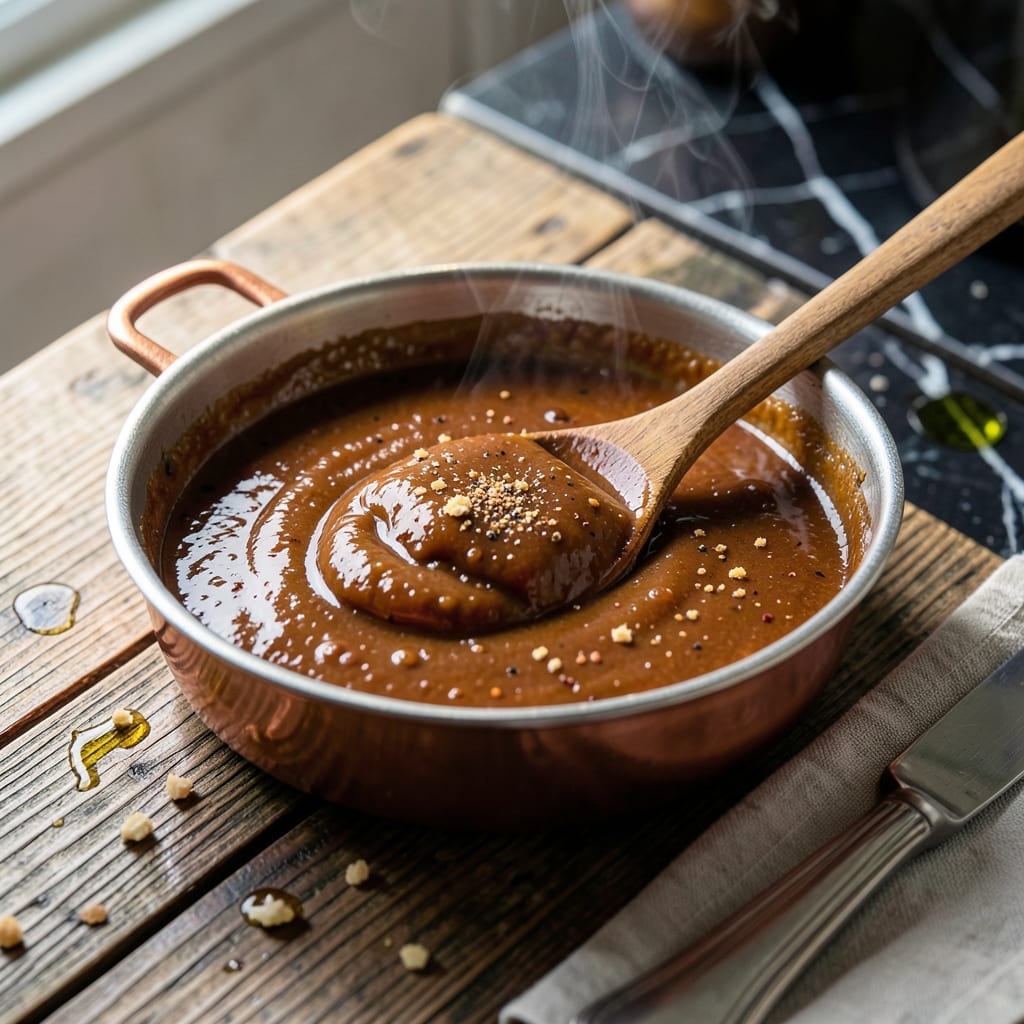
This sugar-free barbecue sauce delivers all the smoky, tangy depth of traditional versions without the sugar spike. I developed it to prove that diabetic-friendly doesn’t mean flavor-free.
Perfect for ribs, chicken, or as a dipping sauce, this creation uses natural sweeteners and bold spices to achieve that classic sugar-free barbecue experience. Store it in the fridge for up to two weeks.
Ingredients for Diabetic Barbecue Sauce
Ten bold ingredients. Zero sugar. All the smoky, tangy flavor you crave.
| Ingredient | Amount | Notes |
|---|---|---|
| Tomato Paste 🍅 | ½ cup | Double-concentrated preferred |
| Apple Cider Vinegar 🍏 | ¼ cup | Raw, unfiltered for tang |
| Sugar-Free Maple Syrup 🍁 | ⅓ cup | Or monk fruit sweetener |
| Worcestershire Sauce 🫒 | 1 tbsp | Check for sugar-free label |
| Smoked Paprika 🌶️ | 2 tsp | Spanish variety preferred |
| Garlic Powder 🧄 | 1 tsp | Freshly ground if possible |
| Onion Powder 🧅 | 1 tsp | Fine grain for even blending |
| Dijon Mustard 🟡 | 1 tbsp | Smooth, no seeds |
| Liquid Smoke 🔥 | ½ tsp | Hickory flavor ideal |
| Salt 🧂 | 1 tsp | Kosher or sea salt |
| Black Pepper 🌶️ | ½ tsp | Freshly ground preferred |
[recipe_ingredient_scaler]
The tomato paste is doing heavy lifting here—double-concentrated gives you that rich, thick base without adding sugar. San Marzano if you’re feeling fancy, but any good canned brand works. For the vinegar, Bragg’s raw apple cider vinegar has that extra tang that balances the sweetness. Don’t skip the liquid smoke (hickory flavor), it’s what makes this taste like it’s been slow-smoked for hours.
No sugar-free maple syrup? Monk fruit sweetener or erythritol works in a 1:1 swap. Worried about Worcestershire? Annie’s or coconut aminos are solid sugar-free options. The smoked paprika is non-negotiable—regular just won’t cut it. If you’ve got chipotle powder lying around, a pinch adds nice heat without overpowering.
Keeps in the fridge for 2 weeks in a sealed jar. The flavors deepen after 24 hours, so make it ahead if you can. Freezes for 3 months (leave room for expansion in the container).
Why You’ll Love This Recipe
- 5-Minute Mix: I just dump everything in a saucepan and stir—no chopping, no fuss, just tomato paste, vinegar, and that smoky paprika doing the work.
- Smoky Sweet Balance: The sugar-free maple syrup and smoked paprika create this deep, tangy-sweet flavor that’s honestly better than store-bought.
- Meal Prep Hero: I make a big batch and it keeps for weeks, so I’m always ready to slather it on chicken, ribs, or even roasted veggies.
- Pantry Staples Only: Between us, I already had all the ingredients—no special trips to the store, just a few spoonfuls of this and that.
Step-by-Step Instructions for Sugar-Free Barbecue Sauce
This method delivers rich, smoky depth without any sugar—just follow these simple steps.
Step 1: Combine the Wet Base Ingredients
In a medium saucepan over medium heat, whisk together the 0.5 cup Tomato Paste, 0.25 cup Apple Cider Vinegar, and 0.33 cup Sugar-Free Maple Syrup. The tomato paste will be thick at first, but the vinegar and syrup will loosen it as you stir.
I use a silicone whisk for this—it scrapes the bottom of the pan better than a wooden spoon and prevents any sticking. You’ll notice the mixture start to bubble gently at the edges after 2-3 minutes. That’s your cue to add the next ingredients.
Step 2: Add the Flavor Boosters
Stir in the 1 tbsp Worcestershire Sauce, 1 tbsp Dijon Mustard, and 0.5 tsp Liquid Smoke. The Worcestershire adds umami depth, while the mustard gives it that classic barbecue tang.
The liquid smoke is potent—0.5 tsp is all you need for that authentic smoky flavor without overpowering the sauce. Here’s the thing—if you’re sensitive to smoke flavor, start with ¼ tsp and adjust to taste later. Let this mixture simmer for 3-4 minutes to meld the flavors.
Step 3: Season and Simmer to Perfection
Add the 2 tsp Smoked Paprika, 1 tsp Garlic Powder, 1 tsp Onion Powder, 1 tsp Salt, and 0.5 tsp Black Pepper. The smoked paprika enhances the liquid smoke and gives the sauce its characteristic color.
Reduce the heat to low and let the sauce simmer uncovered for 10-15 minutes. Stir occasionally to prevent sticking. You’ll know it’s ready when it thickens slightly and coats the back of a spoon. The sauce should have a glossy sheen and a deep, rich color.
Step 4: Adjust and Cool Before Using
Taste and adjust seasoning if needed. If it’s too tangy, a touch more sugar-free maple syrup can balance it. If it’s too thick, thin it with a tablespoon of water. Remember, flavors intensify as it cools, so don’t over-season at this stage.
Remove from heat and let it cool to room temperature. The sauce will thicken further as it cools. Transfer to an airtight container and store in the refrigerator for up to 2 weeks. This cooling step is crucial—it allows the flavors to fully develop before using.
Pro Tips For Making Diabetic Barbecue Sauce
- Simmer Low and Slow: Cook the sauce on low heat for at least 15-20 minutes—rushing it with high heat makes the tomato paste bitter and the flavors won’t meld properly.
- Bloom the Paprika: Toast the smoked paprika in the pot for 30 seconds before adding liquids; it deepens the flavor and removes any raw, chalky taste.
- Balance the Vinegar: Apple cider vinegar can overpower, so start with half the amount, taste, and add more if needed—I learned this the hard way after a few too-tangy batches.
- Sweeten Last: Stir in the sugar-free maple syrup at the very end—adding it too early can make the sauce thin and dull the smoky notes from the paprika.
Common Mistakes When Making This Recipe
Over-Sweetening Pitfall
Many first-time makers dump in extra sweetener to compensate for no sugar. Trust the 0.33 cup Sugar-Free Maple Syrup—it’s enough. The sauce needs tang from vinegar to balance the sweetness. I once ruined a batch by adding extra monk fruit; it tasted cloying, not complex. 💡
Skipping the Simmer
Rushing the 10-15 minute simmer means raw, harsh flavors. The spices need time to bloom, and the vinegar mellows. Use low heat—high heat can scorch the tomato paste, leaving a bitter aftertaste. My French training taught me patience here is non-negotiable.
Liquid Smoke Overload
That 0.5 tsp Liquid Smoke is powerful. Doubling it turns your sauce into a campfire. If unsure, start with ¼ tsp, taste, then adjust. Remember, the smoked paprika adds smoke too, so layer carefully.
Wrong Vinegar Choice
Using white vinegar instead of raw apple cider vinegar flattens the flavor. The cider vinegar’s fruitiness complements the sweetener. I always stock Bragg’s for this reason—consistent quality and tang.
Storage Slip-Ups
Metal containers can react with the acidity. Use glass jars or BPA-free plastic for fridge storage. And don’t forget to leave 1 inch headspace if freezing—the sauce expands. Learned this the hard way with a cracked mason jar. ❄️
Seasoning Too Early
Salt and spices intensify as the sauce cools. If you over-season during cooking, the final product will taste harsh. Wait until the end, taste, then adjust with tiny increments of salt or pepper.
Nutrition Facts
Frequently Asked Questions
Can I use this sauce on grilled vegetables?
Brush it on during the last 5 minutes of grilling asparagus, zucchini, or portobello mushrooms. The natural sugars in vegetables caramelize beautifully with the sauce’s smoky flavors.
Why does the sauce need to cool before storing?
Cooling prevents condensation inside the container, which can dilute the sauce and create an environment for mold. Room temperature takes about 1 hour.
How can I make it spicier?
Add ½ tsp cayenne pepper or 1 chopped chipotle pepper in adobo sauce during simmering. Start small—you can always add more heat, but can’t take it out!

Trained in classic French technique but raised on slow-cooked ribs and spicy rubs, she blends culinary skill with smoke and soul.
- Recipe for Boneless Pork Chops in Cast Iron Skillet: Sear and Baste to Juicy Perfection - October 3, 2026
- Recipe for Boneless Cross Rib Roast: Slow-Roasted Beef with Herb Crust - October 3, 2026
- Hamburgers in Sauce Recipe Crock Pot: Slow-Cooked Savory Delight - October 3, 2026