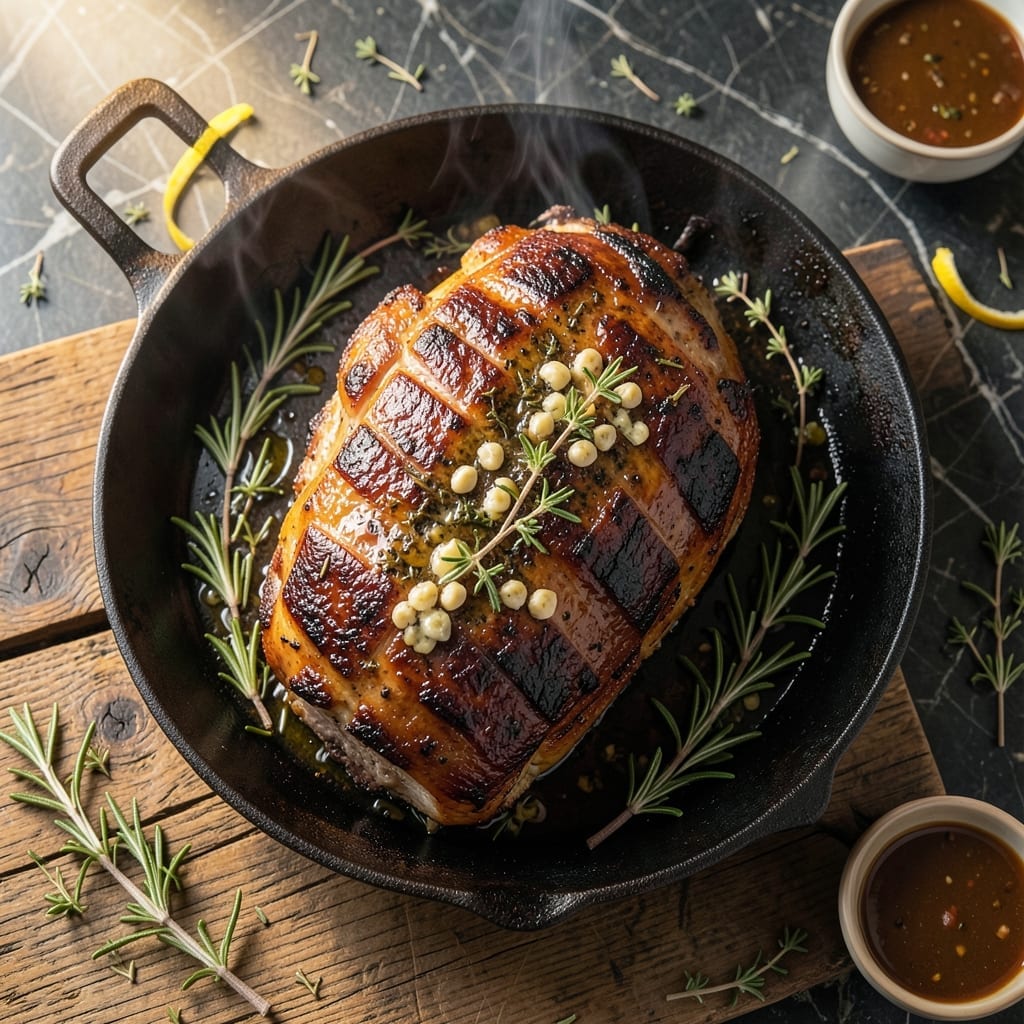
There’s nothing quite like the deep, smoky aroma of a prime rib cooking over wood fire. This method delivers a perfectly charred crust while keeping the inside tender and pink.
I’ve spent years refining this technique, blending classic pitmaster skills with precise timing. The result is a roast that rivals any steakhouse, with a bold, wood-fired flavor you can’t get indoors.
Ingredients for Barbecue Prime Rib Roast
Prime rib requires quality beef, fresh herbs, and proper wood for authentic wood-fired results.
| Ingredient | Amount | Notes |
|---|---|---|
| Prime Rib Roast 🥩 | 5 lb | Bone-in, well-marbled chuck end |
| Coarse Kosher Salt 🧂 | 2 tbsp | Diamond Crystal preferred for texture |
| Freshly Ground Black Pepper 🌶️ | 2 tbsp | Coarse grind for crust formation |
| Garlic Cloves 🧄 | 6 cloves | Minced to paste consistency |
| Fresh Rosemary Sprigs 🌿 | 4 whole | Stems removed, finely chopped |
| Fresh Thyme Sprigs 🍃 | 4 whole | Leaves stripped from stems |
| Olive Oil 🫒 | ¼ cup | Extra-virgin for herb paste |
| Hardwood Lump Charcoal 🔥 | 8 lb | Oak or hickory recommended |
| Wood Chunks 🪵 | 4 pieces | Hickory or cherry for smoke |
| Butter 🧈 | ½ cup | Unsalted, softened for basting |
| Beef Broth 🥣 | 2 cups | Low-sodium for au jus |
| Red Wine 🍷 | 1 cup | Dry Cabernet Sauvignon preferred |
[recipe_ingredient_scaler]
The prime rib is paramount—source USDA Prime or Choice grade from a reputable butcher. Costco offers excellent pre-cut roasts with consistent marbling. Look for bright red meat with creamy white fat. Bone-in roasts provide superior flavor and moisture retention. The herb paste demands fresh rosemary and thyme; dried simply won’t deliver the same aromatic intensity over wood fire.
No fresh herbs? Dried at one-third the quantity works in a pinch, though the crust won’t be as vibrant. Short on red wine? Substitute additional beef broth with a splash of balsamic vinegar. For charcoal, avoid briquettes—they lack the clean burn of lump charcoal. Butter can be replaced with beef tallow for an even more authentic crust.
The uncooked roast keeps 3-4 days in the fridge, though best cooked within 48 hours. Leftover slices reheat beautifully—wrap in foil with a splash of au jus and warm at 325°F for 15 minutes. Freeze cooked portions for up to 3 months with minimal quality loss.
Why You’ll Love This Recipe
- Set It and Forget: The rub just needs salt, pepper, garlic, and rosemary—then the smoker does the rest.
- That Smoky Crust: Honestly, the bark from the dry rub and slow smoke is the best part of every bite.
- Holiday or Tuesday: I’ll serve it Christmas Eve or a random Sunday with zero extra effort.
- Leftovers for Days: One roast feeds us twice—sandwiches the next day taste even better.
Step-by-Step Instructions for Barbecue Prime Rib Roast
Master the reverse sear method for a perfectly wood-fired crust and ideal doneness throughout.
Step 1: Prepare the Herb Paste and Season the Roast
Finely chop the leaves from the 4 whole fresh rosemary sprigs and strip the leaves from the 4 whole fresh thyme sprigs. In a small bowl, combine these herbs with the 6 cloves garlic cloves (minced to a paste), 2 tbsp coarse kosher salt, 2 tbsp freshly ground black pepper, and 0.25 cup olive oil to create a thick, aromatic paste.
Pat the 5 lb prime rib roast dry with paper towels, then apply the herb paste evenly over all surfaces, pressing it into the meat. This ensures maximum flavor penetration and creates the foundation for that coveted crust. Let it sit at room temperature for 1 hour before cooking to allow the seasoning to absorb.
Step 2: Set Up the Grill for Indirect Heat
Arrange the 8 lb hardwood lump charcoal in a two-zone fire, pushing the coals to one side of the grill. Place the 4 pieces wood chunks directly on the hot coals for consistent smoke. You want the grill temperature to stabilize at 275°F on the indirect side, where the prime rib will cook.
Use a grill thermometer to monitor the temperature accurately. Adjust the vents as needed to maintain steady heat—this low-and-slow approach is critical for even cooking. Add a drip pan beneath the roast to catch renderings and prevent flare-ups. The goal is steady, smoky heat without direct flames.
Step 3: Smoke the Roast to Internal Perfection
Place the prime rib on the grill grate over the indirect heat, fat cap up. Insert a meat probe into the thickest part of the roast, avoiding the bone. Smoke the roast until the internal temperature reaches 115-120°F for medium-rare, which should take approximately 2 to 2.5 hours for a 5 lb prime rib roast.
Baste the roast with the 0.5 cup butter every 30-45 minutes to enhance the crust and add richness. Maintain the grill temperature by adding a few pieces of charcoal as needed. The roast is ready for the next step when it develops a deep, mahogany bark and reaches the target internal temperature.
Step 4: Sear and Rest for Optimal Results
Once the roast reaches the desired internal temperature, move it directly over the hot coals to sear for 2-3 minutes per side. This final sear caramelizes the surface, creating a dark, flavorful crust. Watch closely to avoid burning—you want a deep brown color, not black.
Transfer the prime rib to a cutting board and tent loosely with foil. Let it rest for 20-30 minutes to allow the juices to redistribute throughout the meat. This resting period is non-negotiable for a juicy, tender result. While it rests, combine the 2 cups beef broth and 1 cup red wine in a saucepan to create a simple au jus for serving.
Slice the roast against the grain into 1-inch thick portions and serve immediately with the warm au jus. The center should be a perfect pink, indicating ideal medium-rare doneness.
Pro Tips For Making Barbecue Prime Rib Roast
- Dry the Roast: Pat the prime rib completely dry with paper towels before seasoning—any moisture will steam the meat instead of letting it develop that smoky barbecue crust.
- Salt Overnight: rub the coarse kosher salt on the roast at least 12 hours before cooking. I learned this the hard way—it draws out moisture first, then reabsorbs it for a juicier, better-seasoned result.
- Use a Meat Thermometer: Skip guessing and pull the roast at 120°F for medium-rare. After overcooking a few expensive cuts, I finally realized the only way to nail it is with an instant-read thermometer.
- Crush the Garlic: Smash the garlic cloves with the flat side of your knife before rubbing them on the meat—it releases way more flavor than mincing, and the paste sticks better to the roast.
Best Sauces and Condiments for This barbecue prime rib roast
Classic Horseradish Cream
I always pair this roast with a bold horseradish cream sauce—it cuts through the richness beautifully. Mix ½ cup sour cream with 3 tbsp prepared horseradish and 1 tsp lemon juice for that perfect bite. The spice level rises as it sits, so make it fresh. 🔥
Red Wine Au Jus
Use the cooking drippings from your prime rib to create a luscious au jus. Simmer 2 cups beef broth and 1 cup red wine with the pan juices for 10 minutes, then strain. I like adding 1 sprig fresh rosemary while reducing for extra depth.
Chimichurri Sauce
For a bright, herbaceous contrast, blend 1 cup fresh parsley, ¼ cup fresh oregano, 4 garlic cloves, ½ cup olive oil, and 3 tbsp red wine vinegar. This Argentine staple adds freshness that balances the smoky crust. ✨
Smoky BBQ Sauce
If you prefer sweetness, my go-to is Stubb’s Original with a twist: simmer 1 cup BBQ sauce with 2 tbsp apple cider vinegar and 1 tbsp molasses for 5 minutes. The vinegar brightens the sauce, cutting through the fat.
Garlic-Herb Butter
Mix ½ cup softened butter with 2 minced garlic cloves and 1 tbsp chopped fresh rosemary. Dollop this on slices as they rest—it melts into the meat, adding another layer of flavor. I forage wild rosemary when I can for an earthy note.
Nutrition Facts
Frequently Asked Questions
What’s the ideal internal temperature for medium-rare?
Remove the roast at 115-120°F. The temperature will rise 5-10°F while resting, reaching perfect medium-rare. Use a meat probe for accuracy.
Can I use a gas grill instead of charcoal?
Yes, but add wood chips in a smoker box for that authentic flavor. Maintain 275°F indirect heat and follow the same timing. The crust may be less pronounced.
How do I prevent the herb paste from burning?
Pat the roast very dry before applying the paste. Baste with butter every 30-45 minutes to protect the crust. Avoid direct flames during smoking.
Why is resting the roast so important?
Resting for 20-30 minutes lets juices redistribute. Slicing too soon causes dry meat. Tent loosely with foil to keep it warm.

Trained in classic French technique but raised on slow-cooked ribs and spicy rubs, she blends culinary skill with smoke and soul.
- Recipe for Boneless Pork Chops in Cast Iron Skillet: Sear and Baste to Juicy Perfection - October 3, 2026
- Recipe for Boneless Cross Rib Roast: Slow-Roasted Beef with Herb Crust - October 3, 2026
- Hamburgers in Sauce Recipe Crock Pot: Slow-Cooked Savory Delight - October 3, 2026