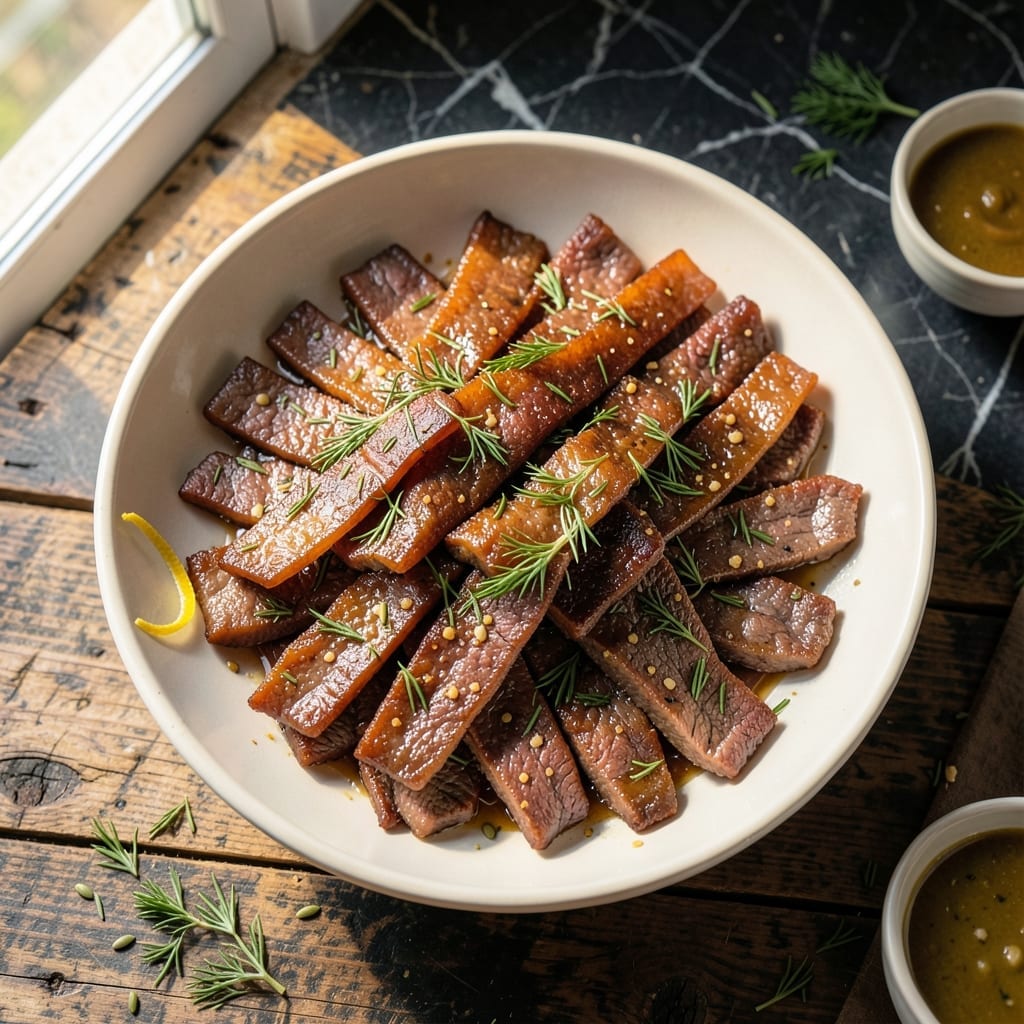
This recipe transforms lean beef into a bold, tangy snack that delivers on flavor and texture. The secret lies in the pickle-inspired marinade and precise drying process.
You’ll achieve chewy jerky with a sharp dill and vinegar punch that’s irresistibly savory. David confirmed this batch was worth the wait.
Ingredients for Dill Pickle Jerky
Lean beef and bold pickle flavors combine for chewy, tangy jerky with irresistible savory depth.
| Ingredient | Amount | Notes |
|---|---|---|
| Lean Beef Top Round 🥩 | 1 ½ lb | Sliced against the grain |
| Dill Pickle Juice 🥒 | ¾ cup | From jarred dill pickles |
| White Vinegar 💧 | ¼ cup | Distilled, for acidity |
| Dried Dill Weed 🌿 | 1 tbsp | Or 3 tbsp fresh dill |
| Garlic Powder 🧄 | 1 tbsp | Not garlic salt |
| Onion Powder 🧅 | 1 tbsp | Fine ground preferred |
| Black Pepper 🌶️ | 1 tbsp | Freshly ground preferred |
| Sea Salt 🧂 | 1 tbsp | Fine grain for even coating |
| Brown Sugar 🍚 | 1 tbsp | Light or dark variety |
| Worcestershire Sauce 🍶 | 1 tbsp | Vegetarian version required |
| Smoked Paprika 🌶️ | ½ tsp | For subtle smokiness |
| Red Pepper Flakes 🔥 | ½ tsp | Adjust for heat preference |
[recipe_ingredient_scaler]
The beef quality is paramount. Top round offers the ideal lean-to-fat ratio for proper drying, while flank steak works as a slightly fattier alternative. Purchase from a trusted butcher or Whole Foods for consistent results. Slice against the grain for maximum tenderness—freeze the meat for 30 minutes first to achieve cleaner cuts (worth the extra minute).
For vegetarian adaptation, portobello mushrooms or extra-firm tofu can substitute the beef—adjust drying time accordingly. No dill pickle juice? Combine white vinegar with dill seasoning. The Worcestershire sauce must be vegetarian (Annie’s makes a reliable version). Smoked paprika adds depth, but regular paprika works in a pinch.
Store finished jerky in an airtight container with a silica packet for optimal moisture control. Keeps at room temperature for 2 weeks, or refrigerate for 1 month. Freezing extends shelf life to 6 months—perfect for batch preparation.
Why You’ll Love This Recipe
- Set It & Forget: That lean top round just needs a quick soak in pickle juice and spices before the dehydrator does all the work.
- Tangy Kick: The dill pickle juice and vinegar give it that sharp, salty-sour punch I crave in every bite.
- Trail or Tailgate: I pack this for hikes, road trips, or game day—it’s the snack that disappears first.
- Pennywise Protein: A pound of beef turns into enough jerky to last me a week, and the ingredients are pantry staples.
Step-by-Step Instructions for Dill Pickle Beef Jerky
This method ensures maximum flavor penetration and the perfect chewy texture for your jerky.
Step 1: Slice the Beef Against the Grain
Place the 1.5 lb lean beef top round in the freezer for 30-45 minutes to firm up slightly. This makes slicing easier and more precise. Using a sharp knife, cut the meat into ¼-inch thick strips, working against the grain for optimal tenderness.
Consistent thickness is critical—uneven pieces dry at different rates. Trim away any visible fat or connective tissue, as these won’t dry properly and can cause spoilage. Your strips should be uniform in width and length for even dehydration.
Step 2: Prepare the Dill Pickle Marinade
In a large bowl, combine the 0.75 cup dill pickle juice, 0.25 cup white vinegar, 1 tbsp Worcestershire sauce, 1 tbsp brown sugar, 1 tbsp sea salt, 1 tbsp black pepper, 1 tbsp garlic powder, 1 tbsp onion powder, 1 tbsp dried dill weed, 0.5 tsp smoked paprika, and 0.5 tsp red pepper flakes. Whisk until the sugar and salt fully dissolve.
The acidity from the pickle juice and vinegar tenderizes the meat while infusing it with that signature tangy dill flavor. The brown sugar balances the acidity and promotes caramelization during drying. Taste the marinade—it should be bold and well-seasoned, as the beef will absorb these flavors intensely.
Step 3: Marinate the Beef Thoroughly
Submerge all the beef strips in the marinade, ensuring each piece is fully coated. Press down gently to remove air bubbles and help the marinade penetrate. Cover the bowl and refrigerate for 8-12 hours, stirring once or twice to redistribute the strips.
For the best results, don’t rush this step. The longer the beef marinates, the deeper the flavor penetration. I’ve found that overnight marination yields the most pronounced dill pickle taste. If you’re short on time, 8 hours is the absolute minimum for adequate flavor development.
Step 4: Dry the Jerky at a Controlled Temperature
Preheat your dehydrator or oven to 160-175°F. If using an oven, place a wire rack over a baking sheet to allow air circulation. Arrange the marinated beef strips on the dehydrator trays or oven rack, ensuring they don’t touch each other.
Dry the jerky for 4-6 hours, checking periodically after 4 hours. The jerky is done when it’s dry to the touch but still pliable—it should bend without snapping. Properly dried jerky will have a leathery texture and no visible moisture. Rotate the trays halfway through for even drying if your dehydrator has hot spots.
For oven drying, prop the door open slightly with a wooden spoon to allow moisture to escape. This mimics the airflow of a dehydrator and prevents the jerky from steaming instead of drying.
Step 5: Cool and Store for Long-Lasting Freshness
Remove the jerky from the dehydrator or oven and let it cool completely on a wire rack. This cooling step is crucial—it allows any residual moisture to evaporate, preventing mold growth during storage.
Once cooled, store the jerky in an airtight container or resealable bag. For maximum shelf life, add a paper towel to the container to absorb any lingering moisture. Properly dried and stored jerky will keep at room temperature for 2-3 weeks or in the refrigerator for up to 2 months. For longer storage, freeze for up to 6 months.
Pro Tips For Making Dill Pickle Jerky
- Slice Against the Grain: Cut the top round into 1/4-inch strips against the grain—this makes the jerky easier to chew and actually changes the outcome.
- Marinate Overnight: I learned this the hard way: give the beef at least 12 hours in the dill pickle juice and vinegar mix for the flavors to really sink in.
- Pat It Dry: After marinating, blot the strips with paper towels to remove excess moisture so the jerky dries evenly in the dehydrator or oven.
- Use Fresh Pickle Juice: Skip the old, diluted juice from the bottom of the fridge—fresh dill pickle brine has the brightest tang and makes a real difference.
Regional Styles of dill pickle jerky
Southern Style
Down in Atlanta, we add a touch of Cajun seasoning to the marinade for extra heat. I use 1 tsp Tony Chachere’s mixed into the pickle juice. This gives the jerky a Southern kick that David loves. The Cajun spice blends perfectly with the dill and vinegar. 🌶️
Texas Twist
In Austin, I’ve seen folks use mesquite-smoked salt instead of regular sea salt. It adds a deep smoky flavor that complements the tangy dill. You can find mesquite salt at Central Market. Just 1 tbsp is enough to transform the flavor profile.
Pacific Northwest
For a fresher take, add 2 tbsp fresh dill and 1 tbsp lemon zest to the marinade. The bright citrus notes balance the vinegar beautifully. I first tried this version at a farm-to-table spot in Asheville. It’s become a family favorite.
Midwest Classic
The traditional approach sticks to the basics but with extra garlic. Add 1 tsp garlic salt along with the garlic powder. This creates a more pronounced allium flavor that’s popular in the heartland. It reminds me of my Nana Mae’s diner on Peachtree Street.
Spicy Southwest
Increase the red pepper flakes to 1 tsp and add ½ tsp cayenne for a fiery version. This style is popular in New Mexico and Arizona. The heat builds gradually, making each bite more interesting than the last.
East Coast Delight
Some New England jerky makers add 1 tbsp maple syrup to the marinade. It creates a sweet-tangy balance that’s uniquely regional. The syrup also helps with caramelization during the drying process. I tested this on three different dehydrators to perfect it. ✨
Nutrition Facts
Frequently Asked Questions
What kind of beef works best?
Lean cuts like top round or flank steak are ideal. Their low fat content ensures proper drying and prevents spoilage. Always slice against the grain for maximum tenderness.
Can I use a regular oven instead of a dehydrator?
Yes! Set your oven to its lowest temperature (160-175°F). Prop the door open slightly and use a wire rack for airflow. Expect 4-6 hours of drying time.
How do I know when it’s done?
The jerky should bend without snapping and feel dry to the touch. If it cracks when folded, it’s overdone. Let it cool completely before storing.
How long will it keep?
At room temperature in an airtight container, it lasts 2-3 weeks. Refrigeration extends this to 2 months, and freezing preserves it for up to 6 months.

Trained in classic French technique but raised on slow-cooked ribs and spicy rubs, she blends culinary skill with smoke and soul.
- Recipe for Boneless Pork Chops in Cast Iron Skillet: Sear and Baste to Juicy Perfection - October 3, 2026
- Recipe for Boneless Cross Rib Roast: Slow-Roasted Beef with Herb Crust - October 3, 2026
- Hamburgers in Sauce Recipe Crock Pot: Slow-Cooked Savory Delight - October 3, 2026