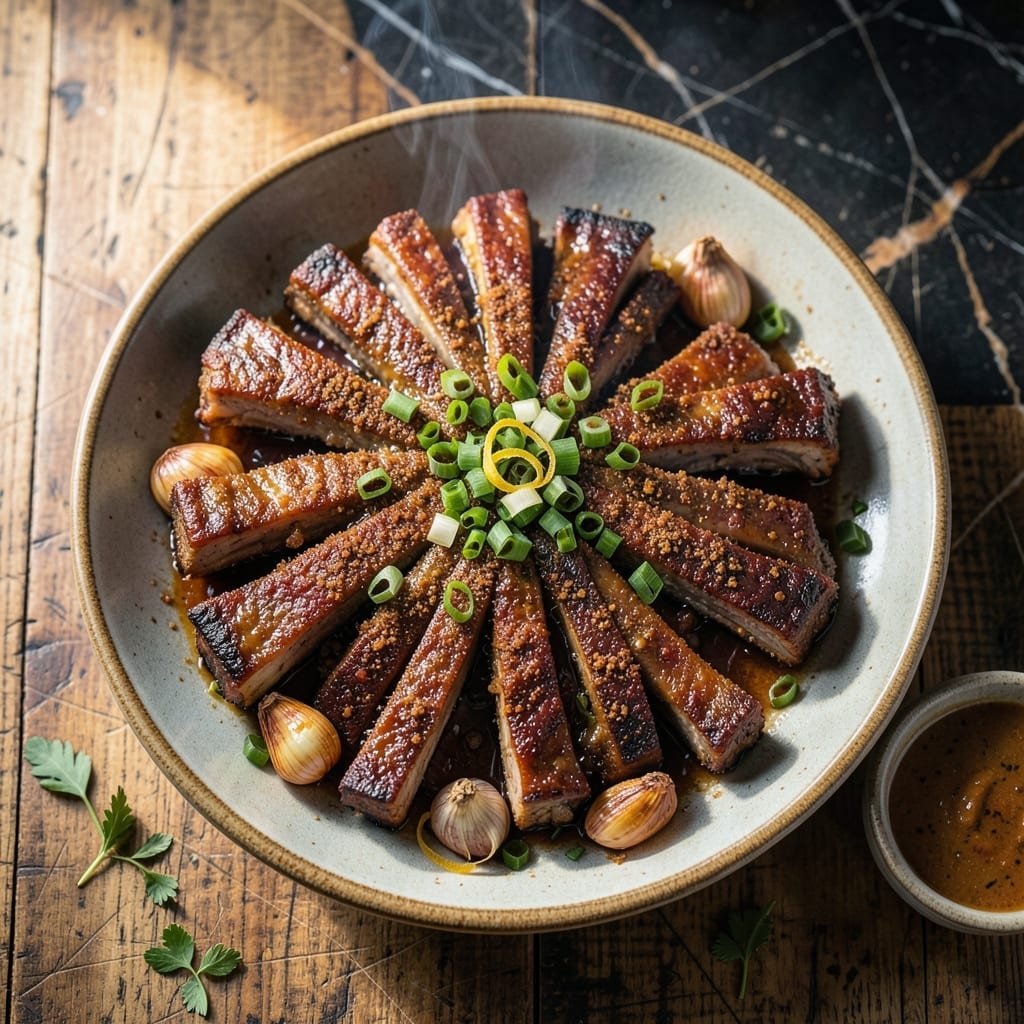
Oven-baked dino ribs deliver fall-off-the-bone tenderness with minimal hands-on time. This method transforms tough cuts into melt-in-your-mouth perfection through slow, even heat.
The secret lies in a simple dry rub and low temperature that breaks down collagen over 3-4 hours. No smoker or grill required—just your oven and a little patience.
What emerges is meat so tender it separates with just a nudge, infused with smoky-spiced flavor. The rub forms a subtle crust while the inside stays impossibly juicy.
Perfect for feeding a crowd or meal prepping for the week. This technique never fails to impress.
Ingredients for Dino Ribs Recipe Oven
Simple dry rub and slow oven time transform tough beef ribs into fall-off-the-bone perfection.
| Ingredient | Amount | Notes |
|---|---|---|
| Beef Back Ribs 🥩 | 4 lb | Dino ribs, bone-in, trimmed |
| Brown Sugar 🧈 | ½ cup | Light or dark variety |
| Paprika 🌶️ | 2 tbsp | Sweet or smoked preferred |
| Garlic Powder 🧄 | 1 tbsp | Not garlic salt |
| Onion Powder 🧅 | 1 tbsp | Fresh ground preferred |
| Kosher Salt 🧂 | 1 tbsp | Diamond Crystal preferred |
| Ground Black Pepper 🌶️ | 1 tbsp | Freshly ground preferred |
| Chili Powder 🌶️ | 1 tbsp | Mild or hot variety |
| Ground Cumin 🌿 | 1 tsp | Toasted for deeper flavor |
| Olive Oil 🫒 | 2 tbsp | Extra-virgin preferred |
| Apple Cider Vinegar 🍏 | 2 tbsp | Balances sweetness in rub |
| Beef Broth 🥩 | 1 cup | Low-sodium for control |
| Yellow Mustard 🟡 | 2 tbsp | Helps rub adhere to ribs |
[recipe_ingredient_scaler]
The beef ribs are critical here—dino ribs (beef back ribs) offer the perfect meat-to-bone ratio. Look for well-marbled pieces at Costco or Whole Foods, where they often come pre-trimmed. The brown sugar in the rub caramelizes beautifully, so opt for light or dark depending on your preferred depth of flavor. A good butcher can also prepare them to your specifications if you prefer more or less fat.
No brown sugar? Coconut sugar or turbino sugar work in a pinch. Out of paprika? Additional chili powder at half the amount keeps the color. For the beef broth, Better Than Bouillon makes a robust option if you’re using a paste. The apple cider vinegar adds a subtle tang—white vinegar can substitute but lacks the same complexity.
The dry rub can be mixed and stored in an airtight container for up to 3 months. Once applied to the ribs, cook them within 24 hours for best results. Leftover cooked ribs keep in the fridge for 4-5 days or freeze for up to 3 months.
Why You’ll Love This Recipe
- Set and Forget: I toss the ribs with brown sugar and spices, pop them in the oven, and walk away—no babysitting required.
- Smoky Sweet Crust: The combo of paprika and brown sugar caramelizes into this sticky, finger-licking glaze that clings to every bite.
- Feeds a Hungry Crowd: I made these for my brother’s birthday and the platter was cleaned before the game even started.
- Leftovers (If Any): Honestly, they taste even better the next day—if your family leaves you any, that is.
Step-by-Step Instructions for Dino Ribs Oven
This method delivers perfectly tender beef back ribs with a caramelized crust in your home oven.
Step 1: Prepare the Dry Rub Mixture
In a medium bowl, combine the 0.5 cup Brown Sugar, 2 tbsp Paprika, 1 tbsp Garlic Powder, 1 tbsp Onion Powder, 1 tbsp Kosher Salt, 1 tbsp Ground Black Pepper, 1 tbsp Chili Powder, and 1 tsp Ground Cumin. Whisk thoroughly until all spices are evenly distributed and no streaks of individual spices remain visible.
This blend creates a balanced sweet-spicy crust that caramelizes beautifully during cooking. I always taste a pinch of the rub at this stage to confirm the flavor profile is to my liking before applying it to the meat.
Step 2: Coat and Marinate the Ribs
Pat the 4 lb Beef Back Ribs completely dry with paper towels to ensure the rub adheres properly. Brush all surfaces with the 2 tbsp Yellow Mustard—this acts as a binder for the dry rub and adds a subtle tang that complements the sweetness.
Rub the spice mixture generously over every surface of the ribs, pressing firmly so it creates a thick crust. Drizzle with the 2 tbsp Olive Oil and 2 tbsp Apple Cider Vinegar, then rub again to distribute evenly. Let the ribs sit at room temperature for 30 minutes while the oven preheats.
Step 3: Slow-Roast the Ribs
Preheat your oven to 300°F. Place the ribs meat-side up on a wire rack set in a rimmed baking sheet. Pour the 1 cup Beef Broth into the bottom of the pan—this creates steam that keeps the ribs moist during the long cooking process.
Cover the pan tightly with aluminum foil and roast for 2.5 hours. At this point, remove the foil and continue roasting for another 1 to 1.5 hours until the meat is fork-tender and the crust has developed a deep mahogany color. The ribs are done when the meat pulls away from the bones with minimal resistance.
Step 4: Rest and Serve
Transfer the ribs to a cutting board and let them rest for 15 minutes before serving. This allows the juices to redistribute throughout the meat, ensuring each bite is moist and flavorful.
I like to brush the ribs with some of the pan juices before serving to add extra shine and flavor. The meat should be so tender that it nearly falls off the bone, with a sticky, caramelized crust that provides a perfect contrast to the richness of the beef.
Pro Tips For Making Dino Ribs Recipe Oven
- Low and Slow Wins: Set your oven to 275°F and give the ribs 3-4 hours—any hotter and the beef back ribs turn tough instead of fall-off-the-bone tender. I learned this the hard way after pulling out dry, chewy ribs from a 350°F oven.
- Pat Them Dry: Blot the ribs with paper towels before rubbing with brown sugar and spices. Sounds weird, but it works: the dry surface helps the paprika and sugar stick better and form that sticky crust everyone loves.
- Skip the Overcrowding: Leave space between ribs on the tray so air circulates. After burning three batches, I finally figured out that packed ribs steam instead of roast, and the brown sugar just turns to a sad, soggy mess.
- Foil Then Uncover: Wrap the ribs in foil for the first 2 hours, then uncover to let the brown sugar caramelize. This isn’t the prettiest method, but it’s the tastiest—locks in moisture first, then gets that glossy finish.
Pro Cooking Tips for dino ribs recipe oven
Temperature Precision
Maintain a consistent 300°F throughout cooking—any higher and the ribs may dry out before the collagen breaks down. I use an oven thermometer to verify my dial setting, as many ovens run 10-15°F off. This low-and-slow approach mimics a smoker’s environment. 🌡️
Foil Technique
Cover the ribs tightly with heavy-duty aluminum foil for the first 2.5 hours. This traps steam, accelerating collagen conversion. Use two layers if your foil is thin to prevent tears. The foil also catches drippings for easy sauce-making later.
Rack Elevation
Always use a wire rack over your baking sheet. This keeps the ribs out of the liquid, preventing steaming instead of roasting. I prefer a V-rack for even air circulation. Elevation creates that coveted caramelized crust on all sides.
Doneness Check
Test for doneness by inserting a fork between the bones—it should slide in like butter. The meat will pull back from the bone ends by about ¼ inch when ready. Internal temperature should reach 195-203°F in the thickest part.
Resting Secret
Let the ribs rest uncovered for 15 minutes after cooking. This final step is non-negotiable for juiciness. I tent them loosely with foil to keep warm while the juices settle. Slicing too soon sends all that flavor straight to your cutting board. 💡
Pan Juice Magic
Before serving, reduce the pan juices on the stovetop with 1 tbsp butter for a quick glaze. Strain out solids first for a smooth finish. This adds a professional touch with almost no extra effort.
Nutrition Facts
Frequently Asked Questions
What temperature should I use?
Maintain a steady 300°F for perfect tenderness. Higher heat risks drying them out before they become tender.
How long do they take in the oven?
Plan for 3.5-4 hours total: 2.5 hours covered, then 1-1.5 hours uncovered. The meat is done when it pulls easily from the bone.
Can I make these ahead?
Cook, cool, and refrigerate for up to 4 days. Reheat covered at 350°F for 20-25 minutes.
What if my ribs are tough?
They likely need more time. Return them to the oven at 275°F with extra broth until fork-tender, checking every 30 minutes.

Trained in classic French technique but raised on slow-cooked ribs and spicy rubs, she blends culinary skill with smoke and soul.
- Recipe for Boneless Pork Chops in Cast Iron Skillet: Sear and Baste to Juicy Perfection - October 3, 2026
- Recipe for Boneless Cross Rib Roast: Slow-Roasted Beef with Herb Crust - October 3, 2026
- Hamburgers in Sauce Recipe Crock Pot: Slow-Cooked Savory Delight - October 3, 2026