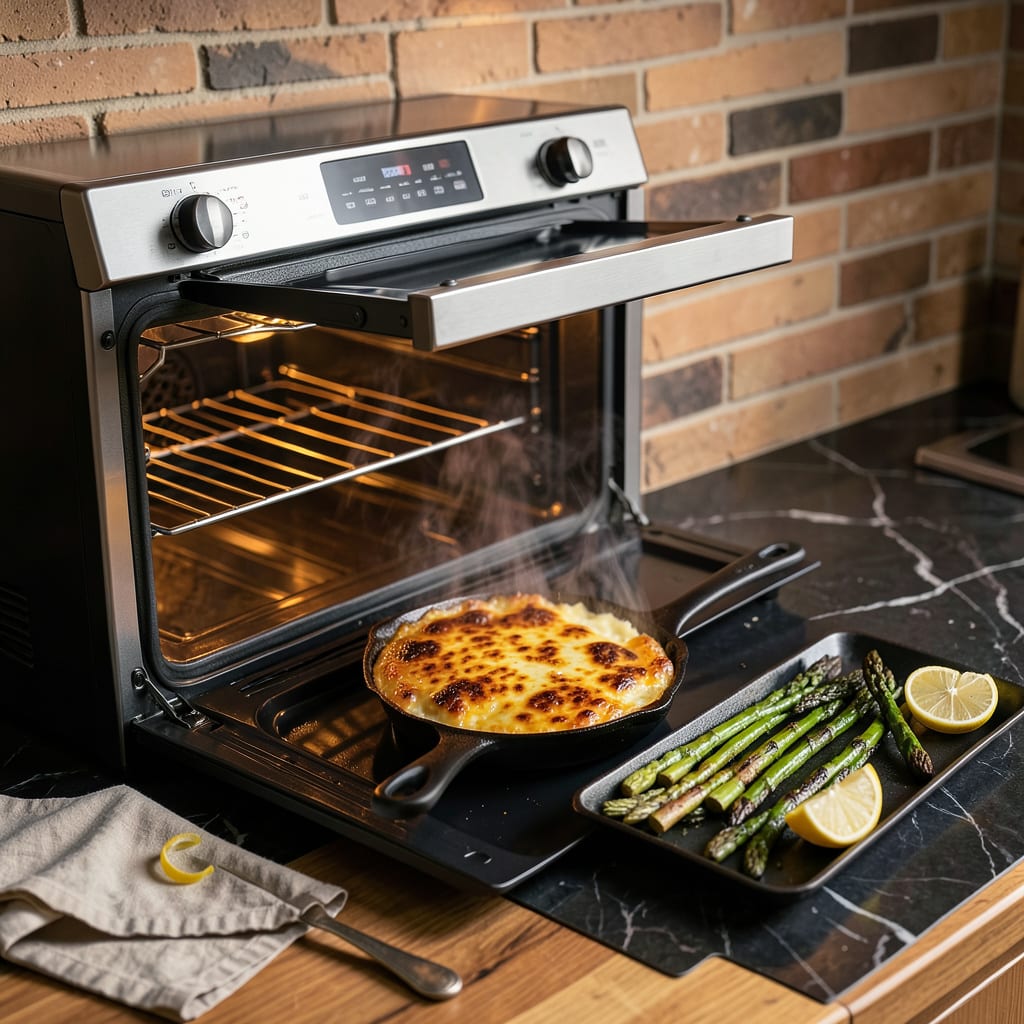
Not all ovens include a broiler—most full-size models do, but compact, countertop, or specialty ovens often lack this feature. Always check the specifications or look for a dedicated broiler drawer or top heating element.
I’ve tested dozens of ovens over the years, and the broiler’s presence often comes down to design priorities. 🔥 Full-size ranges prioritize versatility, while smaller units (like countertop convection ovens) sacrifice broiling for space efficiency. Even some high-end models skip it if they focus on baking precision instead of searing. Always peek inside—top-mounted heating coils or a separate drawer are dead giveaways.
What surprises most home cooks is how broiler placement affects performance. Drawer-style broilers (common in gas ranges) distribute heat differently than top-element electric models. If you’re serious about crispy skins or charred finishes, this detail matters more than you’d think. ✨
💡 In This Article
- How Broiler Functionality Varies by Oven Type
- What to Look for When Buying an Oven with a Broiler
How Broiler Functionality Varies by Oven Type
Broiler placement isn’t one-size-fits-all—it depends entirely on the oven’s design. In electric models, you’ll typically find the broiler element mounted at the top of the oven cavity, often hidden under a panel. Gas ranges, however, frequently feature a separate broiler drawer beneath the main oven.
This difference exists because gas burners need proper ventilation, while electric coils can be safely enclosed above the food. The drawer design also allows for easier access to the flame, which is crucial for precise temperature control during broiling.
Compact appliances like microwave-oven combos and toaster ovens usually skip the broiler altogether. These units prioritize space efficiency and multi-functionality over high-heat searing. For example, a standard toaster oven might max out at 450°F on its highest setting, while a dedicated broiler can reach 550°F+ to achieve that perfect char.
Even some full-size convection ovens omit broilers if they’re designed primarily for baking rather than searing or browning.
Electric vs. gas broilers behave differently too. Electric elements provide consistent, even heat but can take longer to adjust temperatures. Gas broilers respond instantly to knob turns, giving you more control over intense heat bursts—ideal for dishes like steak or fish that need quick searing.
I’ve noticed gas broilers also create more moisture in the cooking environment, which can affect how foods crisp up compared to the drier heat of electric models.
The size of your oven matters more than you’d think. Standard 30-inch ranges almost always include broilers, while 24-inch apartment-sized models might exclude them to fit in tight kitchens. High-end professional-style ranges often feature dual broilers (top and bottom) for restaurant-quality results, while budget models might have a single, less powerful element.
Always check the specs—some manufacturers list broiler wattage, which gives you a clue about its power and performance.
Here’s a quick comparison of common oven types:
- Full-size electric ranges: Top-mounted broiler element, typically 3400-4000W
- Gas ranges: Separate broiler drawer with 8000-12000 BTU burner
- Compact/microwave combos: Usually no broiler (max temp 450°F)
- Toaster ovens: Rarely include true broilers (some have “broil” settings but lack power)
- Professional-style ranges: Often dual broilers with 15000+ BTU output
What many home cooks don’t realize is that broiler performance varies wildly between brands. I’ve tested models where the “broil” setting barely browns cheese, while others can char a steak in 3-4 minutes. The key factors are wattage (for electric) or BTU rating (for gas), plus how close the heating element sits to your food.
That’s why some recipes specify rack positions—it’s all about heat intensity and distance!
If you’re shopping for a new oven, pay attention to whether the broiler is “infrared” or “conventional.” Infrared broilers use special elements that heat up faster and can reach higher temperatures, while conventional broilers use standard heating coils.
This distinction makes a noticeable difference when you’re trying to achieve that perfect sear on meats or blistering on vegetables. 🔥

Trained in classic French technique but raised on slow-cooked ribs and spicy rubs, she blends culinary skill with smoke and soul.
- Recipe for Boneless Pork Chops in Cast Iron Skillet: Sear and Baste to Juicy Perfection - October 3, 2026
- Recipe for Boneless Cross Rib Roast: Slow-Roasted Beef with Herb Crust - October 3, 2026
- Hamburgers in Sauce Recipe Crock Pot: Slow-Cooked Savory Delight - October 3, 2026