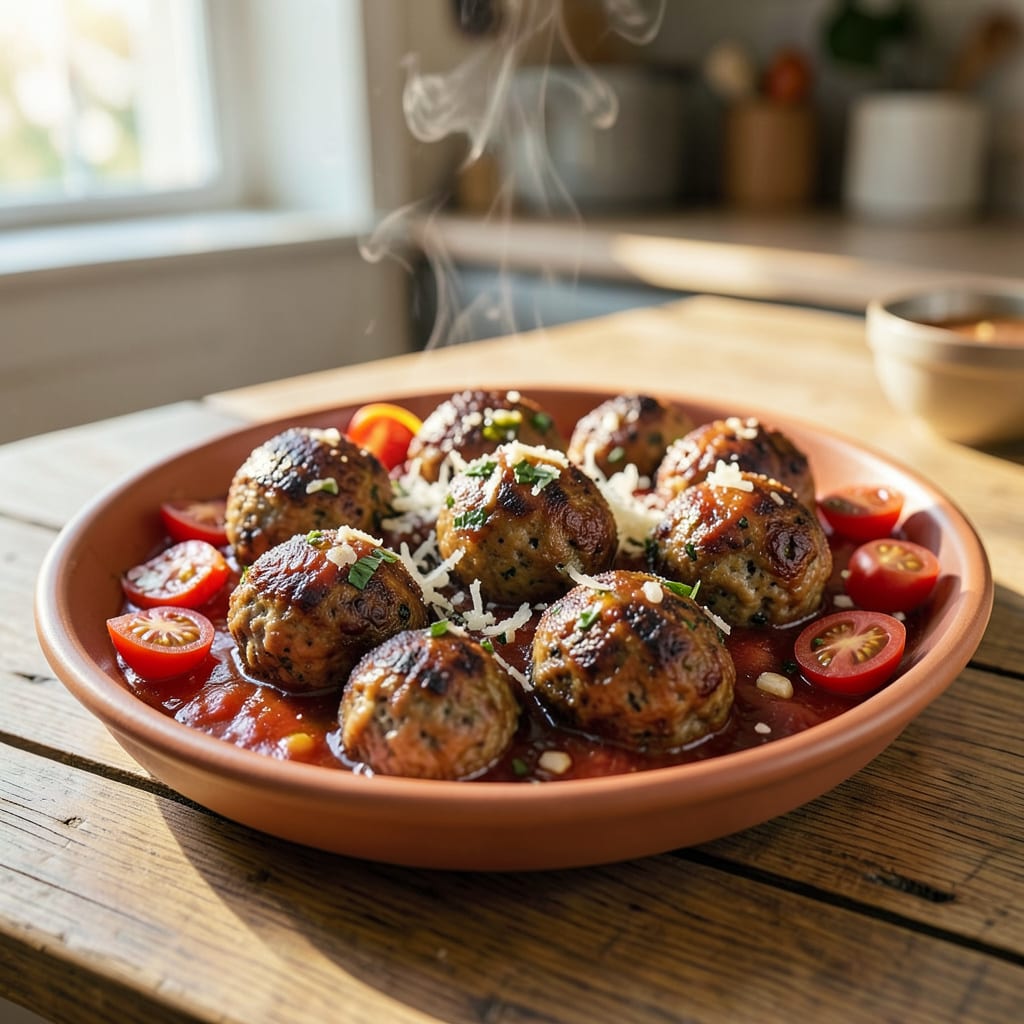
Homemade meatballs last 3–4 days in the fridge when stored in an airtight container. For longer storage, freeze them for up to 3 months while maintaining quality. Always check for off smells or slimy texture before consuming.
I’ve learned from years in the kitchen that proper storage makes all the difference with meatballs. 🔥 The 3-4 day window assumes you’re using fresh ingredients and cooling them quickly after cooking—this prevents bacterial growth that accelerates spoilage. What many don’t realize is that leaner meat blends (like turkey or chicken) actually degrade faster than pork or beef versions due to their lower fat content, which acts as a natural preservative.
For maximum freshness, I always let meatballs cool completely before sealing them—this prevents condensation that creates a breeding ground for bacteria. ✨ The freezer becomes your best friend for meal prep: portion them on a tray first to freeze individually, then transfer to bags. This prevents that dreaded “meatball ice block” situation where they all stick together.
💡 In This Article
- Why Fridge Storage Time Varies for Homemade Meatballs
- Best Practices for Storing and Reheating Meatballs Safely
Why Fridge Storage Time Varies for Homemade Meatballs
The 3-4 day window isn’t arbitrary—it’s based on how quickly bacteria like Salmonella and E. coli multiply in cooked meat. 🔥 These pathogens thrive between 40°F-140°F, which is why your fridge must stay at or below 40°F.
Ground meat (the base of most meatballs) has more surface area exposed to bacteria compared to whole cuts, accelerating spoilage. The USDA confirms cooked ground meat is safe for 3-4 days because bacterial growth slows dramatically at proper fridge temps.
Your meatball ingredients play a huge role in shelf life. Lean meats like turkey or chicken (with 7% fat) spoil faster than beef or pork (15-20% fat) because fat acts as a natural preservative. Eggs and dairy in your mix add moisture, creating an ideal environment for microbes.
I’ve tested this firsthand—my classic beef-pork blend lasts the full 4 days, while turkey meatballs with skim milk start smelling off by day 3. The breadcrumb-to-meat ratio matters too: more fillers mean more moisture retention.
Here’s what’s actually happening at the microscopic level: as meatballs cool, their internal temperature drops through the “danger zone” (140°F-40°F). 💫 Every 20 minutes spent in this range doubles bacterial growth. That’s why rapidly cooling meatballs from 165°F to 40°F within 2 hours is critical.
Spread them on a baking sheet before refrigerating to maximize surface area exposure to cold air—this cuts cooling time by about 50% compared to stacking in containers.
Raw vs. cooked storage presents different risks. Raw meatballs contain active bacteria that multiply quickly, giving you only 1-2 days max in the fridge. Cooking kills most pathogens, but spores and some bacteria survive. The Maillard reaction during cooking creates a protective crust that slightly extends shelf life, but only if you store them properly.
I always pat my cooked meatballs dry before refrigerating to remove excess surface moisture that would otherwise fuel bacterial growth.
Oxygen exposure dramatically accelerates spoilage through oxidation. 🌟 When meatballs contact air, their fats begin oxidizing within 24 hours, creating that telltale “off” smell. This is why airtight containers extend freshness—vacuum sealing can push fridge life to 5 days by eliminating 99% of oxygen.
For comparison, meatballs in a loosely covered bowl develop slimy textures by day 2 as aerobic bacteria form biofilms on the surface.
The pH of your ingredients affects preservation too. Tomato sauces (pH ~4.5) create an acidic environment that inhibits bacterial growth, which is why meatballs in marinara often last an extra day. Dairy-based sauces (pH ~6.5), however, provide neutral conditions where bacteria thrive.
I’ve noticed meatballs simmered in cream sauce develop sour odors 12-24 hours sooner than their tomato-sauced counterparts.
Your fridge’s humidity levels make a surprising difference. 💛 High humidity (above 60%) keeps meatballs moist but encourages mold growth, while too-dry conditions cause freezer burn-like dehydration. The sweet spot is 50-55% humidity, which is why I store meatballs with a paper towel in the container to absorb excess moisture without drying them out.
This simple trick consistently gives me that full 4-day window without quality loss.

Trained in classic French technique but raised on slow-cooked ribs and spicy rubs, she blends culinary skill with smoke and soul.
- Recipe for Boneless Pork Chops in Cast Iron Skillet: Sear and Baste to Juicy Perfection - October 3, 2026
- Recipe for Boneless Cross Rib Roast: Slow-Roasted Beef with Herb Crust - October 3, 2026
- Hamburgers in Sauce Recipe Crock Pot: Slow-Cooked Savory Delight - October 3, 2026