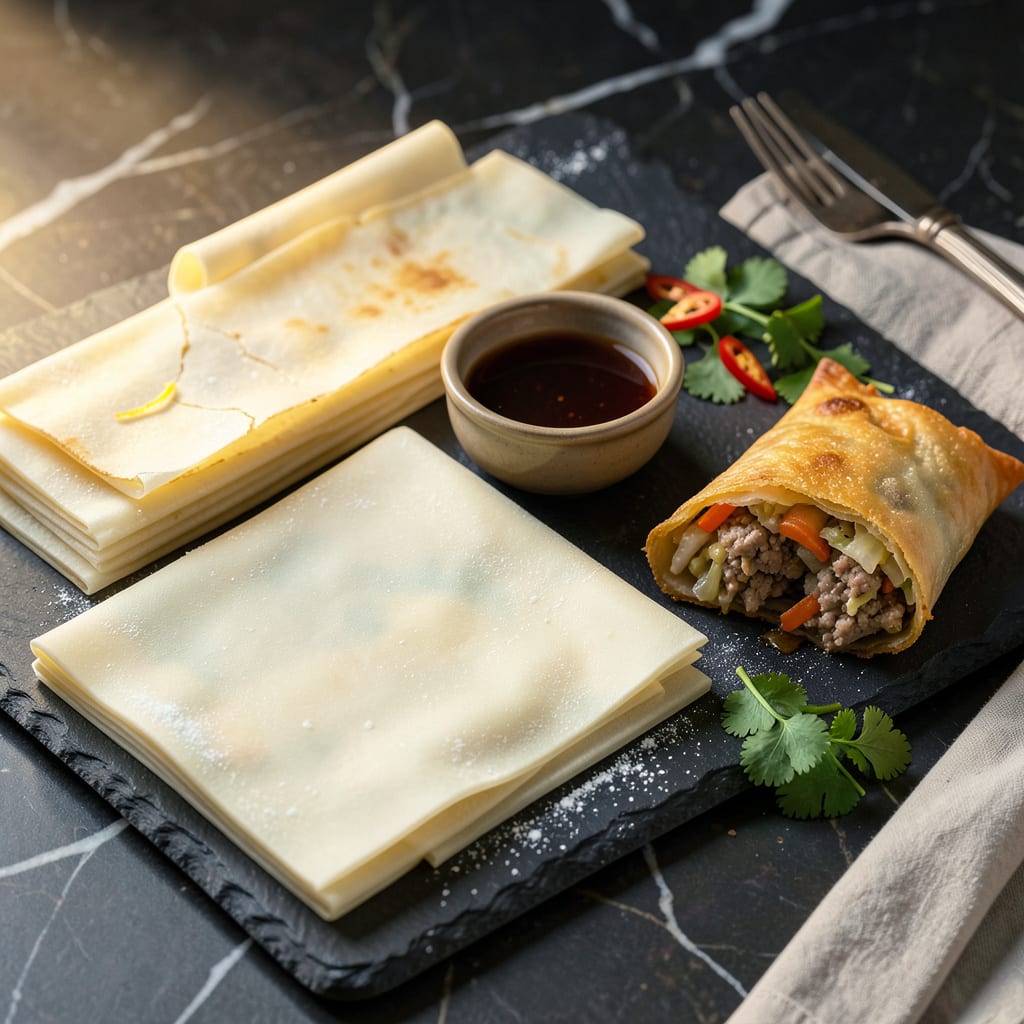
Egg roll wrappers can go bad if not stored properly. Unopened packages last 1-2 months in the pantry, while opened or homemade wrappers should be refrigerated for up to 1 week or frozen for 3-6 months.
I’ve learned through experience that these delicate wrappers are surprisingly sensitive to their environment. 🔥 The thin dough absorbs moisture quickly, which can lead to premature spoilage if left unprotected. Store-bought versions contain preservatives that extend their pantry life, but once opened, they behave more like fresh pasta—requiring refrigeration to maintain quality. For homemade wrappers, I always recommend freezing in single layers between parchment paper to prevent sticking and freezer burn.
💡 In This Article
- Signs Your Egg Roll Wrappers Have Spoiled
- Best Ways to Store Egg Roll Wrappers for Freshness
Signs Your Egg Roll Wrappers Have Spoiled
The science behind wrapper spoilage starts with moisture and microbial activity. These thin dough sheets contain about 30-35% water content, creating an ideal environment for mold spores to germinate when exposed to air. 🔥 Store-bought versions include potassium sorbate as a preservative, which inhibits mold growth for 60-90 days at room temperature.
Once opened, oxygen triggers oxidation that breaks down the wheat proteins, accelerating texture changes.
Visible mold appears as fuzzy green, white, or black spots—especially along the edges where moisture collects. The wrapper’s surface should feel smooth and slightly tacky; any sliminess indicates bacterial growth from excess humidity. Homemade wrappers spoil faster because they lack preservatives—their shelf life drops to just 3-5 days at room temperature.
Compare this to commercial brands that maintain integrity for weeks due to their modified atmosphere packaging.
Off odors develop when lactic acid bacteria ferment the dough’s natural sugars, producing sour or yeasty aromas. I’ve noticed this happens fastest with homemade batches that contain egg wash, as the protein provides additional nutrients for microbes.
Texture changes are equally telling: fresh wrappers should bend without cracking, while spoiled ones either crumble when folded or develop a gummy consistency from enzyme breakdown.
Temperature abuse dramatically shortens shelf life. Wrappers left above 75°F for more than 2 hours can develop Bacillus cereus bacteria, which causes a distinctive “cardboard” smell. Freezer-burned wrappers lose their pliability and develop ice crystals that rupture the gluten structure, making them impossible to roll without tearing.
The key difference between store-bought and homemade lies in their water activity levels—commercial versions are dried to 0.85-0.90 aw, while homemade typically sit at 0.95 aw, making them more perishable.
Here’s what most people miss: even unopened packages can degrade if stored near heat sources or in humid environments. The plastic packaging becomes permeable over time, allowing moisture exchange that creates condensation inside. This is why I always recommend transferring unopened packages to airtight containers with silica gel packets if you live in tropical climates.
The wrappers’ thinness (typically 0.8-1.2mm) means any environmental changes affect them 3-4x faster than regular pasta sheets.
For homemade wrappers, the lack of commercial drying processes means they retain more moisture. This higher water content (about 40-45%) makes them particularly vulnerable to Aspergillus mold growth within 48 hours at room temperature.
💫 The absence of preservatives also means enzymatic activity continues unchecked, causing the wrappers to develop a grayish tint as the wheat germ oxidizes—this color change often precedes visible mold by 24-48 hours.
Pro tip: Always check the wrapper’s flexibility before using. Fresh ones should stretch slightly when pulled, while spoiled wrappers will either snap immediately (too dry) or stretch excessively before tearing (over-hydrated). The “finger test” works well—press gently on the surface; if the indentation remains or the wrapper sticks to your finger, it’s past its prime.

Trained in classic French technique but raised on slow-cooked ribs and spicy rubs, she blends culinary skill with smoke and soul.
- Recipe for Boneless Pork Chops in Cast Iron Skillet: Sear and Baste to Juicy Perfection - October 3, 2026
- Recipe for Boneless Cross Rib Roast: Slow-Roasted Beef with Herb Crust - October 3, 2026
- Hamburgers in Sauce Recipe Crock Pot: Slow-Cooked Savory Delight - October 3, 2026