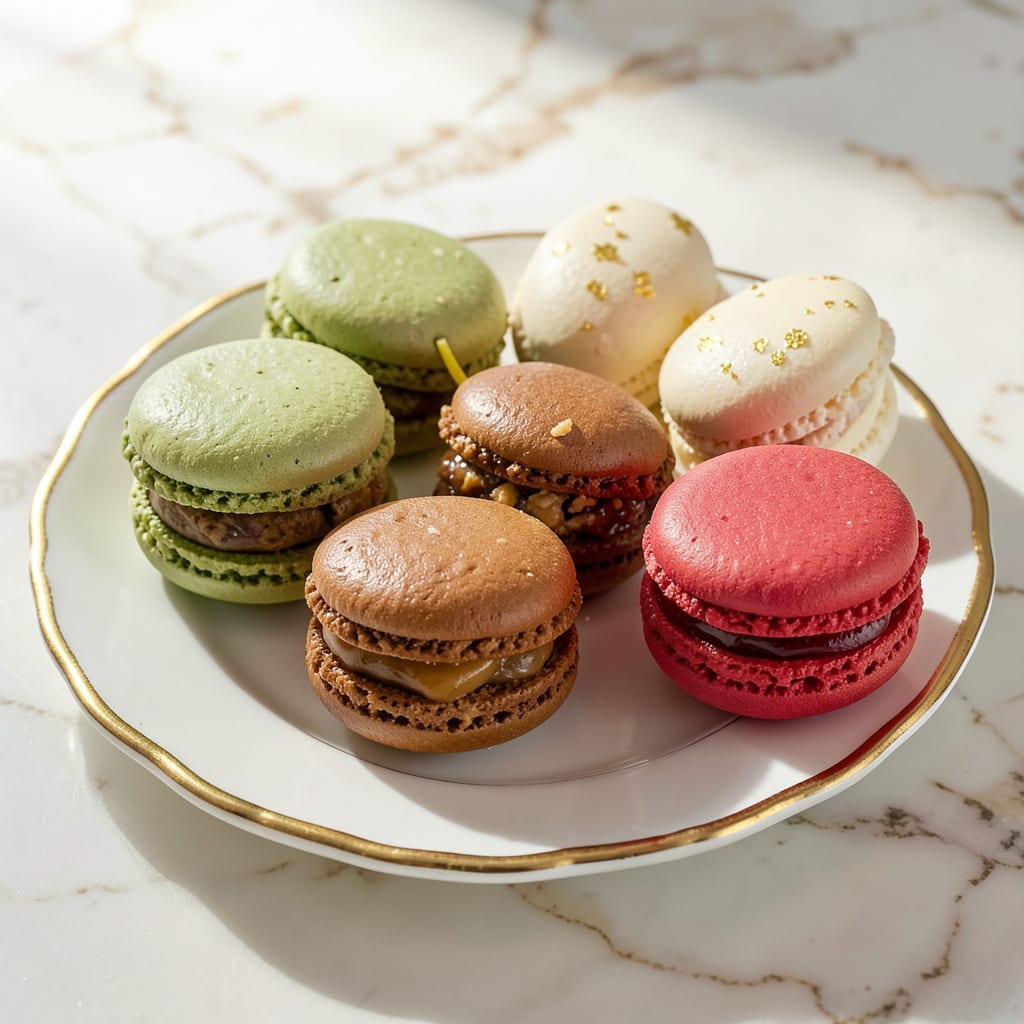
Traditional French macarons contain almond flour as a primary ingredient, making them inherently nut-based. However, nut-free versions using seeds or alternative flours are available for those with allergies.
I’ve worked with countless macaron recipes, and the almond flour isn’t just for flavor—it’s the backbone of that signature chewy-yet-delicate texture. 🔥 The natural oils in almonds create the perfect moisture balance, while the fine grind gives macarons their smooth, glossy shells. For those avoiding nuts, I’ve had great success with sunflower seed flour, which mimics the fat content and structure surprisingly well. The key is adjusting the baking time by 2-3 minutes to account for different moisture levels in alternative flours.
💡 In This Article
- Why Almonds Are Essential in Classic Macaron Recipes
- Nut-Free Macaron Alternatives for Allergy-Safe Desserts
Why Almonds Are Essential in Classic Macaron Recipes
Almond flour isn’t just a traditional choice—it’s the secret to macarons’ signature texture. The natural oils in almonds (about 50-60% by weight) create a moist yet stable structure that other flours struggle to replicate.
When combined with egg whites and sugar, almond flour forms a delicate matrix that gives macarons their crisp shell and chewy interior. This balance is why French patisseries have relied on almonds since the 16th century, when Italian chefs brought the recipe to France.
The science lies in almond flour’s particle size and fat content. With particles typically 60-100 microns fine, it blends seamlessly with powdered sugar to create that smooth, glossy surface. The fat content also prevents excessive drying during baking at 300-325°F, which is why macarons made with leaner flours often crack or become brittle.
I’ve tested this firsthand—substituting hazelnut flour (which has similar fat content) works, but the flavor profile shifts dramatically toward earthy, toasted notes.
Historically, almonds became the gold standard because they were one of the few nuts available year-round in Mediterranean climates. Italian monks initially used them to make simple almond cookies, which evolved into the French double-decker macaron we know today. The almond’s neutral sweetness allows other flavors (vanilla, raspberry, pistachio) to shine without competition.
This versatility explains why 95% of professional macaron recipes still use almond flour as their base.
What most home bakers don’t realize is that almond flour’s protein structure interacts uniquely with egg whites. During the macaronage process (the folding technique), almond proteins help stabilize the meringue while maintaining elasticity. This is why macarons made with coconut flour (which lacks these proteins) often collapse or develop hollow centers.
The difference is visible under a microscope—almond flour creates a more uniform, interconnected network.
For those curious about alternatives, sunflower seed flour comes closest to replicating almond flour’s properties. It has a similar fat content (51-55%) and creates comparable moisture retention. However, you’ll need to adjust the baking temperature by 10-15°F lower to prevent over-browning, as sunflower seeds have a lower smoke point than almonds.
The flavor difference is subtle but noticeable—a slightly grassier note that pairs beautifully with citrus or chocolate fillings. 🌟
Professional tip: If you’re working with alternative flours, always sift them with powdered sugar three times to achieve the fine consistency needed for smooth macaron shells.
I’ve found that adding 1/2 teaspoon of cream of tartar per egg white helps stabilize the meringue when using non-almond flours, compensating for the lack of natural proteins that almonds provide.

Trained in classic French technique but raised on slow-cooked ribs and spicy rubs, she blends culinary skill with smoke and soul.
- Recipe for Boneless Pork Chops in Cast Iron Skillet: Sear and Baste to Juicy Perfection - October 3, 2026
- Recipe for Boneless Cross Rib Roast: Slow-Roasted Beef with Herb Crust - October 3, 2026
- Hamburgers in Sauce Recipe Crock Pot: Slow-Cooked Savory Delight - October 3, 2026