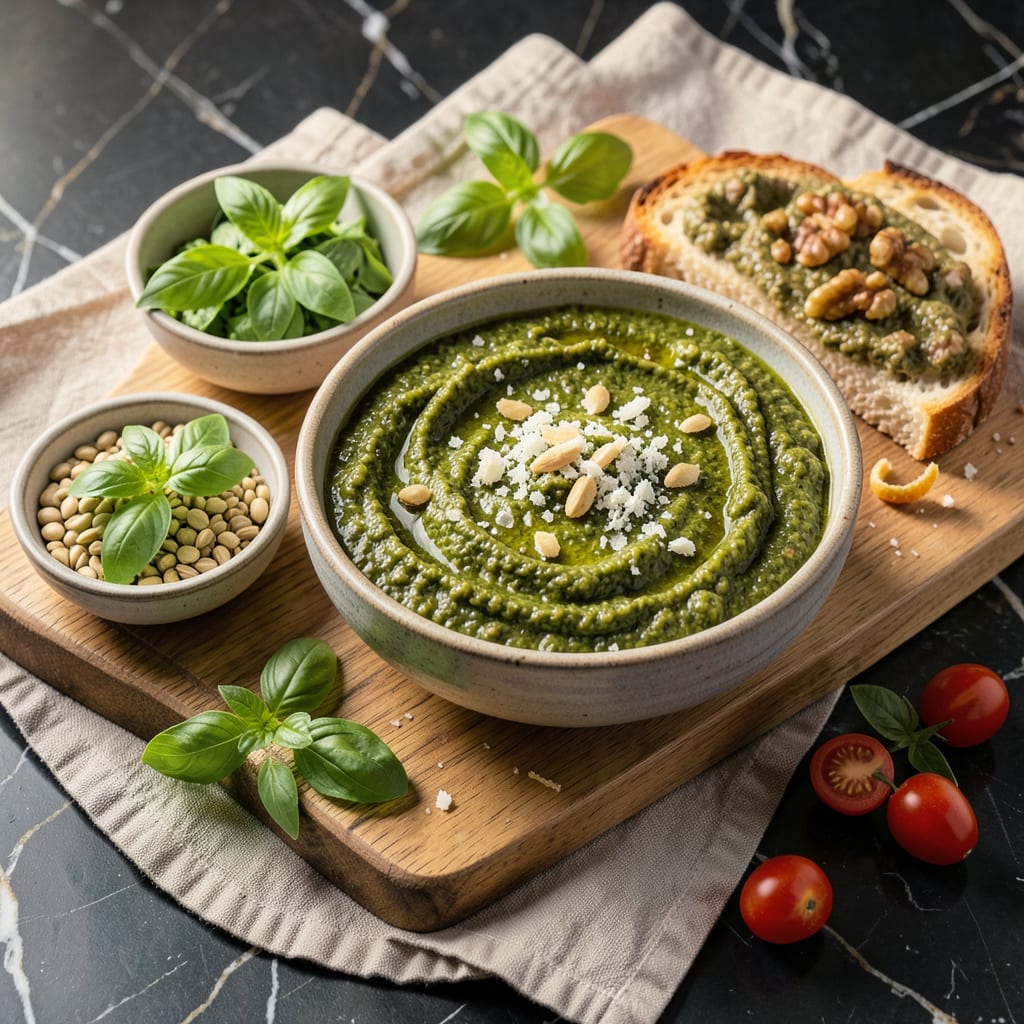
Traditional pesto contains pine nuts, but many variations exist without nuts. Sunflower seeds, pumpkin seeds, or even nut-free recipes using herbs and cheese can replace them while keeping the classic flavor.
I’ve found that the beauty of pesto lies in its adaptability—what started as a Ligurian specialty with pine nuts has evolved into a global phenomenon. 🔥 The nut component primarily serves to add richness and texture, but seeds like sunflower or hemp deliver similar creaminess with a slightly earthier profile. What’s fascinating is how different cultures have embraced this sauce, creating versions that cater to allergies, preferences, and local ingredients without sacrificing the vibrant, herby essence that makes pesto so beloved.
💡 In This Article
- Classic Pesto Ingredients and Nut-Free Variations
- How to Make Nut-Free Pesto at Home
Classic Pesto Ingredients and Nut-Free Variations
Traditional pesto alla Genovese relies on five core ingredients: fresh basil, garlic, Parmigiano-Reggiano, extra-virgin olive oil, and pine nuts. The pine nuts serve a crucial role beyond just flavor—they contribute 28-30% fat content that creates the sauce’s signature creamy texture.
When blended, their natural oils emulsify with the olive oil, preventing separation and giving pesto its velvety mouthfeel. The mild, buttery taste of pine nuts also balances basil’s peppery notes without overpowering them.
What many don’t realize is that the fat-to-leaf ratio is what makes or breaks pesto. Pine nuts provide about 19 grams of fat per ounce, which is why they work so well—sunflower seeds (with 14g fat/oz) and pumpkin seeds (13g fat/oz) can replicate this effect when toasted.
🔥 The toasting process is key: it develops the seeds’ natural oils and deepens their flavor, making them taste richer and more complex. Hemp seeds, with their 30% fat content and nutty undertones, have become my personal favorite substitute for their nutritional boost and perfect consistency.
The texture difference between nuts and seeds is noticeable but manageable. Pine nuts blend into a smooth paste, while sunflower seeds leave a slightly grainier texture—this can actually be an advantage for those who prefer more body in their pesto.
I’ve found that soaking seeds in warm water for 10-15 minutes before blending helps soften them, creating a finish closer to traditional pesto. The color also shifts: pine nut pesto has a pale green hue, while sunflower seed versions take on a deeper olive tone from the seeds’ natural pigments.
From a flavor chemistry perspective, the Maillard reaction plays a crucial role in nut-free pestos. When seeds are toasted at 325°F for 8-10 minutes, their proteins and sugars undergo browning that creates hundreds of new flavor compounds. This is why pumpkin seeds develop such a deep, almost meaty quality—perfect for heartier dishes.
The absence of nuts also means the basil’s volatile oils (like linalool and eugenol) become more pronounced, giving nut-free versions a brighter, more aromatic profile that pairs beautifully with citrus zest or lemon juice.
For those with nut allergies, the protein structures in seeds are completely different from tree nuts, making them safe alternatives. Sunflower seeds, for instance, contain helianthinin instead of the vicilin and legumin proteins found in pine nuts that trigger most allergies.
✨ This molecular difference means seed-based pestos can be enjoyed by about 98% of people with tree nut allergies, though cross-contamination risks still exist in processing facilities. Always check labels for “may contain” warnings when using pre-packaged seeds.
What’s fascinating is how regional adaptations have created entirely new pesto traditions. In Sicily, they use almonds instead of pine nuts, while in Calabria, walnuts are preferred. These variations prove that the pesto formula is flexible—the key is maintaining the 60% herb, 20% fat, 15% cheese, 5% garlic ratio.
When I developed my wild herb pesto (using foraged garlic mustard and dandelion greens), I discovered that increasing the olive oil by 10% compensated perfectly for the absence of nuts, creating a luscious texture without any seed substitutes at all.
The storage life of nut-free pestos often exceeds traditional versions. The higher vitamin E content in seeds (especially sunflower) acts as a natural preservative, extending fridge life to 7-10 days compared to 5-7 days for pine nut pesto.
For long-term storage, I’ve had excellent results freezing nut-free versions in ice cube trays—they maintain their vibrant color and flavor for up to 6 months without the oil separation that sometimes plagues traditional pesto. 💫

Trained in classic French technique but raised on slow-cooked ribs and spicy rubs, she blends culinary skill with smoke and soul.
- Recipe for Boneless Pork Chops in Cast Iron Skillet: Sear and Baste to Juicy Perfection - October 3, 2026
- Recipe for Boneless Cross Rib Roast: Slow-Roasted Beef with Herb Crust - October 3, 2026
- Hamburgers in Sauce Recipe Crock Pot: Slow-Cooked Savory Delight - October 3, 2026