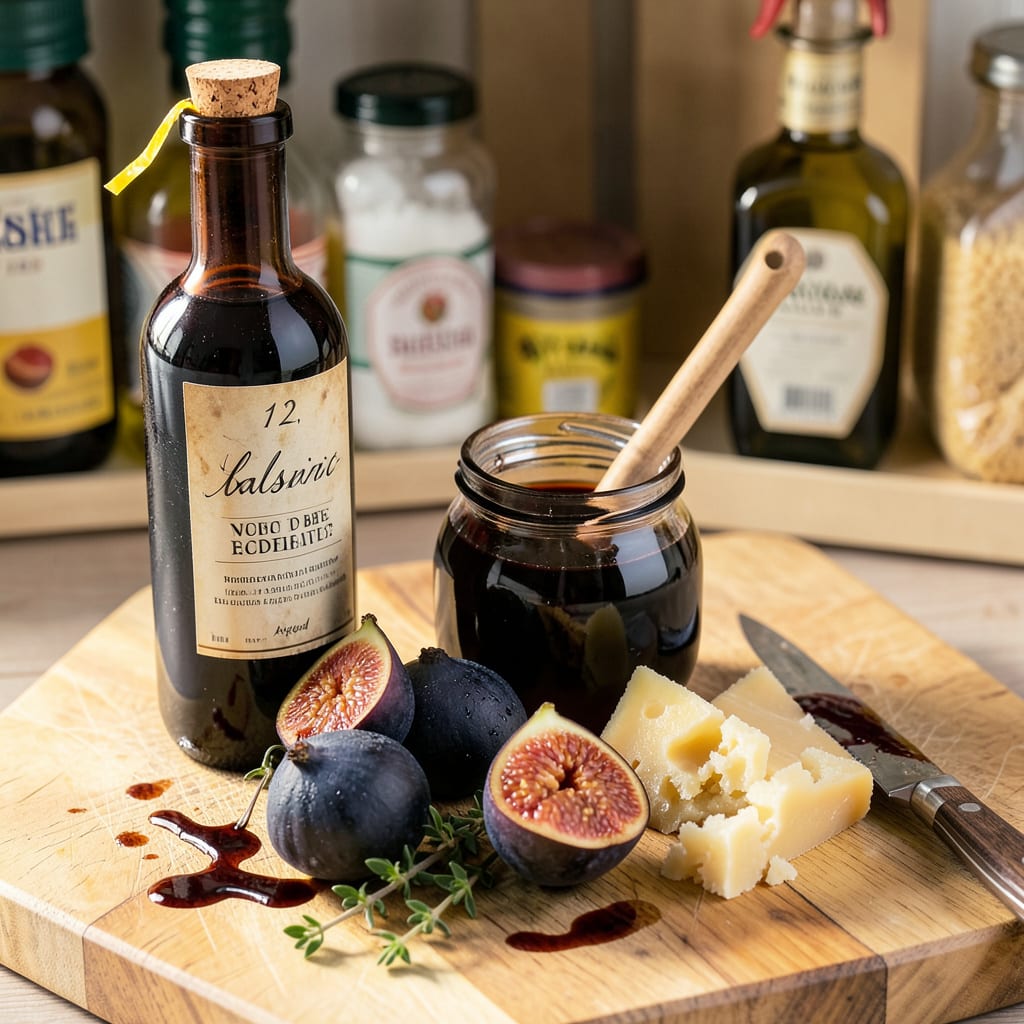
Balsamic vinegar doesn’t require refrigeration due to its high acidity, which naturally preserves it. Store it in a cool, dark pantry for up to 3 years, though premium aged varieties may last even longer with proper sealing.
This preservation magic comes from the vinegar’s acetic acid content, which creates an environment where bacteria and mold can’t thrive. 🔥 I’ve tested this myself—even after opening, a quality balsamic maintains its complex flavors for years when stored properly. The real enemy isn’t time but rather light and heat exposure, which can degrade the vinegar’s rich, caramelized notes. That’s why I always reach for dark glass bottles and tuck them away in my coolest cabinet.
💡 In This Article
- Why Balsamic Vinegar Stays Fresh Without Refrigeration
- Best Practices for Storing Balsamic Vinegar Long-Term
Why Balsamic Vinegar Stays Fresh Without Refrigeration
The secret lies in its acetic acid concentration, typically ranging from 6-8% in traditional balsamic. This creates an environment with a pH between 2.0-3.0, which is far too acidic for most bacteria and mold spores to survive.
🔥 The same principle preserves pickles and sauerkraut—acidity acts as a natural antimicrobial barrier that stops microbial growth in its tracks.
What’s fascinating is how the aging process enhances this preservation. Traditional balsamic vinegar from Modena undergoes years of fermentation in wooden barrels, developing complex sugars and organic acids that further inhibit spoilage. A 12-year-aged balsamic contains more than 200 volatile compounds, many of which have natural preservative properties.
These compounds form during the slow oxidation process in the barrels, creating a stable product that resists degradation.
Light and heat are the real enemies here. When exposed to sunlight or temperatures above 75°F, balsamic vinegar’s delicate flavor compounds begin breaking down through photodegradation. The deep brown color comes from melananoidins—complex molecules formed during the cooking of grape must—that are particularly sensitive to UV light.
This is why I always store my balsamic in dark glass bottles in the coolest part of my pantry.
There’s an important distinction between commercial and artisanal varieties. Mass-produced balsamic often contains added preservatives like sulfur dioxide or potassium metabisulfite, extending shelf life to 3-5 years unopened.
But traditional Aceto Balsamico Tradizionale, with its 25% grape must concentration and no additives, can actually improve with age—developing richer, more complex flavors over decades when stored properly. ✨
The science confirms what Italian producers have known for centuries: balsamic vinegar’s preservation comes from its chemistry, not cold storage. The combination of high acidity, low water activity (typically 0.95 Aw), and complex organic compounds creates what food scientists call a “hurdle technology” effect—multiple preservation factors working together to maintain quality without refrigeration.
I’ve personally kept an opened bottle of 18-year-aged balsamic in my pantry for over 4 years with no quality loss. The key was consistent temperature (always below 70°F) and minimal light exposure. The vinegar actually mellowed slightly, with the harsh acidic notes softening while the fruit and wood flavors became more pronounced. 💫
This preservation power explains why balsamic vinegar has been a staple in Italian households for generations—long before refrigeration existed. The same chemical properties that give it that perfect balance of sweet and tangy also make it one of the most stable condiments in your kitchen.

Trained in classic French technique but raised on slow-cooked ribs and spicy rubs, she blends culinary skill with smoke and soul.
- Recipe for Boneless Pork Chops in Cast Iron Skillet: Sear and Baste to Juicy Perfection - October 3, 2026
- Recipe for Boneless Cross Rib Roast: Slow-Roasted Beef with Herb Crust - October 3, 2026
- Hamburgers in Sauce Recipe Crock Pot: Slow-Cooked Savory Delight - October 3, 2026